
Sonika Impex – Trusted Rice Machinery Exporter in India for Complete Industrial Solutions
July 27, 2026
Why Fruit Processing is the Next Big Opportunity in Africa
August 22, 2026
Industrial Fruit Processing: A Step-by-Step Guide for Modern Processing Plants
The global beverage industry is undergoing a significant transformation. As consumers increasingly shift towards healthier, natural, and minimally processed beverages, fruit juice continues to be one of the fastest-growing segments of the food and beverage market. This trend is creating new opportunities for countries rich in agricultural resources to move beyond exporting fresh fruits and instead invest in value-added processing industries.
This opportunity is most evident in Africa.
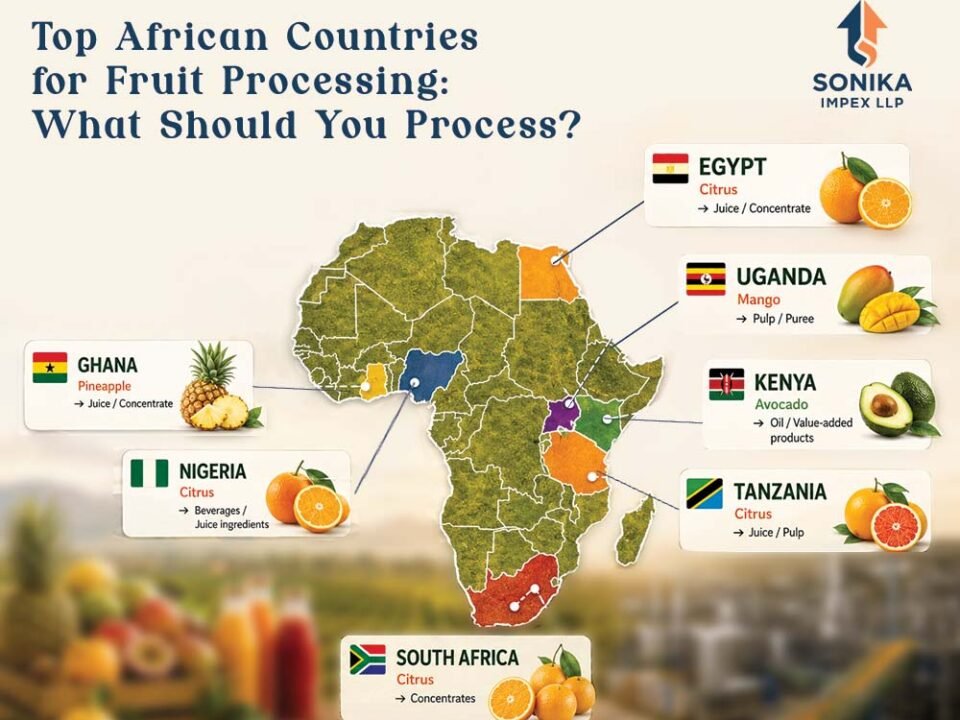
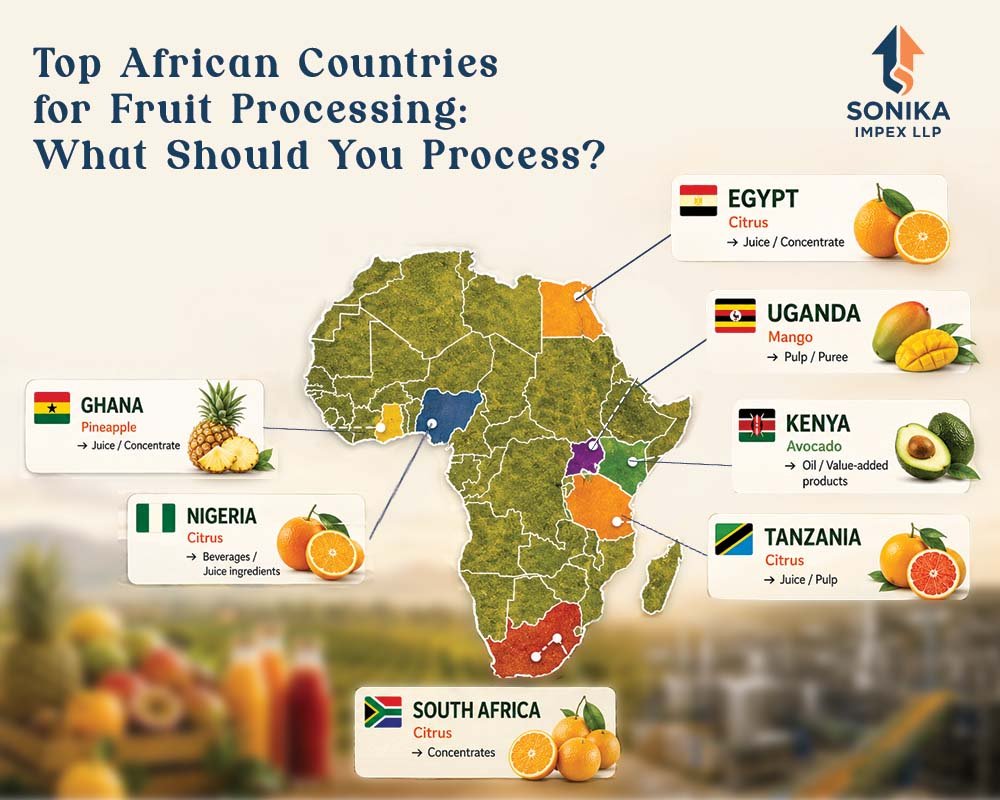
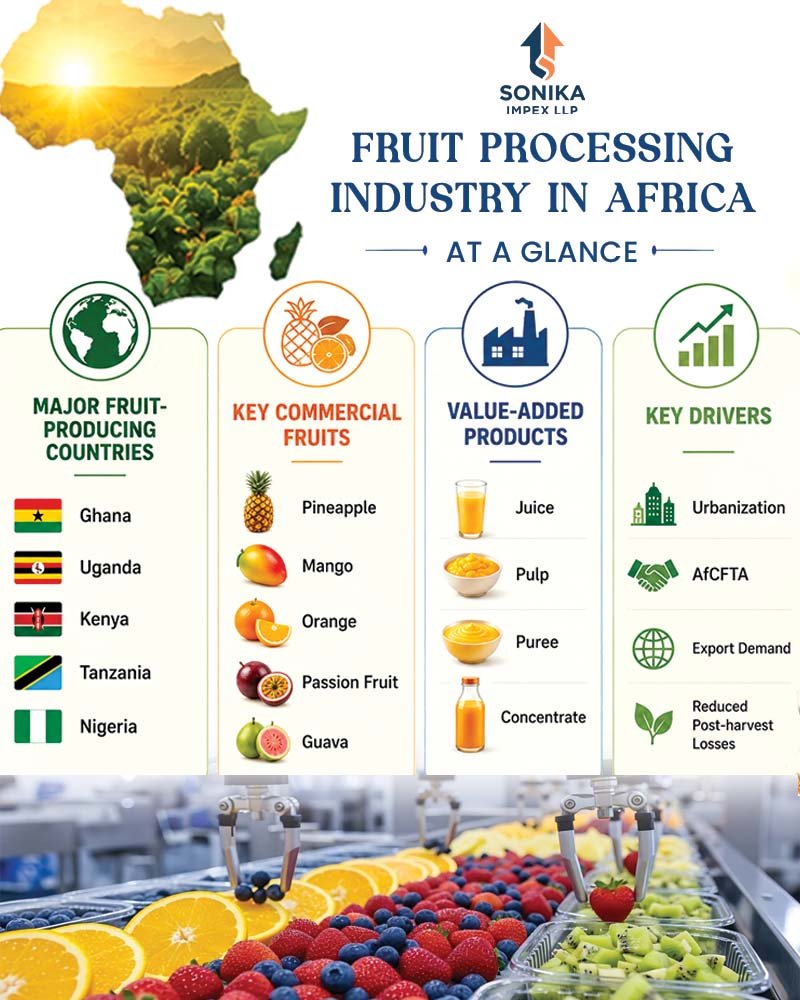
From Ghana’s world-renowned pineapples and Uganda’s sweet mangoes to Kenya’s avocados and Tanzania’s citrus fruits, the continent possesses abundant raw materials capable of supporting a thriving fruit processing industry. Yet, a substantial share of these fruits is still sold fresh or lost due to inadequate storage, transportation, and processing infrastructure.
According to the OECD-FAO Agricultural Outlook 2025–2034, Africa’s fruit sector has enormous potential for income generation and improved nutrition. The report notes that expanding fruit processing industries can strengthen food security, increase farmers’ incomes, and reduce dependence on imported processed foods. It also highlights that intra-African fruit trade is expected to benefit from the African Continental Free Trade Area (AfCFTA), creating stronger regional markets for processed fruit products.
For investors, food processors, governments, and development agencies, this presents a compelling opportunity to establish modern fruit juice processing plants that convert locally grown fruits into high-quality beverages for domestic consumption and export.
However, building a successful fruit juice manufacturing facility requires much more than installing machinery. It demands a carefully engineered production process, the right processing technology, quality control systems, food safety compliance, and an integrated turnkey approach that ensures long-term operational efficiency.
In this guide, we’ll explore the complete industrial fruit juice production process, from fresh fruit reception to finished packaged juice, while highlighting the machinery, quality standards, and best practices adopted by modern processing plants.
Why Africa is Emerging as a Fruit Processing Hub
Africa is often viewed as the world’s next agricultural growth frontier. While the continent produces millions of tonnes of fruits every year, the majority are consumed locally or exported as fresh produce with limited value addition.
Developing local processing industries changes this equation.
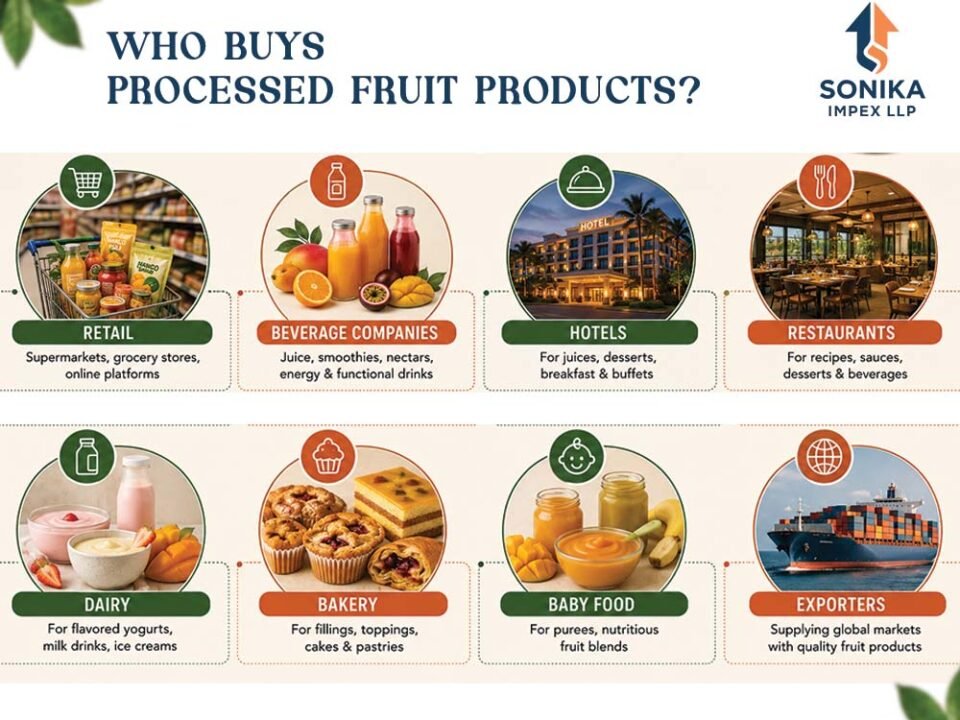
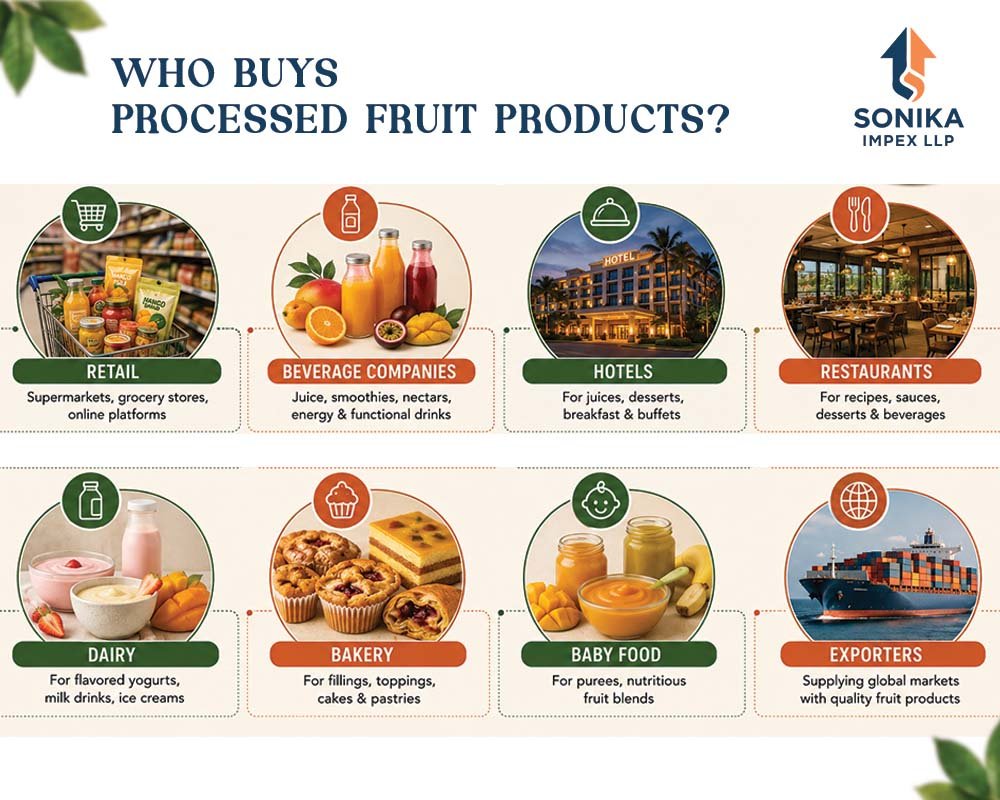
Instead of exporting raw fruits at relatively low margins, countries can manufacture premium products such as:
- Ready-to-drink fruit juices
- Fruit concentrates
- Fruit pulps
- Fruit purees
- Functional beverages
- Smoothies
- Natural fruit blends
This not only creates additional employment across farming, manufacturing, logistics, and packaging sectors but also helps stabilize prices during peak harvest seasons.
The OECD-FAO Agricultural Outlook identifies Algeria, South Africa, Egypt, Morocco, and Nigeria among Africa’s leading fruit producers by value. It further notes that improving transportation infrastructure, cold-chain logistics, and processing capacity will be essential to unlocking future growth in the sector.
For countries like Ghana and Uganda, where Sonika Impex actively supports turnkey food processing projects, investments in fruit processing can significantly reduce post-harvest losses while creating export-ready products with higher commercial value.
Growing Global Demand for Processed Fruit Beverages
Demand for fruit-based beverages is no longer driven solely by taste. The consumer preferences for healthier lifestyles, natural ingredients, and functional nutrition play an important role.
The FAO’s Major Tropical Fruits Market Review consistently highlights strong international demand for tropical fruits such as mangoes, pineapples, papayas, and avocados, encouraging producing countries to expand processing capacity and improve value addition. These trends create opportunities not only for fresh fruit exports but also for processed products including juices, concentrates, and fruit pulps.
Another recent development illustrates why diversified fruit processing has become increasingly important.
In 2024, severe drought conditions and the continued spread of citrus greening disease significantly affected Brazil’s orange production, resulting in record-high orange juice prices worldwide. The supply disruption became so severe that several juice manufacturers began evaluating alternative fruits like mandarins, apples, and pears in order to keep factories running. This event demonstrated how diversified fruit processing capabilities help manufacturers remain resilient when a single fruit crop is affected.
For African processors, this creates an opportunity to capitalize on abundant tropical fruit availability while reducing dependence on a single crop.
Industrial Fruit Juice Production Process Flow
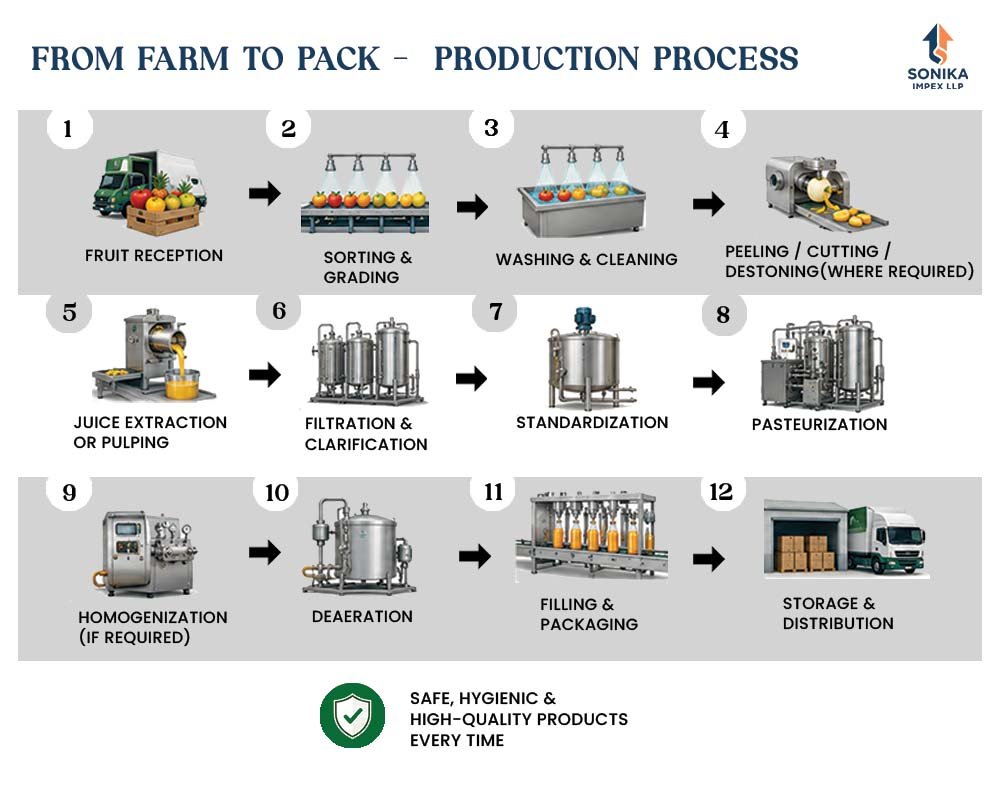
Every modern fruit juice processing plant follows a structured manufacturing sequence designed to preserve nutritional value, maximize juice recovery, ensure food safety, and produce a consistent final product.
Step 1: Fruit Reception, Sorting and Grading
The quality of the finished juice depends largely on the quality of the raw fruit entering the processing facility.
Fresh fruits are received at the plant and subjected to a detailed inspection before entering production.
Typical inspection parameters include:
- Fruit variety
- Ripeness
- Size uniformity
- Colour
- Physical damage
- Disease symptoms
- Foreign matter
Many modern facilities use automated conveyor systems where operators perform visual inspections while defective fruits are removed before processing.
Advanced plants increasingly incorporate optical sorting technologies capable of identifying damaged or underripe fruits with remarkable accuracy, improving both product consistency and juice yield.
Why This Stage Matters
Using properly ripened fruits offers several benefits:
- Higher juice recovery
- Better flavour
- Improved colour
- Lower microbial contamination
- Reduced processing waste
Poor-quality raw materials cannot be corrected later in the manufacturing process, making this one of the most critical quality control stages.
Step 2: Washing and Cleaning
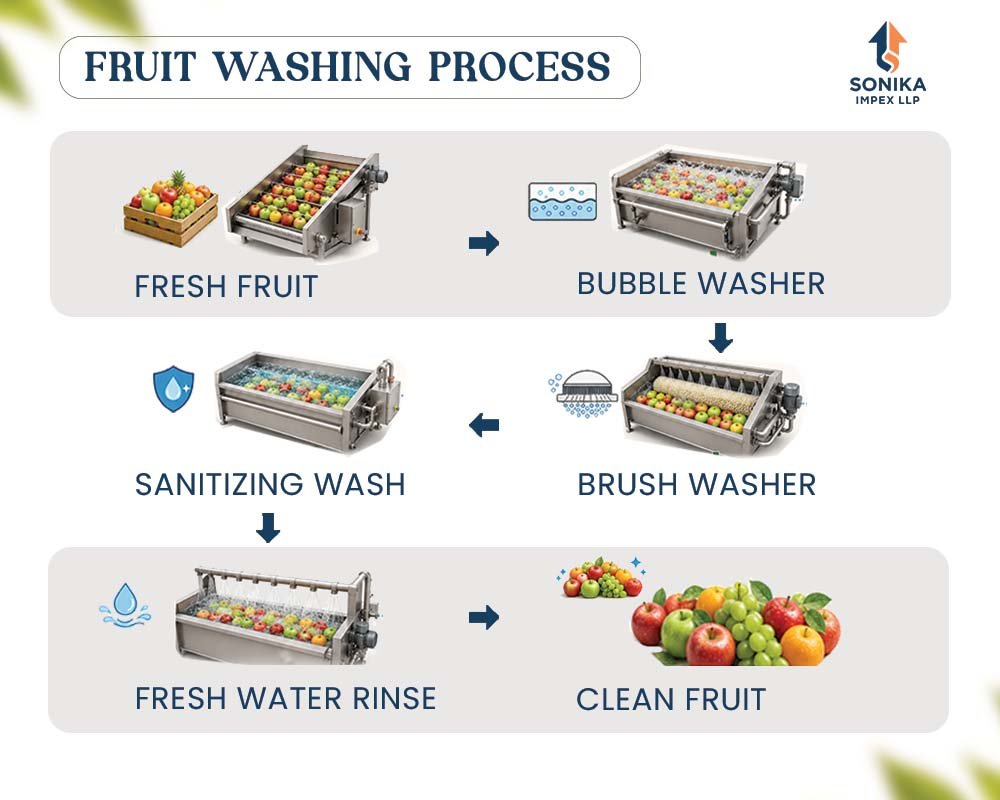
After grading, fruits proceed to the washing section where soil, pesticide residues, leaves, insects, and microorganisms are removed.
The washing process generally involves multiple stages.
Typical Washing Sequence
- Pre-rinse
- Bubble washing
- Rotary brush washing
- Sanitizing rinse
- Final freshwater rinse
Depending on production capacity and fruit type, processing plants may combine several cleaning technologies.
Machinery Used
- Bubble washers
- Rotary brush washers
- Spray washing tunnels
- Inspection conveyors
- Sanitizing tanks
Proper washing is essential for compliance with food safety standards and significantly reduces microbial load before juice extraction.
Step 3: Peeling, Cutting and Fruit Preparation
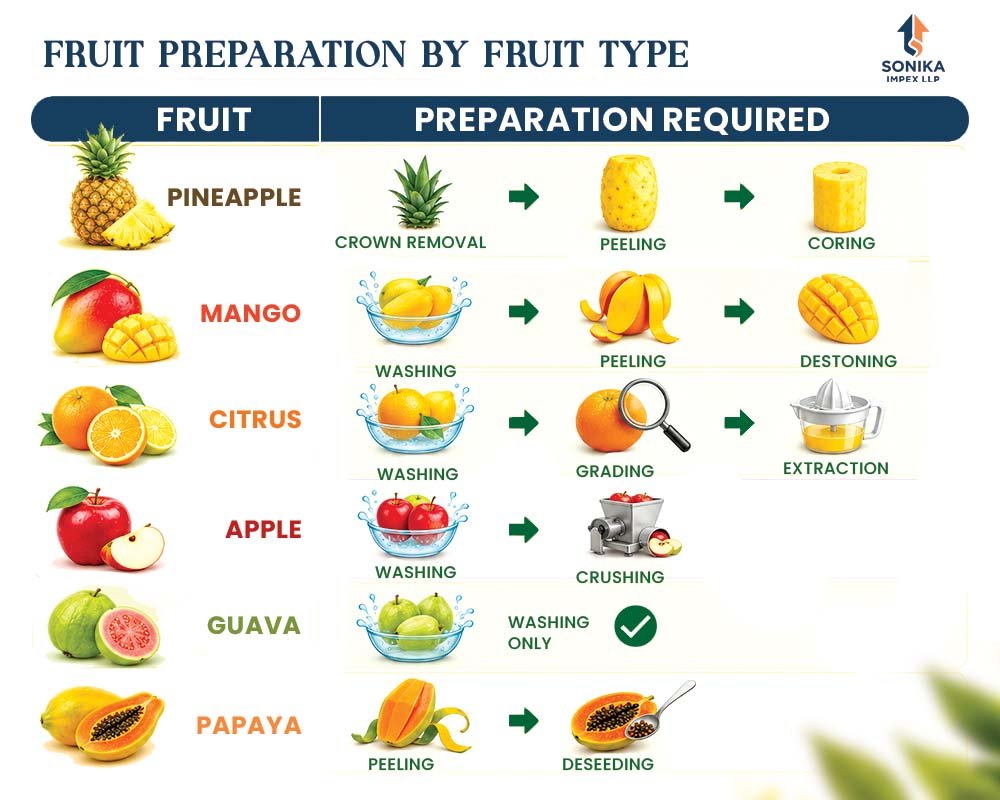
Different fruits require different preparation methods before extraction.
Automation has dramatically improved processing efficiency while reducing labour costs and minimizing fruit losses.
Machinery Used
- Automatic peelers
- Fruit slicers
- Coring machines
- Destoners
- Cutting systems
Proper preparation ensures smoother downstream processing while protecting extraction equipment from damage caused by hard seeds or fruit stones.
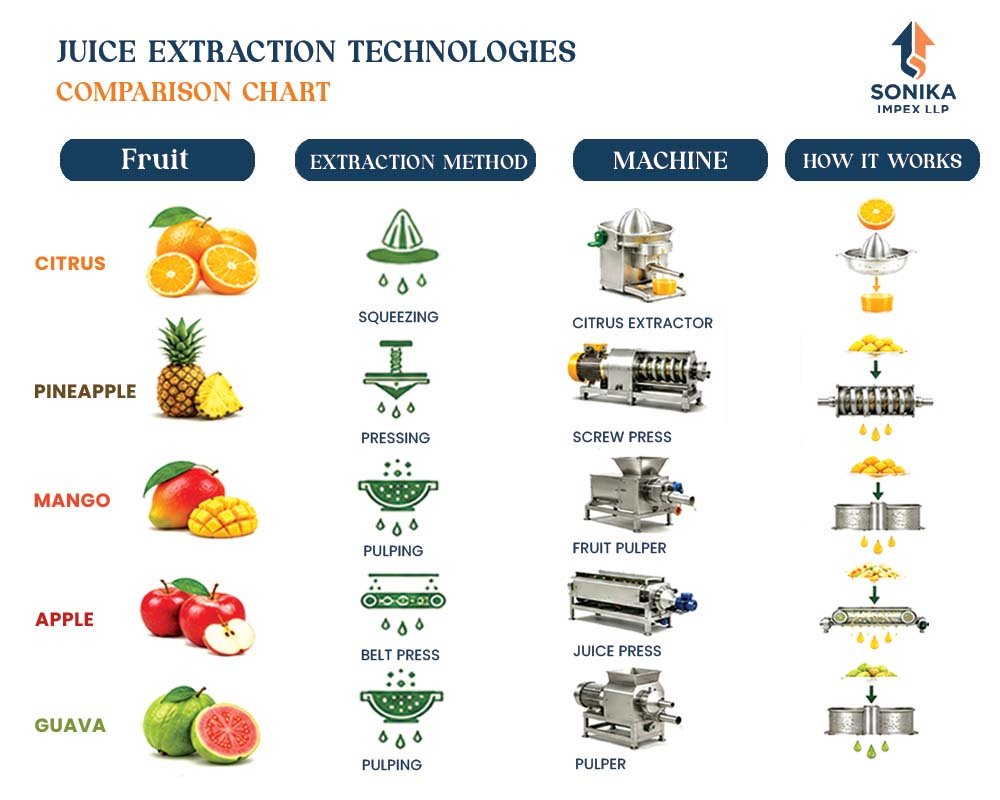
Step 4: Juice Extraction or Pulping
This is the core operation of every fruit juice processing plant.
The extraction method varies depending on fruit characteristics and desired product quality.
Citrus Fruits
Specialized citrus extractors squeeze juice while minimizing peel oil contamination that could create bitterness.
Mangoes and Guavas
Industrial pulpers separate edible pulp from seeds and fibrous material.
Pineapple
Mechanical crushers followed by screw presses extract juice while preserving aroma.
Apples
Hammer mills and belt presses maximize juice recovery while limiting oxidation.
Common Industrial Equipment
- Screw presses
- Belt presses
- Hydraulic presses
- Citrus extractors
- Fruit pulpers
- Fruit crushers
Modern extraction systems are designed to maximize juice yield while preserving flavour, vitamins, and natural colour.
Efficient extraction also minimizes wastage, improving overall plant profitability.
Step 5: Filtration and Clarification
Freshly extracted juice contains suspended solids including fibres, seeds, pulp particles, and other insoluble materials.
Depending on the desired product, manufacturers may produce either clear juice or cloudy juice.
Clear Juice includes Apple juice, Grape juice and Clarified citrus beverages. These products undergo extensive clarification to produce a transparent appearance.
Cloudy Juice intentionally retains natural pulp and are commonly- Orange juice, Mango juice, Pineapple juice, Guava juice. These pulpy juices are often perceived by consumers as more natural and nutritious.
Filtration Equipment
- Vibrating screens
- Filter presses
- Decanter centrifuges
- Ultrafiltration membranes
Filtration not only improves appearance but also enhances product stability and shelf life by removing unwanted suspended materials while maintaining the desired sensory characteristics.
Step 6: Standardization and Blending
No two batches of fruit are exactly alike because of difference in variety, soil conditions, climate, harvest season, and maturity level. These significantly influence the sweetness, acidity, colour, aroma, and nutritional composition of fruits. Without proper standardization, consumers may experience noticeable differences in taste and quality from one batch to another.
Standardization is therefore one of the most critical stages in industrial fruit juice manufacturing. It ensures that every bottle leaving the production line delivers a consistent sensory experience while complying with regulatory standards.
During this stage, manufacturers carefully adjust:
- Total Soluble Solids (°Brix)
- Acidity (pH)
- Fruit pulp percentage
- Colour consistency
- Flavour profile
- Viscosity
- Vitamin fortification (where permitted)
- Natural sweeteners or stabilizers (if required)
For example, a commercial mango juice should maintain consistent sweetness throughout the year, irrespective of seasonal variations in the raw fruit. Similarly, blended beverages such as mango-pineapple or tropical mixed fruit juices require precise formulation to achieve the desired flavour balance.
Large processing facilities use automated blending tanks equipped with flow meters, programmable logic controllers (PLC), and recipe management systems to ensure repeatability and minimize human error.
Machinery Used
- Stainless steel blending tanks
- High-speed agitators
- Automatic dosing systems
- Inline Brix analyzers
- Flow meters
- PLC-controlled formulation systems
Step 7: Pasteurization – Ensuring Safety Without Compromising Quality
Fresh fruit juice naturally contains microorganisms such as yeasts, moulds, and bacteria. If left untreated, these microorganisms can cause spoilage, fermentation, off-flavours, and reduced shelf life.
Pasteurization is the thermal treatment process used to eliminate harmful microorganisms while preserving the juice’s nutritional value, flavour, and natural colour.
The most widely adopted industrial method is High Temperature Short Time (HTST) pasteurization, where juice is rapidly heated to a controlled temperature for a short duration and then immediately cooled.
This process offers several advantages:
- Eliminates pathogenic microorganisms
- Extends product shelf life
- Maintains nutritional quality
- Preserves natural flavour
- Meets food safety regulations
The Codex Alimentarius General Standard for Fruit Juices and Nectars (CODEX STAN 247-2005) provides internationally recognized quality requirements for fruit juices, helping manufacturers ensure product safety and authenticity. Manufacturers targeting export markets often align their production practices with these standards.
Machinery Used
- Plate heat exchangers
- Tubular pasteurizers
- Holding tubes
- Balance tanks
- Automated temperature controllers
Modern pasteurizers also recover heat from processed juice, significantly improving energy efficiency.
Step 8: Homogenization and Deaeration
Although not mandatory for every juice product, homogenization and deaeration are considered best practices in premium beverage manufacturing.
Homogenization
Fruit juices containing pulp often separate during storage because heavier particles settle at the bottom of the container.
Homogenization forces juice through narrow openings under very high pressure, reducing pulp particle size and distributing them evenly throughout the beverage.
Benefits include:
- Uniform texture
- Improved mouthfeel
- Reduced sedimentation
- Better product appearance
- Increased consumer acceptance
Deaeration
During crushing, pumping, and blending, oxygen becomes trapped inside the juice.
Excess oxygen accelerates:
- Oxidation
- Vitamin degradation
- Colour changes
- Flavour deterioration
Vacuum deaerators remove dissolved oxygen before packaging, thereby improving shelf life and maintaining the juice’s fresh taste.
Machinery Used
- High-pressure homogenizers
- Vacuum deaerators
- Vacuum pumps
- Buffer tanks
Step 9: Filling and Packaging
Once the juice has been processed, it is transferred to the filling section under strictly hygienic conditions.
Packaging is much more than a marketing tool—it directly influences product shelf life, transportation costs, consumer convenience, and environmental impact.
The choice of packaging depends on the target market, product positioning, distribution network, and storage conditions.
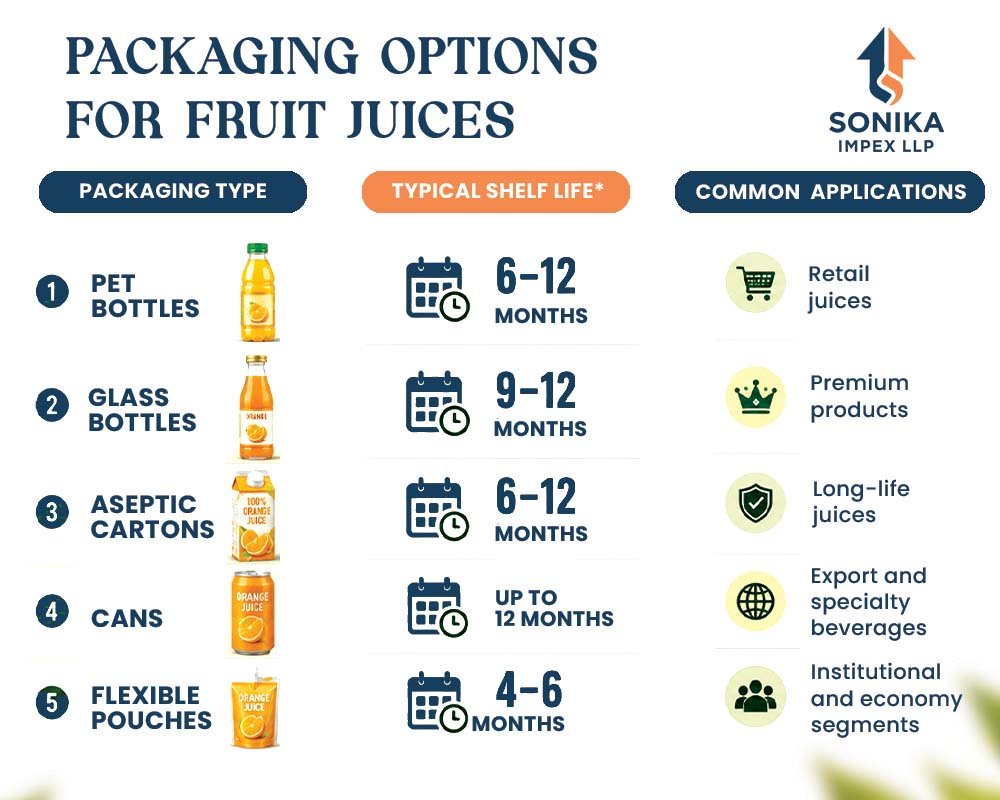
| Packaging Type | Typical Shelf Life* | Common Applications |
|---|---|---|
| PET Bottles | 6–12 months | Retail juices |
| Glass Bottles | 9–12 months | Premium products |
| Aseptic Cartons | 6–12 months | Long-life juices |
| Cans | Up to 12 months | Export and specialty beverages |
| Flexible Pouches | 4–6 months | Institutional and economy segments |
Shelf life varies based on product formulation, packaging technology, and storage conditions.
Modern filling lines use automatic Clean-in-Place (CIP) and Sterilize-in-Place (SIP) systems to maintain hygienic conditions and minimize contamination risks.
Machinery Used
- Automatic bottle rinsers
- Filling machines
- Capping machines
- Labelling systems
- Inkjet printers
- Shrink wrapping machines
- Cartoning systems
- Palletizers
Step 10: Storage and Distribution
The final stage ensures that the product reaches consumers while maintaining its quality and safety.
Finished products are stored under controlled warehouse conditions before dispatch.
Best practices include:
- FIFO (First-In, First-Out) inventory management
- Temperature-controlled storage where necessary
- Proper palletization
- Humidity monitoring
- Warehouse sanitation
- Batch traceability
For export-oriented manufacturers, packaging must also comply with international transportation standards to withstand long-distance shipping.
Efficient logistics become especially important in Africa, where expanding road networks and regional trade agreements are improving access to domestic and neighbouring markets.
Machinery Required for a Fruit Juice Processing Plant
A modern fruit juice processing plant is an integrated production system where each machine performs a specialized function.
| Process Stage | Machinery |
|---|---|
| Fruit Reception | Inspection Conveyor |
| Washing | Bubble Washer / Brush Washer |
| Sorting | Inspection Conveyor |
| Peeling | Automatic Peeler |
| Cutting | Fruit Slicer |
| Destoning | Destoner |
| Crushing | Fruit Crusher |
| Juice Extraction | Screw Press / Citrus Extractor |
| Pulping | Fruit Pulper |
| Filtration | Filter Press / Centrifuge |
| Blending | Mixing Tank |
| Pasteurization | Plate Heat Exchanger |
| Homogenization | High Pressure Homogenizer |
| Deaeration | Vacuum Deaerator |
| Filling | Automatic Filling Machine |
| Packaging | Labelling & Packing Line |
Selecting the right equipment depends on several factors, including fruit type, desired production capacity, level of automation, packaging format, utility availability, and future expansion plans. A turnkey approach ensures that these components are engineered to work together efficiently, minimizing downtime and maximizing return on investment.
Quality Control Throughout the Production Process
Quality assurance should be embedded into every stage of fruit juice manufacturing.
Critical quality parameters include:
- Total Soluble Solids (°Brix)
- pH
- Titratable acidity
- Colour consistency
- Microbiological safety
- Pulp content
- Viscosity
- Packaging integrity
- Shelf-life stability
Laboratory equipment commonly used includes:
- Digital refractometers
- pH meters
- Spectrophotometers
- Microbiological incubators
- Moisture analyzers
Many manufacturers also implement internationally recognized food safety systems such as HACCP (Hazard Analysis and Critical Control Points) and ISO 22000 Food Safety Management Systems to strengthen quality assurance and improve access to export markets.
Quality control checkpoints from raw fruit reception through packaging, showing where Brix, pH, microbiological, and packaging integrity tests are performed.
Sustainability: Turning Waste into Value
Sustainability has become a strategic priority for modern food processing plants. Sustainable practices help manufacturers lower operating costs, improve resource efficiency, and create additional revenue streams, although we understand it also comes at an additional cost, especially for those factories that are just starting out.
Key sustainability initiatives include:
- Water recycling systems for fruit washing
- Heat recovery from pasteurization units
- Solar photovoltaic systems for auxiliary power
- Biomass boilers using agricultural residues
- Wastewater treatment and reuse
- Energy-efficient motors and pumps
Fruit processing also generates by-products that can be converted into commercially valuable products rather than being discarded.
| By-product | Potential Use |
|---|---|
| Orange peel | Essential oils, pectin |
| Mango seed | Oil extraction |
| Pineapple peel | Animal feed, vinegar |
| Apple pomace | Pectin, dietary fibre |
| Mixed fruit waste | Compost, biogas |
The Food and Agriculture Organization (FAO) has highlighted that reducing food loss and promoting value addition are key strategies for improving food system sustainability and increasing rural incomes.
Suggested
Circular economy diagram showing fruit entering the plant, juice production, and by-products converted into pectin, compost, animal feed, bioenergy, and essential oils.
Why Turnkey Fruit Juice Processing Plants Are the Smart Choice
Establishing a fruit juice processing facility involves much more than purchasing machinery. Successful projects require careful coordination across engineering, procurement, utilities, civil works, installation, commissioning, quality assurance, and workforce training.
A turnkey project partner simplifies this process by providing a single point of responsibility from concept to commercial production.
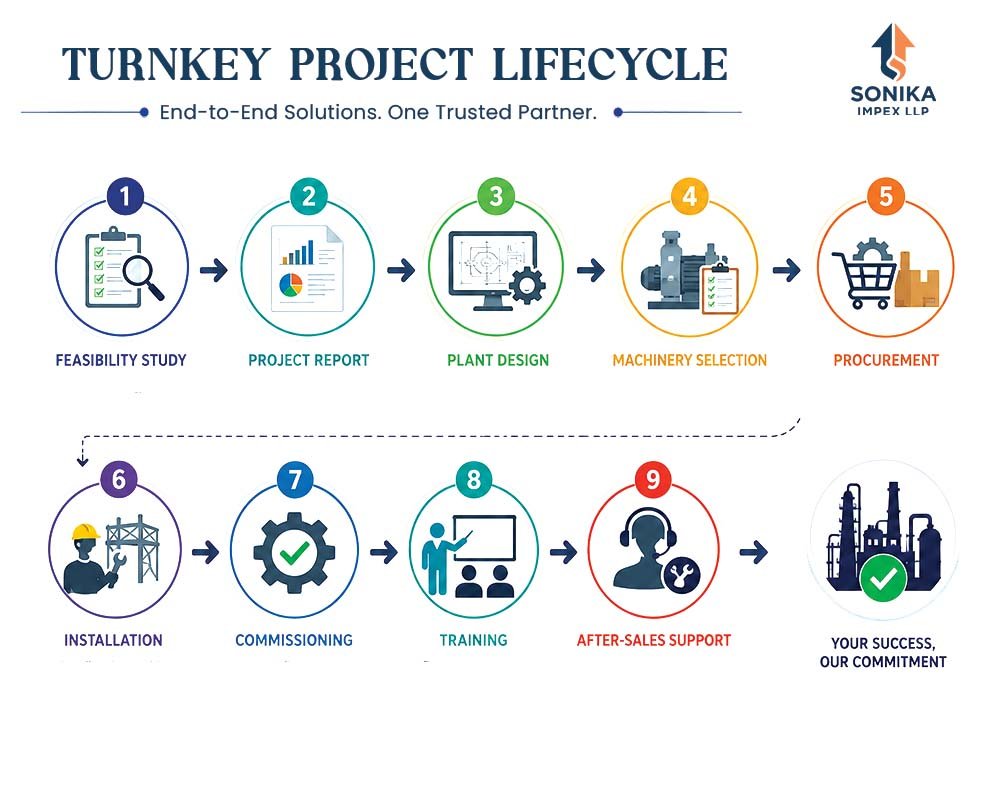
A comprehensive turnkey solution typically includes:
- Feasibility studies and techno-economic analysis
- Plant layout and process engineering
- Machinery selection and procurement
- Utility design (steam, refrigeration, compressed air, water treatment)
- Installation and commissioning
- Automation and control systems
- Operator training
- Preventive maintenance planning
- After-sales technical support
For businesses planning fruit processing investments in Ghana, Uganda, Kenya, Tanzania, or other African markets, partnering with an experienced turnkey consultant helps reduce project risks, optimize plant performance, and accelerate time to market.
Conclusion
The industrial fruit juice production process is a carefully engineered sequence that transforms fresh, perishable fruits into safe, nutritious, and market-ready beverages. Every stage plays a critical role in ensuring product consistency, operational efficiency, and consumer satisfaction.
For Africa, investing in modern fruit juice processing plants represents more than an industrial opportunity. It is a pathway to reducing post-harvest losses, creating local employment, strengthening food security, and increasing the value of abundant agricultural resources. As demand for processed fruit beverages continues to grow across regional and international markets, manufacturers that combine robust processing technology with sound engineering and quality systems will be best positioned for long-term success.
Whether the goal is to establish a greenfield processing facility or expand an existing operation, a turnkey approach (covering feasibility, plant design, machinery integration, commissioning, and technical support) provides a practical foundation for building efficient, scalable, and future-ready fruit juice processing plants. For businesses targeting high-growth markets such as Ghana and Uganda, this integrated approach can help transform locally grown fruit into globally competitive products.
Frequently Asked Questions (FAQ)
What fruits can be processed into commercial fruit juice?
Most commercial plants process fruits such as mango, pineapple, orange, apple, guava, passion fruit, papaya, grape, pomegranate, and mixed tropical fruits.
What is the most important machine in a fruit juice processing plant?
While every stage is essential, the juice extraction system plays a central role in determining yield, product quality, and overall plant efficiency.
What factors determine the shelf life of fruit juice?
Shelf life depends on factors such as fruit quality, pasteurization, packaging technology, storage conditions, and adherence to good manufacturing practices.
Can fruit processing plants manufacture multiple products?
Yes. Modern facilities are often designed to produce juices, nectars, fruit pulps, concentrates, and blended beverages using the same processing line with appropriate changeover procedures.