

Home › Fruit Processing › Citrus juice plant
Orange Juice Processing Plant: Citrus Washing, Extraction, Pasteurising And Bottling
Who An Orange Juice Processing Plant Suits
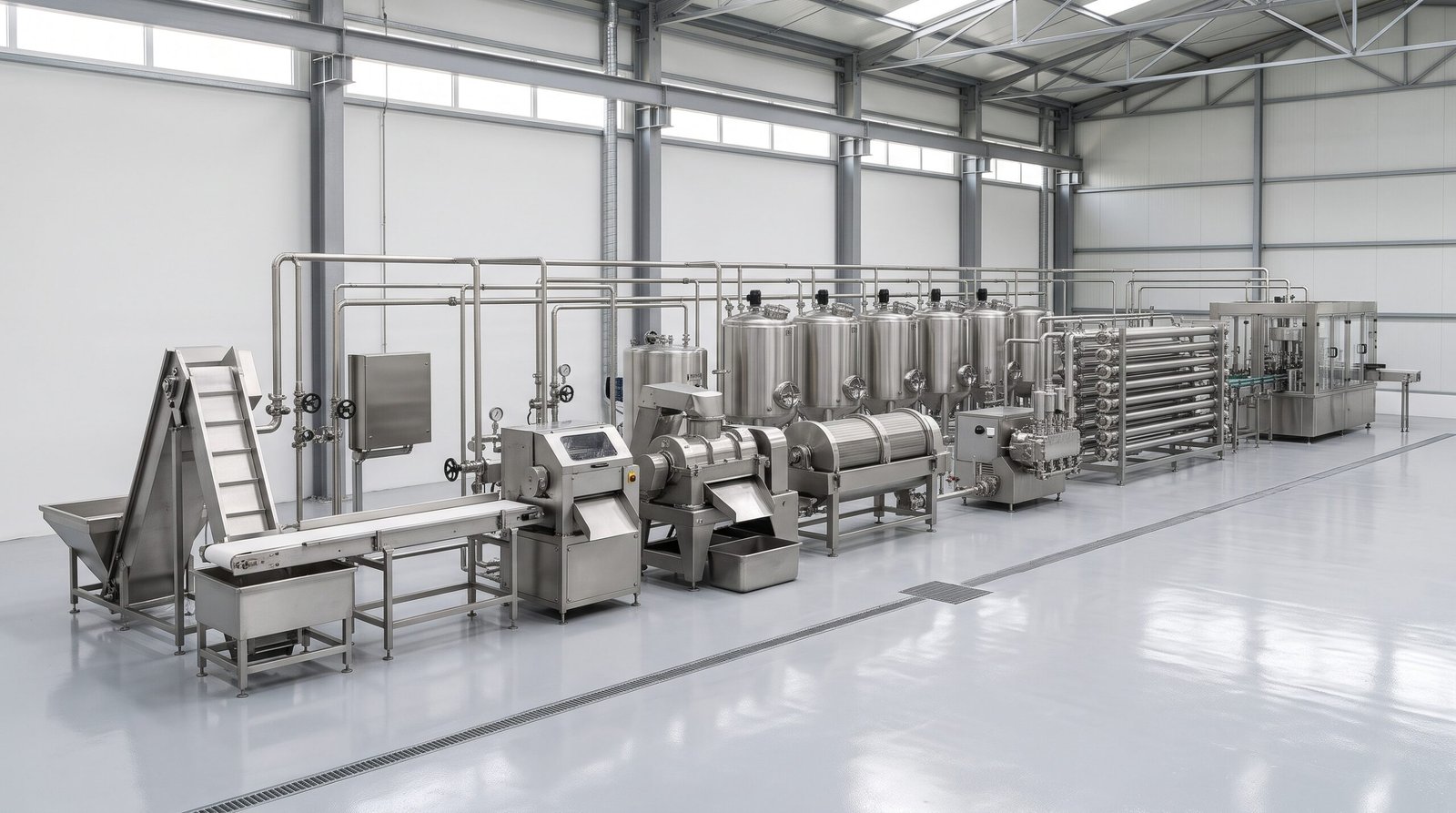
An orange juice processing plant suits a buyer in a citrus-growing area who wants to sell bottled orange, tangerine or mixed citrus juice, or to turn a surplus harvest into concentrate. Citrus is harder to process than most fruit, because peel oil and white pith turn juice bitter, so the line is built to keep them out. It fits a first plant for a citrus farm, cooperative or trader, from lines taking 500 kg of fruit an hour, and an expansion for a juice maker adding its own citrus supply. Larger plants, of up to 8 TPH, run automatic citrus extractors.
Process Flow
Stage 1
Washing In The Orange Juice Processing Plant
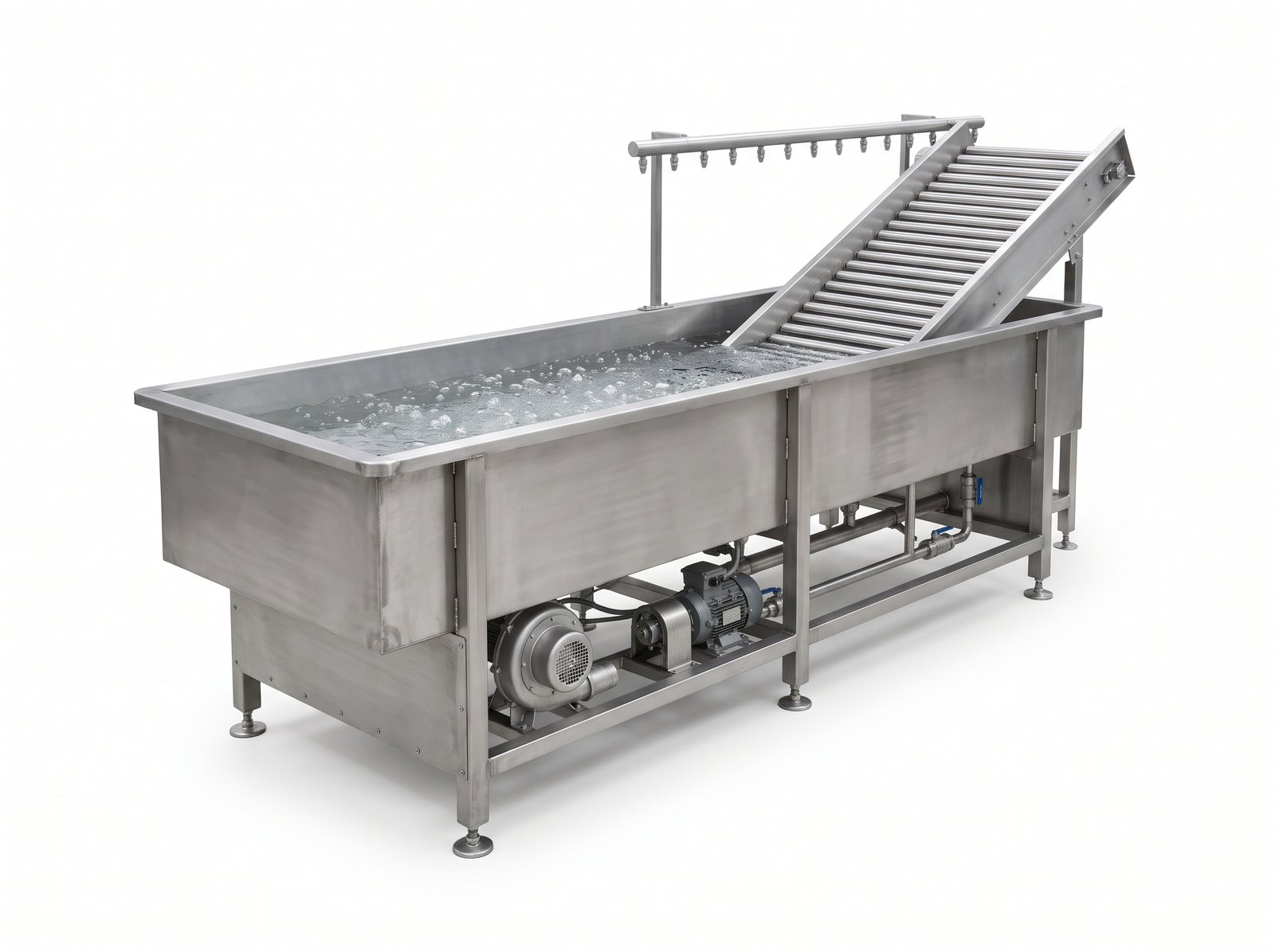
Oranges are dumped into the stainless soaking tank of a fruit washing machine, where a blower agitates the water to roll the fruit and loosen dirt. A perforated belt lifts them out under fresh-water spray. Citrus skins carry wax and field residue, so wash time matters, and the washer is sized to the day’s intake.
Machines At This Stage
- Blower-agitated fruit washer with perforated belt
Stage 2
Inspection In The Orange Juice Processing Plant
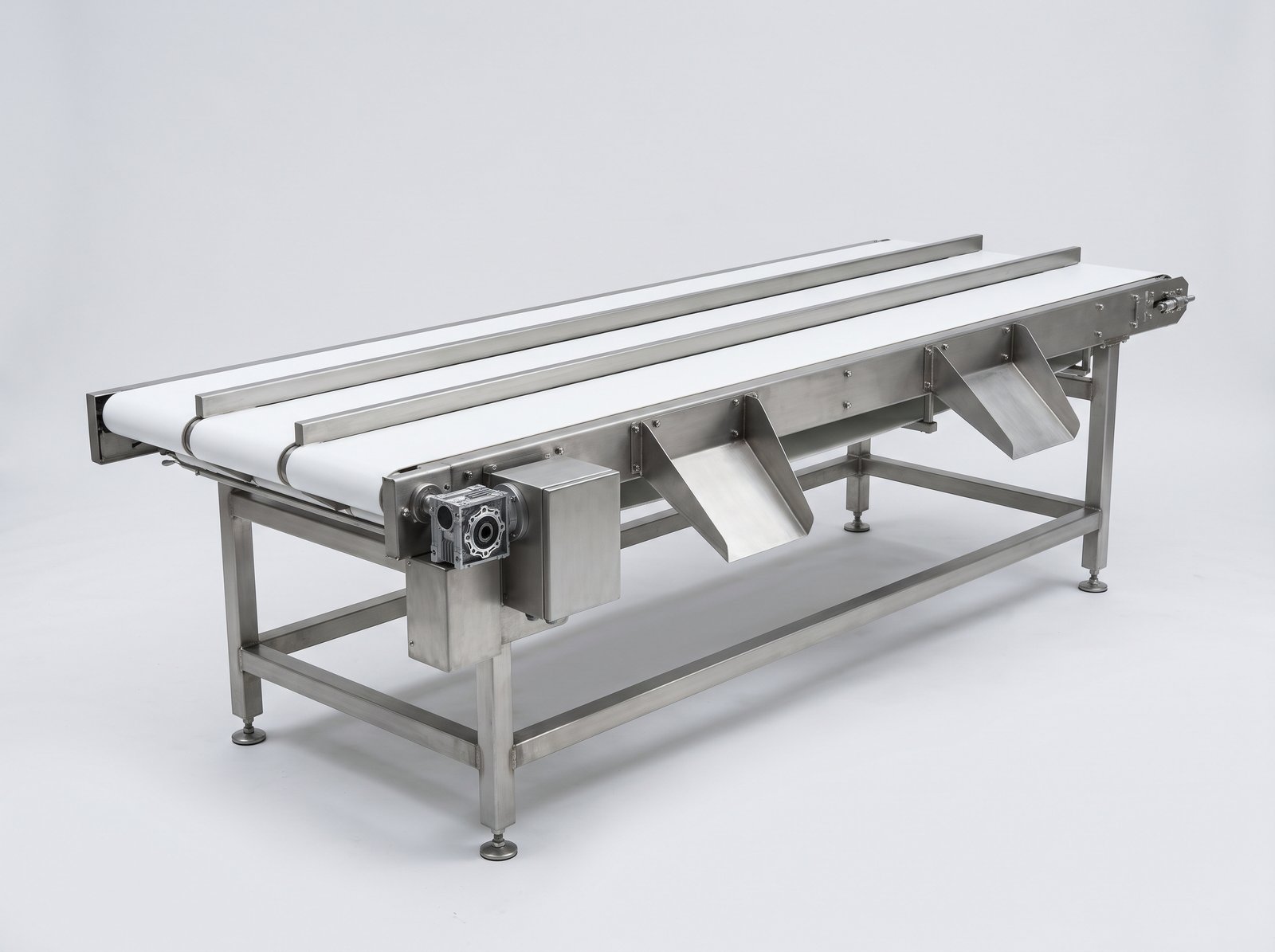
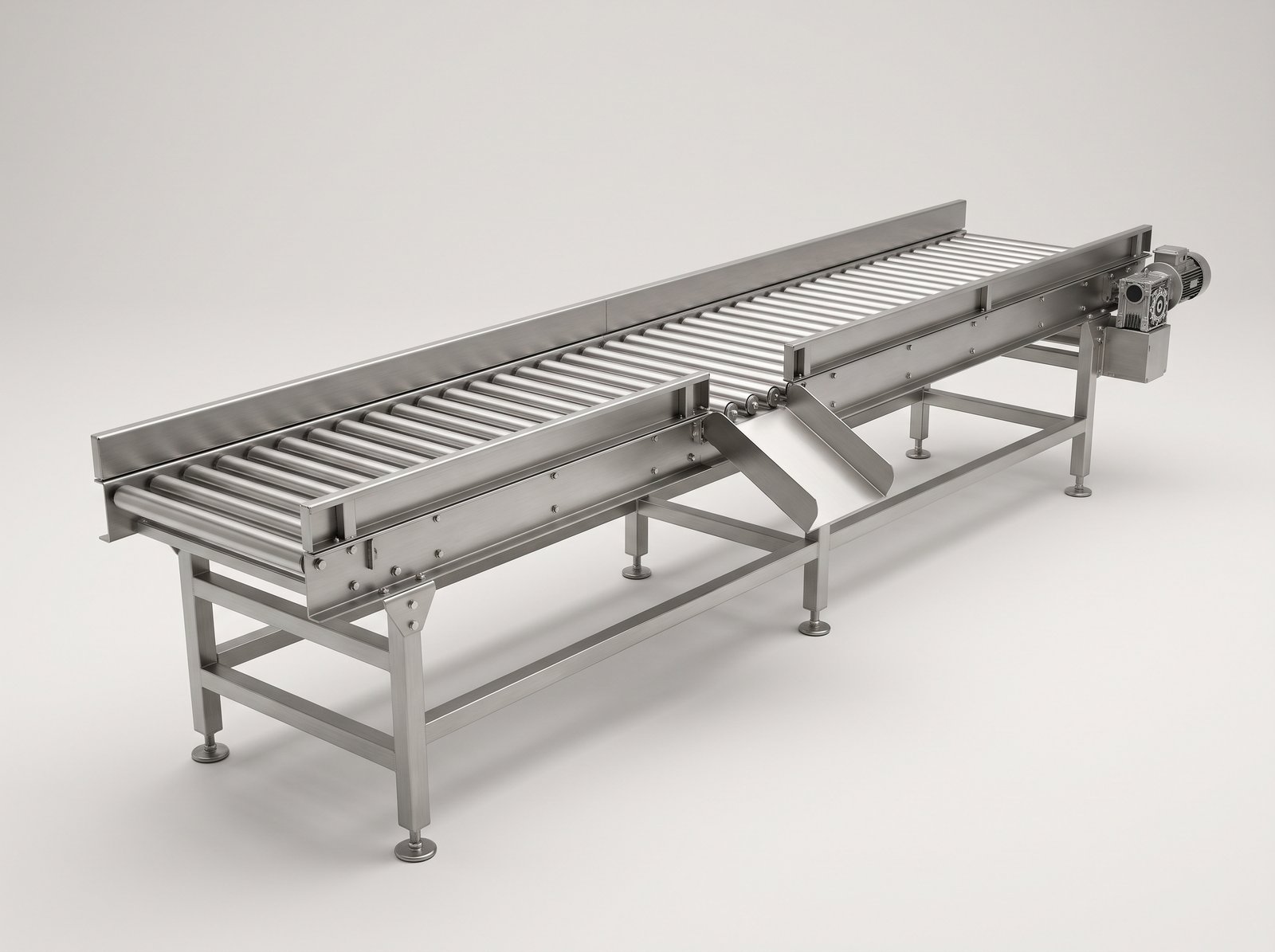
Washed fruit runs along the centre lane of a three-way sorting and grading conveyor, where workers on both sides move rotten, split and green fruit into the side lanes. Unsound fruit shows up in the flavour of the juice. A few rotten oranges can taint a whole tank of juice, so the conveyor is sized to give workers time to see every fruit.
Machines At This Stage
- Three-way inspection conveyor
Stage 3
Peel Treatment In The Orange Juice Processing Plant
On larger lines a rasping machine, the abrasive form of fruit peeling machine, scrapes the outer peel to take off its oil before extraction, so the oil does not reach the juice. On small lines fruit is peeled by hand, or in perforated baskets through a lye dip of about 30 seconds and an acid dip of about 15 minutes in stainless tanks. The choice follows the size of the line and the juice quality the market pays for.
Machines At This Stage
- Rasping machine
- Lye and acid dip tanks with perforated baskets
Stage 4
Juice Extraction In The Orange Juice Processing Plant
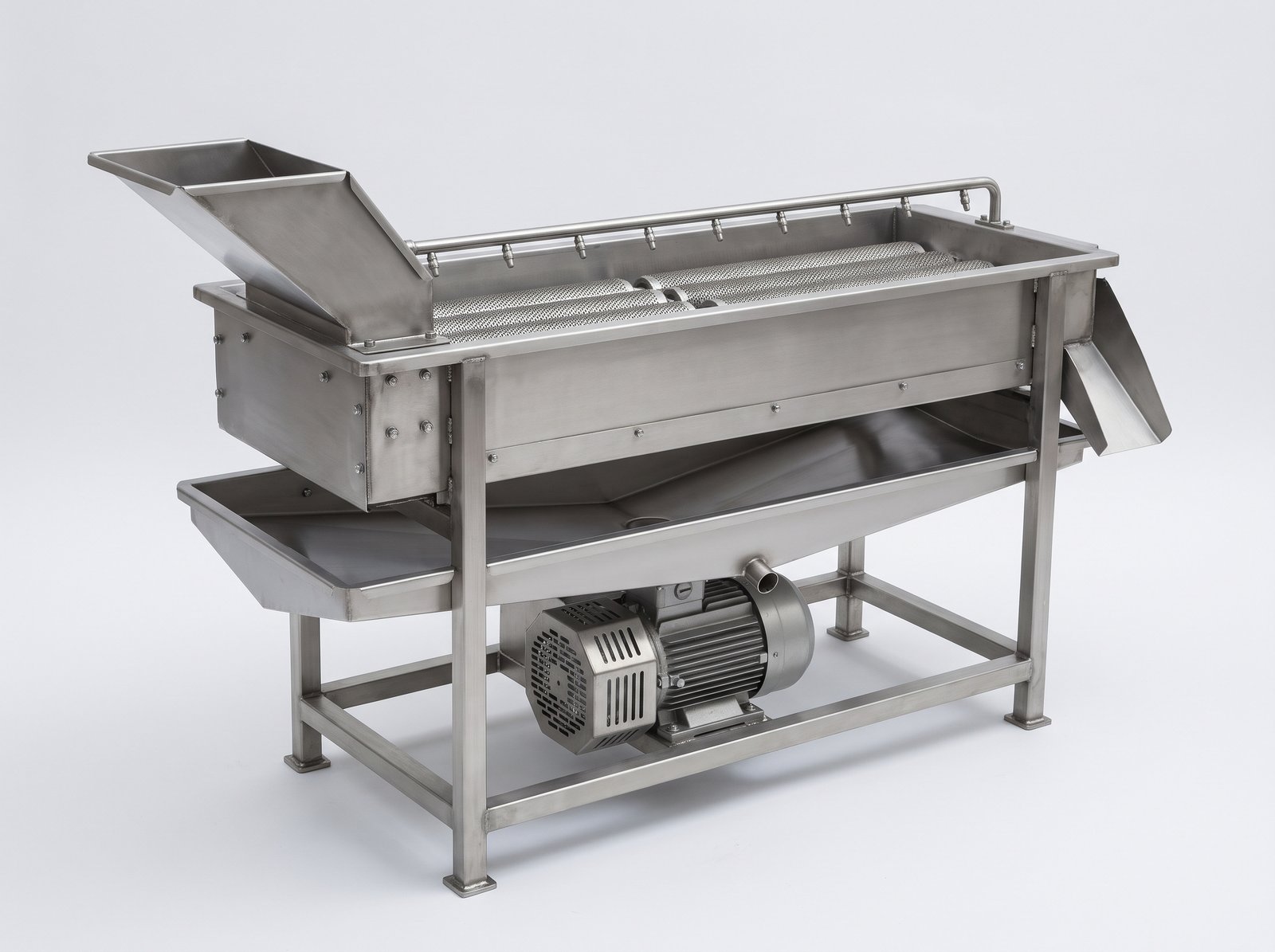
Whole fruit goes into a citrus juice extractor that halves it and presses each half against a perforated screen. Juice goes one way. Peel and seed go another, so bitter peel stays out of the juice. Small lines use a screw-type extractor for peeled fruit, with a screw turning in a perforated stainless drum and an adjustable pressure plate at the discharge. Extractor choice is the most important decision on a citrus line.
Machines At This Stage
- Automatic citrus extractor
- Screw-type extractor

Stage 5
Finishing In The Orange Juice Processing Plant
The juice passes a pulper and finisher, where beater blades or nylon brushes sweep it across a perforated screen, holding back seeds, rag and coarse pulp. A waste screw conveyor carries peel and rag out of the process hall.
Machines At This Stage
- Pulper and finisher
- Waste screw conveyor

Stage 6
Blending In The Orange Juice Processing Plant
Juice is standardised in a steam-jacketed stainless blending tank with a propeller stirrer. Sugar syrup for nectars is prepared at 60 to 65 Brix and 80 °C in a jacketed cooking kettle with scrapers. The syrup is filtered in a plate and frame filter press and held in a syrup tank. Pure juice skips the syrup.
Machines At This Stage
- Steam-jacketed mixing tank
- Sugar syrup kettle
- Filter press and syrup tank

Stage 7
Homogenising And Deaerating In The Orange Juice Processing Plant
A two-stage homogeniser at 150 to 200 bar keeps the fine pulp evenly held in the juice. A deaerator removes trapped air, which protects colour and fresh flavour in the bottle.
Machines At This Stage
- Two-stage homogeniser
- Deaerator

Stage 8
Pasteurising In The Orange Juice Processing Plant
Juice is heated to 90 to 95 °C in the corrugated tube heat exchanger of a tubular pasteuriser, held for 30 to 45 seconds and sent on at 85 to 88 °C for hot filling in heat-set PET, with automatic flow diversion for under-heated juice. It is then held in an insulated stainless steel storage tank ahead of the filler.
Machines At This Stage
- Corrugated tube pasteuriser
- Insulated holding tank

Stage 9
Filling And Capping In The Orange Juice Processing Plant
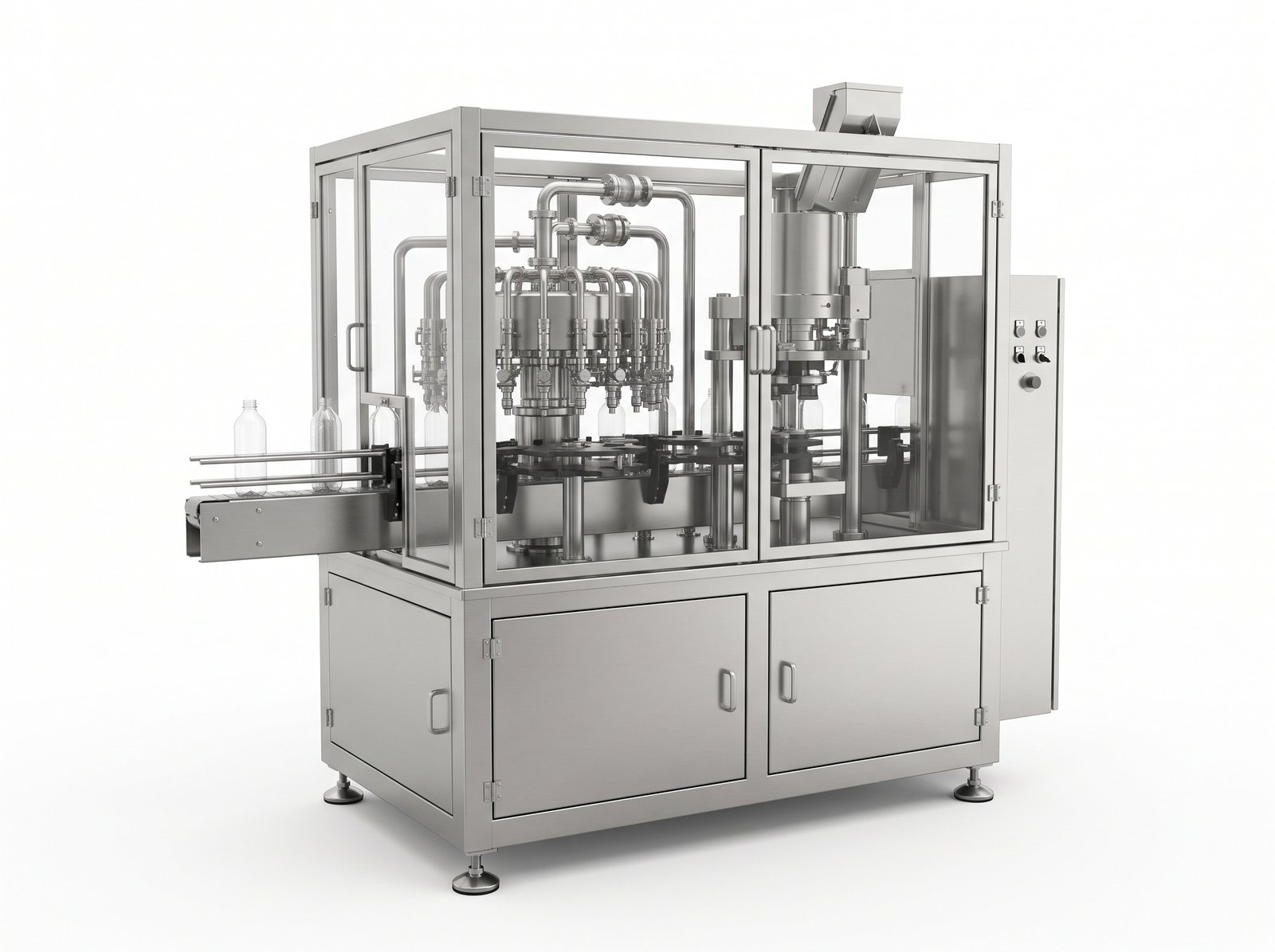
Bottles from a scrambler go to a hot-fill bottle filling and capping machine, where an inline piston filler fills them with hot juice. They are capped from an automatic cap feeder and checked under an inspection light. The filler stops when no bottle is present. PET in 300 and 500 ml is usual.
Machines At This Stage
- Bottle scrambler
- Inline piston filler
- Automatic capper
- Inspection light
Stage 10
Labelling In The Orange Juice Processing Plant
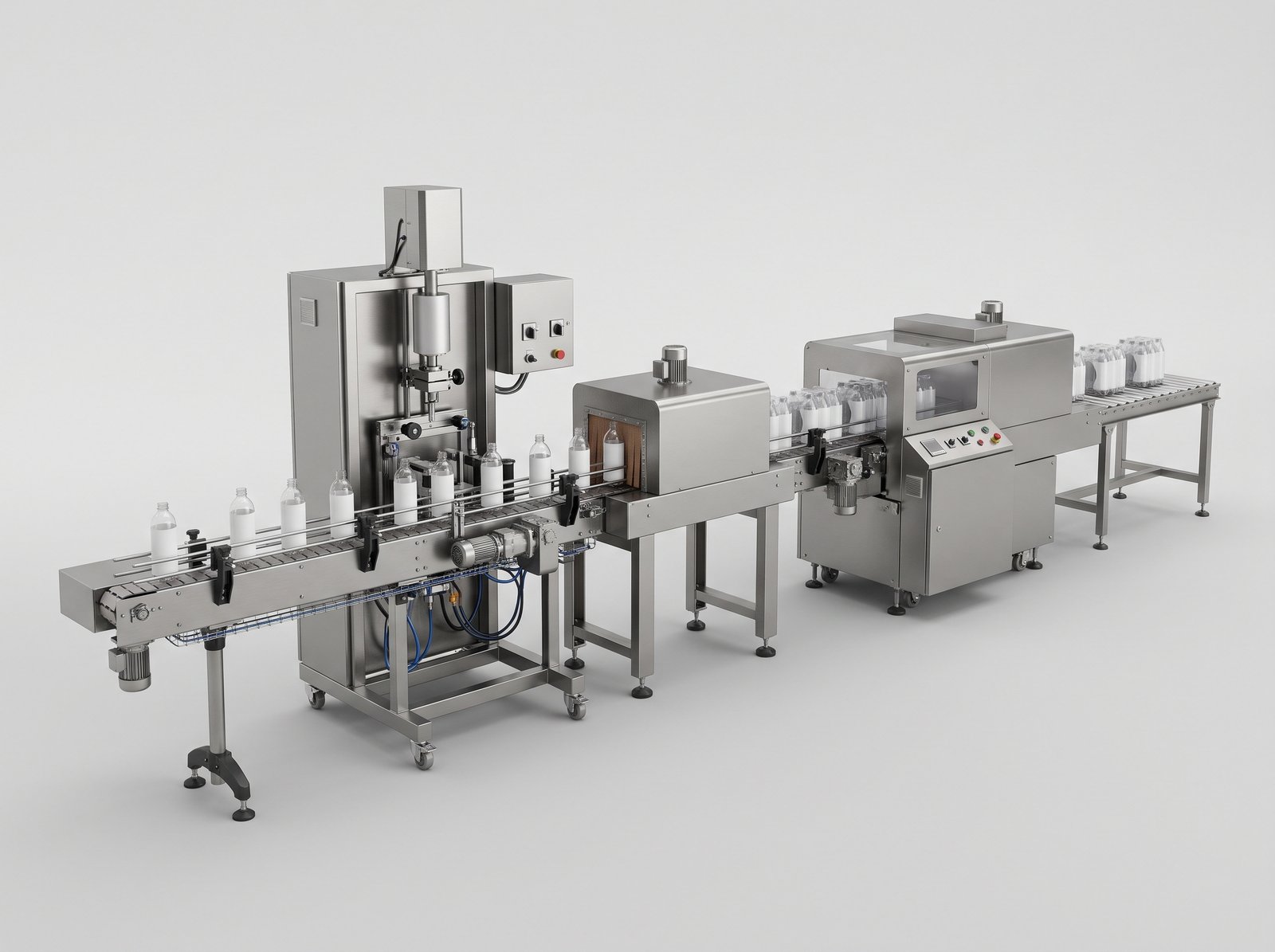
A shrink sleeve is slipped over each bottle and shrunk on in a steam tunnel, the first part of labelling, shrink wrapping and case packing. Bottles are then packed in cartons or shrink-wrapped packs.
Machines At This Stage
- Shrink sleeve tunnel
- Case packer or shrink wrapper
Orange Juice Processing Plant Capacity
Citrus juice plants are offered at 500 kg/hour, 1, 2, 3, 5 and 8 TPH of fruit, from a screw extractor batch line to an automatic citrus extractor line. The extractor, pasteuriser and filler are matched to the plant size, and a concentrate plant adds a falling-film fruit evaporator. Each plant is sized to the buyer’s citrus, the length of its harvest and the juice the market buys.
What Decides The Design Of An Orange Juice Processing Plant
The variety of citrus and the juice the market wants decide the plant.
- Raw material and season: orange, tangerine or mixed citrus, and their weeks of harvest.
- Product mix: pure juice, nectar or concentrate.
- Scale and running hours: tonnes of fruit a day and shifts in season.
- Utilities available: steam fuel, water and power.
- Staff skill: handling lye and acid safely, and running the extractor.
- Packaging the local market expects: PET bottle sizes and labels.
- Site and access: fruit receiving space and peel disposal.
What A Complete Orange Juice Processing Plant Includes
Process Line Of The Orange Juice Processing Plant
Fruit washer, three-way inspection conveyor, rasping machine or lye and acid dip tanks with baskets, citrus extractor or screw extractor, bucket elevator, pulper and finisher, collection tanks and screw pumps, mixing tank, sugar syrup kettle, filter press and syrup tank, homogeniser, deaerator and corrugated tube pasteuriser.
Packaging Machinery For The Orange Juice Processing Plant
Bottle scrambler, inline piston filler, automatic capper, inspection conveyor, shrink sleeve tunnel and case packing. A concentrate plant adds an aseptic steriliser and bag-in-drum filler.
Utilities For The Orange Juice Processing Plant
Steam boiler, air compressor, cooling water for the pasteuriser, process water treatment and section-wise control panels.
Storage And Handling In The Orange Juice Processing Plant
Fruit receiving and holding area, crates, a waste screw conveyor and elevator for peel, juice holding tanks and a finished goods store.
Laboratory For The Orange Juice Processing Plant
The checks the plant needs, and the laboratory items we can supply with the project: Brix refractometer, acidity titration, pH meter, peel oil check and microbiology for shelf life.
Working Capital Materials For The Orange Juice Processing Plant
PET bottles, caps, shrink sleeves, cartons, sugar, citric acid, caustic and acid for peeling, and cleaning chemicals.
Buying An Orange Juice Processing Plant In Stages
A first citrus plant can be small: washer, inspection conveyor, dip tanks, a screw extractor, pulper, mixing tank, pasteuriser and an inline filler. A rasping machine and a full citrus extractor are the main upgrades, and they change the juice quality most. A concentrate section, with an evaporator, steriliser and aseptic filler, is a separate phase for a plant whose harvest outgrows its bottling.
The steam main, drainage and building height should be planned from the start for larger extraction and any future evaporator. Peel disposal must be planned too, since citrus throws off a large share of its weight as peel. A first plant does not need an evaporator, and does not need a rasping machine until it sells against premium juice.
Orange Juice Processing Plant Inputs And Utilities
Oranges arrive at 9 to 11 Brix, which sets how much sugar a nectar needs and how much water a concentrate must lose. Steam at 3 to 4 bar heats the dip tanks, kettles and pasteuriser. Cooling water serves the pasteuriser. Compressed air at 6 to 7 bar works the filler and capper.
Process water washes the fruit and cleans the plant and must be treated. Caustic and acid are consumed by the dip tanks. Labour is needed mostly at inspection, peeling and packing.
Peel leaves the plant in bulk every day, so a covered collection point and regular removal keep flies and sour smells away from the juice hall.
Orange Juice Processing Plant Inspection And Documentation
The washer, dip tanks, extractor, pasteuriser and filler can be inspected by SGS or Bureau Veritas before shipment, as the buyer or bank requires. A boiler in the package can be supplied IBR certified, as compliance documentation. Each machine has its manual and an initial parts kit. Training at site includes safe handling of the lye and acid dip tanks, setting the extractor for the fruit size, and the pasteuriser’s hold.
How An Orange Juice Processing Plant Project Runs
Planning starts from your citrus, its harvest months and the juice you will sell, and sets the first line so a full extractor or a concentrate section can be added later. Installation and commissioning are planned around your harvest season. After-sales support continues once the line is running. Read more on How we work.
Pages Related To The Orange Juice Processing Plant
- Fruit processing
- Fruit juice processing plant
- Pineapple juice plant
- Fruit pulp and concentrate plant
- Fruit washing machine
- Sorting and grading conveyor
- Fruit peeling machine
- Juice extractor
- Fruit pulper and finisher
- Blending and sugar dissolving tanks
- Deaerator
- Homogeniser
- Plate and tubular pasteuriser
- Hot-fill bottle filling and capping machine
- Labelling, shrink wrapping and case packing
- Fruit evaporator
Every machine for this line is in our fruit processing machinery range.
Machines In This Line


Frequently Asked Questions
Why Is An Orange Juice Processing Plant Harder To Run Than Other Juice Plants?
Citrus peel holds oil and the pith holds bitter compounds. If the fruit is pressed whole, both reach the juice, so the line removes peel oil and keeps peel out of extraction.
Rasping Or Lye Peeling For An Orange Juice Processing Plant?
Rasping takes the peel oil off mechanically and suits larger lines. Lye and acid dipping suits small lines that peel fruit before extraction. Many small plants start with dipping and add a rasping machine when they move to a full citrus extractor.
Can An Orange Juice Processing Plant Run Other Fruit?
Yes. The washer, pulper, blending, pasteuriser and filler serve other fruit, and a fruit mill and crusher and a press are often added for pineapple and tropical fruit.
Can An Orange Juice Processing Plant Make Orange Concentrate?
Yes, with an evaporator, aseptic steriliser and bag-in-drum filler added after the finisher. Concentrate lets the harvest be sold through the rest of the year.
Next Step For Your Orange Juice Processing Plant
Send us your citrus supply, the juice you want to sell and the details of your site, and we will prepare a customer-specific proposal. Write to archit@sonikaimpex.com or sunil@sonikaimpex.com, or call +91 99027 67900.