

Home › Fruit Processing Machinery › Mango destoner
Mango Destoner: Beater And Brush Machine For Mango Pulp
What A Mango Destoner Does
A mango destoner separates mango pulp from the stone and the skin in one machine, so whole washed fruit goes in and pulp ready for refining comes out. Mango flesh clings to a large, fibrous stone, so on any line of commercial size mango is destoned whole. The destoner is the first extraction machine on a mango pulp, concentrate or juice line in fruit processing.
A destoner that handles the stone badly costs money twice. If it leaves flesh on the stone, the plant loses pulp it has paid for. If it is set too hard, it breaks stone fragments and skin into the pulp, which then has to be screened out by the finisher, darkens the product and shows as black specks the buyer rejects.
The stone and skin must also leave the machine cleanly. If they do not, the destoner chokes and the line stops in the middle of the mango season.
Mango Destoner Capacity
Mango destoners are offered at 500 kg/hour, 1, 2, 3, 5 and 10 TPH, from a single-stage destoner to a destoner and refiner pair. They serve the fruit pulp and concentrate plant at 500 kg/hour to 10 TPH of fruit. Mango has a short season, so the destoner is chosen to take the full line rate at the peak of the season.
Where A Mango Destoner Sits In The Line
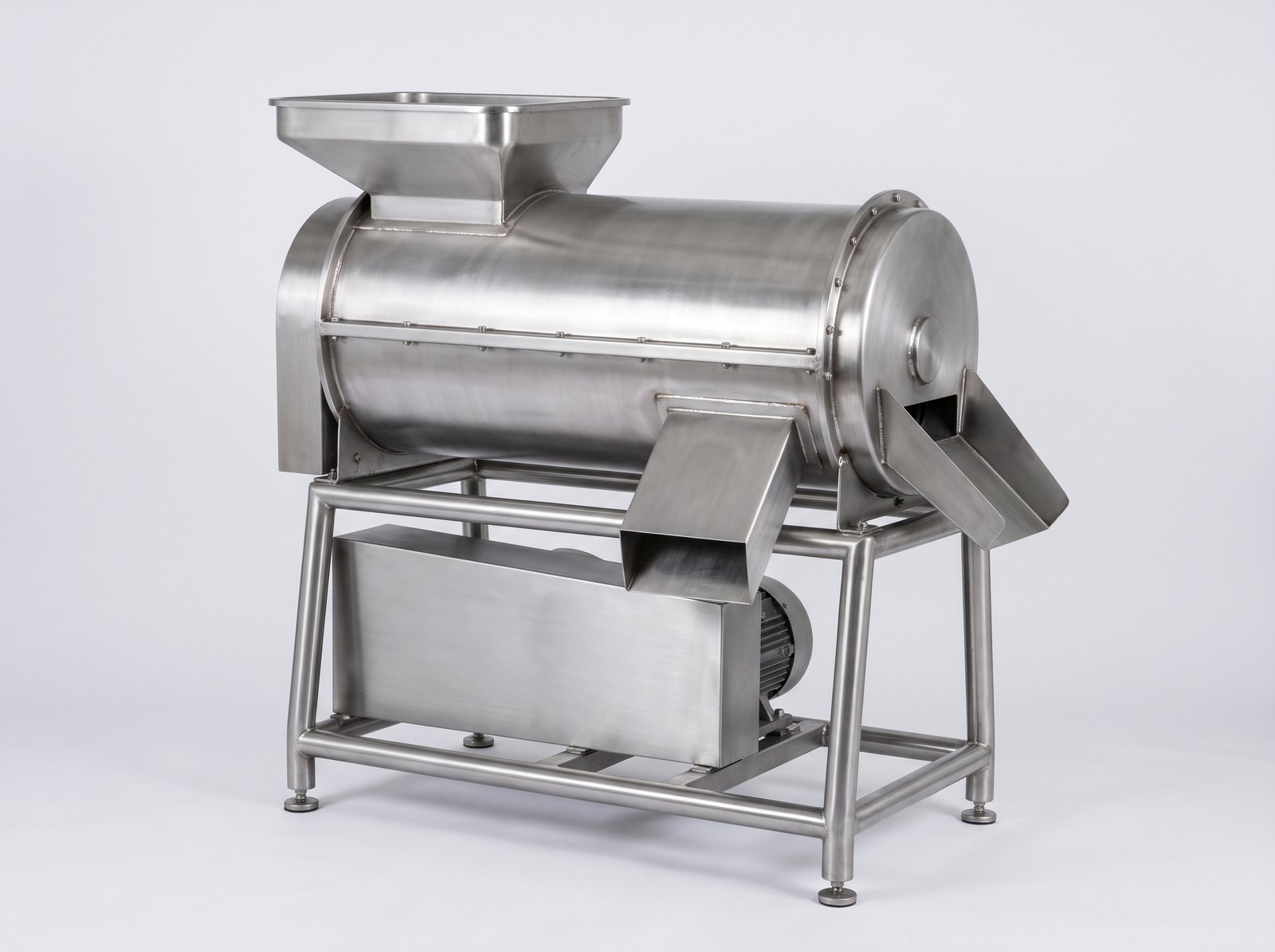
The destoner sits after the sorting and grading conveyor and the elevator, part of the bucket elevator and belt conveyors. It is fed from a distribution conveyor that can also send fruit to a fruit mill and crusher when the plant switches to pineapple or tomato. Ripe whole mangoes, cleaned in the fruit washing machine and sorted, arrive in its feed basin.
Coarse pulp leaves through the product chute to a positive displacement pump and on to the fruit pulper and finisher for refining. Stones and skins leave through a separate waste chute onto the waste conveyor.
Mango destoner
This Machine


How It Works
1
Two Working Groups Inside The Mango Destoner
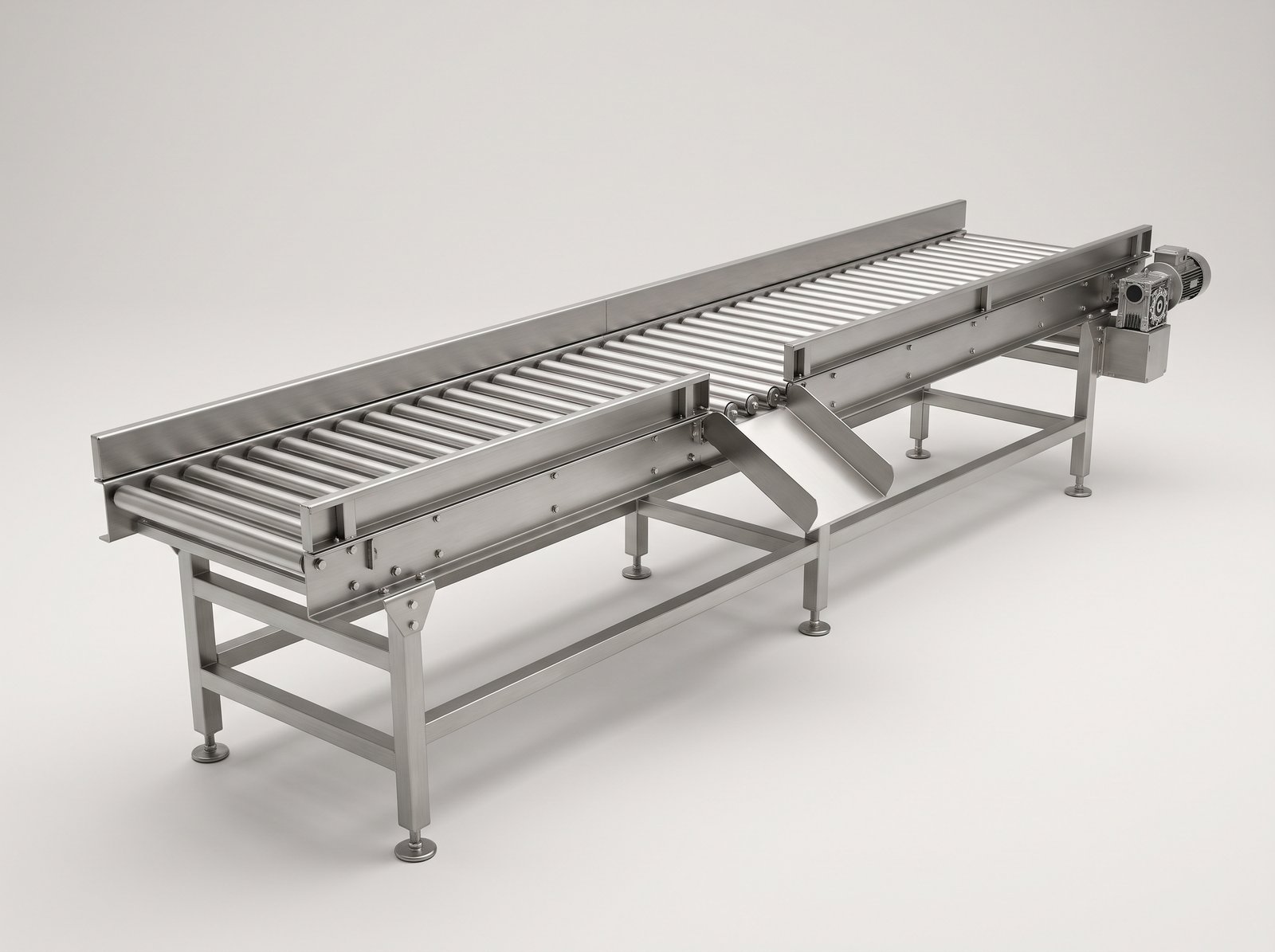
The destoner works in two groups inside a perforated screen. Each group carries both beater blades and nylon brushes on a rotating stainless steel shaft. The operator controls the feed rate from the distribution conveyor and the setting of the beaters and brushes.
2
Destoning Group Of The Mango Destoner
In the destoning group the beaters throw the whole fruit against the screen, splitting the skin and tearing the flesh from the stone. The brushes then push the flesh through the screen holes. Stone and skin stay inside.
3
Refining Group Of The Mango Destoner
In the refining group the beaters and brushes sweep the remaining flesh off stone and skin, so less pulp leaves with the waste.
4
Screen And Discharge In The Mango Destoner
The screen has large openings, because its job is only to keep back the stone and the skin. The fine screening is done later in the finisher. Pulp falls into a collection basin under the screen and runs to the product chute. The stones and skins travel along the screen to the end and drop into the waste chute.
5
Mango Destoner Construction And Drive
All parts that touch the product are stainless steel. The shaft is driven by an electric motor through a belt drive, and the machine is mounted on a stainless steel frame with feed and collection basins. The beater and brush sets wear with use and are replaced as spares.
Types And Options
Single Mango Destoner
One machine with destoning and refining groups, feeding the pulper. It suits mango pulp lines from small seasonal plants upwards.
Mango Destoner With Decanter
On concentrate lines, a decanter after the pulper removes black specks from the pulp before evaporation in the fruit evaporator. It is chosen where the pulp buyer grades on specks.
Paired Mango Destoners
Two destoners side by side on a distribution conveyor keep the line running while one is cleaned or has its beaters changed.
Mango Destoner Options
- Spare beater blade and brush sets.
- Positive displacement pump for the pulp outlet.
- Stainless steel or painted control panel.
What Decides The Mango Destoner Choice
- The mango: variety, size of stone and how fibrous the flesh is change the beater setting and the wear on the brushes.
- Ripeness at intake: fruit that arrives over-ripe needs gentler handling. Hard fruit needs ripening before it is destoned.
- The product: pulp for aseptic drums filled by the aseptic bag-in-drum filler, concentrate or ready-to-serve juice each set how clean the pulp must leave the destoner.
- Scale and season: mango has a short season, so the destoner is sized to the peak day.
- What follows: the pulper and finisher, the pump and the waste conveyor must keep up with the destoner.
- Utilities: power for the drive, and water and drainage for cleaning between runs.
What A Mango Destoner Is Supplied With
- Stainless steel feed and product collection basin with discharge chute.
- Waste discharge chute.
- Beater blade and nylon brush sets for the destoning and refining groups.
- Perforated stainless steel screen.
- Motor, belt drive and guard.
- Starter or control panel.
- Manuals and an initial parts kit, including a set of beaters and brushes.
- Installation, commissioning and operator training at the buyer’s site.
Mango Destoner On Its Own Or In A Line
A destoner is supplied on its own to add mango to a plant that already runs pineapple or tomato, or to replace a worn machine. In a complete plant it is the first extraction machine of the fruit pulp and concentrate plant. It plays the same part in the fruit juice processing plant when mango is the fruit.
It also works in the jam and fruit preserves plant.
Mango Destoner Inspection And Documentation
The destoner can be inspected by SGS or Bureau Veritas before shipment, as the buyer or bank requires.
Frequently Asked Questions
Do Mangoes Need Peeling Before The Mango Destoner?
No. Whole washed mangoes go into the destoner, which separates the skin and the stone together.
Can A Mango Destoner Be Used For Other Fruit?
Its screen and beaters are set for mango. On a multi-fruit line, a distribution conveyor sends pineapple, orange or tomato to a crusher or a juice extractor.
What Wears Out On A Mango Destoner?
The beater blades and nylon brushes wear with use and are replaced as spares. The screen and shaft are long-life parts.
Why Are There Black Specks In Pulp From A Mango Destoner?
Specks usually come from skin and stone fragments or from over-ripe fruit. Better sorting, a correct beater setting and a decanter after the pulper remove them.
Related Machines

Next Step For Your Mango Destoner
Tell us the mango variety you buy, the tonnes you expect at the peak of the season and the product you sell, and we will send a customer-specific proposal. How a project runs is set out in How we work. Write to archit@sonikaimpex.com or sunil@sonikaimpex.com, or call +91 99027 67900.