

Home › Fruit Processing › Fruit juice processing plant
Fruit Juice Processing Plant: Extraction, Blending, Pasteurising And Hot Filling
Who A Fruit Juice Processing Plant Suits
A fruit juice processing plant suits a buyer who has a reliable supply of fruit, or of pulp and concentrate, and a market for packed ready-to-serve juice in bottles. It fits a first plant for a fruit trader or farm group moving into processing. It also fits an expansion for a pulp maker who wants to sell a finished drink. Plants run from 250 to 3,000 litres of juice an hour, from a small semi-automatic batch plant to a fully automatic line.
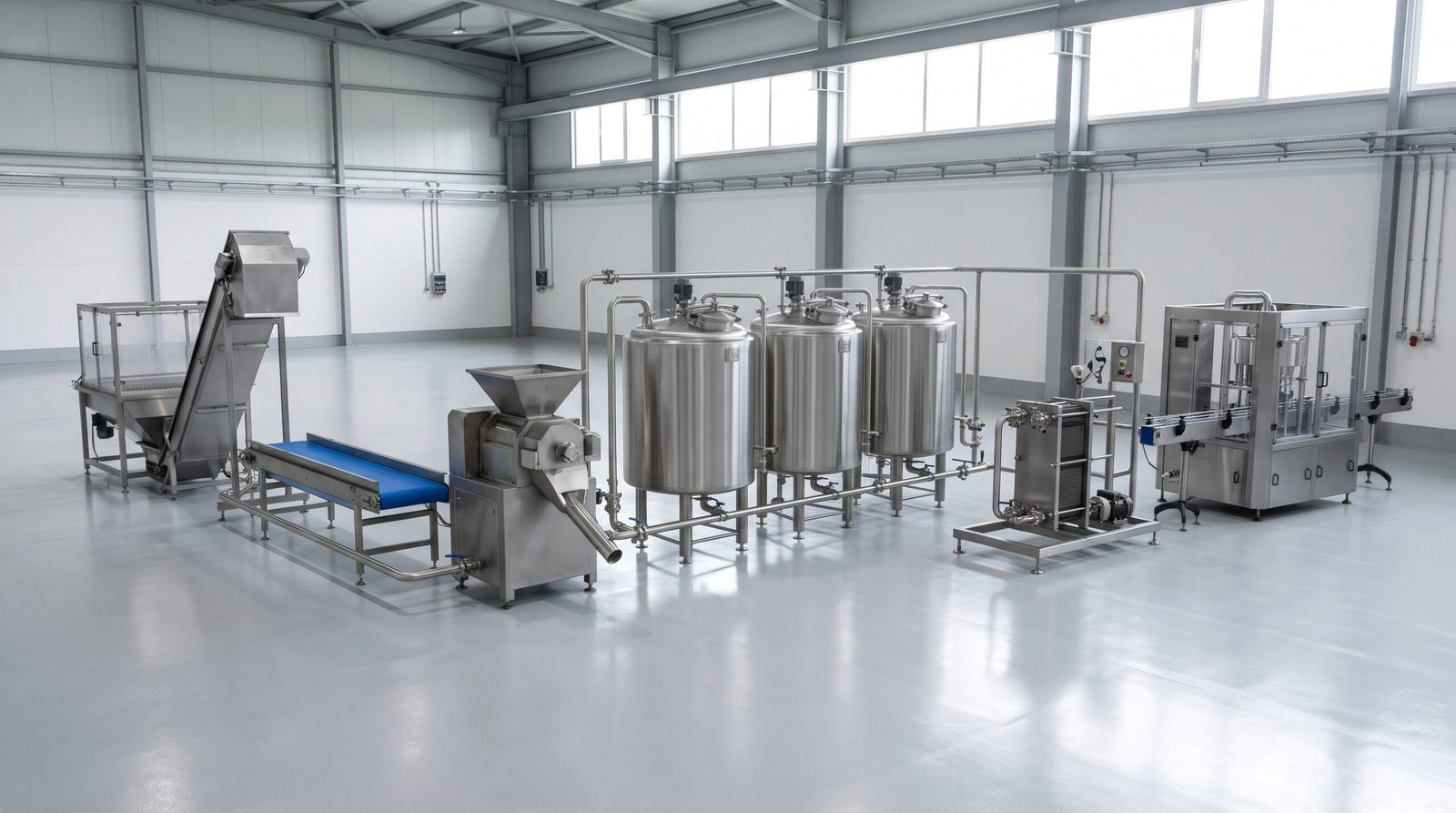
Process Flow
Stage 1
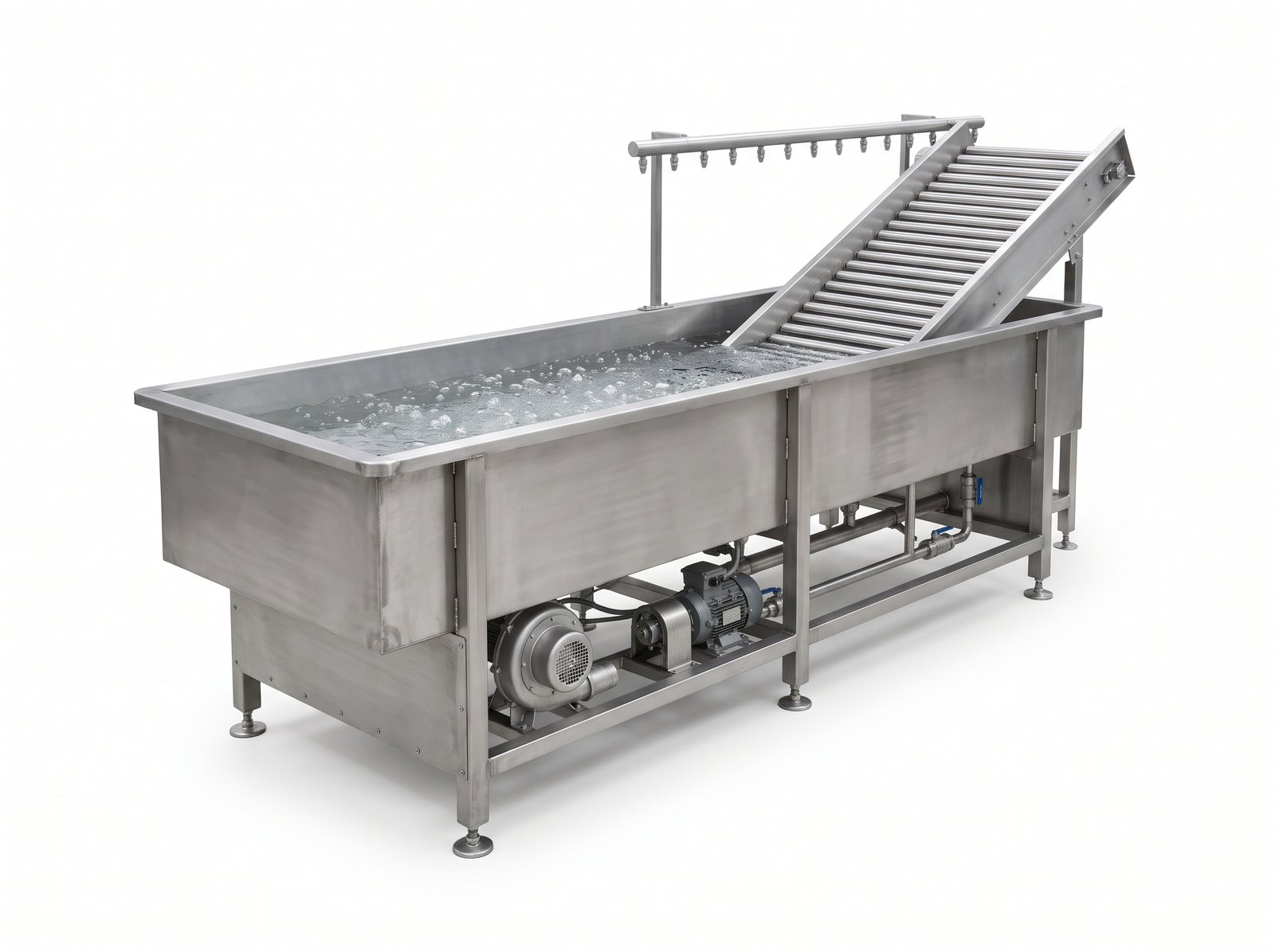
Receiving And Washing In The Fruit Juice Processing Plant
Fruit is tipped into the soaking tank of the washer, where air blown through the water turns the fruit over and loosens soil, leaf and dust. A modular belt or slat elevator then lifts it through a bank of spray nozzles for a final rinse in clean water. The buyer chooses the tank size and elevator length from the hourly intake.
Machines At This Stage
Stage 2
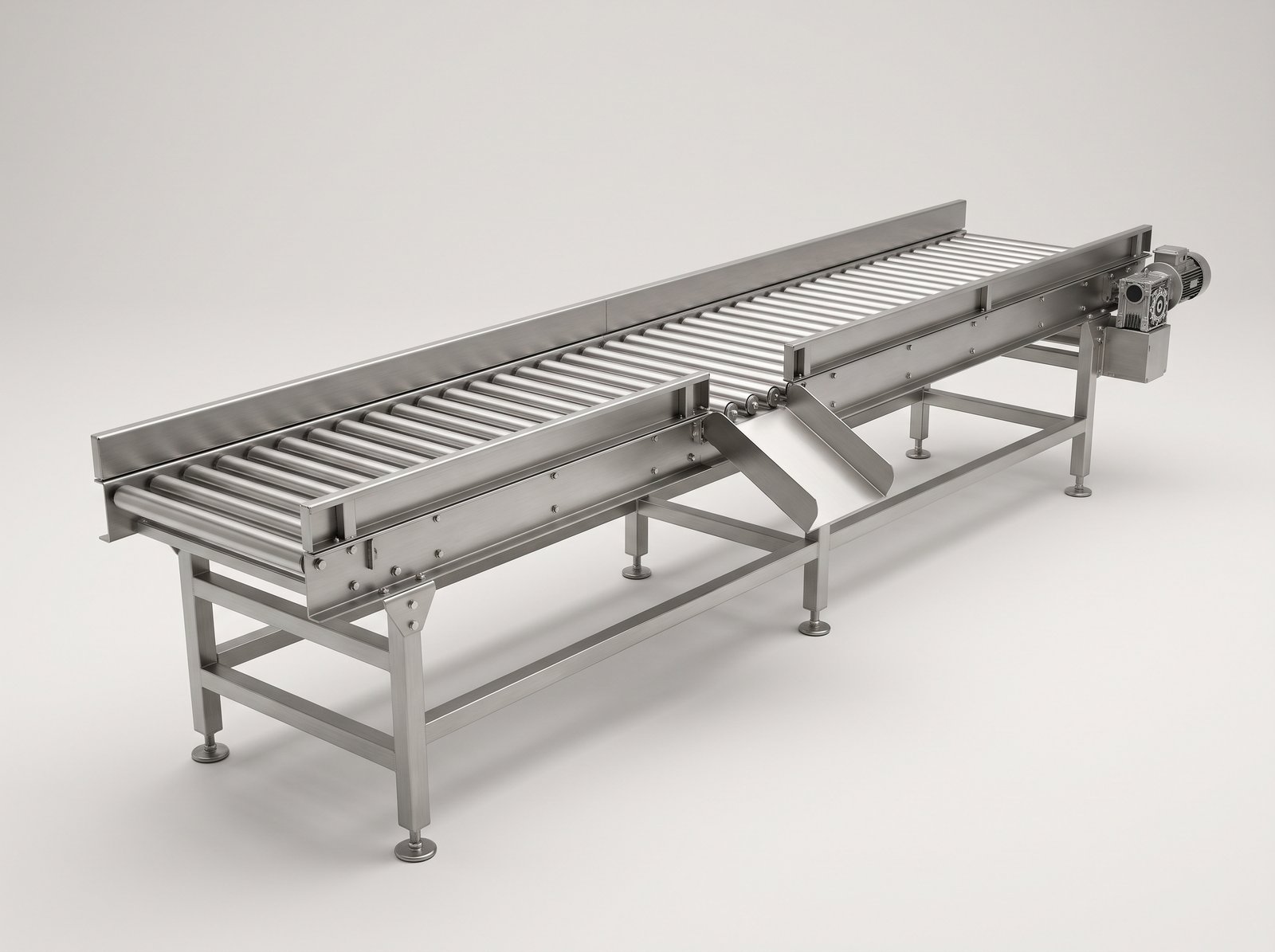
Inspection And Sorting In The Fruit Juice Processing Plant
Washed fruit travels on a stainless roller conveyor past workers on both sides, who pick out rotten, bruised and unripe fruit and trim damaged parts. The length of the conveyor sets how many people can stand at it. That number follows the intake rate and how clean the fruit arrives from the field.
Machines At This Stage
Stage 3
Extraction In The Fruit Juice Processing Plant
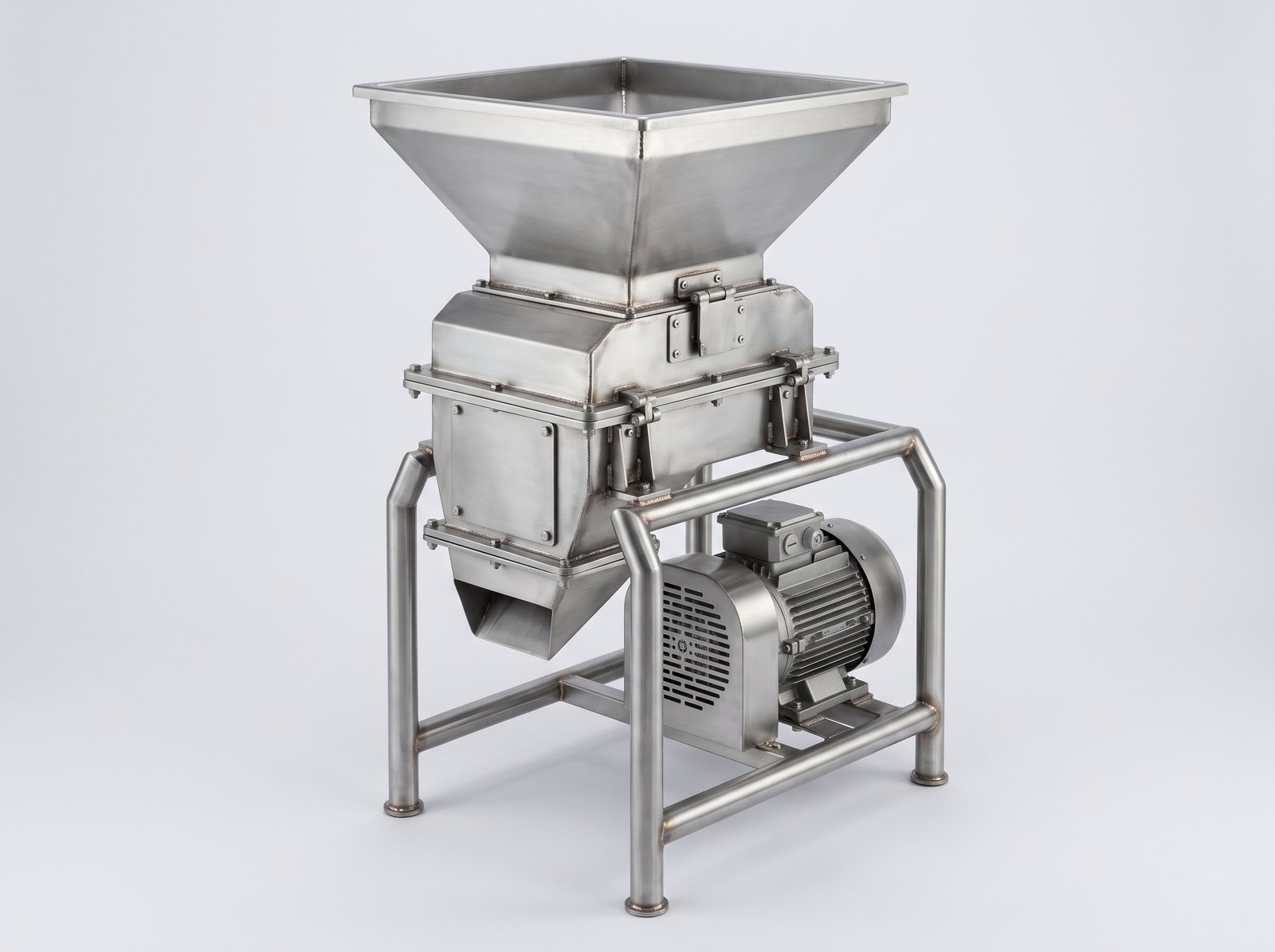
Citrus fruit goes whole into a citrus extractor that cuts each fruit in half and presses the halves against a perforated screen, sending the peel out separately. Pineapple and tropical fruit are crushed in a fruit mill. The crushed fruit then passes through a twin pulper and finisher, whose rotating beaters force the juice and soft pulp through a perforated stainless screen. The buyer chooses the extractor for each fruit.
Machines At This Stage

Stage 4
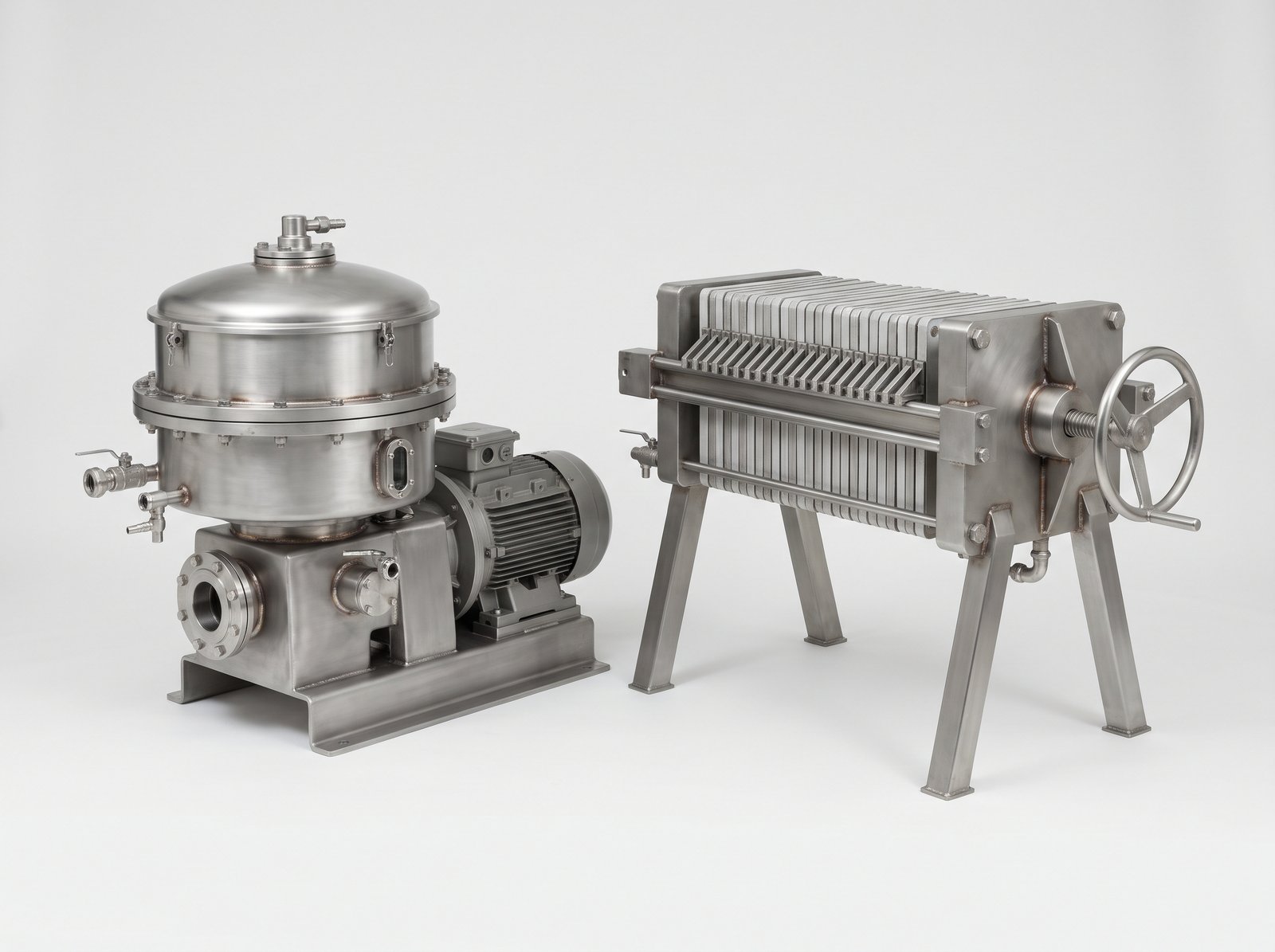
Clarifying In The Fruit Juice Processing Plant
Where the market wants a clear juice, a centrifugal clarifier spins out fine pulp and cell debris, and a plate filter press polishes the juice further. A cloudy juice or nectar skips this step and keeps its body.
Machines At This Stage
Stage 5
Syrup Preparation In The Fruit Juice Processing Plant
Sugar is tipped from a hopper on a platform and pumped into an insulated, steam-heated dissolving tank with jet mixing. There it is brought to a syrup of 60 to 65 Brix at 80 °C. The syrup is filtered and held in a storage tank with a slow agitator. The buyer sets the batch size from the day’s production plan.
Machines At This Stage

Stage 6
Blending In The Fruit Juice Processing Plant
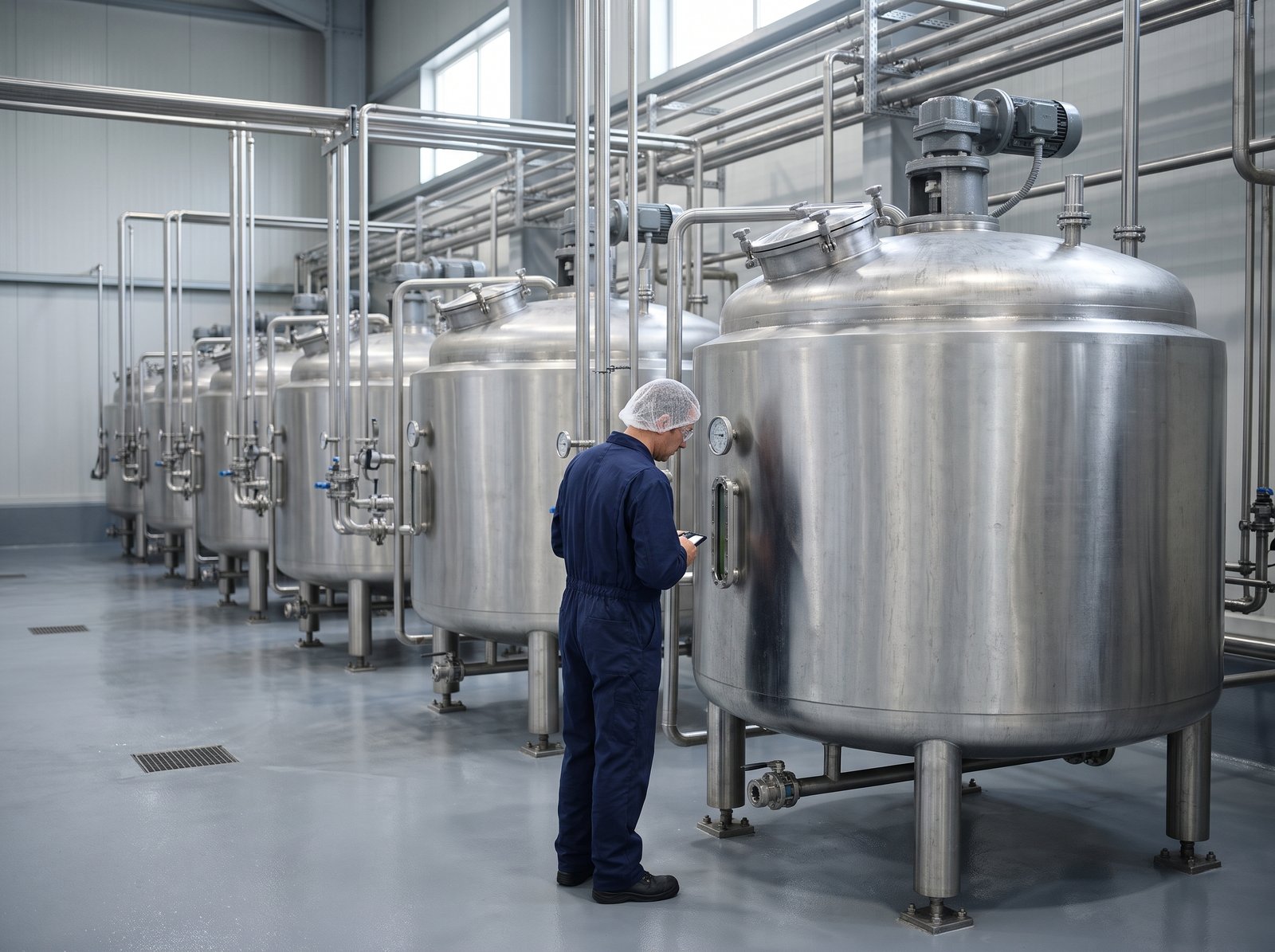
Juice, or pulp and concentrate from the dump tank, is blended with syrup, water and acid in stainless blending tanks fitted with agitators and spray balls for cleaning. The finished beverage is brought to 15 to 18 Brix. The number of tanks sets how many recipes can be held at once.
Machines At This Stage
Stage 7
Homogenising And Deaerating In The Fruit Juice Processing Plant
Pulpy drinks pass through a homogeniser at 150 to 200 bar, which breaks the pulp into fine, even particles so the drink does not settle in the bottle. A deaerator draws trapped air out of the juice under vacuum, which protects colour and flavour.
Machines At This Stage

Stage 8
Heat Treatment In The Fruit Juice Processing Plant
A skid-mounted pasteuriser heats the juice in a corrugated multi-tube heat exchanger to 90 to 95 °C and holds it for 30 to 45 seconds in a holding tube. The juice then goes to the filler at 85 to 88 °C for hot filling in heat-set PET. An automatic flow diversion valve returns under-heated juice to the balance tank.
Machines At This Stage

Stage 9
Hot Filling And Capping In The Fruit Juice Processing Plant
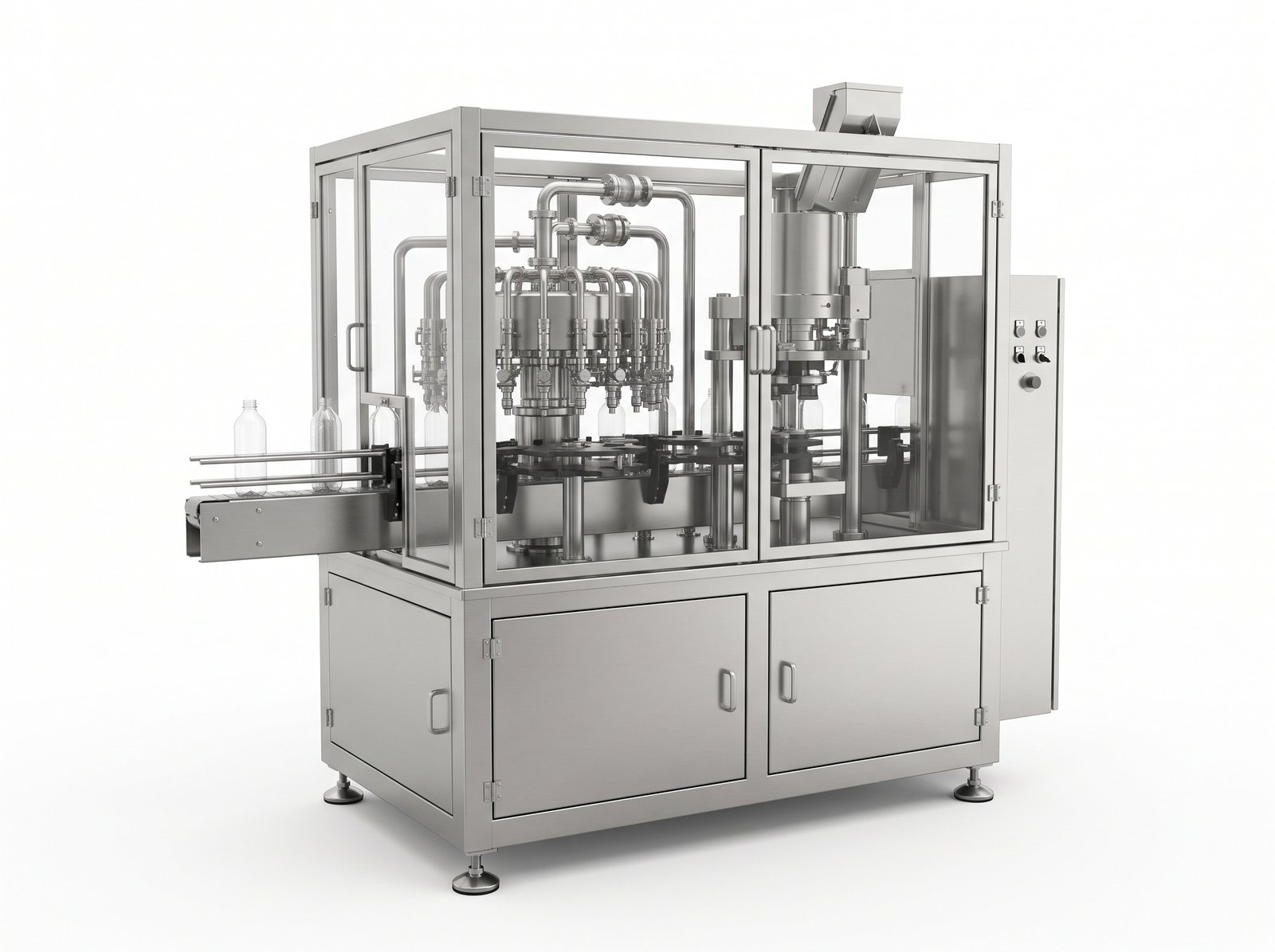
Juice at filling temperature is filled into PET bottles, commonly 300 and 500 ml, and capped at once. The hot product pasteurises the inside of the bottle and cap. The buyer chooses the filler’s head count from the hourly output and the bottle sizes to be run.
Machines At This Stage
Stage 10
Cooling, Labelling And Packing In The Fruit Juice Processing Plant
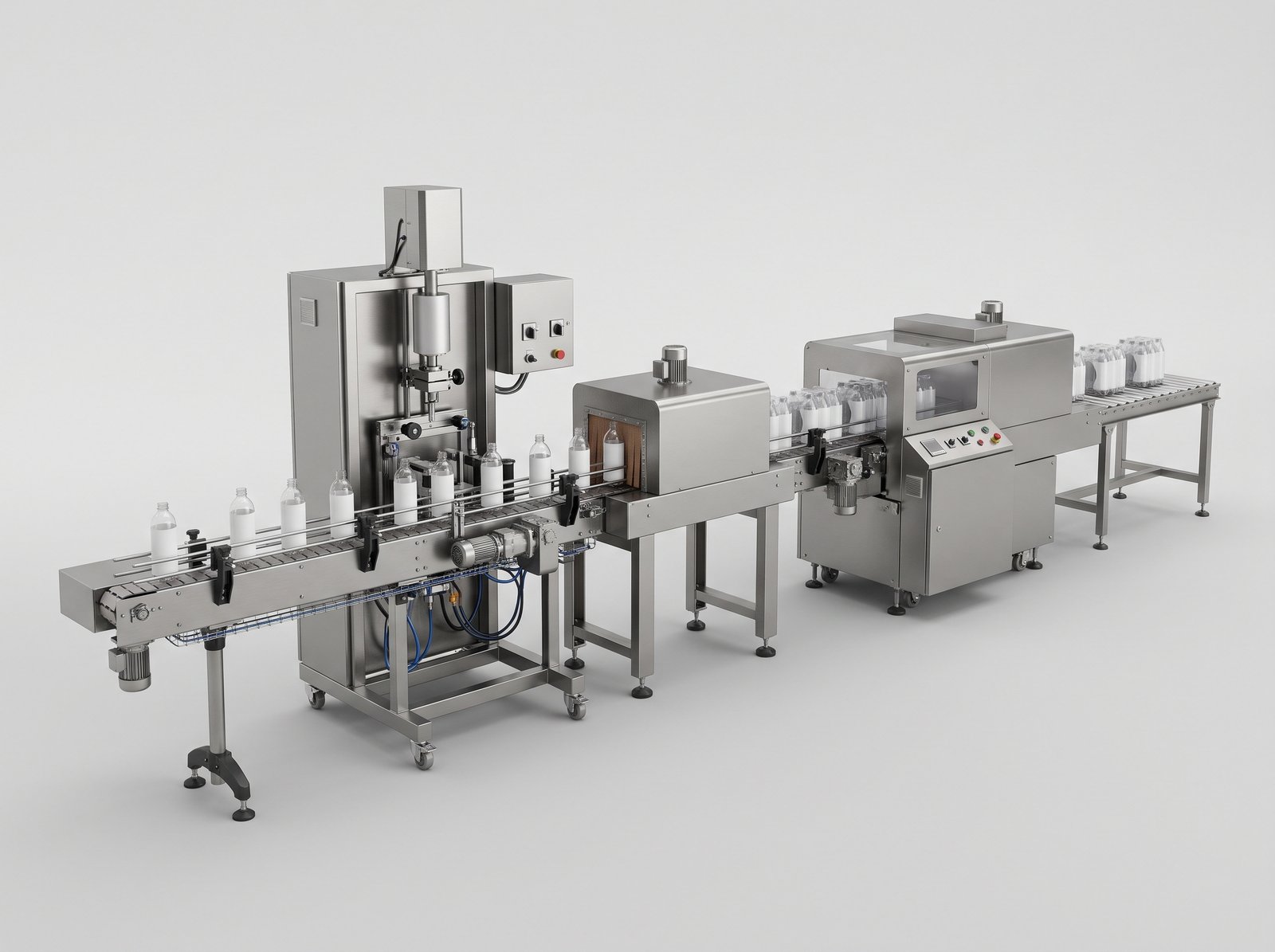
Filled bottles pass through a tunnel cooler that sprays water in stages to bring them down to handling temperature. They are then dried, labelled, batch coded and bundled under shrink film or packed in cases.
Machines At This Stage
Fruit Juice Processing Plant Capacity
Fruit juice plants are offered at 250, 500, 1,000, 2,000 and 3,000 litres/hour of juice, from a semi-automatic batch plant to a fully automatic line. The ready-to-serve juice line as offered runs at 2,000 litres/hour, hot filled into PET bottles. Bottle speeds fall as the bottle size rises, so the filler is chosen with the bottle sizes. Each plant is sized to the buyer’s fruit and season in the needs assessment.
What Decides The Design Of A Fruit Juice Processing Plant
The design follows the fruit and the drink. A plant built around one fruit for one short season is sized to that fruit and that season. A plant that runs pineapple, orange and mango in turn carries an extraction stage for each fruit and fills the gaps between seasons with stored pulp.
- Raw material and season: which fruits, how many months each, and whether pulp or concentrate will be bought in.
- Product mix: clear juice, cloudy juice or nectar, and how many recipes.
- Scale and running hours: hourly output, shifts a day and days a year.
- Utilities available: grid power, water quality and the fuel for the boiler.
- Staff skill: how much of the line can be automatic and still be kept running.
- Packaging the local market expects: PET or glass, bottle sizes, single bottles or packs.
- Site and access: lorry access for fruit, space for crates and waste, and room to extend.
What A Complete Fruit Juice Processing Plant Includes
Process Line Of The Fruit Juice Processing Plant
Fruit washer, sorting and grading conveyor, elevators and belt conveyors, fruit mill and crusher or citrus extractor, pulper and finisher, centrifugal clarifier and filter press, sugar dissolving and syrup storage tanks, blending tanks, homogeniser, deaerator and tubular pasteuriser with balance tank and holding tube.
Packaging Machinery For The Fruit Juice Processing Plant
Rinsing, hot-fill and capping machine for PET bottles, tunnel cooler, bottle dryer, labelling machine, batch coder, shrink wrapper and case packing station.
Utilities For The Fruit Juice Processing Plant
Steam boiler, air compressor with receiver, process chiller, cooling tower, water softener and treatment for process water, and the control panels for each section.
Storage And Handling In The Fruit Juice Processing Plant
Fruit crates and a shaded receiving area, sugar store, pulp dump tank, juice holding and buffer tanks, and a finished goods store. Concentrate held for the off season needs a cold room. Holding tanks and their cleaning set come from the stainless steel storage tanks and CIP system range.
Laboratory For The Fruit Juice Processing Plant
The checks the plant needs, and the laboratory items we can supply with the project: Brix refractometer, pH meter, titration set for acidity, balance and basic microbiology for shelf-life checks on each batch.
Working Capital Materials For The Fruit Juice Processing Plant
PET bottles, caps, labels, shrink film, cartons, sugar, acid and cleaning chemicals.
Buying A Fruit Juice Processing Plant In Stages
A plant can start with the beverage end of the line: syrup tanks, blending, pasteuriser and a hot-fill filler, running on bought-in pulp or concentrate. That plant can sell juice in the first season while the fruit supply is being organised. Washing, extraction and clarifying can be added later in front of it, planned in the layout from the start.
Some things cannot be deferred. The building height, the floor drains, the steam and water mains and the electrical supply must be sized for the full plant from the start, because changing them later means stopping production. A first plant does not usually need an automatic case packer, a second filler or an in-house bottle blowing machine. Those come when volume justifies them.
Fruit Juice Processing Plant Inputs And Utilities
Fruit is the main input, and its ripeness and Brix decide how much sugar and water the recipe needs. Mango comes in at 14 to 16 Brix, pineapple at 12 to 14 and orange at 9 to 11, so the same drink takes a different recipe from each fruit. Sugar, food acids and water make up most of the rest of the drink. Process water must therefore be treated and softened before it touches the product.
Power runs the pumps, extractor, homogeniser, filler and refrigeration. Steam, at 3 to 4 bar at the plant, heats the syrup, the pasteuriser and the cleaning system. Compressed air at 6 to 7 bar works the filler and pneumatic valves. Labour is needed mostly at sorting, packing and cleaning.
Fruit Juice Processing Plant Inspection And Documentation
Before shipment the extractor, pasteuriser, filler and the rest of the juice line can be inspected by SGS or Bureau Veritas, as the buyer or the bank requires. A steam boiler in the package can be supplied IBR certified, and its certificate goes with the shipping documents.
Each machine comes with its manual and an initial parts kit. At site, operators are trained on the pasteuriser’s temperature and hold, and on changing the filler from one bottle size to the next. Maintenance staff are trained on extractor and pump service.
How A Fruit Juice Processing Plant Project Runs
Work starts from your fruit, the drinks you mean to sell and the site, and the proposal is built around those. The same team carries the project from that first conversation to a running line, and stays in touch for the seasons after.
The machines are inspected and packed before shipment, exported FOB or CIF as agreed, and erected and commissioned at your site. Read more on How we work.
Pages Related To The Fruit Juice Processing Plant
- Fruit processing: every fruit and vegetable plant and machine we supply.
- Fruit pulp and concentrate plant: makes the pulp and concentrate a juice line can run on out of season.
- Citrus juice plant: a plant built around the citrus extractor.
- Pineapple juice plant: a plant built around crushing and pulping pineapple.
- Hibiscus and herbal drink plant: soaking tanks ahead of blending and bottling.
The machines named in the process stages each have their own page, linked at the stage where they work.
Every machine for this line is in our fruit processing machinery range.
Machines In This Line


Frequently Asked Questions
Can One Fruit Juice Processing Plant Run More Than One Fruit?
Yes. The washer, sorting conveyor, blending, pasteuriser and filler serve every fruit. The extraction stage is where fruits differ, so a citrus and pineapple plant carries both a citrus extractor and a crusher with pulper.
Can A Fruit Juice Processing Plant Start On Pulp Or Concentrate Instead Of Fresh Fruit?
Yes. A ready-to-serve line of 2,000 litres an hour can run on bought-in pulp or concentrate, blended with syrup and water, with fresh fruit handling added later.
Why Does A Fruit Juice Processing Plant Hot Fill In PET?
Juice filled hot at 70 to 72 °C pasteurises the inside of the bottle and cap as it is filled, so the drink keeps without a sterile filling room. It needs heat-resistant bottles.
Next Step For Your Fruit Juice Processing Plant
Send us the fruit you will process, the drink you want to sell and the details of your site, and we will prepare a customer-specific proposal. Write to archit@sonikaimpex.com or sunil@sonikaimpex.com, or call +91 99027 67900.