

Home › Fruit Processing Machinery › Sorting and grading conveyor
Fruit Sorting And Grading Conveyor: Inspection Belts And Tables
What A Fruit Sorting And Grading Conveyor Does
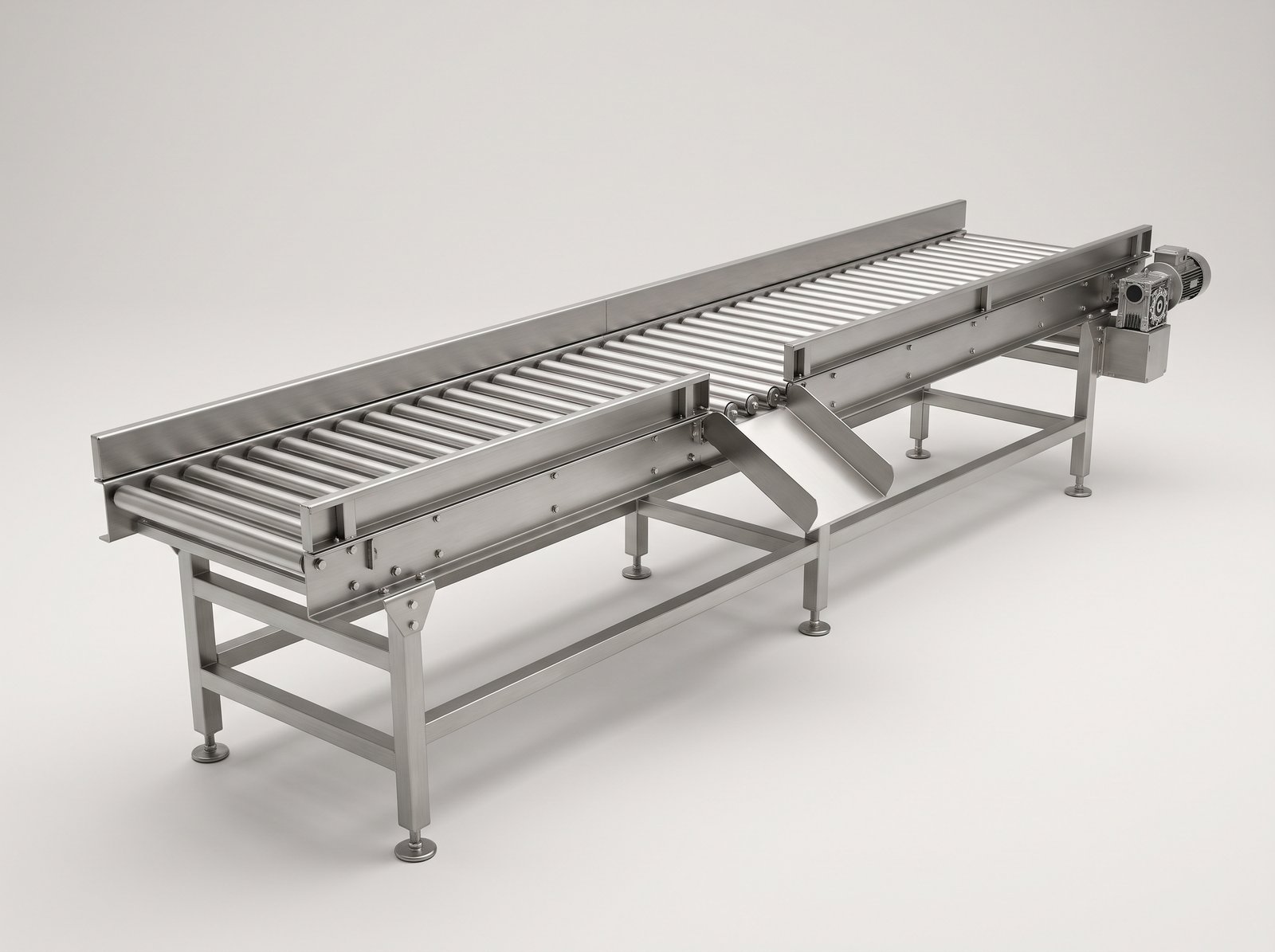
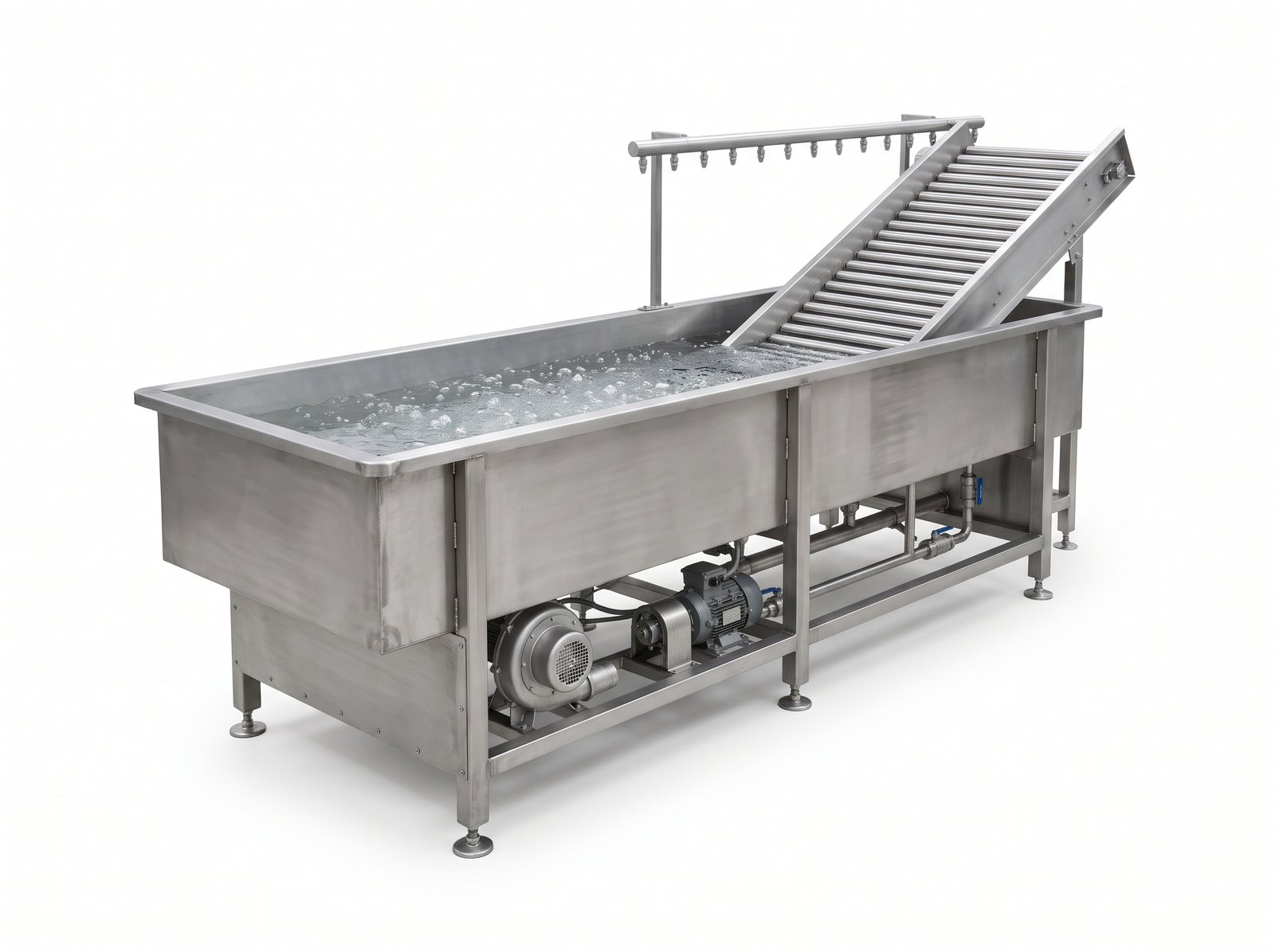
A fruit sorting and grading conveyor carries washed fruit past a line of workers who inspect it by eye and by hand. They take out rotten, mouldy, bruised and unripe fruit, cut away damaged parts, remove stems and leaves the washer missed, and separate fruit by ripeness or size where the product needs it. In a fruit processing line the conveyor sits right after the fruit washing machine. It is the last point where a person looks at every fruit before it is crushed, pulped or pressed.
What goes wrong when sorting is skipped or rushed is plain in the product. Mouldy fruit taints the pulp it is mixed into. Unripe fruit lowers the sugar and colour of the juice, which then needs more syrup or more evaporation to reach the standard. Green tomatoes pull down the colour of a puree, and stray stems and leaves end up as specks the buyer rejects.
Fruit Sorting And Grading Conveyor Capacity
Sorting and grading conveyors are offered for lines of 500 kg/hour, 1, 2, 5 and 10 TPH, from an inspection table to a roller sorting and size grading conveyor. The belt width, belt length and number of sorting places are chosen to carry the line’s peak intake at a pace the sorters can inspect. Each conveyor is sized with the washer ahead of it in the buyer’s needs assessment.
Where A Fruit Sorting And Grading Conveyor Sits In The Line
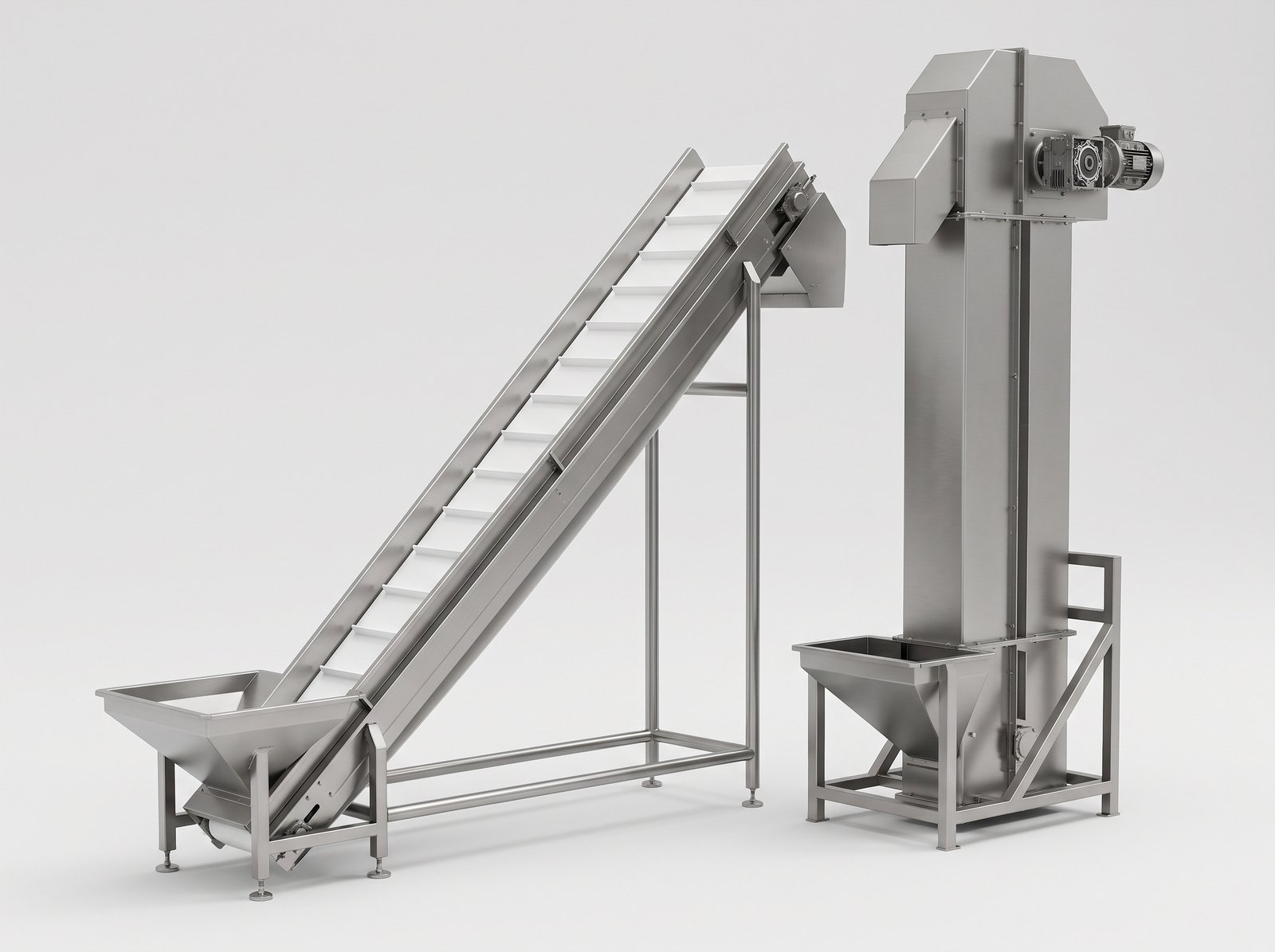
The sorting conveyor takes fruit from the washer’s pick-up conveyor and delivers it to one of the bucket elevator and belt conveyors, an elevator or distribution conveyor that feeds the extraction machines. Those are the mango destoner, the fruit mill and crusher, the juice extractor or the fruit peeling machine at the peeling station.
Fruit arrives clean, wet and unsorted. It leaves as an even flow of sound fruit at the ripeness the product needs, with the rejects going down a separate chute to a waste bin or conveyor.
Sorting and grading conveyor
This Machine

How It Works
1
The Belt And Frame Of A Fruit Sorting And Grading Conveyor
The conveyor is a food-grade PVC endless belt running over rubber-covered pulleys on a stainless steel square-tube frame. A take-up bearing unit at one end keeps the belt tensioned and tracking straight. Stainless steel side guides hold the fruit on the belt, and a stainless steel trough and waste chute run along the side so workers can drop rejects without reaching across the belt. A belt cleaning arrangement under the return side scrapes off juice and pulp so the belt does not carry dirt back to the start.
2
The Drive And Belt Speed Of A Fruit Sorting And Grading Conveyor
A geared motor drives the head pulley at a fixed speed set for the line. The speed is the main thing the buyer decides: too fast and workers cannot inspect every fruit, too slow and the belt holds up the washer. Workers stand on both sides, so the belt width is set to what a person can reach from the edge.
3
How A Roller Fruit Sorting And Grading Conveyor Turns Each Fruit
On roller inspection tables, the fruit rides on turning rollers in place of a flat belt. The rollers rotate each fruit as it moves, so the worker sees all sides without picking it up. These tables are used where every face of the fruit matters, such as mango, and they carry a variable-speed drive.
4
Types And Options
Fruit Sorting And Grading Conveyor With A Flat Inspection Belt
The standard type: a straight PVC belt with side guides and a waste trough. It suits tomato, orange and most fruit sorted for defects.
Three-Way Fruit Sorting And Grading Conveyor
The belt is divided into lanes so workers can separate fruit into two grades and a reject stream at once. For example, fruit going to the extractor is kept apart from fruit going to lye peeling.
Two-Tier Fruit Sorting And Grading Conveyor
A second belt above or below the first carries rejects or a second grade away. This keeps the inspection belt clear on high-volume lines.
Roller Inspection Table As A Fruit Sorting And Grading Conveyor
Rotating rollers turn the fruit for full inspection. It is chosen for mango and for lines where surface defects matter.
Inspection And Preparation Tables Beside A Fruit Sorting And Grading Conveyor
Static stainless steel tables stand beside the belt for hand work: cutting, trimming, coring, and topping and tailing pineapple.
Fruit Sorting And Grading Conveyor Options
- Belt length and width to suit the number of workers and the line rate.
- Variable-speed drive in place of fixed speed.
- Waste conveyor under the reject chute.
What Decides The Choice Of A Fruit Sorting And Grading Conveyor
- The fruit and the defect you are sorting for: surface defects call for a roller table, size or ripeness grading for a multi-lane belt.
- Line rate: the fruit per hour from the washer sets the belt speed, and the belt speed sets how many workers you need along it.
- Labour: how many sorters you can put on a shift decides the belt length.
- What follows: a fruit pulper and finisher or crusher downstream can take a steady flow; a destoner or extractor may need the fruit spaced, which a distribution conveyor does.
- Floor space and layout: the conveyor runs between the washer and the elevator, so its length is planned with the building.
- Cleaning: the belt and trough are washed down at every shift change, so drains and water points are planned alongside.
What A Fruit Sorting And Grading Conveyor Is Supplied With
- Stainless steel square-tube frame with adjustable feet.
- Food-grade PVC endless belt, rubber-covered pulleys and take-up unit.
- Stainless steel side guides, waste trough and waste chute.
- Belt cleaning arrangement.
- Geared motor drive, fixed or variable speed.
- Inspection tables where ordered.
- Manuals and an initial parts kit.
- Installation, commissioning and operator training at the buyer’s site.
A Fruit Sorting And Grading Conveyor On Its Own Or In A Line
The sorting conveyor is supplied on its own to lengthen an existing inspection line or to replace a worn belt and frame. In a complete plant it comes between the washer and the extraction section of the fruit juice processing plant, the fruit pulp and concentrate plant, the tomato ketchup plant, the tomato puree, paste and sauce plant, the citrus juice plant and the pineapple juice plant.
It also works in the hibiscus and herbal drink plant and the jam and fruit preserves plant.
Inspection And Documentation For A Fruit Sorting And Grading Conveyor
The frame, belt, drive and side guides can be inspected by SGS or Bureau Veritas before the conveyor is packed, when the buyer asks. It is shipped with its manual and an initial parts kit, including belt fasteners.
Frequently Asked Questions
How Many Workers Does A Fruit Sorting And Grading Conveyor Need?
That depends on the fruit, how much of it is defective and how fast the line runs. The belt is sized so each worker has a reachable length of belt, and the number of places is set in the proposal from your intake.
Can A Fruit Sorting And Grading Conveyor Be Automated?
For fruit pulp and juice lines, sorting is done by hand on the belt, because workers judge ripeness and rot better than a simple grader. Automatic grading by size can be added where a product needs it.
Is A Roller Table Worth It Over A Flat Belt On A Fruit Sorting And Grading Conveyor?
For mango and fruit where a bad patch can be on any side, yes, because the fruit turns as it moves. For tomato and citrus a flat belt is usually enough.
What Happens To The Rejects From A Fruit Sorting And Grading Conveyor?
They go down the waste chute into a bin or onto a waste conveyor, kept apart from the sound fruit.
Related Machines
Next Step For Your Fruit Sorting And Grading Conveyor
Send us the fruit you sort, the rate your washer runs at and the space you have between washer and extraction, and we will send a customer-specific proposal. How we work sets out the steps from there. Write to archit@sonikaimpex.com or sunil@sonikaimpex.com, or call +91 99027 67900.