

Home › Fruit Processing Machinery › Homogeniser
Homogeniser Machine For Fruit Juice, Nectar, Puree And Sauce
What A Homogeniser Machine Does
A homogeniser machine forces a product at high pressure through a narrow gap, which breaks the pulp particles and fat or oil droplets in it into very small, even sizes. Fruit juice, nectar, puree and sauce leave it with a uniform body that stays mixed in the bottle. In fruit processing it sits in the preparation section, after blending and before the pasteuriser or steriliser.
Without homogenising, or with it done at the wrong pressure, the pulp in a nectar settles to the bottom of the bottle and leaves a clear layer on top, which a buyer reads as a fault. Sauces and ketchup feel grainy and separate water on standing. Cloudy juices lose their cloud. The product may be safe, but it looks old before it has left the warehouse.
Homogeniser Machine Capacity
Homogenisers are offered at 300, 500, 1,000, 2,000 and 3,000 litres/hour, from a single-stage machine to a two-stage, three-plunger machine. You choose the size to match the pasteuriser or steriliser it feeds, since the two run at the same flow. The pressure and the number of stages are chosen for the pulp in the product. Each line is sized to the buyer’s fruit and season in the needs assessment.

Where A Homogeniser Machine Sits In The Line
The homogeniser receives standardised product from the blending and sugar dissolving tanks, or refined pulp and puree from the fruit pulper and finisher and the colloid mill. Where a deaerator is fitted, it draws out trapped air first. Product arrives liquid or pulpy, mixed but with particles of uneven size.
It leaves at the same flow but with a fine, even texture, and goes straight on to the plate and tubular pasteuriser or the aseptic steriliser for heat treatment. Because the homogeniser is a positive displacement pump as well, it often sets the flow rate for the heat treatment that follows.
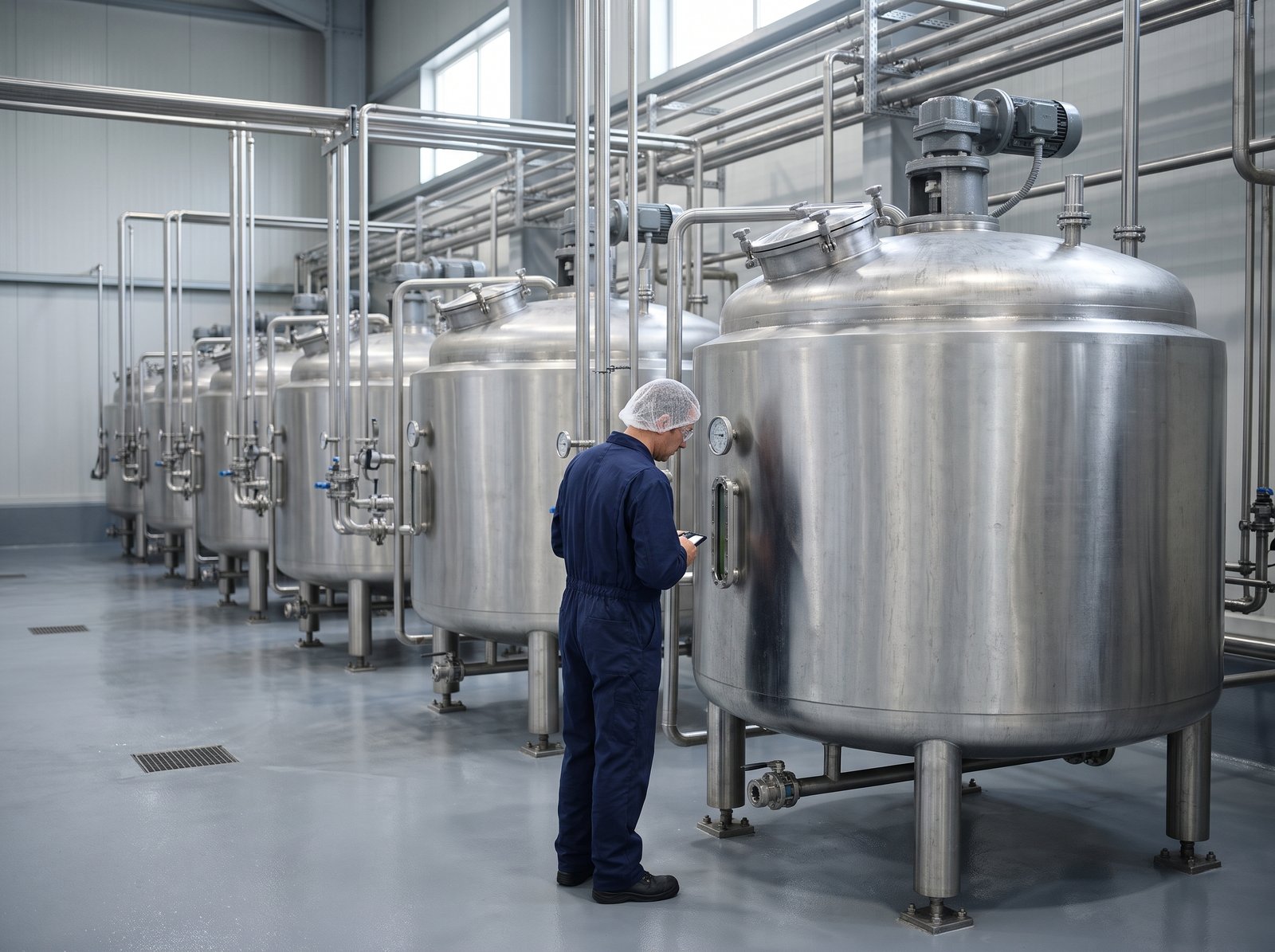
blending tanks
Homogeniser
This Machine
How It Works
1
The Plunger Pump In A Homogeniser Machine
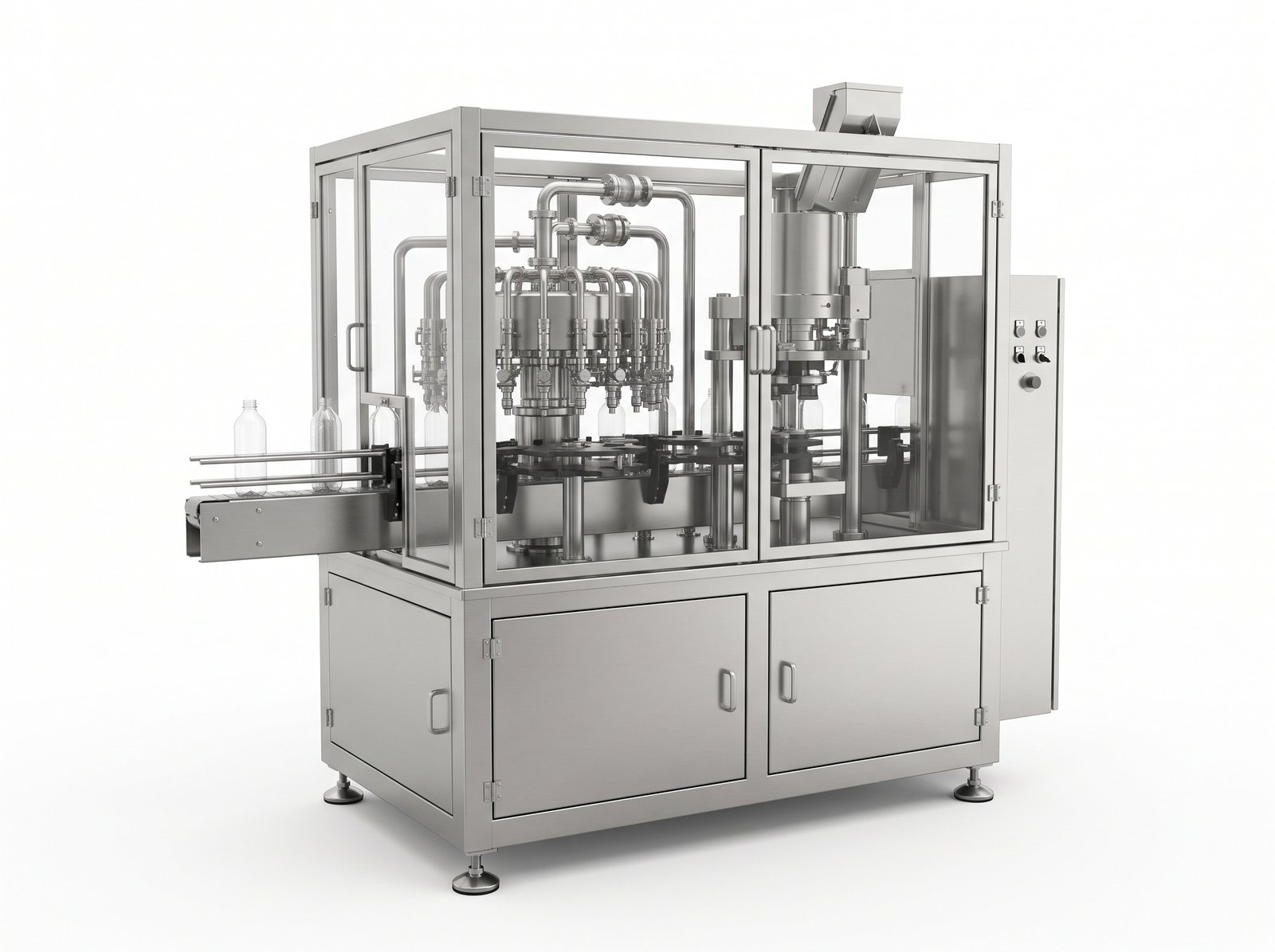
A homogeniser is a high-pressure plunger pump with a homogenising valve on its outlet. An electric motor drives a crankshaft through a belt or gearbox, and the crankshaft moves a set of plungers back and forth in a stainless steel block, the pump chamber, built in SS 316 on the offered machines. Each plunger draws product in through a suction valve and pushes it out through a delivery valve. Together they give a nearly even flow at high pressure.
2
The Homogenising Valve In A Homogeniser Machine
The product then meets the homogenising valve: a valve seat and a valve body held close together, leaving a gap a fraction of a millimetre wide. Forced through that gap at high speed, the product is torn by shear, impact and the sudden drop in pressure, and the particles break down. In a double stage machine a second valve after the first holds a lower back pressure, which stops the broken particles clustering again.
3
Setting The Pressure On A Homogeniser Machine
The operator sets the homogenising pressure with a hand wheel or a hydraulic setting on the valve, and reads it on a diaphragm pressure gauge that keeps product out of the gauge itself. Fruit products are usually homogenised at 150 to 200 bar. Higher pressure gives a finer, more stable product but more wear on the valve and more power drawn.
The whole machine stands on a stainless square tube frame or inside a closed stainless cabinet.
4
Types And Options
Single Stage Or Double Stage Homogeniser Machine
A single stage homogeniser suits juices and nectars. A double stage machine suits sauces, emulsions and products with oil or fat.
Contact Parts Of The Homogeniser Machine
The pump chamber and valve parts are in SS 316. Hard-faced valve seats are fitted for abrasive or fibrous products.
Manual Or Hydraulic Pressure Setting On The Homogeniser Machine
Pressure is set manually by hand wheel. Hydraulic setting is offered for operators who change products often.
Frame, Size And Outlet Options For The Homogeniser Machine
- Open frame or closed stainless cabinet.
- Size matched to the line, from small batch lines to full-scale ready-to-serve plants.
- Pulsation damper on the outlet for a steadier flow into the heat exchanger.
What Decides The Choice Of A Homogeniser Machine
- The product: clear juice may not need a homogeniser at all. Nectars, purees, sauces and ketchup do.
- Pulp content and particle size after pulping and milling, which set the pressure and the number of stages.
- Scale and running hours, which set the flow and the wear the valve parts will see.
- Upstream and downstream: a deaerator ahead protects the valve and plungers from air, and the heat treatment after it must run at the same flow.
- Power on site: a homogeniser is one of the largest motors in a juice line.
- Maintenance: valve seats, plunger seals and suction and delivery valves are wear parts, and stocking them decides how long the line runs between stops.
What A Homogeniser Machine Is Supplied With
- Plunger homogeniser with SS 316 pump chamber and homogenising head
- Electric motor with belt or gear drive, mounted on the frame
- Pressure gauge and pressure setting device
- Starter or connection to the line control panel
- Standard spares, including seals and wear parts of the homogenising head, and tools
- Operation and maintenance manuals
- Installation and commissioning at your site, with operator training on pressure setting and wear-part changes
Homogeniser Machine On Its Own Or In A Line
A homogeniser can be bought on its own when a juice maker moves into nectars with pulp, or when settling in the bottle is costing sales. It is part of the complete fruit juice processing plant, pineapple juice plant, hibiscus and herbal drink plant, tomato ketchup plant and tomato puree, paste and sauce plant.
It also works in the canned fruit and vegetable plant and the citrus juice plant.
Homogeniser Machine Inspection And Documentation
Before shipment, SGS or Bureau Veritas can inspect the homogeniser as required: the material of the pump block and contact parts, a pressure test of the homogenising head and a running test at the agreed flow. The manuals cover setting the pressure for each recipe and changing seals and wear parts.
Frequently Asked Questions
Does A Clear Juice Need A Homogeniser Machine?
Usually not. A clear juice is filtered or clarified to remove particles, for example on a centrifugal clarifier and filter press. A homogeniser is for products meant to keep their pulp or cloud evenly spread: nectars, cloudy juices, purees and sauces.
What Pressure Should A Homogeniser Machine Run At?
Fruit products are typically homogenised at 150 to 200 bar. The right setting depends on the product and is fixed during commissioning, then held for each recipe.
Which Parts Of A Homogeniser Machine Wear, And How Often Are They Changed?
The valve seat, valve body, plunger seals and the suction and delivery valves wear with use, faster on fibrous or gritty products. Keeping a set of each in stock is part of planning the line.
Can A Homogeniser Machine Replace A Colloid Mill?
No. A colloid mill breaks coarse fibre and paste. A homogeniser refines what is already fine. Sauce and ketchup lines often use both.
Related Machines

It draws trapped air out of the product before the homogeniser, protecting the valve and plungers.
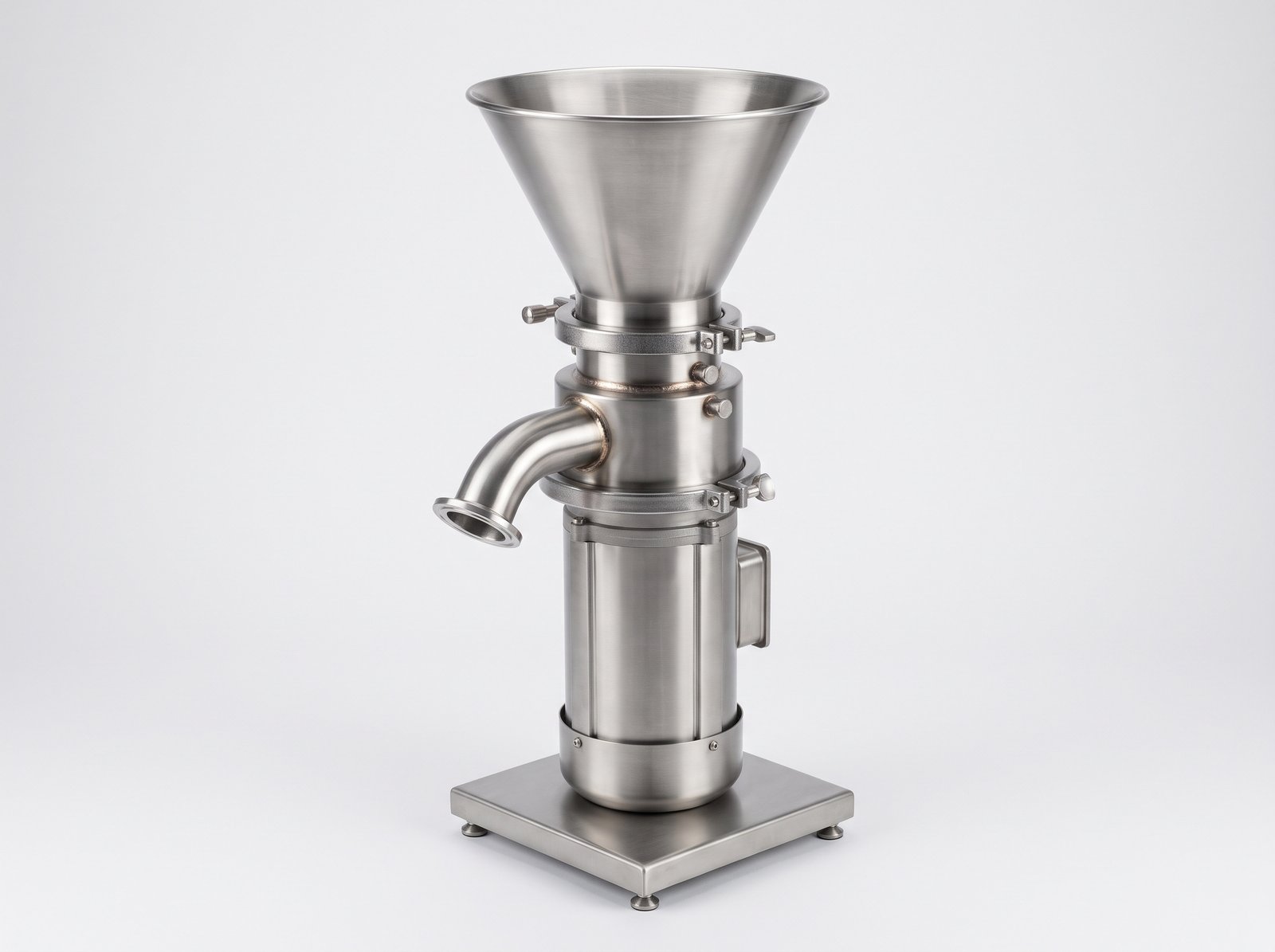
It breaks down coarse fibre and paste so the homogeniser can refine what is already fine.

It heat-treats the homogenised product at the same flow the homogeniser delivers.
Next Step For Your Homogeniser Machine
Tell us your product, its pulp content and the line output, and we will prepare a customer-specific proposal. Write to archit@sonikaimpex.com or sunil@sonikaimpex.com, or call +91 99027 67900.