

Home › Fruit Processing Machinery › Aseptic bag-in-drum filler
Aseptic Bag In Drum Filler For Fruit Puree, Pulp And Concentrate
What An Aseptic Bag In Drum Filler Does
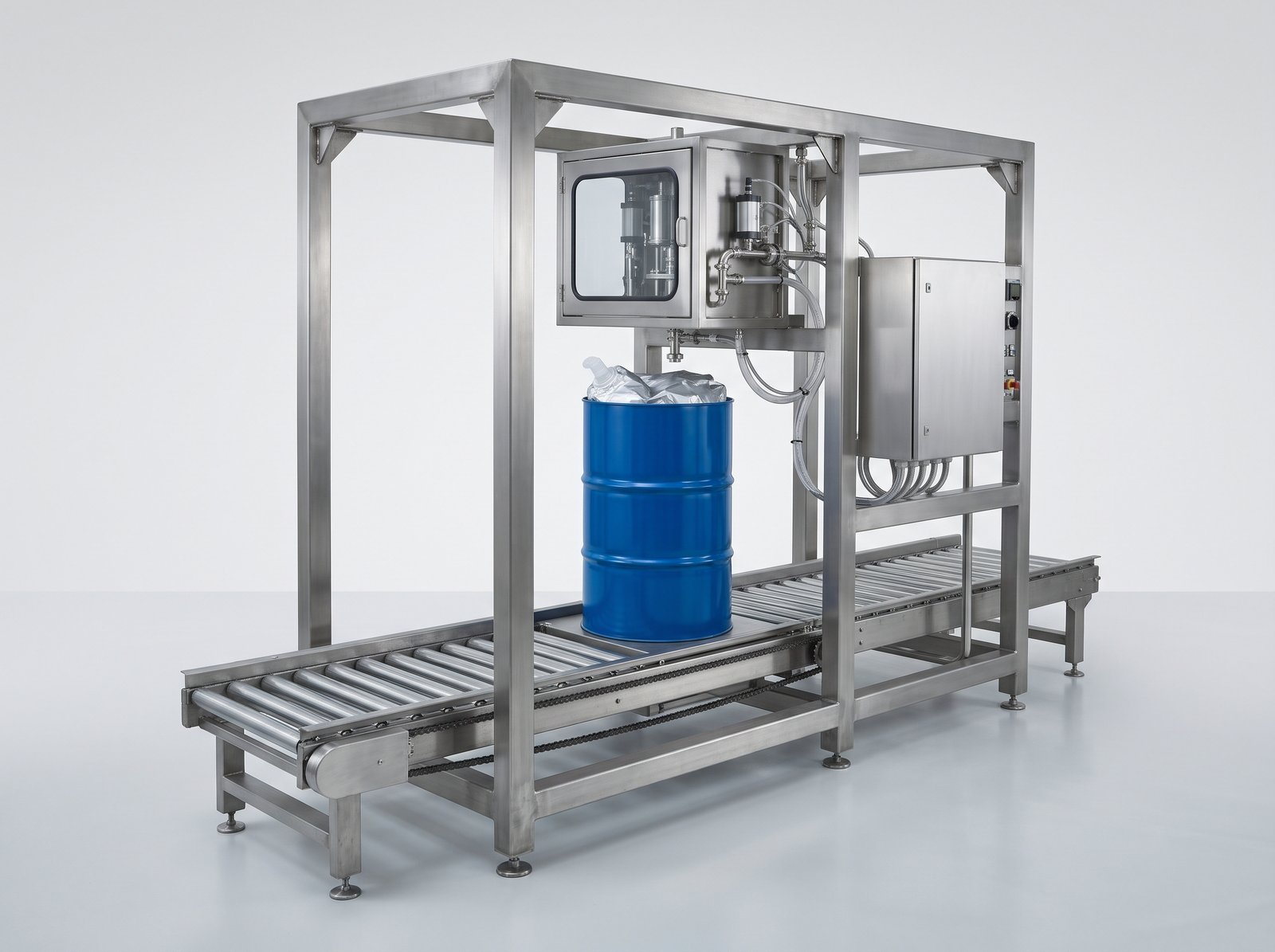
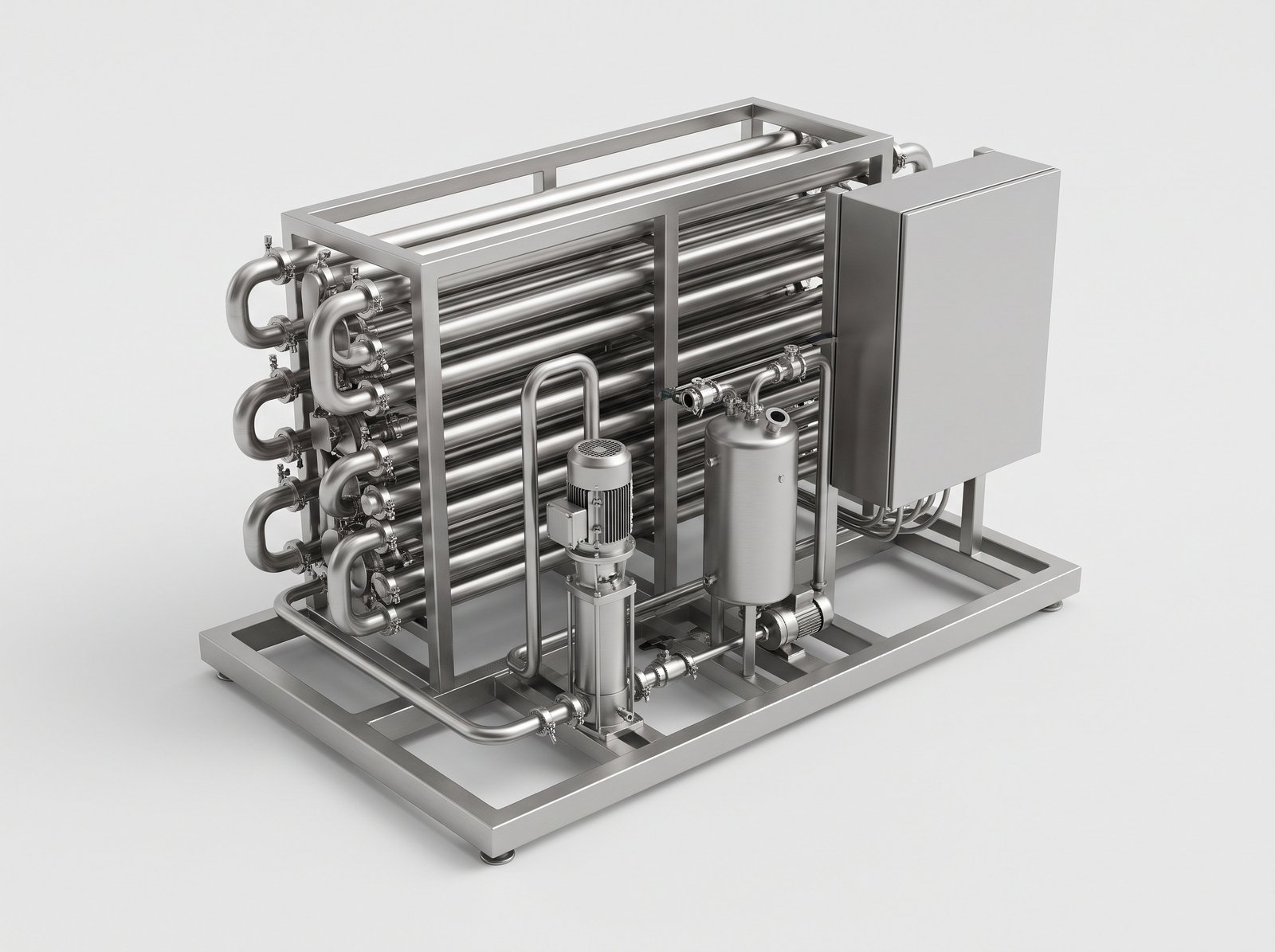
An aseptic bag in drum filler puts sterile fruit puree, pulp or concentrate into pre-sterilised plastic bags that sit inside steel drums, without letting air or organisms into the product. The filling head and the bag spout are sterilised with steam at every fill, so the product leaves the line as sterile as it left the steriliser. It is the packing stage of a pulp and concentrate line in fruit processing, directly after the aseptic steriliser.
This is how mango pulp, tomato paste and fruit concentrates travel to juice makers and food factories far from where the fruit grows, at ambient temperature and for many months. When the filler fails, it fails one bag at a time: a leaking spout seal, a missed steam cycle or a contaminated head spoils a drum that may only be opened months later in another country, which is why the machine checks its own sterility on every cycle.
Aseptic Bag In Drum Filler Capacity
Aseptic bag fillers are offered at 1,000–1,500, 3,000 and 6,000 litres/hour, filling bags of 3 to 200 litres, from a single-head semi-automatic filler to a double-head automatic filler. You choose the head count and the bag size to match the aseptic steriliser output, from 600 to 5,000 kg/hour, and what your buyers want to receive.
Where An Aseptic Bag In Drum Filler Sits In The Line
Puree comes from the fruit pulper and finisher and concentrate from the fruit evaporator, and both pass through the steriliser before they reach the filler. Sterile product arrives through closed piping, cooled to 20 to 35 °C. Empty drums with sterile bags arrive on a motorised roller conveyor, and the operator places the bag spout into the filling head.
Full drums leave on the roller conveyor to be closed, labelled and stacked for storage and dispatch. Product that cannot be filled, during a bag change or a fault, is turned back to the steriliser through an aseptic two-way valve so the steriliser never has to stop.

How It Works
1
The Frame And Filling Head Of The Aseptic Bag In Drum Filler
The filler is built on a tubular stainless monoblock frame with an operator platform, stairway and handrail. Product runs through AISI 316 or 316L pipework whose joints are protected by steam barriers, so the product path stays sterile even where the head moves up and down. At the heart of the machine is the filling head: an aseptic valve, a steam chamber around it and a steam ejector that clears condensate and impurities.
2
Seating And Sterilising The Spout In The Aseptic Bag In Drum Filler
For each bag the operator seats the spout in the head. The machine then sterilises the spout and the cap area with steam, opens the cap inside the sterile zone, and opens the aseptic valve.
3
Filling And Closing The Bag In The Aseptic Bag In Drum Filler
An electromagnetic flow meter measures the volume, and for large bags load cells under the drum weigh the fill. A pneumatic cylinder lowers the head into the drum and lifts it as the bag fills. When the set quantity is reached the valve closes, the cap is pressed home, the area is steamed again and the head releases the bag.
4
Control And Fail-Safe Sterility In The Aseptic Bag In Drum Filler
A PLC with a touch screen runs every step, holds settings for each bag size and product, and keeps an alarm record. A fail-safe system watches steam temperature at the barriers and in the head, and stops filling and warns the operator if sterility is at risk. The operator sets the bag size, the fill quantity and the product recipe, and is responsible for placing each bag correctly.
4
Types And Options
Single Head Aseptic Bag In Drum Filler
The single head filler is semi-automatic and serves one line of drums. The operator places each bag, and the machine runs the sterilising and filling cycle.
Double Head Aseptic Bag In Drum Filler
The double head filler is built for continuous filling. One head fills while the operator places the next bag on the other, so the steriliser output is taken up without long recycling.
Bag Sizes On The Aseptic Bag In Drum Filler
Bags run from small sizes on a roller conveyor up to 200 litre bags in drums. Load cells weigh the fill for the large sizes.
Product And Cap Types For The Aseptic Bag In Drum Filler
The filler handles liquid concentrate, very viscous purees and diced fruit, each with a suitable valve passage. Caps can be flat, rigid or pressure caps.
Control And Skid Options For The Aseptic Bag In Drum Filler
Control is by PLC with touch screen, or an industrial PC on request, with remote monitoring. The skid design ships pre-assembled, with its own connection to the plant’s stainless steel storage tanks and CIP system.
What Decides The Choice Of An Aseptic Bag In Drum Filler
- The product: concentrate, puree, pulp or diced fruit, which sets the valve passage and the filling method.
- Bag size: what your buyers take, from small bags for food service to 200 litre drums for industry.
- The steriliser ahead: the filler must keep pace with it, or product is recycled for long periods.
- Bag and spout supply: aseptic bags and spouts are bought in, and samples are needed to set up the machine.
- Utilities: clean steam at pressure, compressed air, power and water for CIP.
- Staff: operators trained in aseptic practice, since the bag is placed by hand.
What An Aseptic Bag In Drum Filler Is Supplied With
- Aseptic filling head or heads with steam barrier and steam ejector
- Stainless monoblock frame with operator platform
- Electromagnetic flow meter, and load cells for drum filling
- Aseptic product recycling back to the steriliser
- Steam infeed group and air treatment group
- Motorised roller conveyors for drums and a roller conveyor for small bags
- PLC control cabinet with touch screen and fail-safe sterility control
- Standard spares and operation and maintenance manuals
- Installation and commissioning at your site, with training in aseptic practice, bag placing and the sterilising cycle
Aseptic Bag In Drum Filler On Its Own Or In A Line
The filler is bought together with an aseptic steriliser when a plant moves into aseptic packing, or on its own to add a second head or replace an older filler. It is part of the complete Fruit pulp and concentrate plant and the Tomato puree, paste and sauce plant.
Aseptic Bag In Drum Filler Inspection And Documentation
SGS or Bureau Veritas can inspect the filler before shipment as required. It is assembled on its skid and run through its steam and filling cycles at the works, and the manuals cover bag changes, recipes and the fail-safe alarms.
Frequently Asked Questions
Why Choose An Aseptic Bag In Drum Filler Over Cans?
A bag in a drum holds up to 200 litres and is what industrial buyers of pulp and concentrate expect. Cans suit retail and small packs.
At What Temperature Does An Aseptic Bag In Drum Filler Fill The Product?
Aseptic products are filled cool, at 20 to 35 °C, after sterilising and cooling. Cool filling protects colour and flavour over long storage.
Can One Aseptic Bag In Drum Filler Handle Different Bag Sizes?
Yes. Settings for each bag size are stored in the control system, small bags run on a roller conveyor and large bags in drums are weighed by load cells.
Where Do The Bags For An Aseptic Bag In Drum Filler Come From?
Aseptic bags and spouts are bought from specialist bag makers, and samples are tested on the filler before an order is placed.
Related Machines


turns prepared fruit into the smooth puree that goes on to sterilising and filling.
Next Step For Your Aseptic Bag In Drum Filler
Tell us your product, the bag sizes your buyers take and your season’s output, and we will prepare a customer-specific proposal for the aseptic packing section. You can read How we work to see how a project runs. Write to archit@sonikaimpex.com or sunil@sonikaimpex.com, or call +91 99027 67900.