

Home › Fruit Processing › Pineapple juice plant
Pineapple Juice Processing Plant: Roller Extraction, Screw Press, Pasteurising And PET Filling
Who A Pineapple Juice Processing Plant Suits
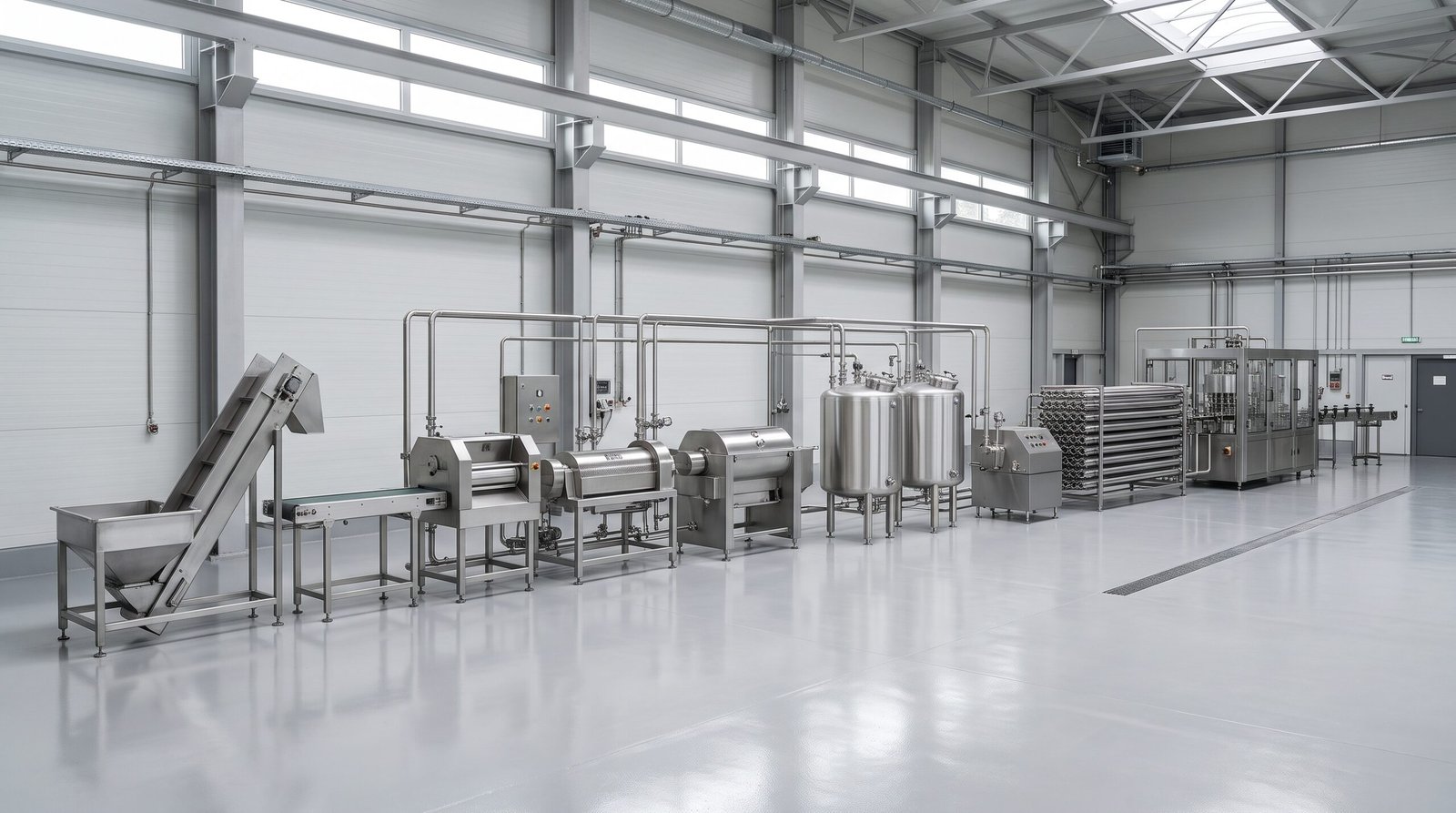
A pineapple juice processing plant suits a buyer in a pineapple-growing area who wants to sell bottled pineapple juice or blends such as pineapple with passion fruit or watermelon. It fits a first plant for a farm group or trader, starting from 150 kg of fruit an hour, and an expansion for a juice maker who wants a line of up to 5 TPH on its own supply. The plant is built around getting the juice out of a tough, fibrous fruit without the bitterness of the skin.
It is one of the lines in our fruit processing range. What sets it apart is the front of the line, where the fruit is topped, pressed and its skins squeezed.
Process Flow

Stage 1
Washing In The Pineapple Juice Processing Plant
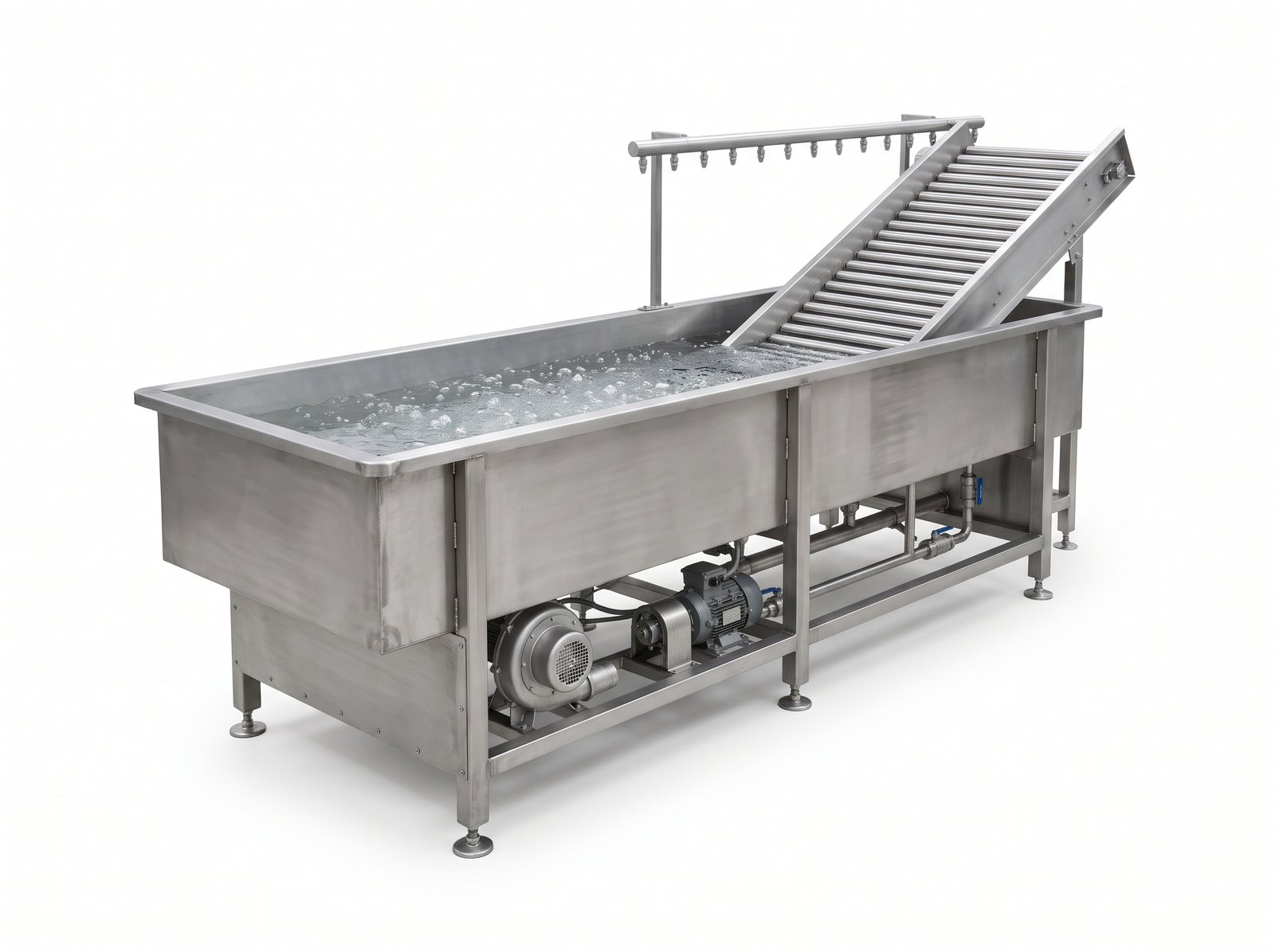
Whole pineapples, crowns removed, are tipped into a water-bath fruit washing machine where agitation loosens soil and a pick-up belt lifts them out under spray. Pineapple skins hold dirt in their eyes, so a good soak matters. Crowns are often removed in the field, which keeps the washer and the waste route smaller. The buyer sizes the bath and belt to the hourly intake.
Machines At This Stage
- Water-bath fruit washer with agitation
- Pick-up belt with spray
Stage 2
Topping, Tailing And Inspection In The Pineapple Juice Processing Plant
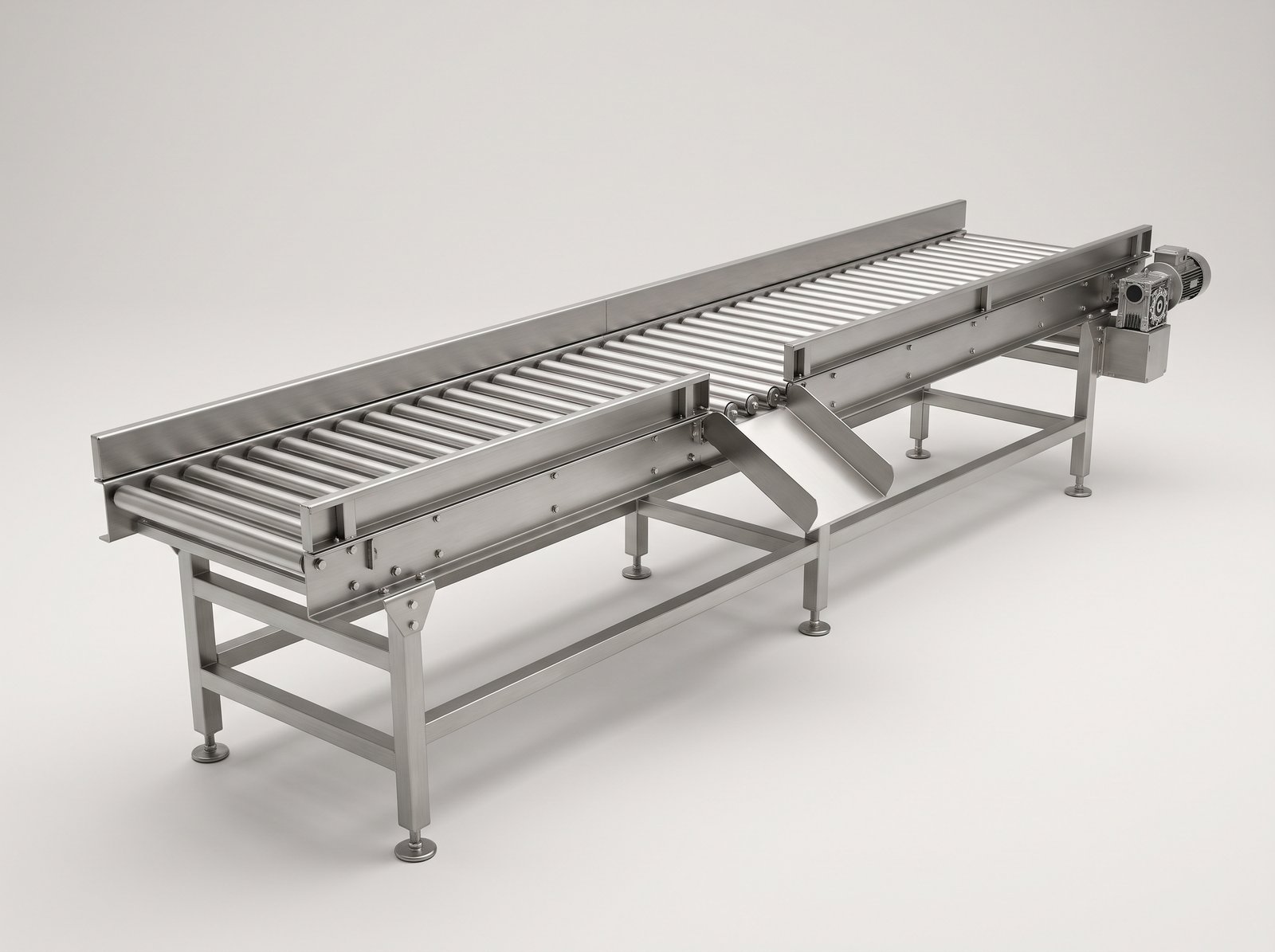
On a long inspection belt, a sorting and grading conveyor, workers cut off the top and tail and remove bruised and unripe fruit. Lines that make pulpy juice or blends also peel and cut the fruit by hand at stainless tables here. The conveyor length sets the number of workers and follows the fruit rate.
Machines At This Stage
- Inspection conveyor
- Stainless preparation tables

Stage 3
Roller Extraction In The Pineapple Juice Processing Plant
A bucket elevator feeds the fruit into a roller-type juice extractor, where the fruit is pressed between rollers and the juice runs to a collection tank. The roller extractor suits pineapple’s fibre better than a beater machine. On small pulpy lines, peeled pieces go instead to a rotor-and-blade fruit mill and crusher and a steam-jacketed kettle for preheating.
Machines At This Stage
- Bucket elevator
- Roller pineapple juice extractor
- Rotor-and-blade crusher and steam-jacketed kettle, on small pulpy lines

Stage 4
Skin Pressing In The Pineapple Juice Processing Plant
Skins and residue leaving the extractor carry juice, so a transfer screw conveyor takes them to a screw press, where a screw turning in a perforated cage squeezes out the remaining juice. This adds juice from the same fruit without going back to the extractor.
Machines At This Stage
- Transfer screw conveyor
- Screw press with perforated cage

Stage 5
Finishing In The Pineapple Juice Processing Plant
Juice from the extractor and press is collected in stainless steel storage tanks and passed through a fruit pulper and finisher, where rotating blades on a screen take out fibre and coarse pulp. The buyer decides how much pulp to leave in by the style of juice the market buys.
Machines At This Stage
- Stainless collection tanks
- Pulper and finisher

Stage 6
Blending In The Pineapple Juice Processing Plant
Juice is standardised in steam-jacketed mixing tanks with stirrers, the blending and sugar dissolving tanks, where syrup, acid and blend fruit are added. Sugar syrup is made in a steam-jacketed kettle at 60 to 65 Brix and 80 °C, filtered in a filter press and held in a syrup tank. The finished juice is brought to 15 to 18 Brix. Blend fruit such as passion fruit is prepared separately and added as pulp or juice at this stage.
Machines At This Stage
- Steam-jacketed mixing tanks with stirrers
- Sugar syrup kettle
- Filter press and syrup tank

Stage 7
Homogenising In The Pineapple Juice Processing Plant
A two-stage homogeniser at 150 to 200 bar breaks the fine pineapple pulp so it stays suspended and the juice does not separate in the bottle.
Machines At This Stage
- Two-stage homogeniser

Stage 8
Pasteurising In The Pineapple Juice Processing Plant
Juice is pumped from a feed tank through a corrugated tube-in-tube heat exchanger, a type of pasteuriser, heated to 90 to 95 °C, held for 30 to 45 seconds and cooled to 70 to 72 °C, the temperature a hot-fill PET bottle can take. A hot water generator with steam sparging supplies the heating water. Holding the juice at temperature for the set time is what makes it safe to fill, so the operator records the temperature on every batch.
Machines At This Stage
- Feed tank
- Corrugated tube-in-tube pasteuriser
- Hot water generator with steam sparging

Stage 9
Filling And Capping In The Pineapple Juice Processing Plant
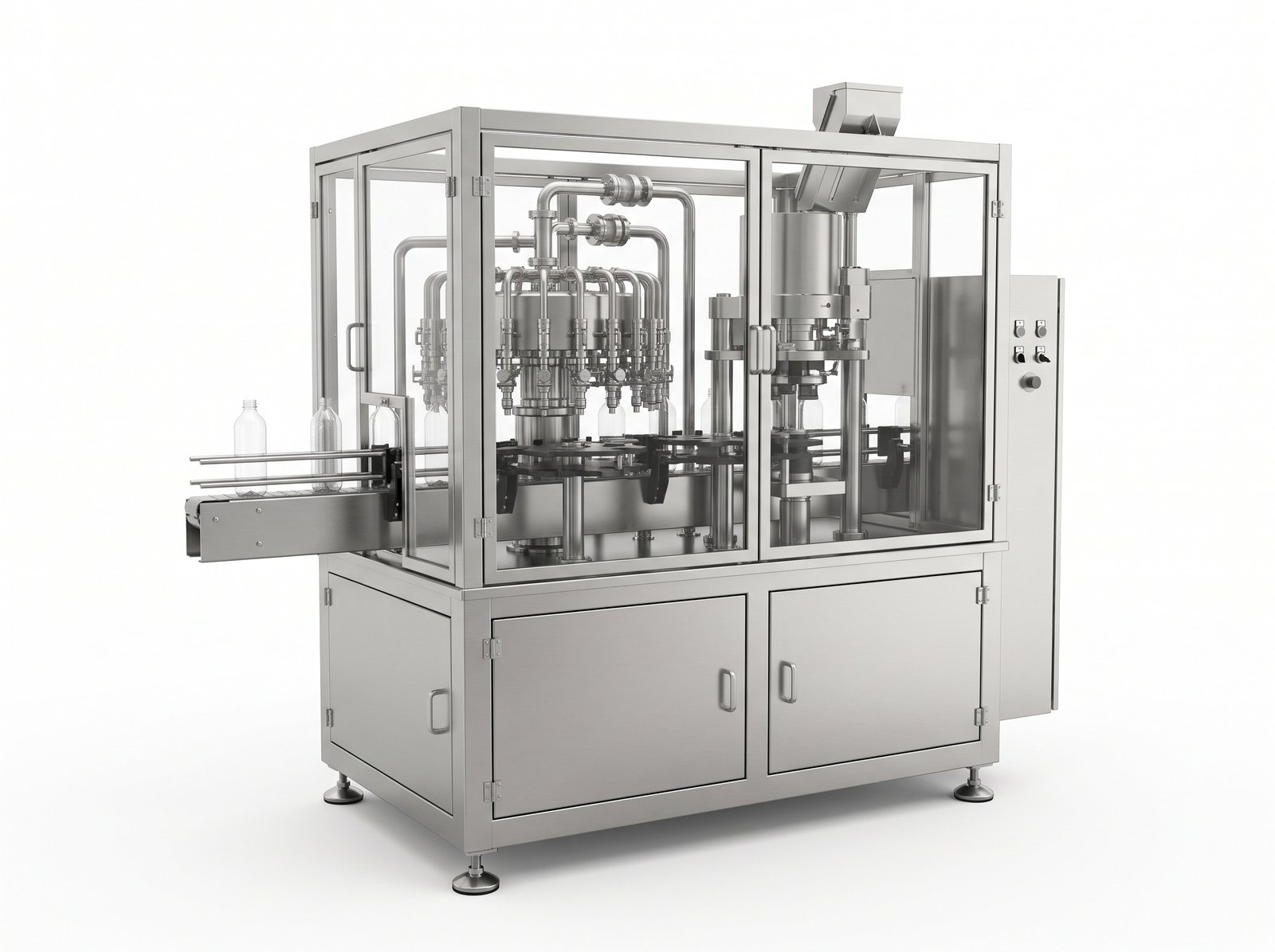
Juice from an insulated buffer tank is filled into PET bottles of 300 or 500 ml on a hot-fill bottle filling and capping machine and capped at once. Small lines use a semi-automatic filler with caps placed by hand; larger lines a two-head filler and capper. Filled bottles are laid on their side or inverted briefly so the hot juice also treats the cap. They are then cooled in a tunnel cooler, labelled and packed on the labelling, shrink wrapping and case packing machines.
Machines At This Stage
- Insulated filler buffer tank
- PET filler and capper
- Tunnel cooler
- Labelling machine, batch coder and carton packing
Stage 10
Machines At This Stage
Pineapple Juice Processing Plant Capacity
Pineapple juice plants are offered at 150 kg/hour, 500 kg/hour, 1, 1.5, 3 and 5 TPH of fruit, from a semi-automatic batch plant to a fully automatic line. The extractor, screw press, pasteuriser and filler are matched to the plant size, and bottle speeds fall as the bottle size rises. Each line is sized to the buyer’s pineapple supply, the months it is available and the juice to be sold.
What Decides The Design Of A Pineapple Juice Processing Plant
Pineapple variety and the style of juice decide the line.
- Raw material and season: pineapple supply through the year, and any blend fruit.
- Product mix: clear juice, pulpy juice or blends with passion fruit or watermelon.
- Scale and running hours: fruit an hour and shifts a day.
- Utilities available: steam fuel, water and power.
- Staff skill: operating the extractor, pasteuriser and filler.
- Packaging the local market expects: PET bottle sizes.
- Site and access: fruit receiving space and skin disposal.
What A Complete Pineapple Juice Processing Plant Includes
Process Line Of A Pineapple Juice Processing Plant
Water-bath fruit washer, inspection conveyor, stainless preparation tables, bucket elevator, roller pineapple juice extractor, transfer screw conveyor and screw press for skins, collection tanks, pulper and finisher, steam-jacketed mixing tanks, sugar syrup kettle, filter press and syrup tank, homogeniser and tube-in-tube pasteuriser with feed tank.
Packaging Machinery For A Pineapple Juice Processing Plant
Insulated filler buffer tank, PET filler and capper, tunnel cooler, labelling machine, batch coder and carton packing.
Utilities For A Pineapple Juice Processing Plant
Steam boiler, hot water generator, air compressor, cooling water for the pasteuriser, process water treatment and control panels.
Storage And Handling In A Pineapple Juice Processing Plant
Fruit receiving and holding area, a waste conveyor for skins and crowns, sugar store, juice holding tanks and a finished goods store.
Laboratory For A Pineapple Juice Processing Plant
The checks the plant needs, and the laboratory items we can supply with the project: Brix refractometer, acidity titration, pH meter and microbiology for shelf life.
Working Capital Materials For A Pineapple Juice Processing Plant
PET bottles, caps, labels, cartons, sugar, citric acid and cleaning chemicals.
Buying A Pineapple Juice Processing Plant In Stages
A first line can start at 150 kg of fruit an hour with a washer, hand peeling and cutting, a crusher, a kettle, a pulper, a mixing tank, a homogeniser, a pasteuriser and a semi-automatic filler. A roller extractor with a screw press for skins, a second mixing tank and an automatic filler and capper come as the line grows towards 1,500 kg an hour.
The steam supply, drainage and the floor area for the larger extractor and press should be allowed for from the start. Skins and crowns are a large share of the fruit and need a planned route out of the building. A first plant does not need a screw press until the roller extractor is in, and does not need automatic capping until output passes what a person can cap by hand.
Each addition fits the same hall and the same steam supply, so the line grows without the first machines being replaced.
Pineapple Juice Processing Plant Inputs And Utilities
Ripe pineapple arrives at 12 to 14 Brix, which sets how much syrup a sweetened juice needs. Steam at 3 to 4 bar heats the kettles, mixing tanks and pasteuriser. Process water washes the fruit and cleans the plant. Cooling water cools the juice after pasteurising.
Compressed air at 6 to 7 bar works the filler on larger lines. Labour is needed most at topping, tailing and inspection, and at packing. Skins, crowns and pressed residue leave in large volumes each day and need a planned route off site, often as animal feed or compost.
Pineapple Juice Processing Plant Inspection And Documentation
The washer, roller extractor, screw press, pasteuriser and PET filler can be inspected by SGS or Bureau Veritas before dispatch, when the buyer requires it. Where a steam boiler is supplied, it can carry IBR certification as compliance documentation. Manuals and an initial parts kit travel with the machines. At site, staff are trained on setting the roller gap and screw press for ripe and firm fruit, and on the pasteuriser and filler.
How A Pineapple Juice Processing Plant Project Runs
We start from your pineapple supply, the juice and blends you plan and the site, and size the first line so the screw press and automatic filler can follow. Support continues once juice is filling. Read more on How we work.
Pages Related To The Pineapple Juice Processing Plant
Fruit processing. Fruit juice processing plant. Citrus juice plant. Canned fruit and vegetable plant. Fruit pulp and concentrate plant. Fruit washing machine. Sorting and grading conveyor. Fruit mill and crusher. Juice extractor. Fruit pulper and finisher. Blending and sugar dissolving tanks. Homogeniser. Plate and tubular pasteuriser. Hot-fill bottle filling and capping machine. Labelling, shrink wrapping and case packing.
Every machine for this line is in our fruit processing machinery range.

Frequently Asked Questions
Why Does A Pineapple Juice Processing Plant Use A Roller Extractor?
Pineapple is fibrous. A roller extractor presses the juice out without shredding the fibre into it, and the skins go on to a screw press for the rest of the juice.
Can A Pineapple Juice Processing Plant Make Blends?
Yes. Passion fruit or watermelon can be added at the mixing tanks. Lines that make blends often prepare the fruit by hand and use a crusher and pulper instead of the roller extractor.
What Is The Smallest Practical Pineapple Juice Processing Plant?
Lines start at 150 kg of fruit an hour with a semi-automatic filler. They grow by adding the roller extractor, screw press and an automatic filler.
How Many Months A Year Can A Pineapple Juice Processing Plant Run?
Where pineapple is available for much of the year, the line can run for longer. Where supply dips, the same blending, pasteurising and filling end can run on stored pulp or concentrate.
Is A Screw Press Worth Adding To A Pineapple Juice Processing Plant?
It recovers juice that would otherwise leave with the skins, from fruit already paid for. On a roller extractor line it is usually one of the first additions.
Can A Pineapple Juice Processing Plant Also Make Canned Pineapple?
The washer and preparation are shared, but canned slices need a corer, slicer, syrup filling, exhaust box, seamer and retort. That is a separate line, a canned fruit and vegetable plant, set beside the juice line.
Next Step For Your Pineapple Juice Processing Plant
Send us your pineapple supply, the juice you want to sell and the details of your site, and we will prepare a customer-specific proposal. Write to archit@sonikaimpex.com or sunil@sonikaimpex.com, or call +91 99027 67900.