

Home › Fruit Processing Machinery › Plate and tubular pasteuriser
Juice Pasteuriser: Tubular And Plate Pasteurisers For Fruit Juice And Puree
What A Juice Pasteuriser Does
A juice pasteuriser heats juice, nectar, puree or sauce to a set temperature, holds it there long enough to destroy the organisms that spoil it, and cools it to the temperature the next step needs. It is the heat treatment stage of a fruit processing line, after blending and homogenising, with deaeration where fitted, and immediately before filling. For hot filling into heat-set PET bottles the product is pasteurised at 90 to 95 °C with a 30 to 45 second hold and filled at 85 to 88 °C, hot enough to pasteurise the inside of the bottle and cap as it fills.
When pasteurisation is done badly, the fault shows up in the market. Too little heat or too short a hold leaves yeasts and moulds alive, and bottles swell or ferment on the shelf. Too much heat cooks the juice, browns the colour and dulls the fresh fruit taste. Uneven heating does both at once.
Juice Pasteuriser Capacity
Pasteurisers are offered at 300, 500, 1,000, 2,000 and 3,000 litres/hour, from a tube-in-tube unit to a plate or tubular pasteuriser with automatic flow diversion. They serve juice plants of 250 to 3,000 litres/hour of juice. You choose the size to match the filler and the line output, and the heating section, holding tube and cooling sections are then sized to the temperatures your product needs.

Where A Juice Pasteuriser Sits In The Line
Product arrives from the blending and sugar dissolving tanks, through the homogeniser, and the deaerator where one is fitted, at near room temperature, standardised and free of trapped air. It enters through a float balance tank that keeps the pasteuriser feed pump primed and the flow steady.
It leaves either hot, at filling temperature, for the hot-fill bottle filling and capping machine, or cooled, for holding in a stainless steel storage tank or for the pouch and jar filling machine. Product that has not reached pasteurisation temperature does not leave at all. The flow diversion valve sends it back to the balance tank to be heated again.

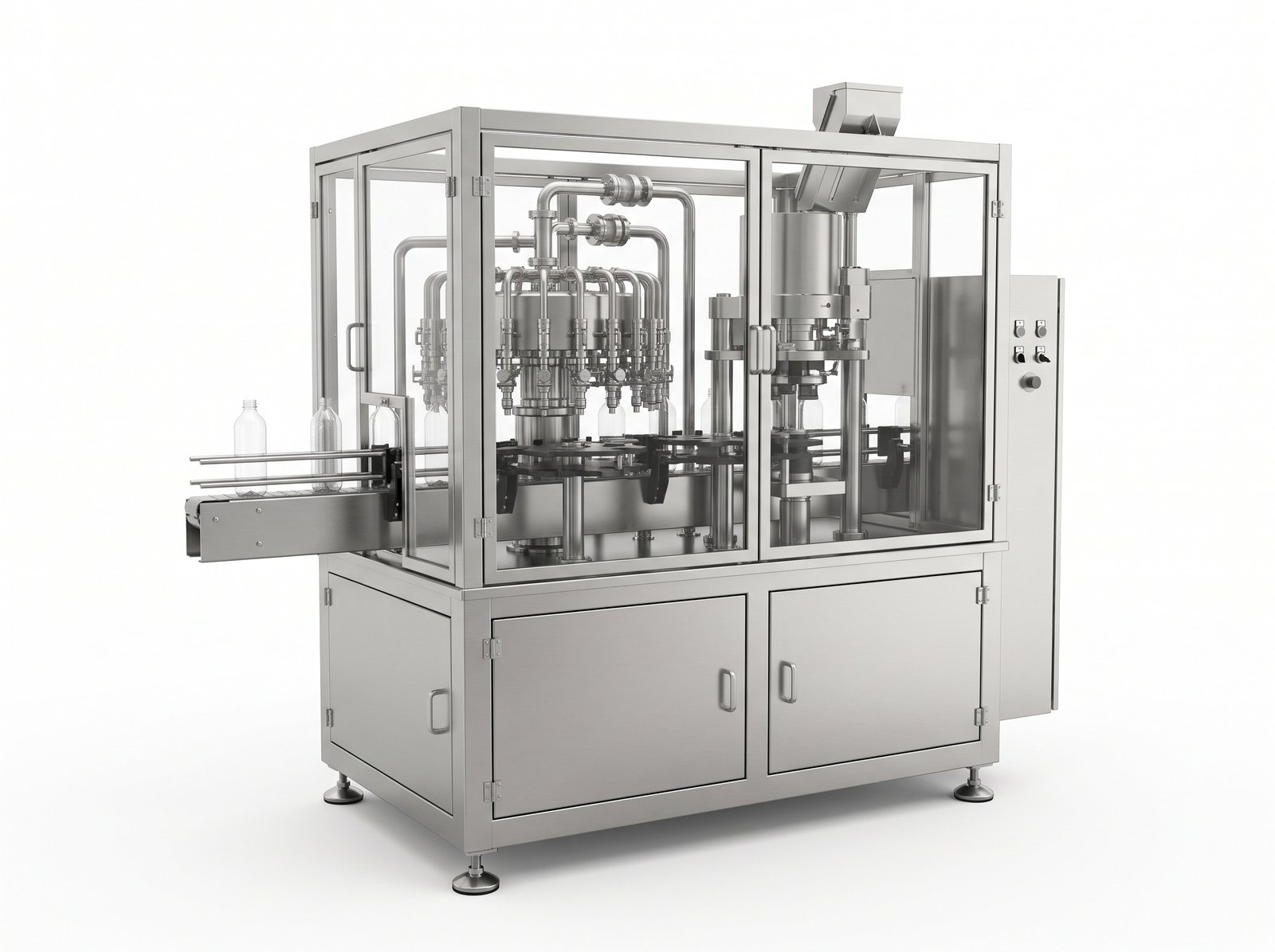
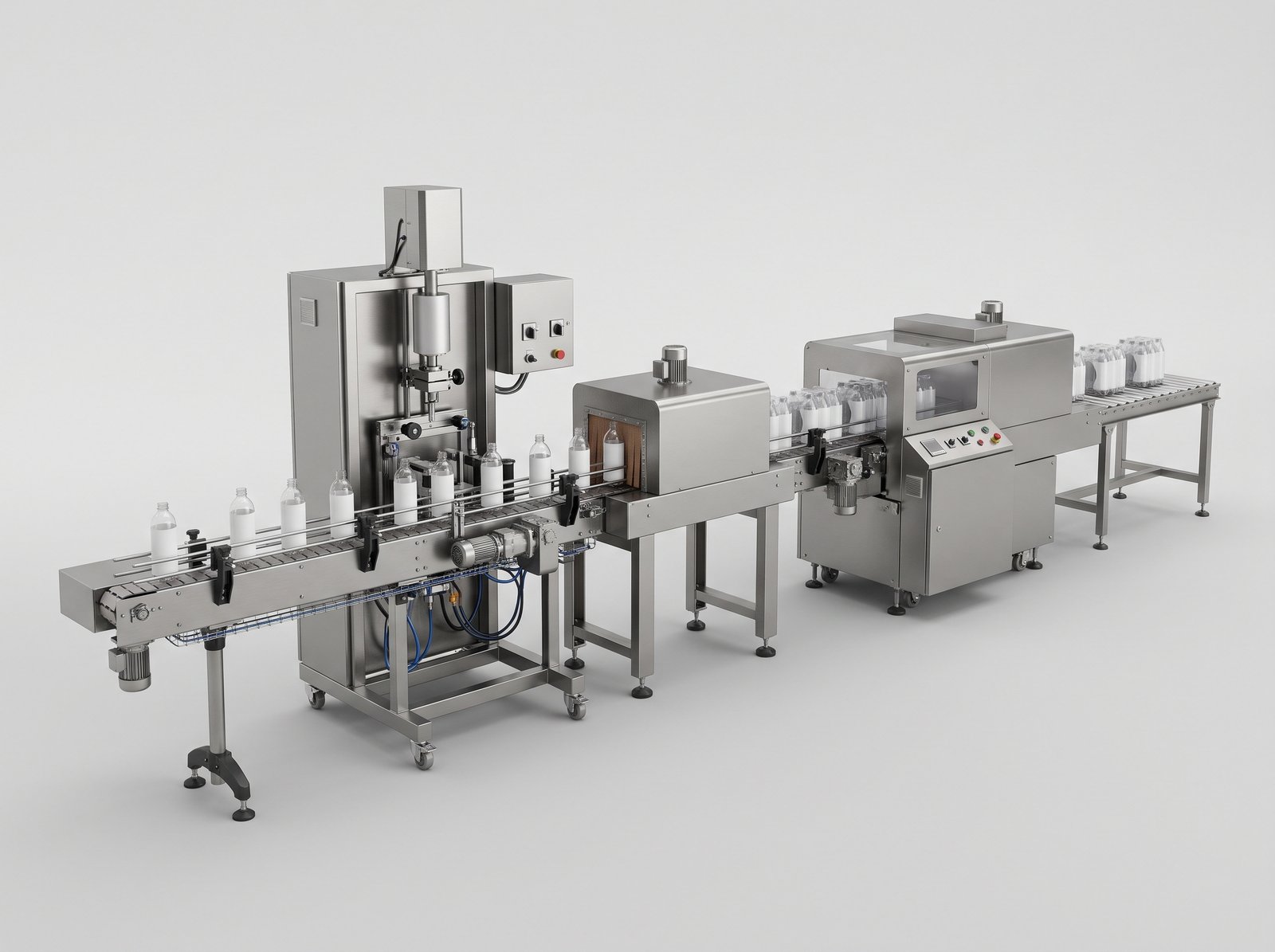
Plate and tubular pasteuriser
This Machine
How It Works
1
Heat Exchange Through Tubes Or Plates In The Juice Pasteuriser
The heat exchanger is the heart of the machine. In the tubular type, product runs through corrugated inner tubes of SS 316 inside SS 304 outer tubes, with hot water flowing the other way around them. The corrugations keep the product turbulent, so it heats evenly with a short residence time, and the gasket-free design suits pulpy products and is quick to clean. In the plate type, product and hot water flow in thin channels between pressed stainless plates, which gives high heat transfer for clear juices.
2
Regeneration And Heating In The Juice Pasteuriser
The product passes through a regeneration section first, where it is warmed by product already pasteurised. It then moves to the heating section, where hot water brings it to the set temperature.
3
Holding And Cooling In The Juice Pasteuriser
Next the product runs through a holding tube, a length of SS 316 pipe sized so that the product spends the required seconds at temperature. After the holding tube it is cooled, by regeneration and then by cooling tower water or chilled water, to the outlet temperature.
4
Hot Water Supply And Control Of The Juice Pasteuriser
Hot water is made in a shell and tube heater with steam, controlled by a regulating valve. A PLC reads the temperature after the holding tube and drives the automatic flow diversion valve, records the process, and runs the CIP sequence. The operator sets the pasteurisation temperature, the hold, the outlet temperature and the flow rate.
4
Types And Options
Corrugated Tubular Or Plate Juice Pasteuriser
The corrugated tubular design suits pulpy juices, nectars, purees and sauces. The plate design suits clear juices and syrups.
Tube-In-Tube Juice Pasteuriser For Small Lines
A tube-in-tube design with a feed tank serves small lines and batch-style running.
Steam-Injection Heating On A Larger Juice Pasteuriser
Larger ready-to-serve lines can heat the product by steam injection.
Hot-Fill Or Full-Cooling Outlet On The Juice Pasteuriser
The outlet is set for hot filling, or for full cooling for filling cold, storage or pouch packing.
Regeneration Section For Heat Recovery In The Juice Pasteuriser
A regeneration section recovers heat and lowers steam use on lines that run long hours.
Juice Pasteuriser Control From Indicator To Full PLC
Control ranges from a temperature indicator controller with manual diversion up to full PLC control with recording, alarms and automatic CIP.
Skid-Mounted Juice Pasteuriser
The pumps and the hot water set can come pre-assembled on a skid, which shortens installation.
What Decides The Choice Of A Juice Pasteuriser
- The product: clear juice, pulpy nectar, puree or sauce, which decides tubular or plate design.
- How it is filled: hot fill in PET or glass, or cold fill, which sets the outlet temperature and the cooling sections.
- Scale and running hours: the flow rate must match the filler, and long runs justify heat recovery.
- Upstream: a deaerator and homogeniser ahead of the pasteuriser give an even feed and better heat transfer.
- Utilities: steam for the hot water set, cooling tower or chilled water, compressed air for automatic valves, and power for pumps and controls.
- Cleaning: the pasteuriser is cleaned in place at the end of each run, so it must connect to the line CIP system.
What A Juice Pasteuriser Is Supplied With
- Tubular or plate heat exchanger with heating, regeneration and cooling sections
- Holding tube in SS 316
- Float balance tank and feed pump with flow regulation
- Automatic flow diversion
- Hot water preparation set with shell and tube heater, hot water pump and steam control
- Stainless steel control panel, with PLC where specified
- Skid-mounted and pre-assembled, with back-wash arrangement
- Standard spares and operation and maintenance manuals
- Installation, commissioning and operator training at your site
Juice Pasteuriser On Its Own Or In A Line
A pasteuriser can be bought on its own to replace batch heating in a steam-jacketed and vacuum cooking kettle, or to add capacity to a line that has outgrown its first unit. It is also part of every complete fruit juice processing plant, citrus juice plant, pineapple juice plant, hibiscus and herbal drink plant and tomato ketchup plant.
It also works in the tomato puree, paste and sauce plant.
Juice Pasteuriser Inspection And Documentation
SGS or Bureau Veritas can inspect the pasteuriser before shipment as the buyer requires: the heat exchanger and holding tube steel, a pressure test of the product and hot water circuits, and a run of the temperature control and flow diversion. Manuals, the packing list and an initial parts kit of gaskets and seals come with the supply.
Frequently Asked Questions
Tubular Or Plate Juice Pasteuriser: Which Suits My Product?
A plate pasteuriser suits clear juices and gives high heat transfer in a compact unit. A corrugated tubular pasteuriser handles pulp and fibre without blocking, so it is the usual choice for nectars, purees and sauces.
Why Is Juice Filled Hot After The Juice Pasteuriser?
Filling at 85 to 88 °C pasteurises the inside of the bottle and the cap as the juice goes in. The bottle is then cooled in a tunnel pasteuriser and bottle cooler so the juice keeps its colour and flavour.
What Happens If The Juice Pasteuriser Temperature Drops During A Run?
The controller sees it after the holding tube and the flow diversion valve returns the product to the balance tank. Nothing under-heated reaches the filler.
How Is A Juice Pasteuriser Cleaned?
It is cleaned in place after each run with hot water and detergent from the CIP system, without opening the heat exchanger.
Related Machines

Next Step For Your Juice Pasteuriser
Tell us your product, how you fill it and the output you need, and we will prepare a customer-specific proposal for the pasteuriser. How we work sets out how a project runs. Write to archit@sonikaimpex.com or sunil@sonikaimpex.com, or call +91 99027 67900.