

Home › Fruit Processing › Fruit pulp and concentrate plant
Mango Pulp Processing Plant: Pulp, Concentrate And Aseptic Bag-In-Drum Filling
Who A Mango Pulp Processing Plant Suits
A mango pulp processing plant suits a buyer who has a large seasonal supply of mango, pineapple or orange and wants to turn the harvest into a bulk product that keeps and travels. Pulp and concentrate are sold to juice and dairy makers at home and abroad, or held by the buyer to run a juice line through the months when there is no fruit. It fits a first plant for a fruit cooperative or exporter, and an expansion for a juice maker who wants a pulp supply of their own. Plants run from small batch lines taking 2 tonnes of fruit a day up to lines of 10 TPH.
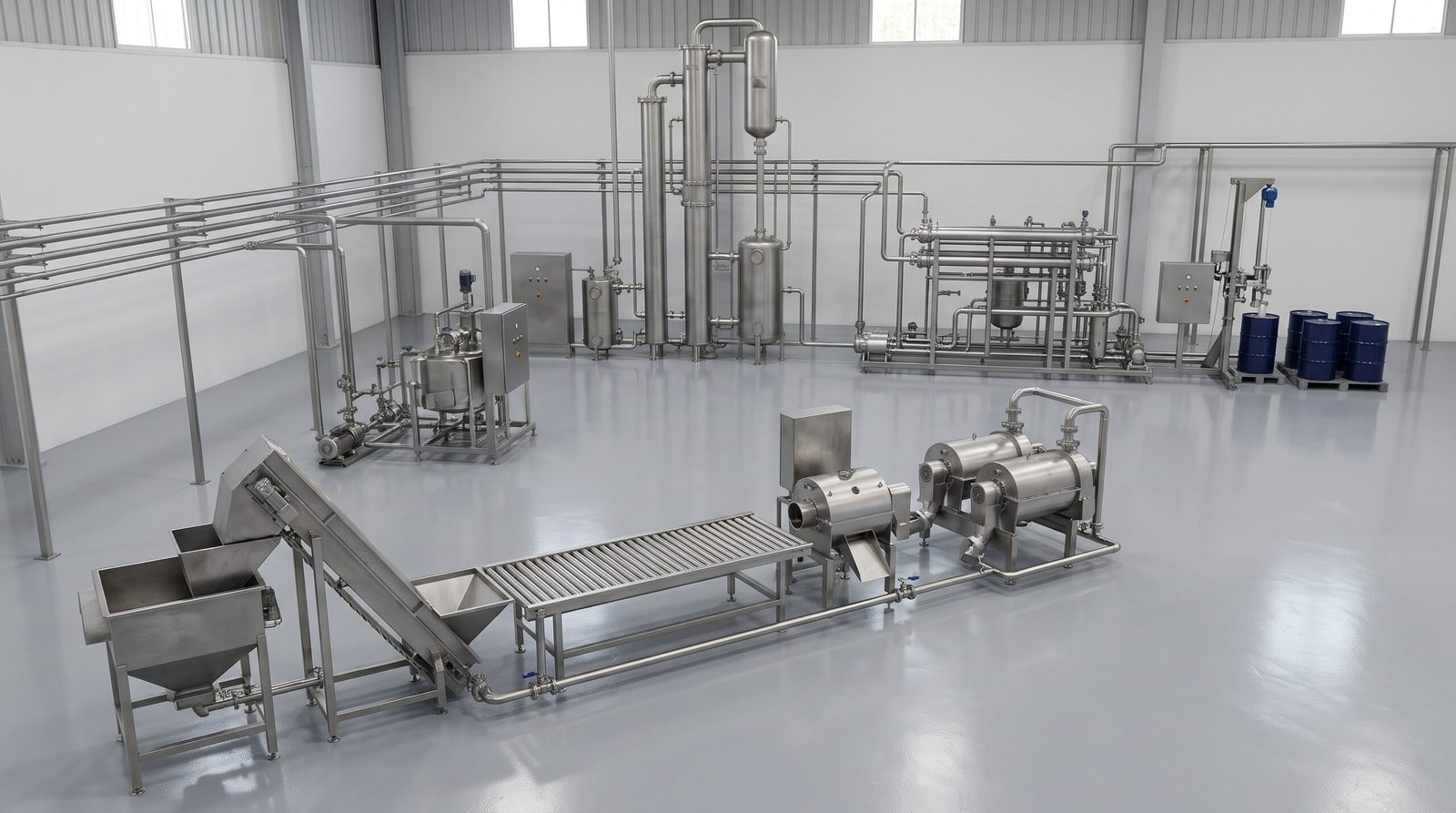
Process Flow

Stage 1
Washing And Brushing In The Mango Pulp Processing Plant
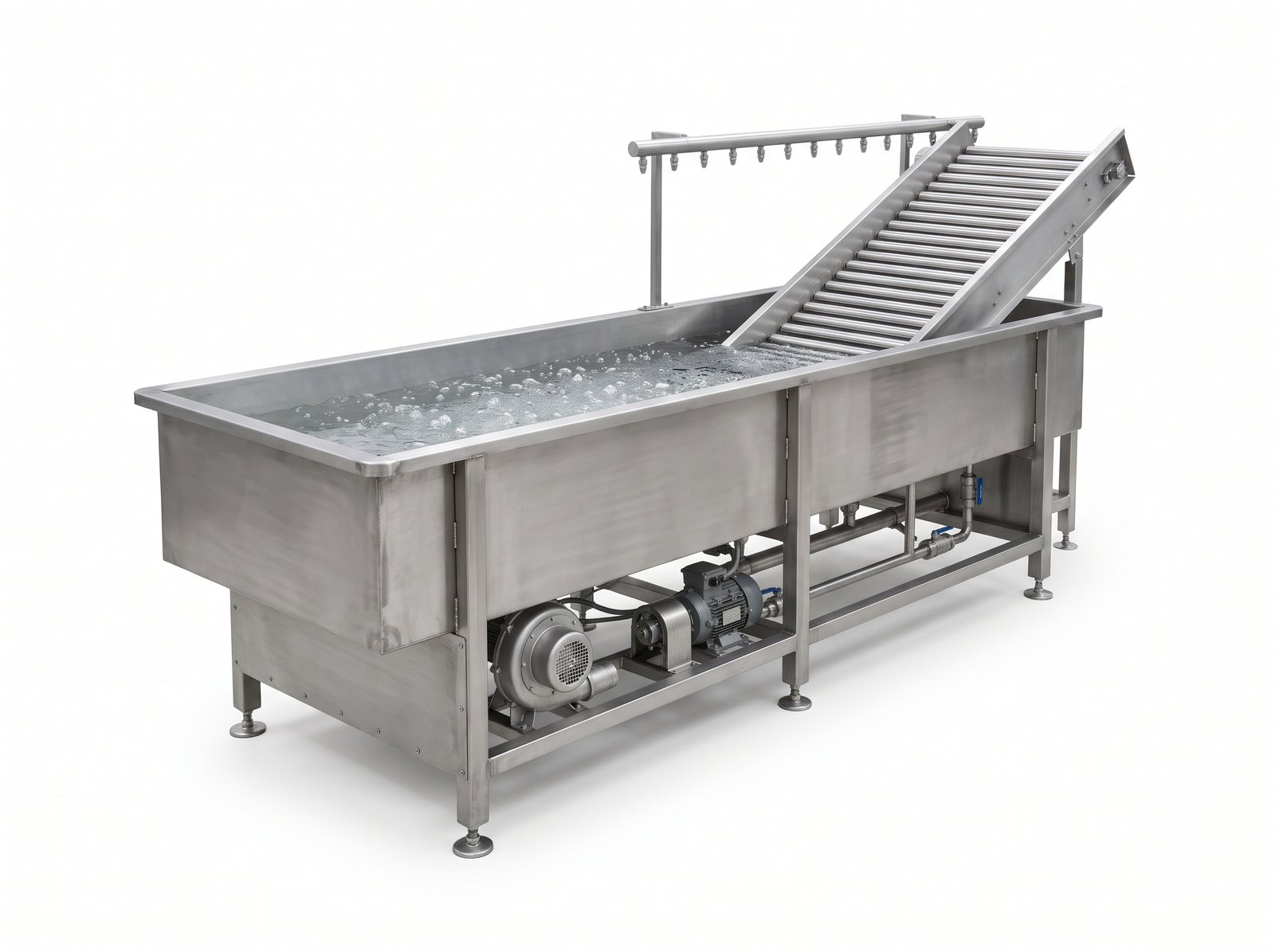
Ripe fruit is tipped into a fruit washing machine where paddles push it through the water, and a stainless slat elevator lifts it out under spray. On mango lines a brushing machine with rows of rotating nylon brushes and sprayers scrubs off latex and dirt. The buyer chooses the washer size from the peak hourly intake of the season.
Machines At This Stage
- Fruit washer
- Slat elevator
- Brushing machine
Stage 2
Inspection In The Mango Pulp Processing Plant
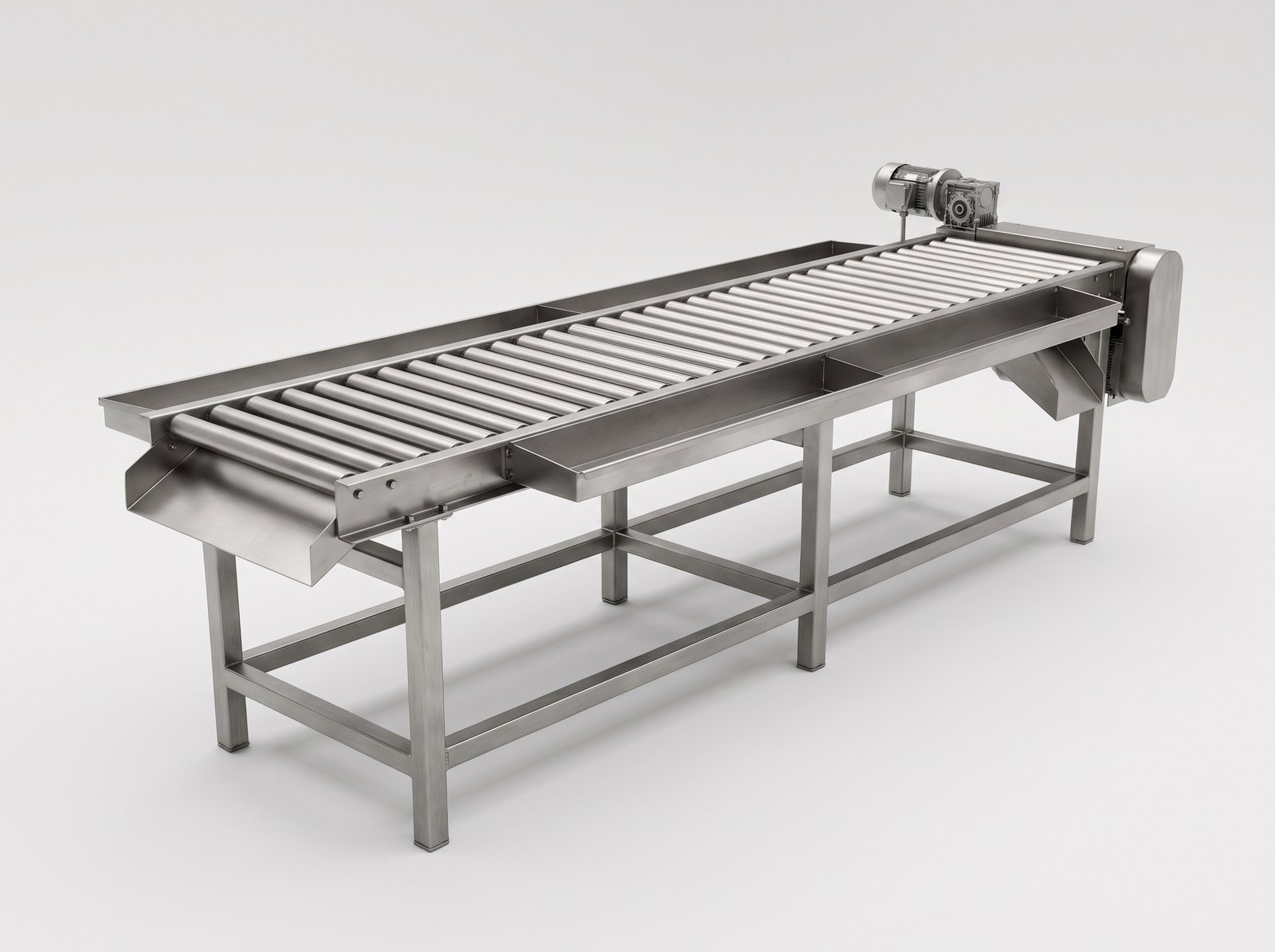
Fruit turns on stainless rollers in front of workers who remove unripe, rotten and damaged fruit. The roller inspection table is the first step of the sorting and grading conveyor range, and a variable speed drive lets the line slow down when a poor lot arrives. Poor sorting shows up later in the colour and flavour of the pulp, so the table is sized to the peak intake. Distributing conveyors and bucket elevator and belt conveyors carry the sorted fruit on to extraction.
Machines At This Stage
- Roller inspection table
- Distributing conveyor
- Elevator conveyor
Stage 3
Destoning And Pulping In The Mango Pulp Processing Plant
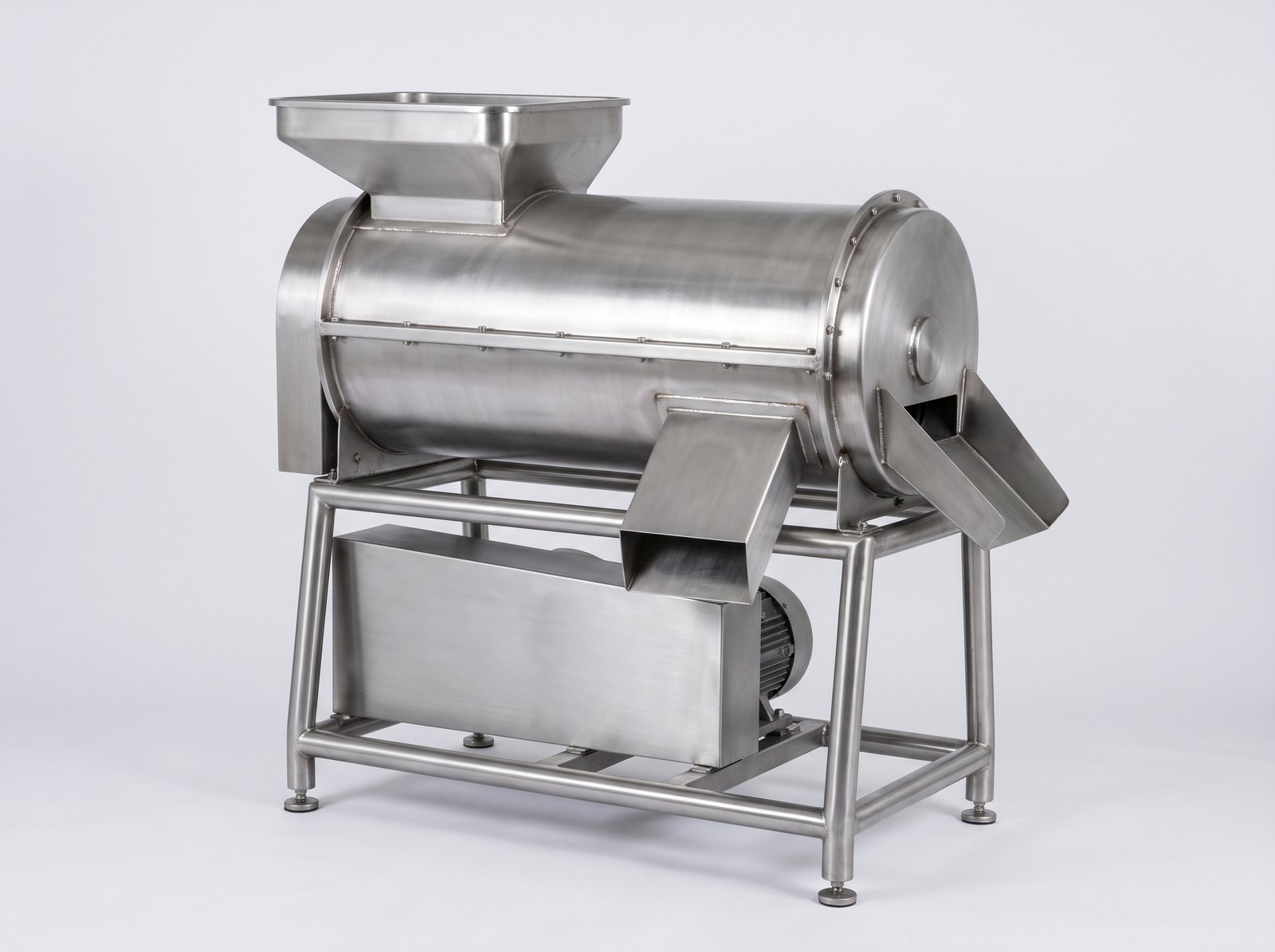
The mango destoner throws the fruit against beater blades and nylon brushes inside a large sieve, so the pulp passes through and the stone and skin are thrown out at the end. All contact parts are stainless steel. A second refining group in the same machine takes the pulp to a finer screen. For pineapple and orange, this step uses a juice extractor or a fruit mill and crusher.
Machines At This Stage
- Mango destoner, single-stage or as a destoner and refiner pair
- Juice extractor or fruit mill and crusher, for pineapple and orange
- Waste conveyor for stones and skins
Stage 4
Refining In The Mango Pulp Processing Plant
The pulp passes through a fruit pulper and finisher, where rotating blades sweep it across a finer perforated screen to remove fibre. Where black specks must come out, a decanter centrifuge follows. The buyer chooses the screen and whether a decanter is needed by the grade the pulp customer pays for.
Machines At This Stage
- Pulper and finisher, single or twin
- Decanter centrifuge, where specks must be removed

Stage 5
Preheating And Standardising In The Mango Pulp Processing Plant
Pulp is pumped by a positive displacement pump into an agitated standardisation tank, then through a preheater, at 60 to 70 °C for mango, which stops the natural enzymes that thin and darken the pulp. Batches are tested and adjusted here so each drum carries the same Brix and acidity. The standardisation and buffer tanks are part of the stainless steel storage tanks and CIP system that also cleans the line between runs.
Machines At This Stage
- Positive displacement pump
- Standardisation and buffer tanks
- Preheater

Stage 6
Clarifying For Concentrate In The Mango Pulp Processing Plant
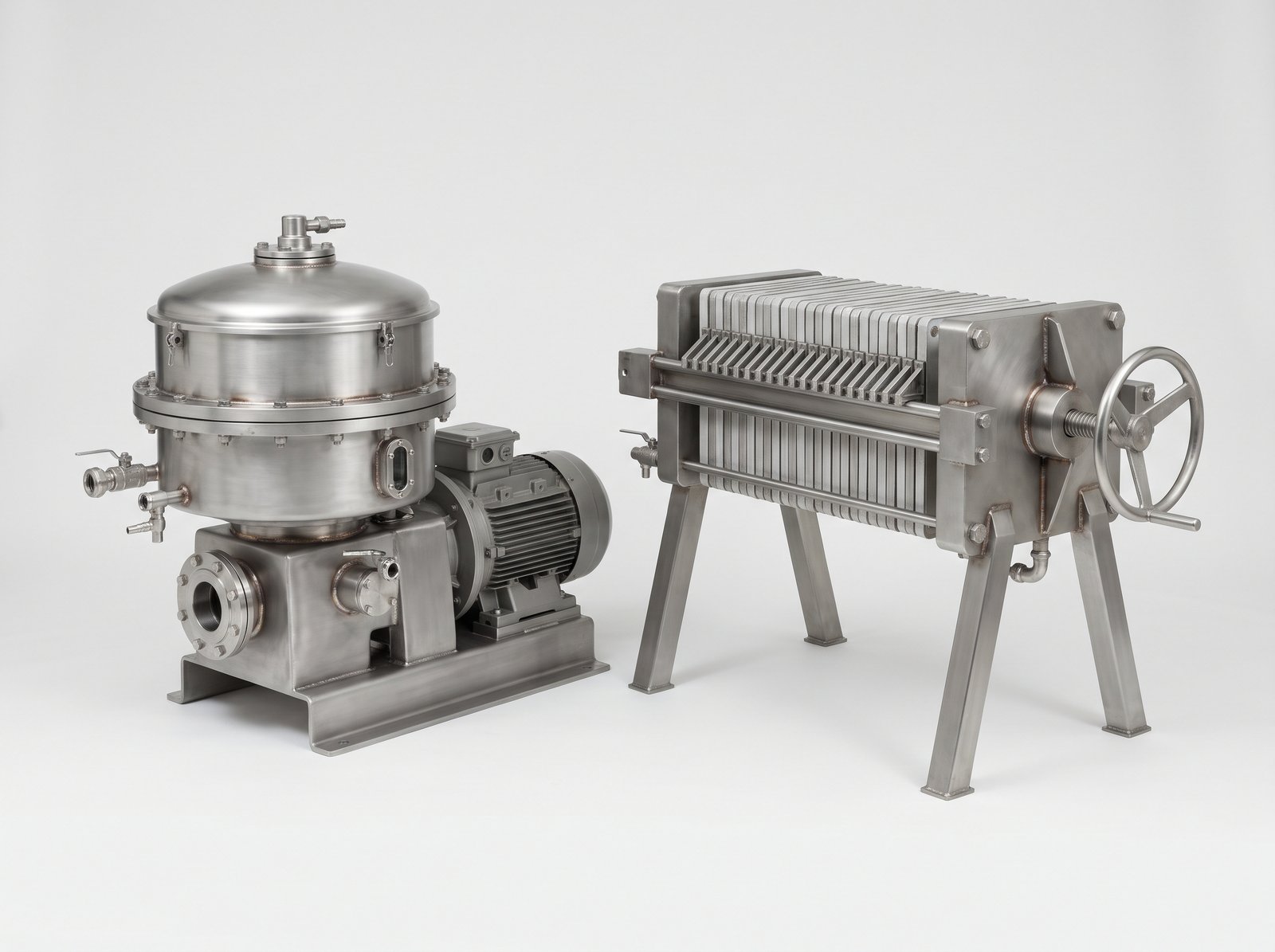
For concentrate, a centrifugal clarifier removes part of the pulp from the juice before it reaches the evaporator, so the evaporator surfaces stay clean and the concentrate stays pourable. The clarifier comes from the centrifugal clarifier and filter press range. Plain pulp for bag-in-drum filling skips this step.
Machines At This Stage
Stage 7
Concentrating In The Mango Pulp Processing Plant
The fruit evaporator boils water off under vacuum at a vapour temperature of 50 to 55 °C, low enough to keep colour and aroma, and takes the juice to 60 to 65 Brix in a single pass. The buyer chooses the evaporator size from the hours of fruit per day, since it is the largest single steam user in the plant.
Machines At This Stage
- Falling-film or plate evaporator
- Concentrate collection tank

Stage 8
Sterilising In The Mango Pulp Processing Plant
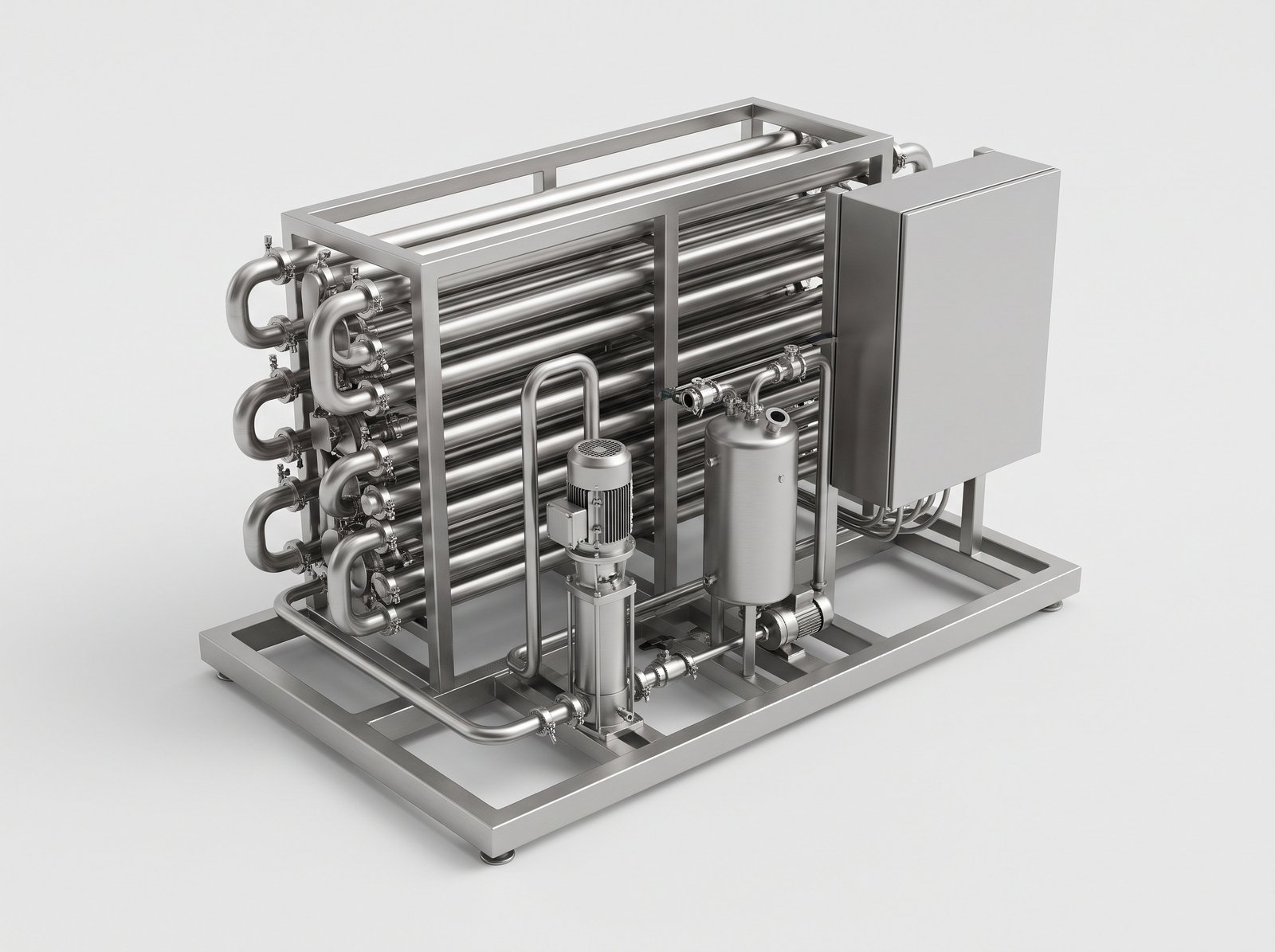
Pulp or concentrate is pumped by a lobe pump through a plate or tubular aseptic steriliser with a deaerator tank, heated to 98 to 110 °C, held for 30 to 60 seconds in a holding cell and cooled. A flow diversion device returns anything that has not reached temperature.
Machines At This Stage
- Lobe pump
- Aseptic steriliser with holding cell
- Deaerator tank
- Flow diversion device
Stage 9
Aseptic Filling In The Mango Pulp Processing Plant
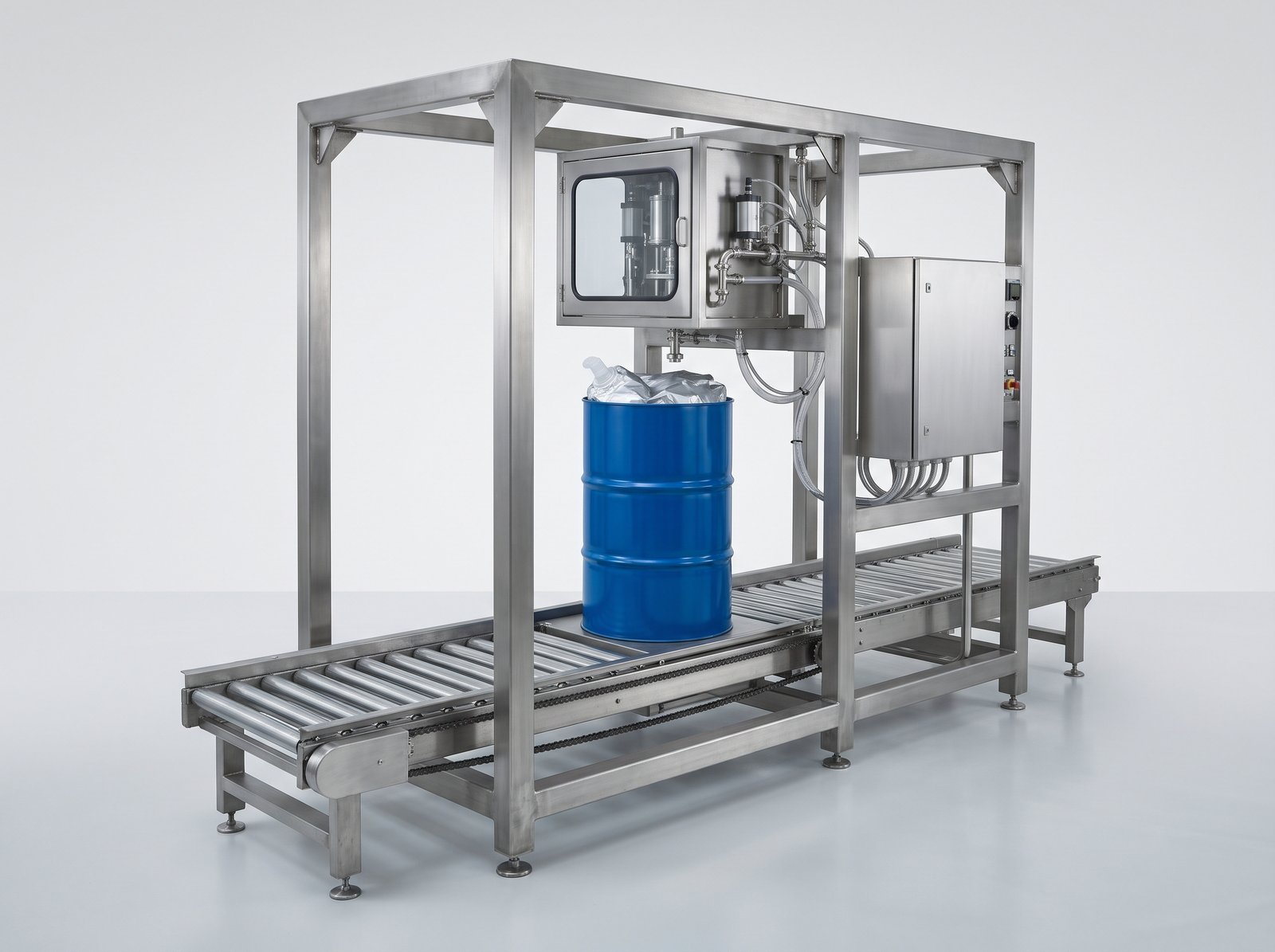
The cooled product, at 20 to 35 °C, is filled by the aseptic bag-in-drum filler into pre-sterilised bags of up to 200 litres sitting inside drums, through a filling head kept sterile with steam. Smaller bags run on a roller conveyor. The filled drums go to a covered store until sold or used.
Machines At This Stage
- Aseptic bag-in-drum filler
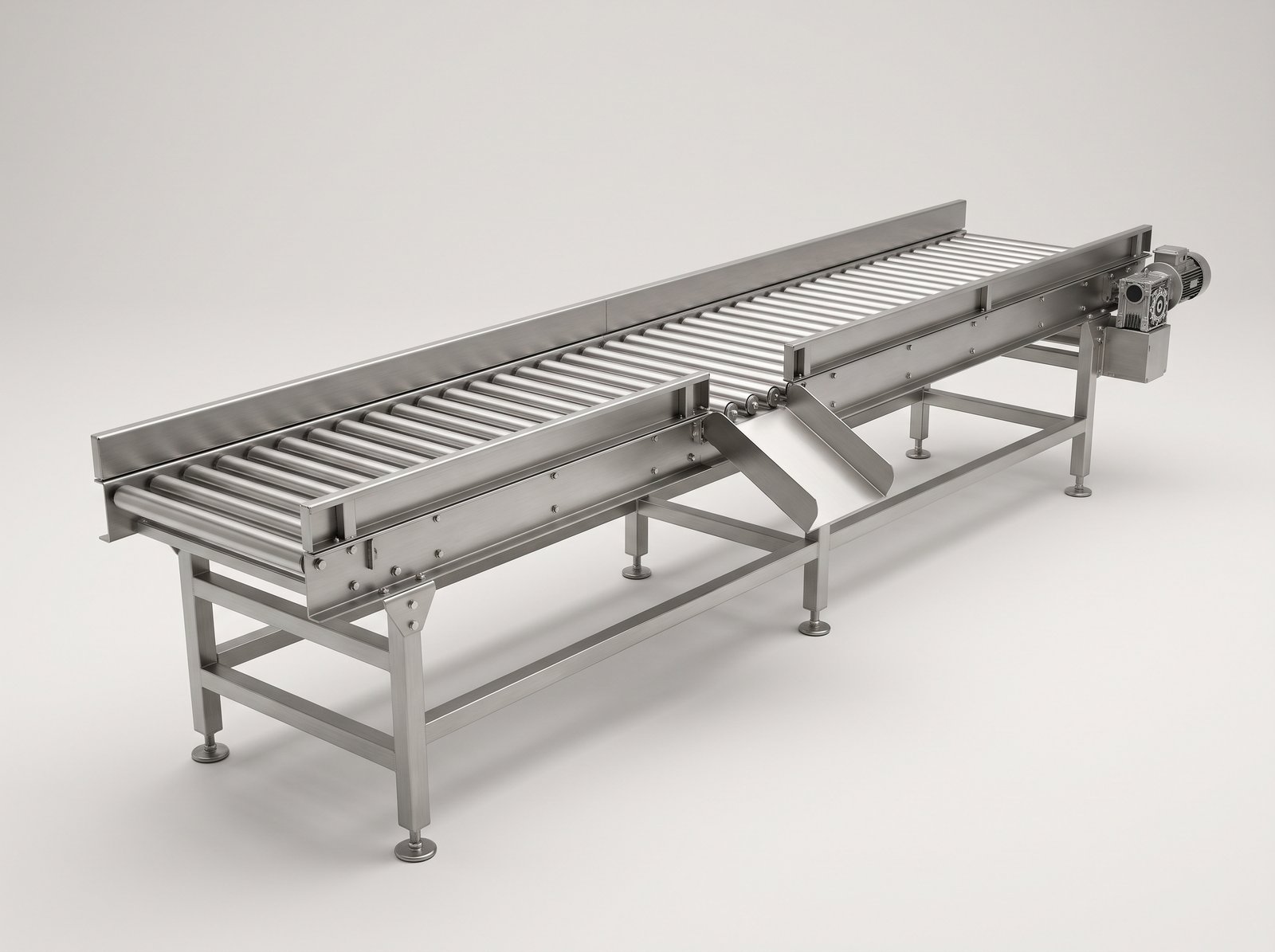
- Roller conveyor for small bags
- Drum handling trolleys
Stage 10
Machines At This Stage
Mango Pulp Processing Plant Capacity
Fruit pulp and concentrate plants are offered at 500 kg/hour, 1, 2, 3, 5 and 10 TPH of fruit, from a pulp-only batch line to a continuous pulp and concentrate plant. Small soursop and banana lines are offered at 2 tonnes/day of fruit. The evaporator, steriliser and bag filler are matched to the plant size. Each plant is sized to the buyer’s fruit and season in the needs assessment, with the washer set to the peak intake.
What Decides The Design Of A Mango Pulp Processing Plant
The season decides most of it. Mango arrives in a short season, and the plant must take the whole harvest in that time.
- Raw material and season: which fruits, their weeks of harvest, and ripening space.
- Product mix: plain pulp, single-strength juice or concentrate.
- Scale and running hours: peak tonnes a day and shifts during the season.
- Utilities available: steam fuel, cooling water and grid stability.
- Staff skill: aseptic filling and evaporation need trained operators.
- Packaging the buyer of the pulp expects: bag size and drum type.
- Site and access: lorry access in the rains, and drum storage.
What A Complete Mango Pulp Processing Plant Includes
Mango Pulp Processing Plant Process Line
Fruit washer, brushing machine, roller inspection table, distributing and elevator conveyors, mango destoner or fruit extractor, pulper and finisher, decanter, standardisation and buffer tanks, preheater, centrifugal clarifier, evaporator, concentrate collection tank and aseptic steriliser with deaerator.
Mango Pulp Processing Plant Packaging Machinery
Aseptic bag-in-drum filler with roller conveyor for small bags. A plant that also sells pulp in retail packs adds a can filler and seamer from the canned fruit and vegetable plant range, or a hot-fill bottle filling and capping machine.
Utilities For A Mango Pulp Processing Plant
Steam boiler sized for the evaporator, cooling tower, glycol chiller, dry instrument air from a compressor and dryer, process water treatment, and a centralised control panel for the line.
Mango Pulp Processing Plant Storage And Handling
Ripening area and crates for incoming fruit, a waste conveyor for stones and skins, drum handling trolleys and a covered store for filled drums. Pumps move product between tanks.
Mango Pulp Processing Plant Laboratory
The checks the plant needs, and the laboratory items we can supply with the project: Brix refractometer, pH meter, acidity titration, viscosity check and microbiology for sterility tests on filled bags.
Working Capital Materials For A Mango Pulp Processing Plant
Aseptic bags, drums, liners, citric acid and cleaning chemicals for the cleaning-in-place system.
Buying A Mango Pulp Processing Plant In Stages
A first plant can stop at pulp: washing, destoning, refining, preheating, sterilising and aseptic filling. Pulp in drums already reaches the juice and dairy trade, and it keeps the steam and cooling load small. The clarifier and evaporator can be added later between the preheater and the steriliser, if the plant layout leaves space for them and the building can take the evaporator’s height.
What cannot be deferred is the steam supply and the cooling water. An evaporator added later needs far more steam and cooling than a pulp line, so the boiler house, the cooling tower base and the water source should be planned for it from the start. The aseptic filler and steriliser are needed from day one, since pulp without them does not keep. A first plant does not need a decanter unless its customers grade on specks.
Mango Pulp Processing Plant Inputs And Utilities
Ripe fruit at the right Brix is the input. Mango arrives at 14 to 16 Brix, pineapple at 12 to 14 and orange at 9 to 11, and the evaporator’s work depends on it.
Steam is needed at 3 to 4 bar for preheating and sterilising and at 9 bar for the evaporator. Cooling water condenses the evaporator vapour, and chilled glycol water cools the product before filling. Dry, oil-free compressed air at 6 to 7 bar works the valves and filler.
Power runs the destoner, pumps and vacuum system. Labour is needed mostly at inspection, waste handling and drum handling.
Mango Pulp Processing Plant Inspection And Documentation
The destoner, pulper, evaporator, aseptic steriliser and bag filler can be inspected by SGS or Bureau Veritas before they are packed, as the buyer requires. Where the plant has its own steam boiler, it can be supplied IBR certified as compliance documentation for the boiler inspector. Manuals and an initial parts kit come with the machines. Training at site gives most time to the steriliser’s hold and the filling head’s steam sterilising, since a single unsterile bag spoils its drum.
How A Mango Pulp Processing Plant Project Runs
The plan is drawn from the fruit, the length of its season and who will buy the pulp. Installation and commissioning are planned around the buyer’s harvest season. After that, support follows the plant into each new season. Read more on How we work.
Pages Related To The Mango Pulp Processing Plant
- Fruit processing
- Fruit juice processing plant
- Tomato puree, paste and sauce plant
- Canned fruit and vegetable plant
- Fruit washing machine
- Sorting and grading conveyor
- Mango destoner
- Fruit pulper and finisher
- Juice extractor
- Centrifugal clarifier and filter press
- Fruit evaporator
- Deaerator
- Aseptic steriliser
- Aseptic bag-in-drum filler
- Stainless steel storage tanks and CIP system
Every machine for this line is in our fruit processing machinery range.

Frequently Asked Questions
What Is The Difference Between Pulp And Concentrate From A Mango Pulp Processing Plant?
Pulp keeps the fruit’s own water and body and is sold by the drum to juice and dairy makers. Concentrate has most of the water taken off, to 60 to 65 Brix, so it costs less to store and ship and is diluted again by the user.
Why Does A Mango Pulp Processing Plant Use Aseptic Bag-In-Drum Filling?
Sterile pulp filled into a sterile bag keeps without refrigeration in the bag for long periods, which lets the season’s fruit be sold or used over the year.
Can The Same Mango Pulp Processing Plant Run Pineapple And Orange?
Yes, one fruit at a time. Washing, preheating, evaporation, sterilising and filling are shared. The extraction stage changes, with a destoner for mango and extractors for pineapple and orange.
Does A Mango Pulp Processing Plant Need An Evaporator?
Only to make concentrate. A pulp plant without one is smaller and simpler, and the evaporator can follow when the market for concentrate is there.
Why Is The Pulp Preheated In A Mango Pulp Processing Plant?
Heating mango pulp to 60 to 70 °C straight after pulping stops the natural enzymes that would thin the pulp and change its colour while it waits.
Next Step For Your Mango Pulp Processing Plant
Send us your fruit, its season and the product you want to sell, with the details of your site, and we will prepare a customer-specific proposal. Write to archit@sonikaimpex.com or sunil@sonikaimpex.com, or call +91 99027 67900.