

Home › Fruit Processing › Tomato puree, paste and sauce plant
Tomato Paste Processing Plant: Puree, Paste And Sauce In Cans, Pouches And Drums
Who A Tomato Paste Processing Plant Suits
A tomato paste processing plant suits a buyer in a tomato-growing area where the harvest comes in faster than the fresh market can take it. Turning tomatoes into puree, paste or cooking sauce lets the grower or trader hold the crop for months and sell it to households, caterers and food makers. It fits a first plant for a cooperative or agro-processor, and an expansion for a ketchup maker who wants to make its own base.
Plants run from 500 kg an hour to 10 TPH of fresh tomatoes. The larger paste plants follow the same steps, with a fruit evaporator in place of vacuum pans.
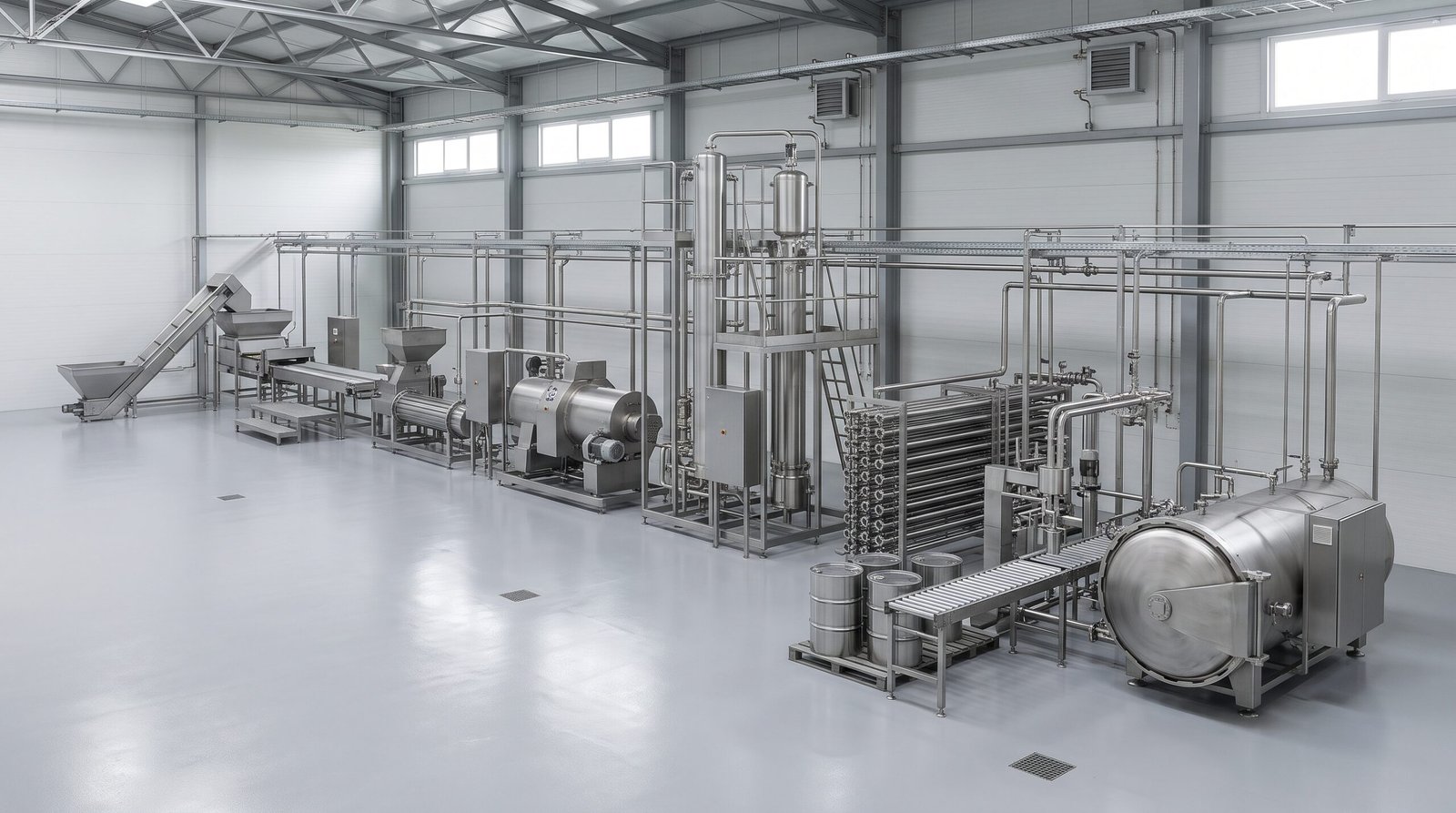
Process Flow

Stage 1
Washing In The Tomato Paste Processing Plant
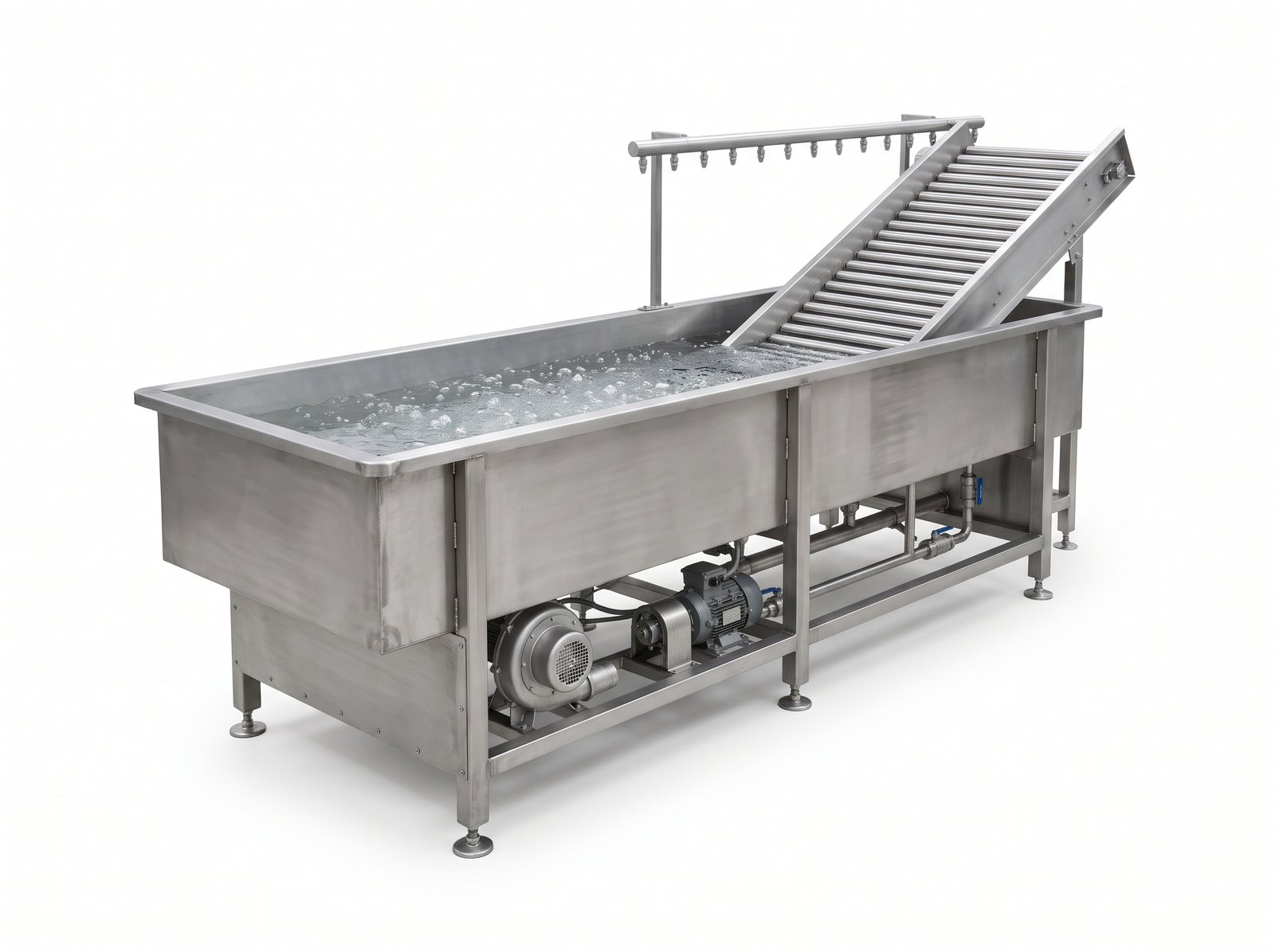
Tomatoes are dumped into the soaking tank of a fruit washing machine, where an air blower agitates the water so the fruit rolls and sheds soil. A perforated belt lifts them out through fresh-water sprays. The buyer sizes the washer to the peak day’s intake, since tomatoes cannot wait long once picked.
Machines At This Stage
- Tomato washer with soaking tank and air blower
- Perforated lifting belt with fresh-water sprays
Stage 2
Inspection In The Tomato Paste Processing Plant
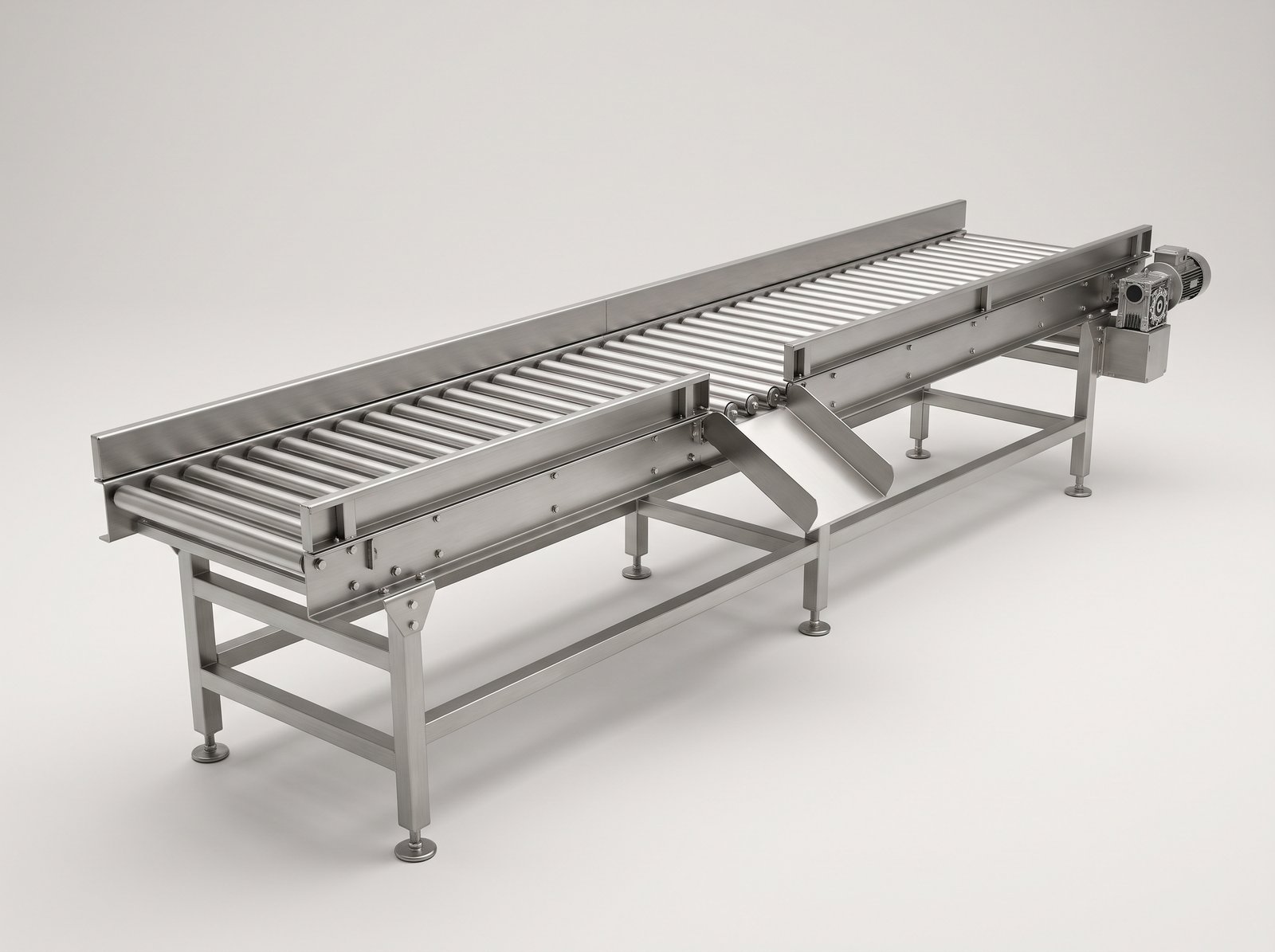
A food-grade belt, the inspection end of the sorting and grading conveyor range, carries the tomatoes past workers who remove green, rotten and damaged fruit. Clean sorting matters more here than in juice, because concentration multiplies every defect in the final colour and flavour.
Machines At This Stage
- Inspection conveyor

Stage 3
Crushing And Hot Break In The Tomato Paste Processing Plant
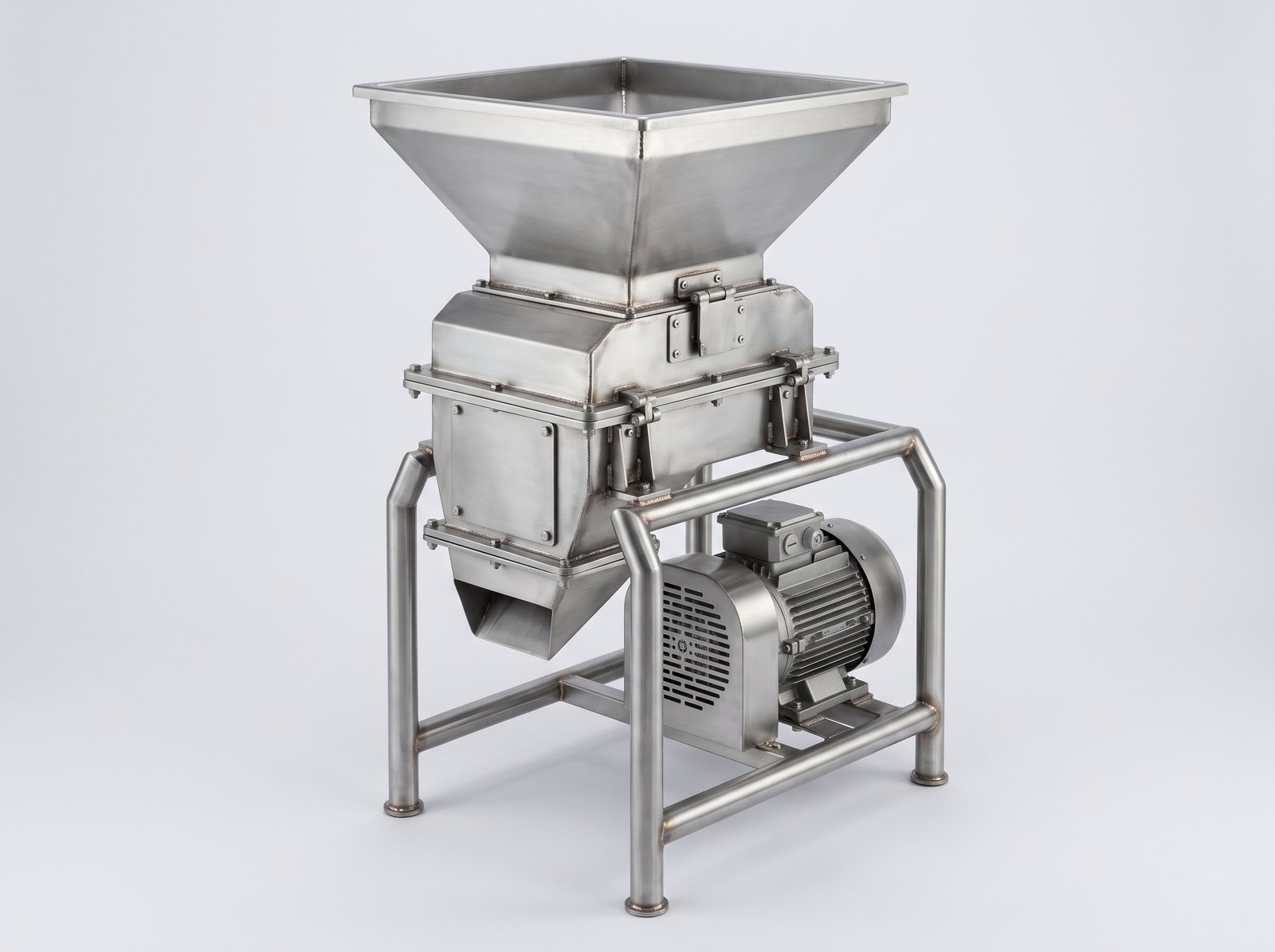
Tomatoes are crushed in a fruit mill and crusher and collected in a tank, and the crush is circulated through a heat exchanger and heated quickly and strongly before pulping. This hot break stops the natural enzymes that break down pectin, holds the colour and keeps the body that gives paste its thickness. A cold break uses less heat and lets the enzymes work for a short time. It gives a thinner, brighter pulp, suited to tomato juice and thin sauces.
Machines At This Stage
- Fruit mill and crusher
- Crush collection tank
- Hot break heat exchanger
Stage 4
Pulping In The Tomato Paste Processing Plant
The hot crush passes through a twin fruit pulper and finisher mounted one above the other, where rotating brushes force the pulp through perforated screens and throw out skins and seeds. The juice is collected in a stainless steel storage tank and moved by a screw transfer pump.
Machines At This Stage
- Twin pulper and finisher
- Juice collection tank
- Screw transfer pump

Stage 5
Concentrating In The Tomato Paste Processing Plant
Tomato juice is concentrated in jacketed vacuum pans with paddle stirrers, linked to a common condenser and vacuum pump, at 550 to 600 mm Hg so it boils at low temperature. Two or three pans work in series, and the plant makes puree at 12 Brix. For thicker paste at higher volume, a continuous evaporator takes over this step and keeps the viscous product moving over the heating surface. The buyer chooses pans or evaporator by the product and the tonnes a day.
Machines At This Stage
- Jacketed vacuum pans with paddle stirrers
- Common condenser and vacuum pump
- Continuous evaporator, for thick paste

Stage 6
Standardising And Sauce Cooking In The Tomato Paste Processing Plant
Puree is standardised in a steam-jacketed mixing kettle. For cooking sauce, salt, sugar, oil, onion and spice are added and cooked here. A homogeniser then gives the sauce an even body. Plain puree skips the recipe step.
Machines At This Stage
- Steam-jacketed mixing kettle
- Homogeniser, for sauce

Stage 7
Heat Treatment In The Tomato Paste Processing Plant
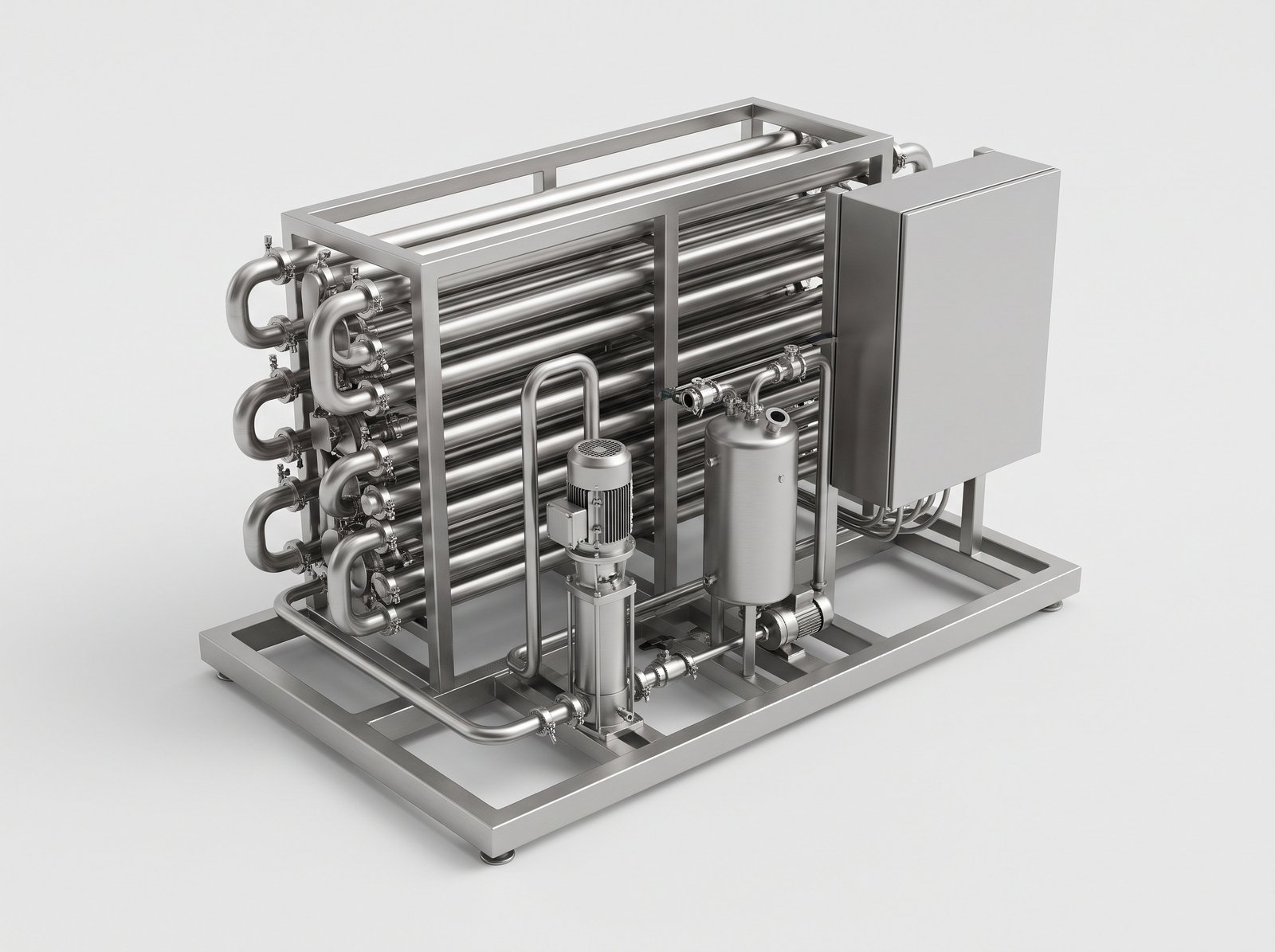
For retail pouches, puree is pasteurised and cooled in a tubular heat exchanger, the tubular form of the plate and tubular pasteuriser, and held in an insulated tank. For bulk paste in drums, an aseptic steriliser heats it to 98 to 110 °C, holds it for 30 to 60 seconds and cools it for filling.
Machines At This Stage
- Tubular pasteuriser and cooler with insulated holding tank
- Aseptic steriliser, for bulk paste

Stage 8
Filling In The Tomato Paste Processing Plant
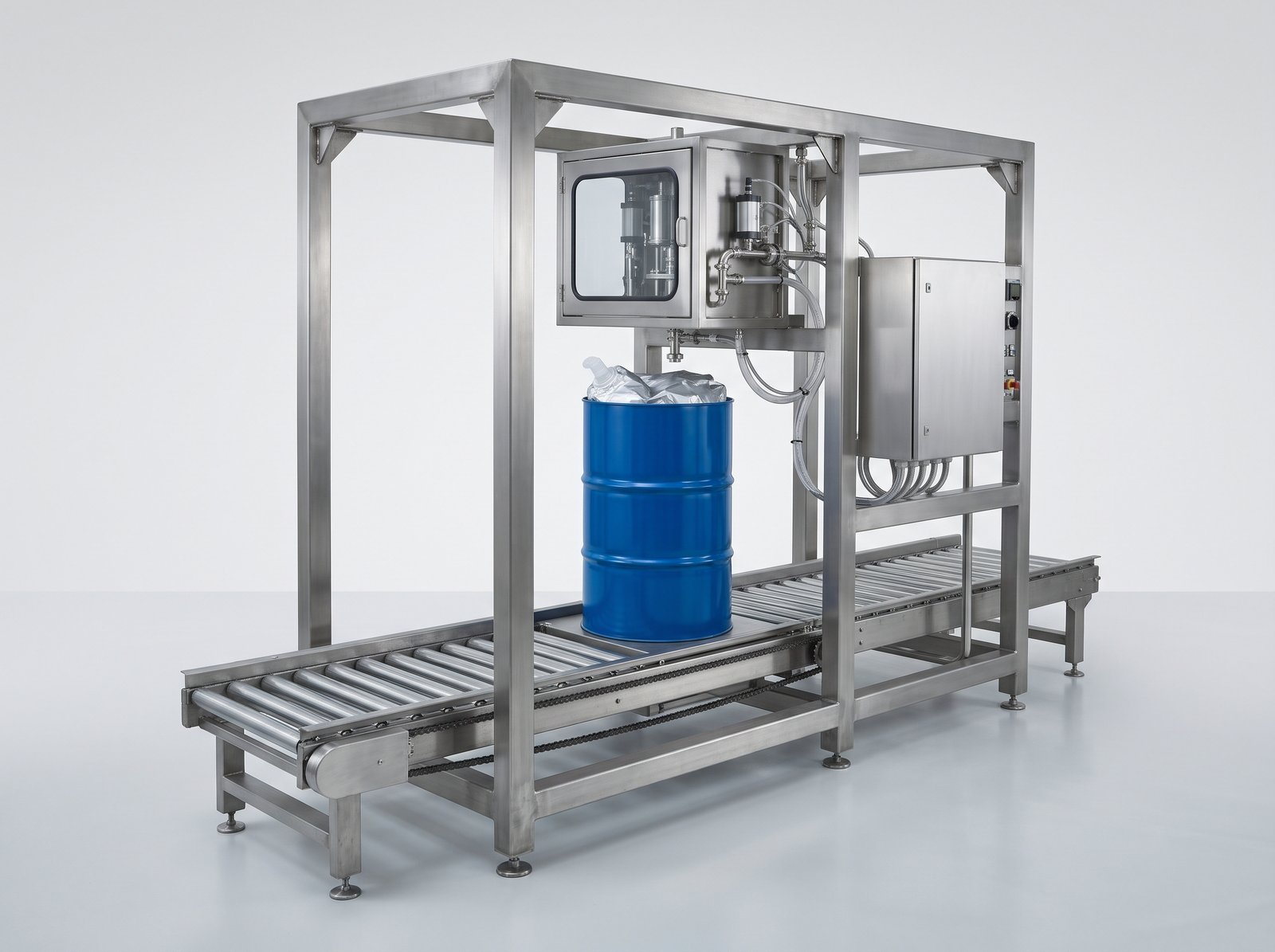
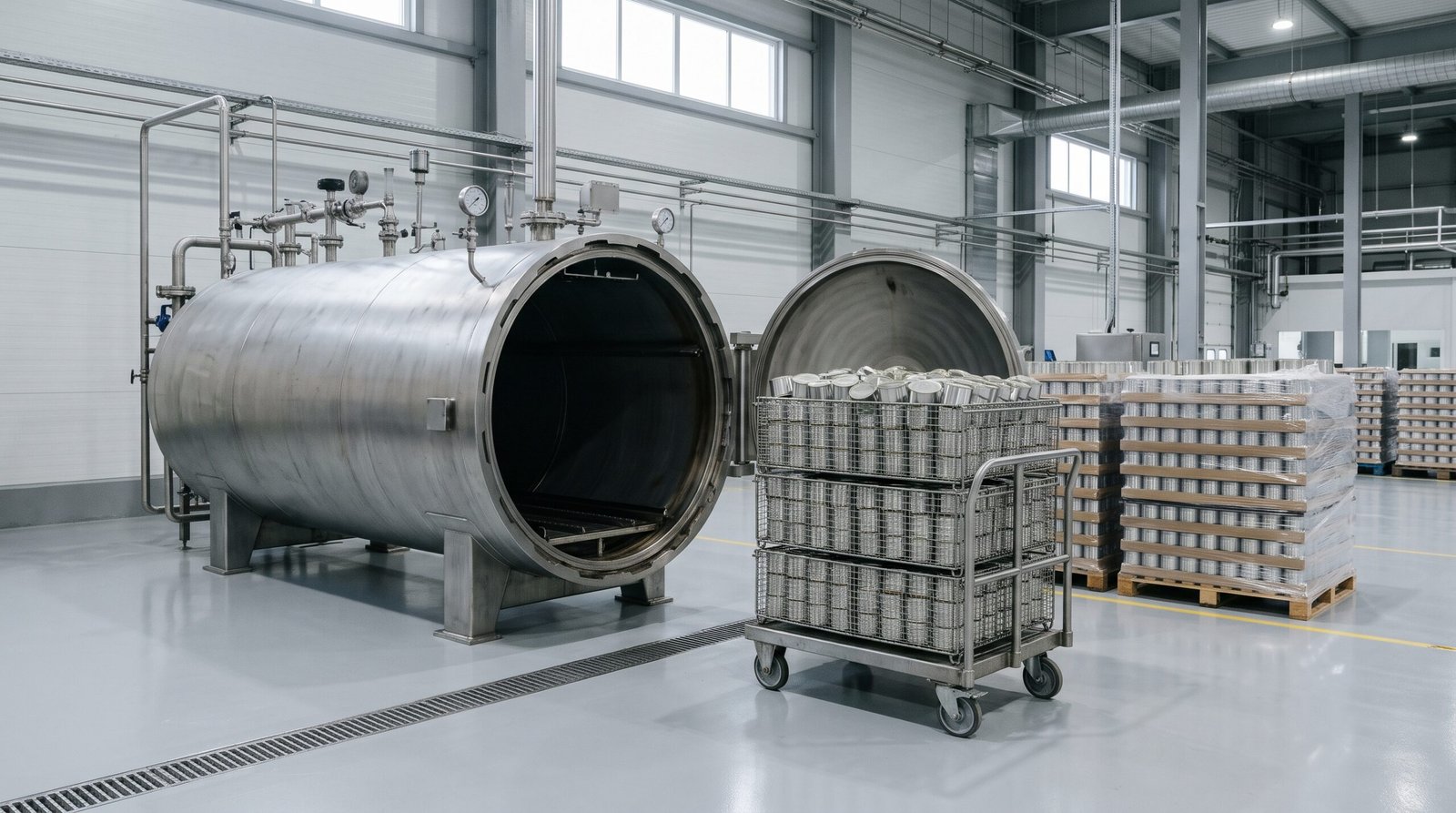
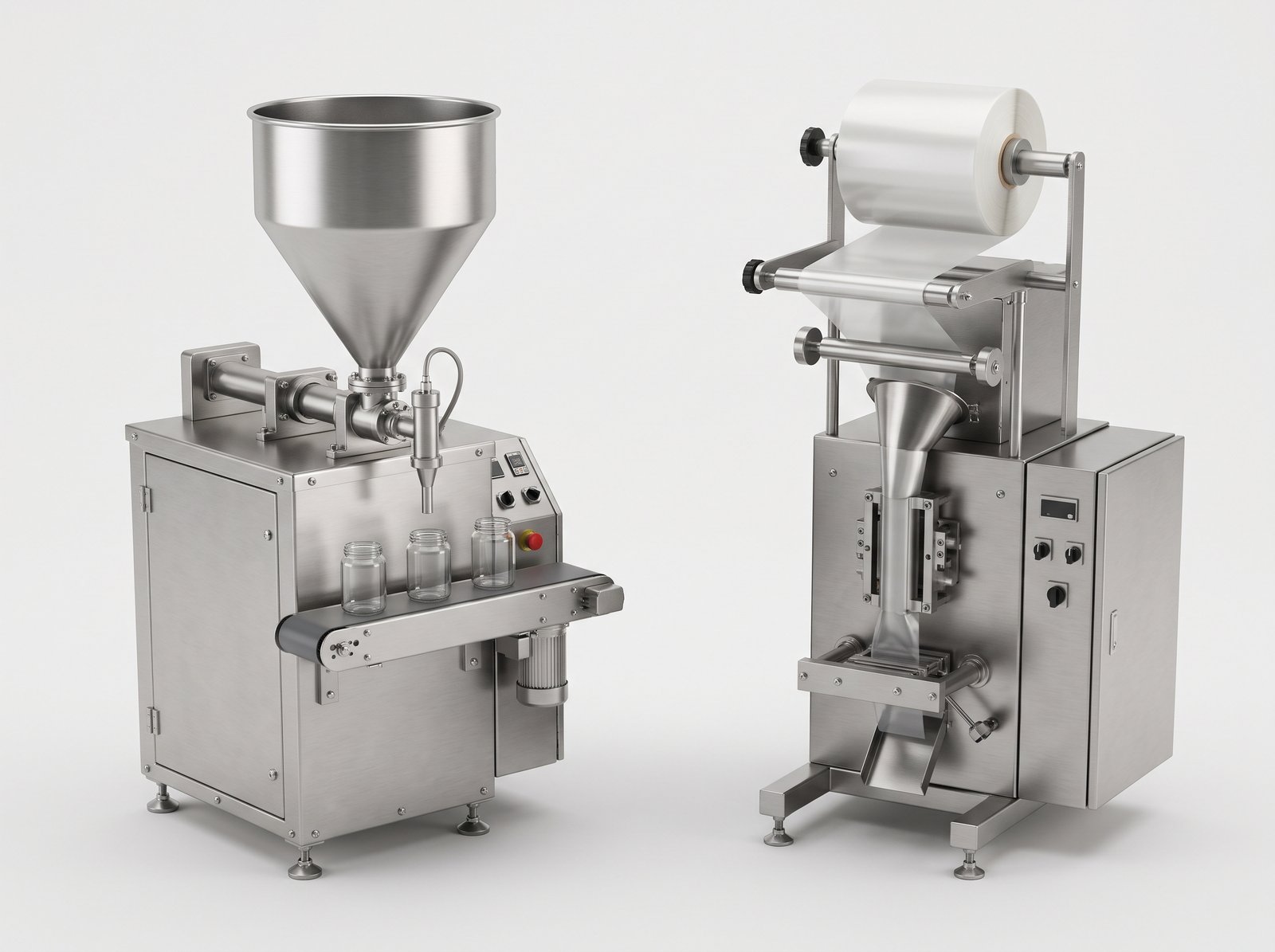
Puree is filled hot into steam-washed cans by an inline piston filler, the lids are seamed on, and the cans are sterilised in a retort at up to 140 °C. Pouches of 250 to 1,000 ml are filled on a form-fill-seal pouch and jar filling machine. Bulk paste goes into aseptic bags in drums on an aseptic bag-in-drum filler. The buyer picks one pack to start, by market.
Machines At This Stage
- Can washer and steam steriliser, inline piston filler and can seamer
- Horizontal retort
- Pouch form-fill-seal machine
- Aseptic bag-in-drum filler
Stage 9
Cooling And Storage In The Tomato Paste Processing Plant
Retorted cans are cooled in the retort with water, dried, then labelled and packed in cartons on the labelling, shrink wrapping and case packing equipment. Pouches and drums go to a cool, dry store.
Machines At This Stage
- Retort water cooling
- Labelling and carton packing
- Finished goods store
Stage 10
Machines At This Stage
Tomato Paste Processing Plant Capacity
Tomato puree, paste and sauce plants are offered at 500 kg/hour, 750 kg/hour, 1.5, 3, 5 and 10 TPH of tomatoes, from a vacuum pan batch plant to a continuous evaporator plant. The steriliser, retorts and fillers are matched to the plant size and the packs it runs. Each plant is sized to the buyer’s tomatoes and season in the needs assessment, and the full plant is planned even when it is bought in stages.
What Decides The Design Of A Tomato Paste Processing Plant
The tomato season and the product decide the plant. A short season pushes the plant to a higher hourly rate. A long season lets it run smaller for longer.
- Raw material and season: tomato varieties, weeks of harvest and daily peak.
- Product mix: puree, thick paste or cooking sauce.
- Scale and running hours: tonnes a day and shifts in season.
- Utilities available: steam fuel, cooling water and power.
- Staff skill: vacuum concentration and retorting need trained operators.
- Packaging the local market expects: cans, pouches or bulk drums.
- Site and access: lorry access in the harvest and waste disposal.
What A Complete Tomato Paste Processing Plant Includes
Tomato Paste Processing Plant Process Line
Tomato washer with blower, inspection conveyor, fruit mill and crusher, hot break heat exchanger, twin pulper and finisher, juice collection tank, screw transfer pumps, vacuum pans with condenser and vacuum pump, or a continuous evaporator for thick paste, steam-jacketed mixing kettles and homogeniser.
Packaging Machinery For The Tomato Paste Processing Plant
Can washer and steam steriliser, inline piston filler, can seamer, horizontal retort, pouch form-fill-seal machine, aseptic bag-in-drum filler for bulk paste, and labelling and carton packing.
Tomato Paste Processing Plant Utilities
Steam boiler, cooling tower for the condenser and retort, air compressor, process water treatment, and control panels.
Storage And Handling In The Tomato Paste Processing Plant
Crates and a receiving area for tomatoes, a waste conveyor for skins and seeds from the bucket elevator and belt conveyors range, a can and pouch store, and a finished goods store kept cool and dry.
Tomato Paste Processing Plant Laboratory
The checks the plant needs, and the laboratory items we can supply with the project: Brix refractometer, consistometer, pH meter, salt test kit and microbiology for can and pouch incubation tests.
Working Capital Materials For The Tomato Paste Processing Plant
Cans and lids, pouch film, aseptic bags and drums, labels, cartons, salt, sugar, spices and cleaning chemicals.
Buying A Tomato Paste Processing Plant In Stages
A first plant can make one product in one pack: puree at 12 Brix in pouches, on vacuum pans, with a washer, hot break and pulper in front. Canning and a retort, or a cooking-sauce recipe with a homogeniser, can be added later on the same front end. A continuous evaporator for thick paste is a larger step and is planned as a second phase.
The building, the cooling water and the steam must be planned for the final concentration step from the start, because vacuum concentration takes most of both. The drainage for skins, seeds and wash water cannot be an afterthought in a tomato plant. A first plant does not need aseptic drum filling unless it sells paste in bulk.
Tomato Paste Processing Plant Inputs And Utilities
Fresh tomatoes are the raw material, and their solids content decides how much water must be boiled off. Salt, sugar, oil and spices are added for sauces. Labour is needed most at inspection and packing.
Steam at 3 to 4 bar heats the hot break, vacuum pans, kettles and retort. An evaporator needs steam at 9 bar. Large volumes of cooling water serve the vacuum condenser and the retort, and a cooling tower recirculates it. Process water washes the tomatoes and cleans the plant. Compressed air at 6 to 7 bar works the filler and pouch machine.
Tomato Paste Processing Plant Inspection And Documentation
The crusher and hot break, pulper, vacuum pans, steriliser, fillers and retort can be inspected by SGS or Bureau Veritas before they leave, as the buyer requires. The retort is a pressure vessel and ships with its own pressure-vessel documents; a boiler in the scope can be supplied IBR certified as compliance documentation. Manuals and an initial parts kit come with each machine. Training at site covers vacuum pan operation to the target Brix, the retort cycle and the can seamer’s settings.
How A Tomato Paste Processing Plant Project Runs
The plan follows your tomato harvest, the products you will sell and the site, and the first season is set up so later phases can be added beside it. Installation and commissioning are planned around your harvest season, and support carries on after it. Read more on How we work.
Pages Related To The Tomato Paste Processing Plant
Fruit processing. Tomato ketchup plant. Canned fruit and vegetable plant. Fruit pulp and concentrate plant. Fruit washing machine. Sorting and grading conveyor. Fruit mill and crusher. Fruit pulper and finisher. Fruit evaporator. Steam-jacketed and vacuum cooking kettle. Homogeniser. Plate and tubular pasteuriser. Aseptic steriliser. Aseptic bag-in-drum filler. Pouch and jar filling machine. Labelling, shrink wrapping and case packing.
Every machine for this line is in our fruit processing machinery range.
Frequently Asked Questions
What Is The Difference Between Puree And Paste In A Tomato Paste Processing Plant?
Both are concentrated tomato. Puree is concentrated lightly, to around 12 Brix on vacuum pans. Paste is concentrated much further, usually on an evaporator, and is sold in bulk or small cans.
Should A Tomato Paste Processing Plant Use Vacuum Pans Or An Evaporator?
Vacuum pans suit smaller plants and puree. An evaporator suits higher tonnage and thick paste, at a higher steam and cooling load.
Which Pack Should A First Tomato Paste Processing Plant Choose?
Pouches need the least equipment. Cans need a seamer and a retort but keep longest on the shelf. Aseptic drums suit bulk sale to other food makers.
Can A Tomato Paste Processing Plant Make Ketchup Too?
Yes. A tomato ketchup plant uses the same washing, hot break and pulping, then adds recipe cooking and bottle filling. A plant can make puree in season and ketchup year-round.
Why Does A Tomato Paste Processing Plant Use Hot Break?
It heats the crushed tomatoes quickly and strongly, stopping the enzymes that break down pectin, so the paste keeps its body and colour. A cold break, with less heat, gives a thinner pulp.
Next Step For Your Tomato Paste Processing Plant
Send us your tomato supply, the products you want to sell and the details of your site, and we will prepare a customer-specific proposal. Write to archit@sonikaimpex.com or sunil@sonikaimpex.com, or call +91 99027 67900.