

Home › Fruit Processing Machinery › Stainless steel storage tanks and CIP system
Stainless Steel Storage Tanks And CIP System For Fruit Processing
What A Stainless Steel Storage Tank And CIP System Does
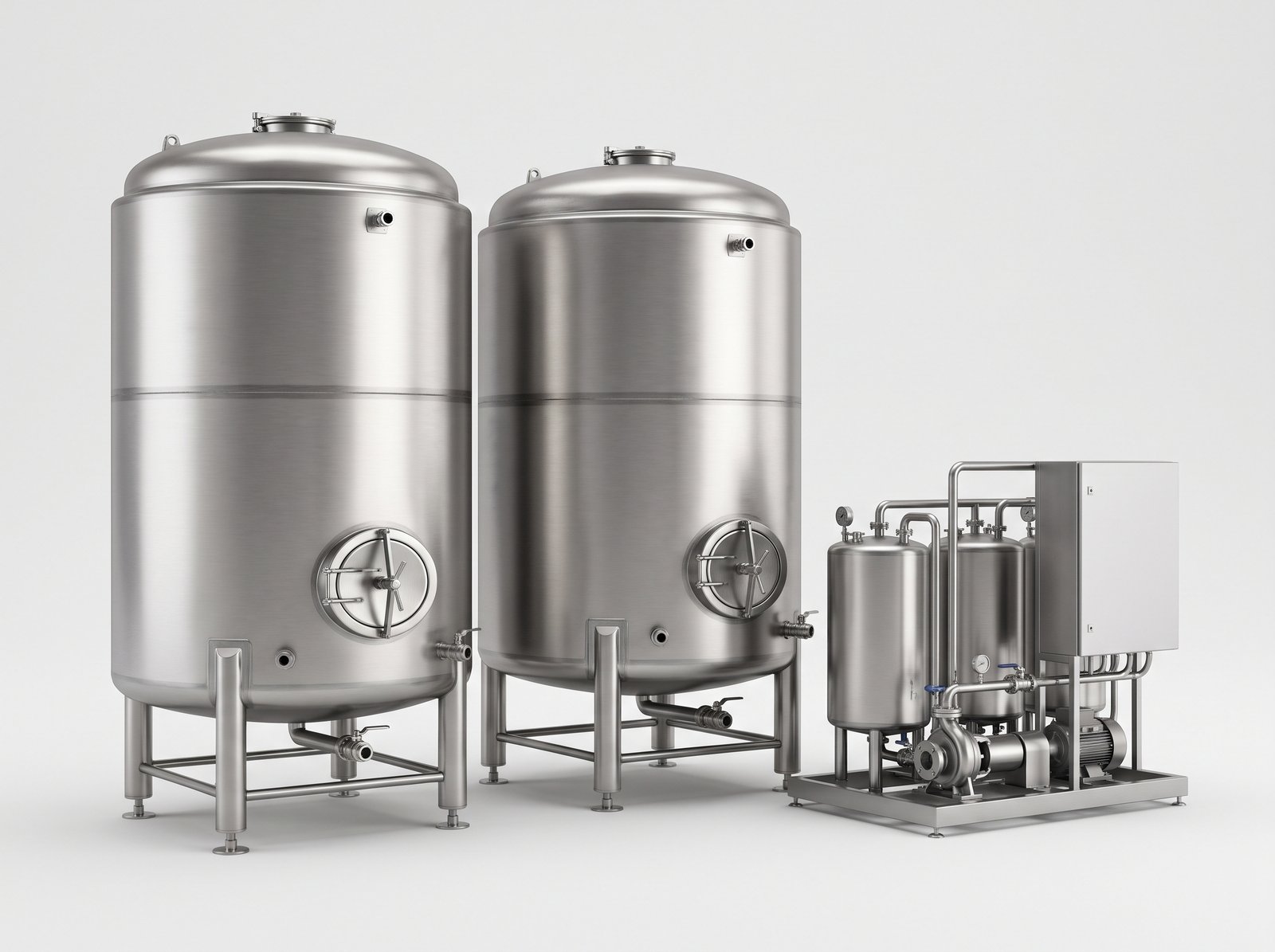
A stainless steel storage tank holds juice, pulp, syrup or concentrate between one stage of a fruit processing line and the next: collection tanks after extraction, buffer and balance tanks ahead of the evaporator and steriliser, holding tanks before the filler, and storage tanks for finished product awaiting packing. The CIP system, short for cleaning in place, cleans those tanks and the pipes, pumps and heat exchangers that join them, without taking anything apart. Storage sits throughout the line. CIP serves all of it.
Tanks and cleaning decide more about a plant’s output than they are given credit for. A line with too little holding capacity stops every time one machine pauses, and runs to the size of its smallest tank. Tanks that cannot be cleaned properly carry yeast and bacteria from one batch into the next, and the fault shows up as spoiled bottles weeks later. Cleaning by hand takes hours each day and uses more water and chemicals. A repeated programme cleans the same way every time.
Stainless Steel Storage Tank And CIP System Capacity
Tanks are offered at 500, 1,000, 2,000, 5,000 and 10,000 litres, with CIP sets of 1,000 to 5,000 litre tanks, from manual single-tank CIP to two- or three-tank automatic CIP. Each collection, buffer and holding tank is sized to the time the machine after it may stop without stopping the machine before it, and the CIP tanks to the largest circuit they clean.
Where A Stainless Steel Storage Tank And CIP System Sits In The Line
Collection tanks receive juice and pulp from the juice extractor and the fruit pulper and finisher. Buffer and balance tanks feed the centrifugal clarifier, the fruit evaporator and the aseptic steriliser evenly. Holding tanks receive pasteurised product and feed the hot-fill bottle filling and capping machine or the pouch and jar filler. Each tank takes product from the machine before it and releases it to the machine after, so the two can run at different times.
The CIP system sits beside the line, with its own tanks and pump, and connects to every tank and to the pasteuriser, the deaerator and the pipework through supply and return lines. After a run it pushes cleaning water and detergent through the circuit and takes it back.

Stainless steel storage tanks and CIP system
This Machine
How It Works
1
Building The Stainless Steel Storage Tank
The tanks are vertical cylindrical vessels in SS 304 for general duty, or SS 316 / 316L for acid, pulpy or hot product, with cone or dished ends, a sanitary finish inside and out, and legs with ball feet. Each carries a manhole, an air vent, a level glass or level transmitter, a sampling valve and outlet valves. A rotary CIP spray ball sits in the top of every tank.
2
Insulating And Mixing In The Stainless Steel Storage Tank
Tanks for hot product are insulated and clad in stainless sheet. Where product must stay mixed, a geared-motor agitator turns slowly in the tank.
3
CIP Tanks, Pump And Heater Serving The Stainless Steel Storage Tank
A manual CIP unit works from a single tank. The automatic CIP system is built around two or three tanks, including one for hot water and one for lye or detergent, each with level switches. A CIP pump sends the cleaning liquid through the plant, and a heat exchanger with a steam control valve holds it at temperature.
4
Running The CIP Programme Through Each Stainless Steel Storage Tank
A PLC runs the programme through pneumatic valves: a first water flush to push out product, a hot water flush, a lye or detergent rinse, another hot water flush, and a final fresh water rinse to cool the system. The spray balls in each tank throw the liquid over every inside surface.
On automatic sets, the operator chooses which circuit to clean and starts the programme. The PLC handles the timing, temperatures and valve sequence, and the operator checks detergent strength and the final rinse.
Types And Options
Collection, Buffer And Holding Duty For A Stainless Steel Storage Tank
Tanks serve as collection, buffer, balance, holding and storage tanks, each sized to its stage.
Plain, Insulated Or Jacketed Stainless Steel Storage Tank
Plain tanks suit cold product. Insulated tanks keep hot product hot. Jacketed tanks heat or cool it.
SS 304 Or SS 316 Stainless Steel Storage Tank
SS 304 suits general duty. SS 316 / 316L suits acid, pulpy or hot product, including the lye and acid dip tanks that serve the fruit peeling machine.
Mounting, Agitator And Level Options On A Stainless Steel Storage Tank
Tanks come fixed on legs, or castor-mounted for moving in small plants, with or without an agitator, and with a level glass or level transmitter. Load cells go under tanks where batch weights must be recorded.
Manual Or Automatic CIP For The Stainless Steel Storage Tank
CIP runs from a manual single-tank unit to a two- or three-tank automatic system under PLC control.
What Decides The Choice Of A Stainless Steel Storage Tank And CIP System
- The products and how long each must wait between stages, which sets the number and size of tanks.
- The line's running pattern. Long seasonal shifts need more buffer. A few hours a day needs less.
- Acidity, pulp and temperature of the product, which decide SS 304 or SS 316 / 316L, insulation and jackets.
- Floor space and building height, which limit tank size and layout.
- Utilities for CIP: steam to heat cleaning water, treated water, compressed air for pneumatic valves, and drainage for the spent liquid.
- Hygiene standard your buyers expect, which decides how far cleaning is automated and recorded.
What A Stainless Steel Storage Tank And CIP System Is Supplied With
- Stainless steel tanks with manholes, vents, level indication, sampling points and CIP spray balls
- Agitators with geared motors where specified
- CIP tank for the manual set, or CIP tanks for hot water and detergent with level switches on automatic sets
- CIP pump and heat exchanger with steam control
- PLC control for the CIP programme on automatic sets
- Manuals and an initial parts kit
- Installation and commissioning at your site, with operator training on running and checking the CIP programme
Stainless Steel Storage Tank And CIP System On Its Own Or In A Line
Storage tanks and CIP systems can be bought on their own when a plant adds holding capacity or replaces hand cleaning with an automatic system. They are part of the complete Fruit juice processing plant, Fruit pulp and concentrate plant, Citrus juice plant, Pineapple juice plant, Tomato ketchup plant and Tomato puree, paste and sauce plant.
Stainless Steel Storage Tank And CIP System Inspection And Documentation
SGS or Bureau Veritas can inspect the tanks and CIP set before shipment as required: steel grade, internal finish and fitted accessories. The manuals cover the CIP sequence, detergent strength checks and tank care.
Frequently Asked Questions
Should A Stainless Steel Storage Tank Be SS 304 Or SS 316?
SS 304 suits general duty. SS 316 / 316L suits acid, pulpy or hot product. Each tank’s grade is set in the offer to suit the buyer’s product.
How Much Stainless Steel Storage Tank Capacity Does A Line Need?
Enough that each machine can keep running when the one before or after it pauses. We work this out from your products, shift pattern and season.
Does CIP Replace Manual Cleaning Of A Stainless Steel Storage Tank?
For tanks, pipework and heat exchangers, yes. Machines such as the fruit washing machine, the pulper and the filler still need their own cleaning routine, which is covered in operator training.
What Does The CIP Programme Do For A Stainless Steel Storage Tank?
It flushes out product with water, cleans with hot water and detergent, flushes again and finishes with a fresh water rinse, on automatic sets on a timed sequence run by the PLC.
Related Machines


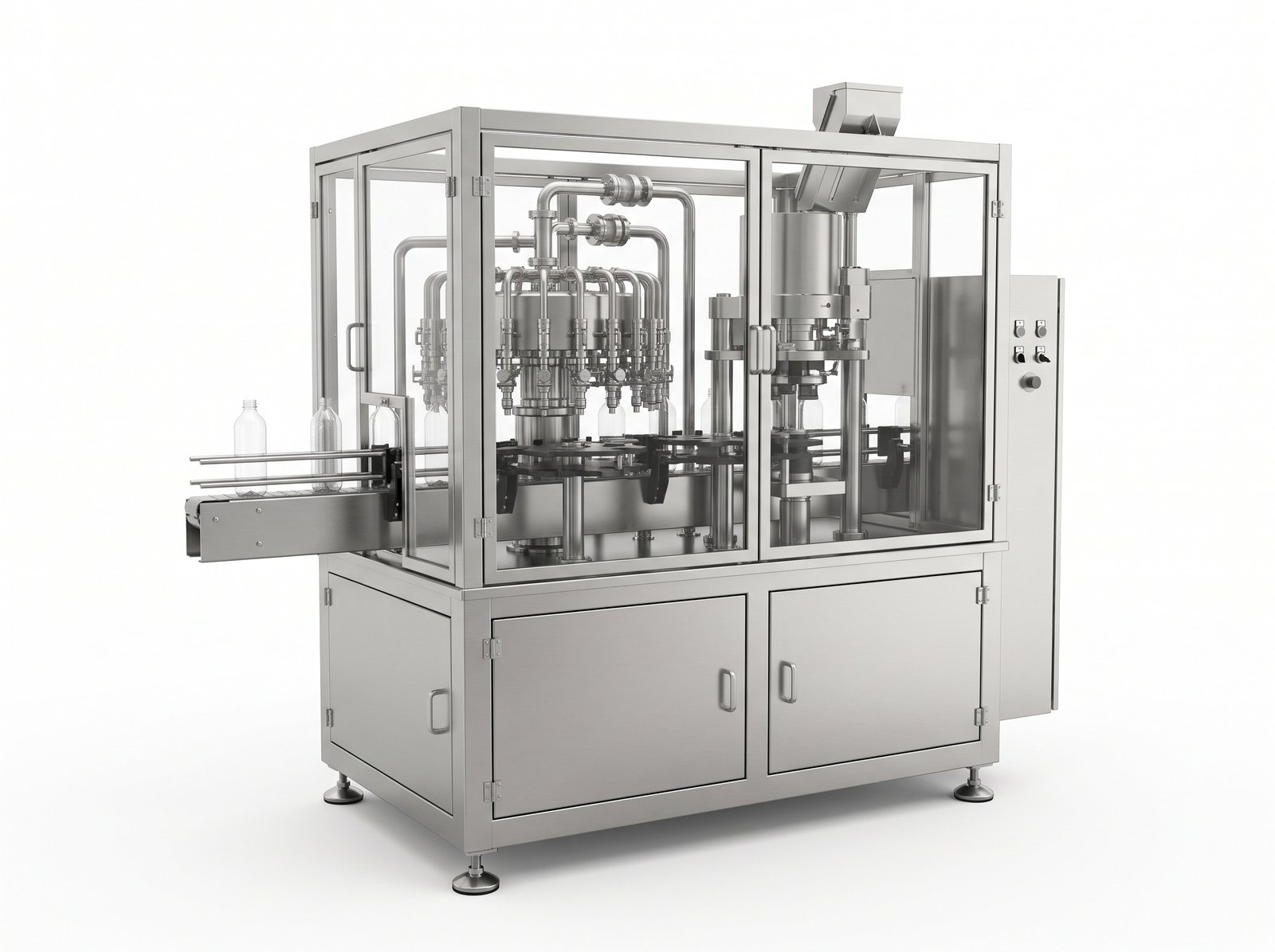
it bottles pasteurised juice drawn from the holding tank.
Next Step For Your Stainless Steel Storage Tank And CIP System
Tell us your products, your shift pattern and the line you run or plan, and we will prepare a customer-specific proposal for storage and cleaning. How we work sets out each step. Write to archit@sonikaimpex.com or sunil@sonikaimpex.com, or call +91 99027 67900.