

Home › Fruit Processing Machinery › Deaerator
Juice Deaerator For Fruit Juice, Pulp And Puree Lines
What A Juice Deaerator Does
A juice deaerator removes the air that is trapped in juice, pulp and puree before they are heat treated and filled. Air enters the product at every stage that breaks or moves fruit: crushing, pulping, pumping and blending all fold air in. The deaerator holds the product under vacuum, where the dissolved and entrained air comes out and is drawn away. It sits between preparation and heat treatment, just ahead of the plate and tubular pasteuriser or the aseptic steriliser.
When air is left in, the product pays for it later. Oxygen darkens colour and flattens flavour, and destroys part of the vitamin content during heating. Air bubbles foam at the filler, so bottles fill short or overflow, and air pockets in a heat exchanger cause uneven heating. Over the months of shelf life, oxygen left in the pack keeps working on colour and taste.
Juice Deaerator Capacity
Deaerators are offered at 500, 1,000, 2,000, 3,000 and 5,000 litres/hour, from a batch vacuum tank to a continuous deaerator. The deaerator runs at the same flow as the pasteuriser or steriliser it feeds, so it is chosen with them. That means pasteurisers of 300 to 3,000 litres/hour on juice lines, and aseptic sterilisers of 600 to 5,000 kg/hour on pulp and puree lines.

Where A Juice Deaerator Sits In The Line
The deaerator receives standardised product from the blending and sugar dissolving tanks in a beverage line, or refined pulp from the fruit pulper and finisher in a pulp and concentrate line. What arrives is liquid or pulpy, at near room temperature or slightly warm, with air bubbles and dissolved oxygen from the steps before.
What leaves is the same product with the air drawn out, pumped forward at a steady rate. In a juice line it goes to the homogeniser or straight to the pasteuriser. In a puree or concentrate line the deaerator tank often doubles as the feed tank of the aseptic steriliser, which then fills through the aseptic bag-in-drum filler.
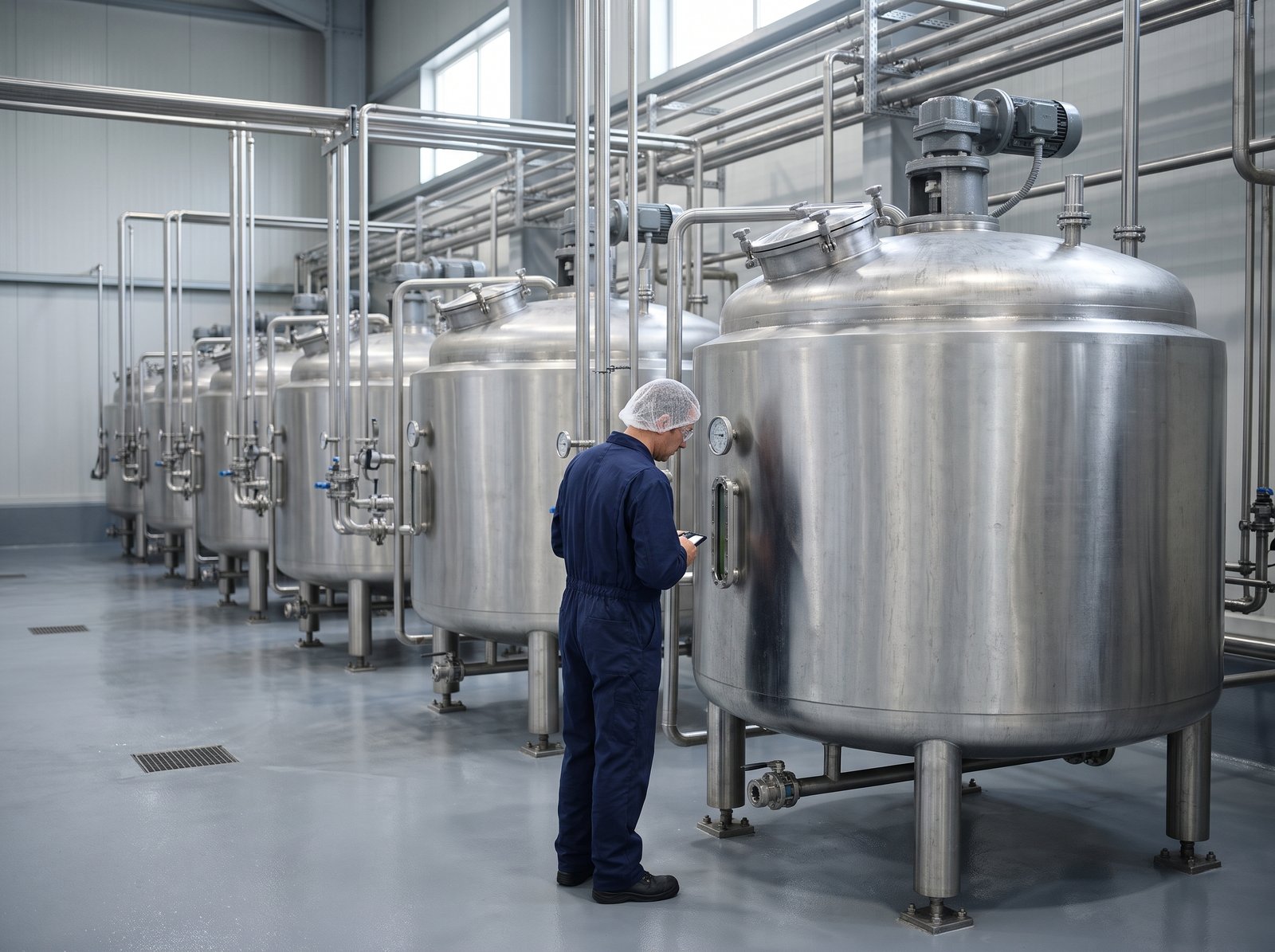
Blending tanks
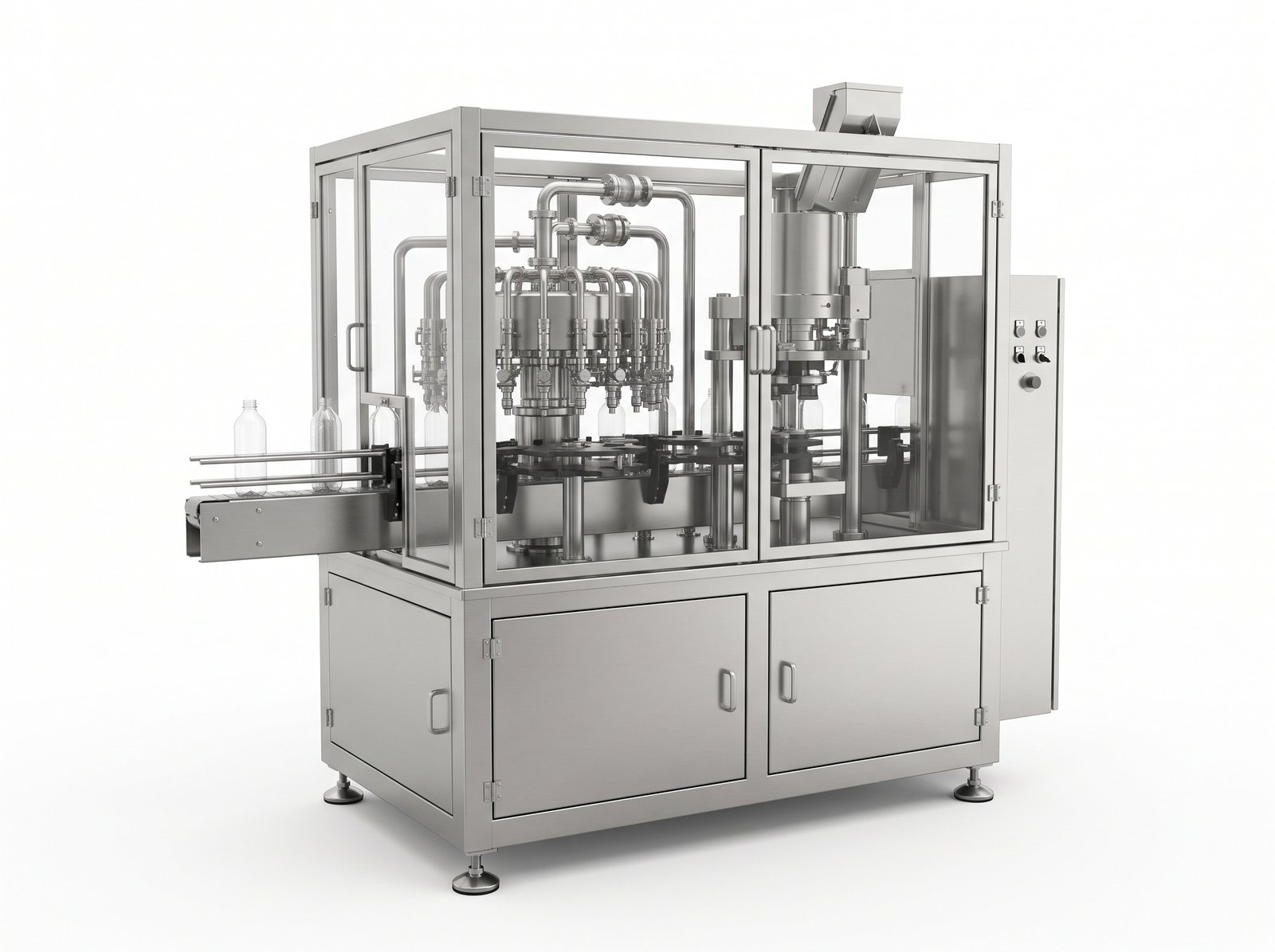
Deaerator
This Machine

How It Works
1
Feeding And Spreading Product In The Juice Deaerator
The deaerator is a closed stainless steel vessel, in AISI 316L, held under vacuum by a vacuum pump. Product enters at the top and is spread into a thin film or spray across the inside of the vessel. That gives the trapped air a short path to the surface.
2
Drawing Off Air Under Vacuum In The Juice Deaerator
Under reduced pressure the gas leaves the liquid and is pulled out through the vacuum line. The line usually runs past a condenser, so that vapour and aroma are not lost to the pump. Deeper vacuum and a warmer feed remove more air but also more water vapour and aroma, so the setting is a balance chosen for each product.
3
Discharge And Level Control In The Juice Deaerator
The deaerated product collects in the conical bottom and is drawn off by a sanitary pump, often a positive displacement pump for pulpy or thick products. Instruments on the vessel transmit level, temperature and pressure. The level controls the pump, so the vessel neither floods nor runs dry, and a sight glass lets the operator watch the product.
4
Setting And Cleaning The Juice Deaerator
The operator sets the vacuum level, the feed temperature and the level in the vessel. The feed rate must match the heat treatment that follows, so the deaerator is sized to the pasteuriser or steriliser it serves. A CIP spray ball in the cover lets the vessel be cleaned and sterilised in place with the rest of the line.
Types And Options
Stand-Alone Juice Deaerator Vessel
A stand-alone deaerator vessel comes with its own vacuum pump. It is placed ahead of the pasteuriser in juice and nectar lines.
Juice Deaerator Combined With The Steriliser Feed Tank
In pulp and concentrate lines, the deaerator tank can be combined with the feed and recirculation tank of an aseptic steriliser. This saves a vessel.
Aroma Recovery On The Juice Deaerator
A condenser on the vacuum line returns volatile flavour to the product. It is useful on fruit with delicate aroma, where a deep vacuum would otherwise carry part of the flavour away to the pump.
Contact Parts And Product Pump For The Juice Deaerator
Contact parts are offered in AISI 316L for acid and pulpy products, or in SS 304 for less demanding duty. The product pump is chosen to match: a centrifugal pump for thin juices, and a positive displacement pump for pulp and puree.
Instrumentation Levels For The Juice Deaerator
Instrumentation ranges from gauges and a level switch on simpler units to transmitters wired into the line PLC.
What Decides The Choice Of A Juice Deaerator
- The product: clear juice deaerates easily; thick pulp and puree hold air and need longer residence and a stronger pump.
- The fruit: products sensitive to browning or vitamin loss gain most from deaeration.
- The heat treatment that follows: a pasteuriser line and an aseptic steriliser line set different flow rates and hygiene standards.
- Scale and running hours, which set the vessel size and whether it runs continuously with the line.
- Utilities on site: power for the vacuum pump and product pump, cooling water for the vacuum system, compressed air for automatic valves.
- Cleaning: whether the vessel joins the CIP and sterilising cycle of the steriliser.
What A Juice Deaerator Is Supplied With
- Stainless steel deaerator vessel with cover, sight glass and CIP spray ball
- Vacuum pump with its motor
- Product discharge pump
- Level, temperature and pressure instruments
- Control panel or connection to the line control panel
- Manuals and an initial parts kit
- Installation, commissioning and operator training at your site
Juice Deaerator On Its Own Or In A Line
A deaerator can be added to an existing juice line when colour or shelf life is falling short, or when foaming slows the filler. It is also part of the complete fruit juice processing plant, fruit pulp and concentrate plant, citrus juice plant and pineapple juice plant. It also serves puree lines feeding an aseptic steriliser, across the lines Sonika supplies for fruit processing.
Juice Deaerator Inspection And Documentation
Before shipment, SGS or Bureau Veritas can check the deaerator as the buyer requires: the vessel steel and internal finish, a vacuum hold test, the vacuum and product pumps, and the level and pressure instruments. Manuals, the packing list and an initial parts kit of pump seals come with the supply.
Frequently Asked Questions
Does Every Juice Line Need A Juice Deaerator?
No. Small lines selling juice for quick consumption often run without one. It earns its place when the product must keep its colour and flavour over a long shelf life, or when foaming at the filler is costing output.
Does A Juice Deaerator Change The Taste?
Done at the right vacuum and temperature, deaeration protects the taste by removing the oxygen that would otherwise dull it. Too deep a vacuum on a warm feed can draw off aroma, which is why an aroma condenser is offered.
Can A Juice Deaerator Be Cleaned With The Rest Of The Line?
Yes. The vessel carries a CIP spray ball and joins the line’s cleaning circuit, run from the stainless steel storage tanks and CIP system. On aseptic lines it is sterilised together with the steriliser.
Related Machines

They standardise and sweeten the juice that the deaerator then clears of air.
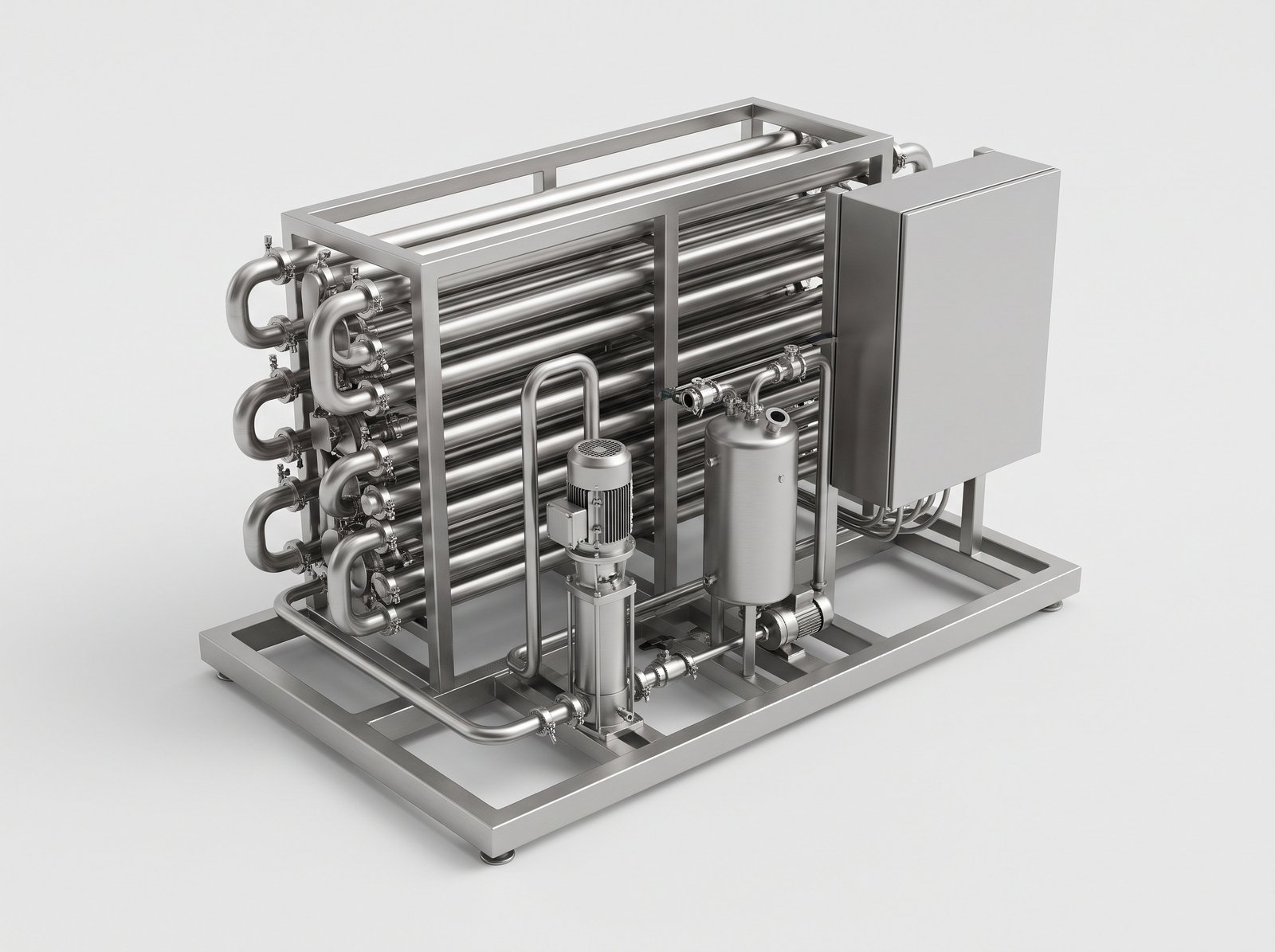
On pulp and puree lines it takes the deaerated product, often from the same tank.
Next Step For Your Juice Deaerator
Tell us your product, the line output and the heat treatment it feeds, and we will prepare a customer-specific proposal. How we work sets out each step from that proposal to commissioning at your site. Write to archit@sonikaimpex.com or sunil@sonikaimpex.com, or call +91 99027 67900.