

Home › Fruit Processing Machinery › Fruit washing machine
Fruit Washing Machine: Air-Agitated Soak And Spray Washer
What A Fruit Washing Machine Does
A fruit washing machine takes soil, dust, leaf, insects and surface residue off whole fruit before anything is cut, crushed or pulped. It is the first machine the fruit meets after it is tipped from the crate, and every machine after it depends on it.
When washing is done badly, the dirt is crushed into the pulp. It wears the pulper screens and the pump stators, raises the microbial load the pasteuriser has to deal with, and shows up as specks and off-flavour in the finished juice or puree. A washer undersized for the season’s peak also becomes the point where the whole line queues, so the plant runs below the rate it was built for.
- Construction: stainless steel soak tank, conveyor tracks and spray rail
- Agitation: air blower feeding a header under the water
- Drive: geared motor on the pick-up conveyor, with a variable-speed option
Fruit Washing Machine Capacity
Fruit washers are offered at 250 kg/hour, 500 kg/hour, 1, 2, 5 and 10 TPH of fresh fruit, from a batch soak tank to a blower-agitated continuous washer. They serve fruit processing plants of 150 kg/hour to 10 TPH.
Where A Fruit Washing Machine Sits In The Line
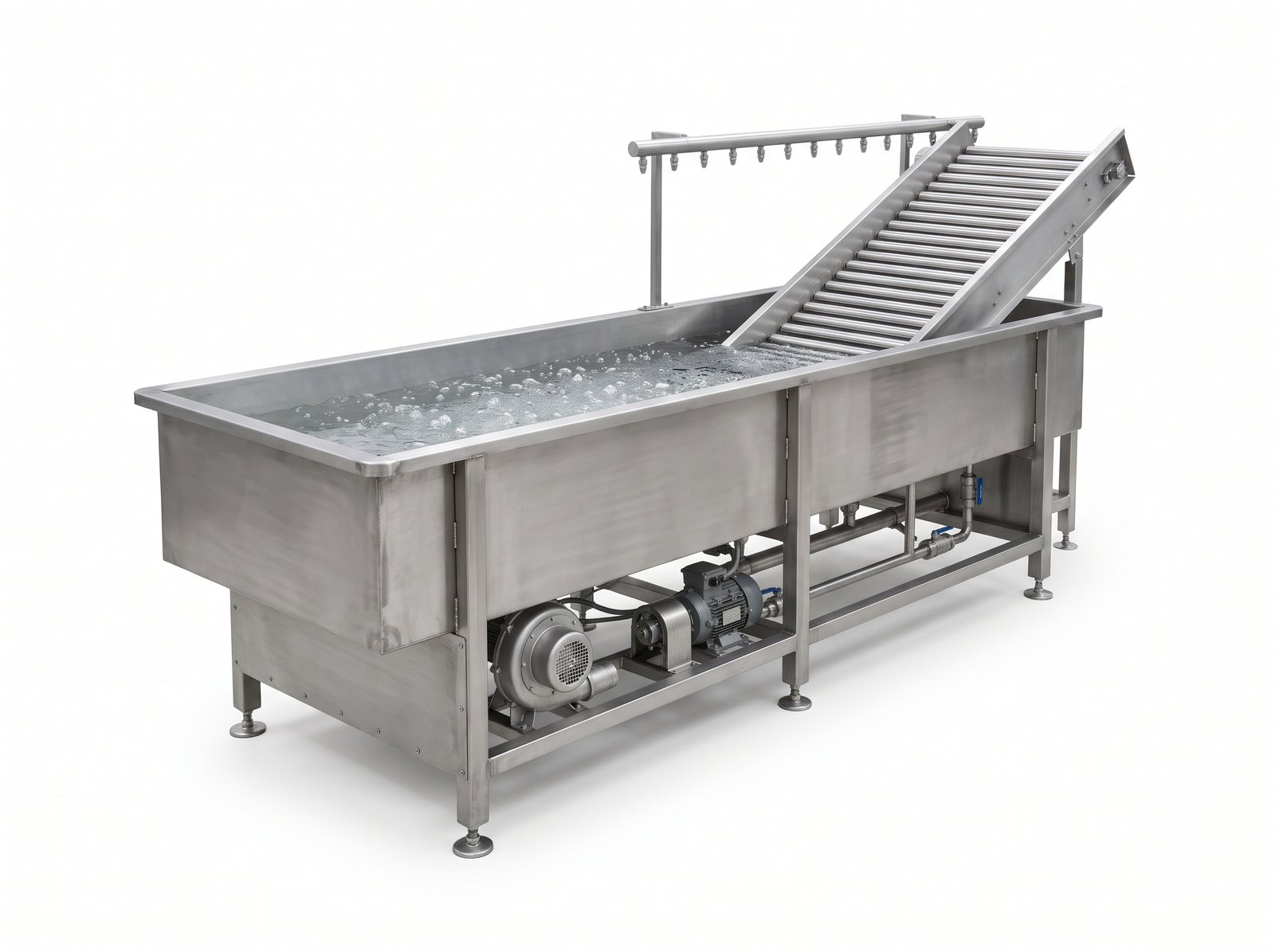
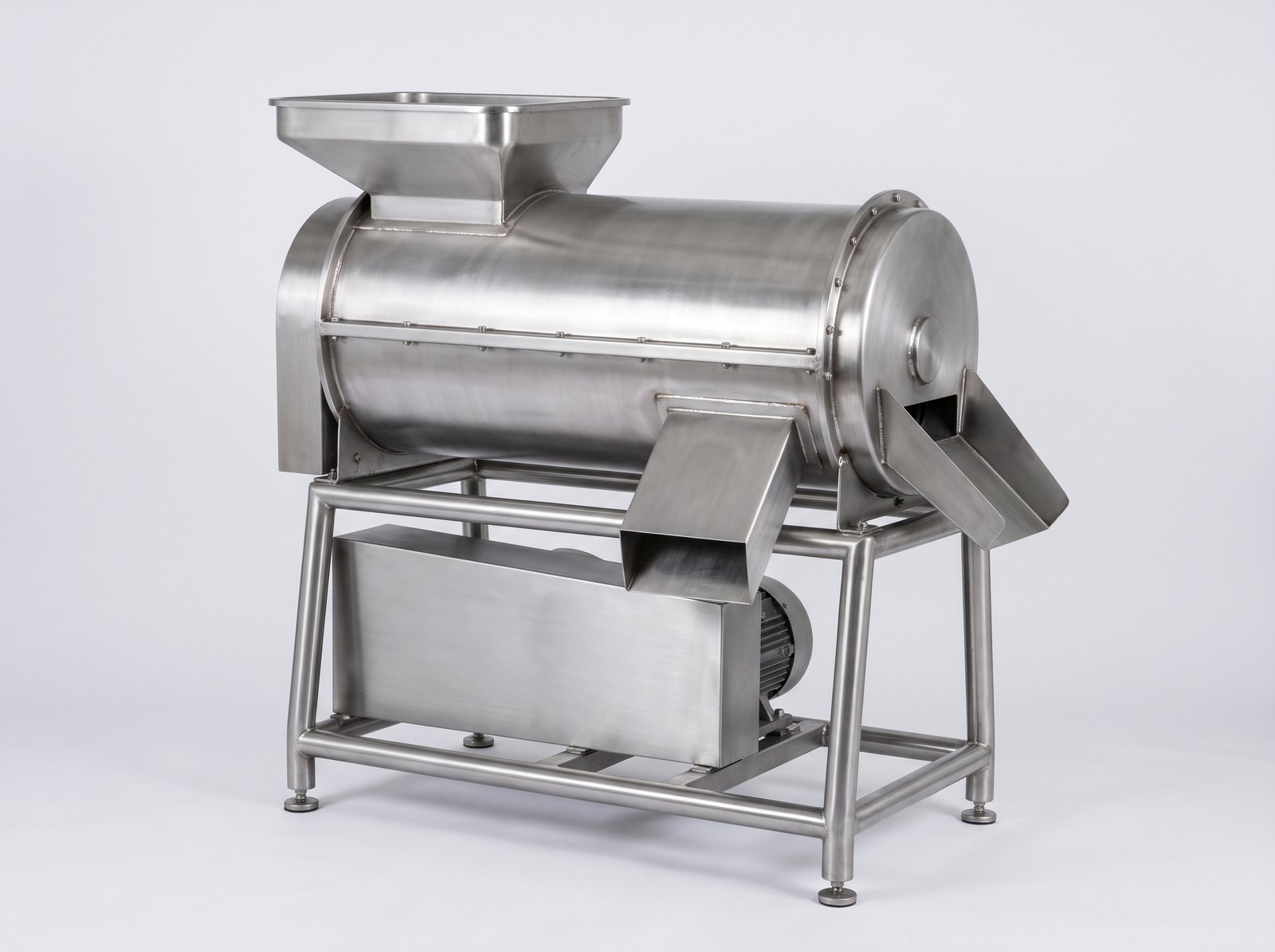
The washer sits between the fruit intake and the sorting and grading conveyor. Fruit arrives from the field crate or receiving hopper as harvested, with dirt, leaves and stems. It leaves the washer clean and wet, on an inclined pick-up conveyor that carries it up and out of the tank onto the inspection belt. From there it goes on to the mango destoner, the fruit mill and crusher or the juice extractor.


How It Works
1
Soaking And Air Agitation In The Fruit Washing Machine
Fruit is tipped into a stainless steel tank that holds water over a perforated false bottom. An air blower feeds a header under the water, and the rising bubbles keep the fruit rolling and rubbing against each other. The tumbling lifts soil off the skin gently enough for soft fruit. The operator sets the air flow and water level.
2
Settling And Overflow In The Fruit Washing Machine
Heavy dirt, stones and sand fall through the perforated sheet to the bottom of the tank, where a drain lets them out. Floating leaves and stems leave over the overflow.
3
Fruit Washing Machine Pick-Up And Spray Rinse
At the discharge end, a modular plastic belt with flights runs on stainless steel tracks and lifts the fruit out of the water. As the fruit rises, a stainless steel spray rail rinses it with fresh water, so what leaves is clean of the soak water as well as the field dirt.
4
Fruit Washing Machine Belt Speed
The pick-up belt is driven by a geared motor. A variable-speed drive lets the operator slow the belt for small or delicate fruit and speed it up when the intake is heavy, so the washer feeds the sorting conveyor at the rate the line downstream can take.
4
Types And Options
Air-Agitated Soak And Spray Fruit Washing Machine
The standard washer for a fruit line, and the one most plants start with. It suits most fruit that tolerates soaking.
Fruit Washing Machine With Brushing Unit
A roller brush unit after the soak tank scrubs the skin with rotating nylon brushes under sprays. It suits citrus and waxy fruit, where soaking alone leaves a film.
Fruit Washing Machine With Slat Elevator Discharge
A stainless steel slat elevator, fed by two paddles in the tank, lifts the fruit out. It suits a buyer who wants all-steel construction.
Fruit Washing Machine With Water Reuse
A circulation pump and filter keep the soak water cleaner for longer, so the tank is drained less often. It matters where clean water is limited or waste water must be treated.
Fruit Washing Machine Feed Hopper And Control Panel
The feed hopper is sized to the crate or bin the farm delivers in. A stainless steel control panel can be fitted where the washing area stays wet.
What Decides The Choice Of A Fruit Washing Machine
- The fruit: hard fruit such as orange and green mango takes vigorous air and brushing. Soft fruit needs gentler agitation.
- The dirt it carries: fruit picked off the ground in the rains needs a longer soak, more filtration and more spray.
- Peak intake: the tonnes that arrive on the heaviest day of the season.
- What sits downstream: the sorting conveyor's height sets the pick-up belt's length and angle.
- Water: the clean water the site can supply, and whether waste water must be treated.
- Cleaning: the tank is drained and cleaned daily, so drainage and access are planned with the layout.
What A Fruit Washing Machine Is Supplied With
- Stainless steel soak tank with perforated false bottom, drain, overflow and inspection opening.
- Air blower with air header.
- Pick-up conveyor with plastic modular belt, flights and geared motor drive.
- Fresh-water spray rail.
- Feed hopper and discharge chute.
- Motor starters or control panel.
- Manuals and an initial parts kit.
- Installation, commissioning and training for project and maintenance staff at the buyer’s site.
Fruit Washing Machine On Its Own Or In A Line
A washer is supplied on its own to replace a worn unit or to add capacity ahead of an existing line. More often it is the first machine of a complete plant, such as the fruit juice processing plant, the fruit pulp and concentrate plant, the tomato ketchup plant, the tomato puree, paste and sauce plant, the citrus juice plant, the pineapple juice plant, the jam and fruit preserves plant and the canned fruit and vegetable plant.
Fruit Washing Machine Inspection And Documentation
Before shipment the soak tank, blower, pick-up conveyor and spray rail can be checked by SGS or Bureau Veritas, as the buyer or the bank requires.
Frequently Asked Questions
Can One Fruit Washing Machine Handle Different Fruits?
Yes. The same washer handles mango, tomato, orange and pineapple. The operator adjusts air flow, belt speed and spray for each fruit.
Does A Fruit Washing Machine Bruise Soft Fruit?
Air agitation keeps soft fruit rolling gently in the water, cushioned as it is cleaned. For very ripe fruit the air and belt speed are turned down.
Can A Fruit Washing Machine Be Added To A Line I Already Run?
Yes. The pick-up conveyor is built to the height and position of your existing sorting conveyor, so the washer fits in front of it.
Related Machines
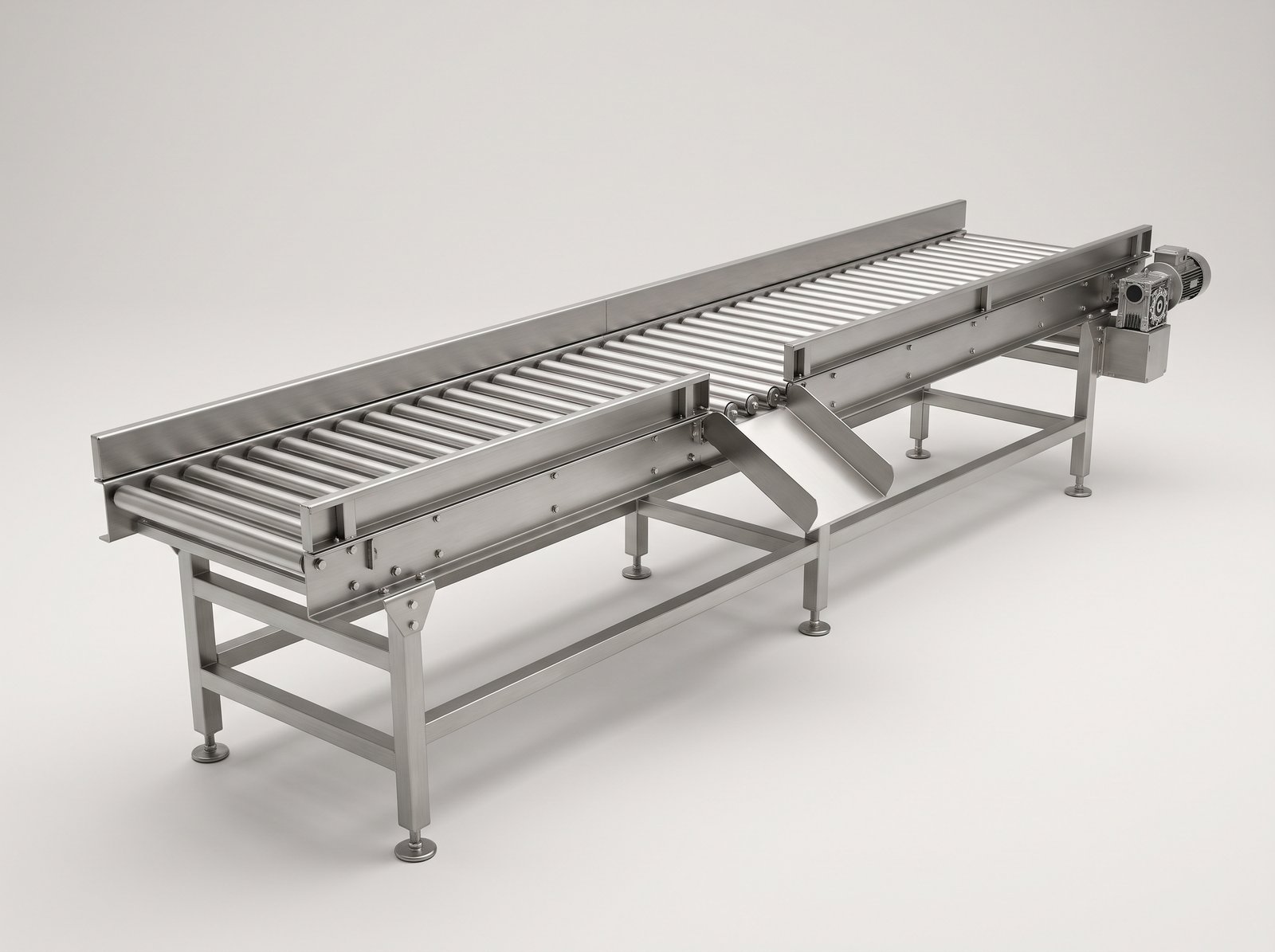
takes the washed fruit off the pick-up belt so workers can remove rotten, bruised and unripe fruit.
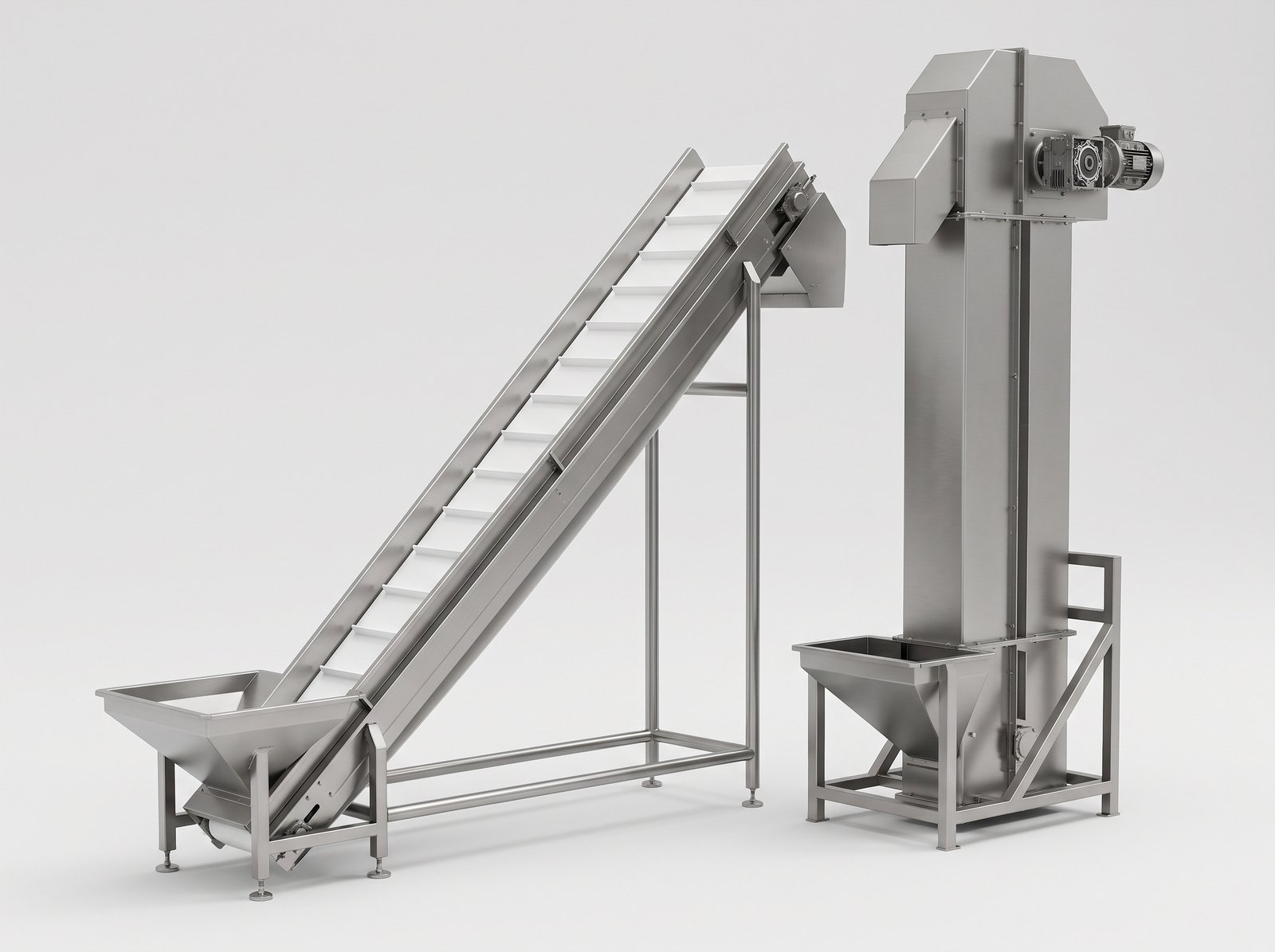
carry the sorted fruit from the washing area up to the feed hopper of the next machine.
Next Step For Your Fruit Washing Machine
Tell us the fruit you handle, the tonnes you expect on your busiest day and the line the washer will feed, and we will send a customer-specific proposal. Write to archit@sonikaimpex.com or sunil@sonikaimpex.com, or call +91 99027 67900.