

Home › Fruit Processing Machinery › Fruit pulper and finisher
Fruit Pulper Machine: Pulper And Finisher For Puree And Juice
What A Fruit Pulper Machine Does
A fruit pulper machine separates the edible pulp or juice from skin, seed and fibre by pushing the fruit through a perforated screen. The pulper does the first, coarser pass; the finisher does a second, finer pass that leaves a smooth product. The two are often built as one twin machine, one above the other. In fruit processing it is the main extraction machine for tomato puree, mango pulp, pineapple juice and any product made from crushed or destoned fruit.
What goes wrong when the pulper is set badly is visible straight away. A screen too open lets seed fragments, skin and fibre into the pulp, giving a gritty, speckled product. A screen too fine, or worn brushes, sends good pulp out with the waste. A pulper run faster than its feed allows chokes, overflows and stops the line behind it.
Fruit Pulper Machine Capacity
Pulpers and finishers are offered at 300 kg/hour, 500 kg/hour, 1, 2, 3 and 5 TPH, from a single pulper to a twin pulper-finisher. They serve tomato puree and ketchup lines, mango pulp lines and fruit juice lines. The pulper is matched to the crusher or destoner ahead of it, and the screen is chosen by the texture the product needs. Each line is sized to the buyer’s fruit and season in the needs assessment.

Where The Fruit Pulper Machine Sits In The Line
The pulper and finisher sit after the fruit mill and crusher, the hot break or the mango destoner. Coarse crushed fruit or destoned mango pulp arrives by pump or chute into the feed hopper. Smooth pulp or juice leaves from the collection hopper to a holding tank, from where it goes on to the steam-jacketed and vacuum cooking kettle, the fruit evaporator, the deaerator or the plate and tubular pasteuriser. Skins, seeds and fibre leave through the waste chute onto the waste conveyor.
Fruit pulper and finisher
This Machine

How It Works
1
Screen And Rotor Inside The Fruit Pulper Machine
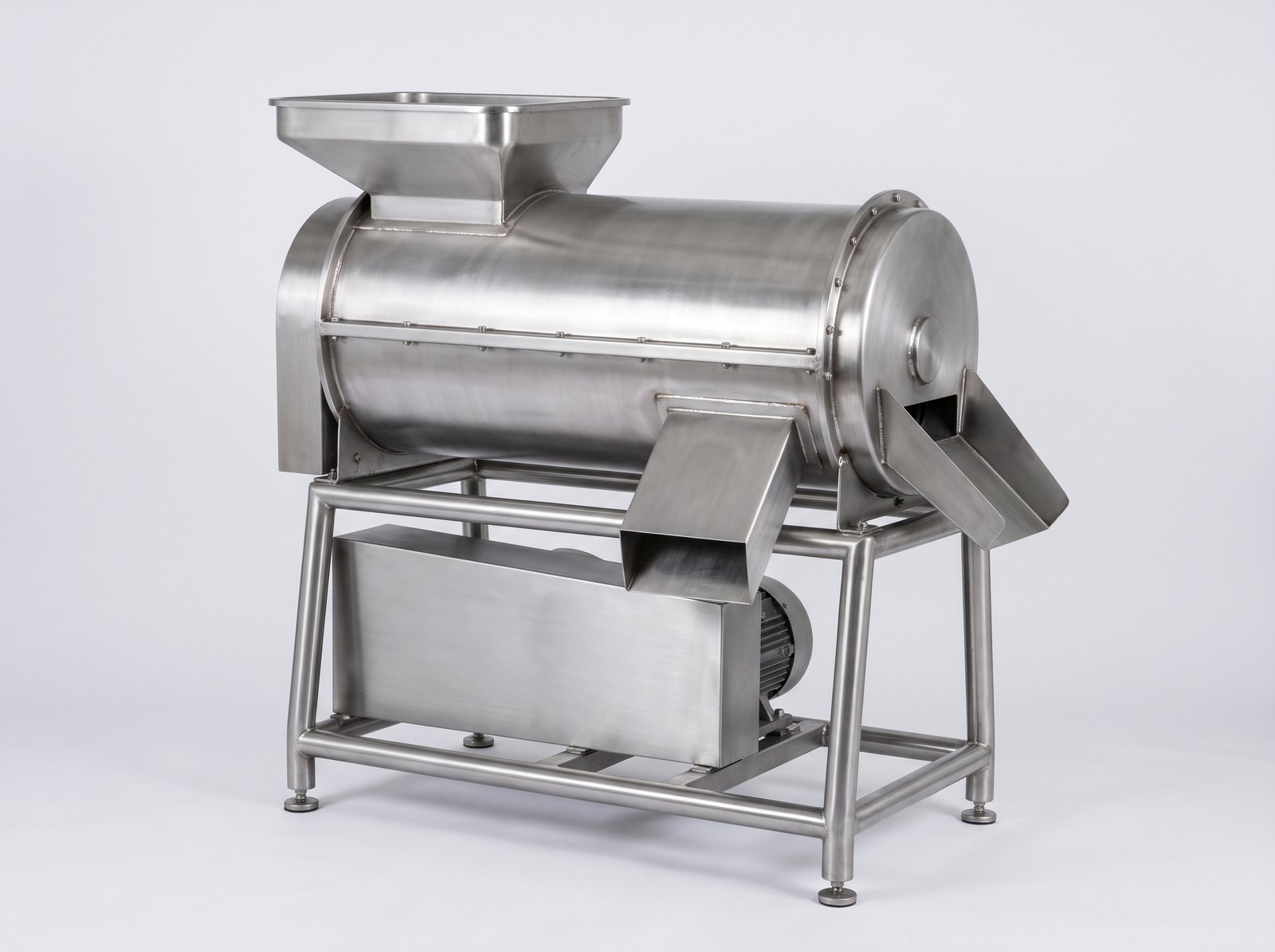
Each stage is a horizontal cylindrical screen of perforated stainless steel with a rotating shaft inside it. On the shaft are either nylon brushes or stainless steel beater blades, set at a small angle so that as they turn they press the fruit against the screen and also move it along from the feed end to the waste end. Soft pulp and juice pass through the holes into the collection hopper under the screen. Skin, seed and fibre cannot pass, travel to the end of the screen and drop out through the waste chute.
2
Two Passes In A Twin Fruit Pulper Machine
In a twin pulper, the pulper stage has the coarser screen and the finisher stage below it has the finer screen. Pulp from the first falls straight into the second, so the product is refined twice without a pump between them. Brushes give a gentler action suited to soft fruit, mango and tomato; beater blades suit firmer, more fibrous fruit.
3
Drive And Settings On The Fruit Pulper Machine
The shaft is driven by an electric motor through a V-belt fixed-speed drive with a guard, on a stainless steel square-tube frame. All contact parts, screens, shaft, hoppers and chutes are stainless steel. The operator chooses the screen for the product, sets the gap and angle of the brushes or blades, and controls the feed rate so the screen stays full but never floods. Screens are interchangeable, so one machine can run different products with a screen change.
4
Types And Options
Twin Fruit Pulper Machine With Finisher
Two stages on one frame, pulper above finisher. It is the standard machine for tomato, mango and mixed fruit.
Single-Stage Fruit Pulper Machine
One stage for lines where a second pass is done elsewhere, such as a continuous finisher after a citrus extractor.
Continuous Finisher Version Of The Fruit Pulper Machine
A single cylindrical screen with a variable-speed drive, used after a juice extractor to take out the remaining pulp and seeds.
Fruit Pulper Machine Options
- Brushes or beater blades.
- A set of interchangeable screens for different products.
- Variable-speed drive in place of fixed speed.
- Product pump at the outlet.
What Decides The Choice Of Fruit Pulper Machine
- The fruit: tomato, mango, pineapple and citrus each need a different screen and a choice between brushes and blades.
- The product: ketchup and puree need a fine, smooth finish; nectar and juice can carry more pulp.
- Line rate: the screen length and drive are set for the rate from the crusher or destoner.
- What comes before: a hot break or destoner changes how soft and coarse the feed is.
- What comes after: a kettle, evaporator or pasteuriser downstream decides how much fibre and how many specks are acceptable.
- Cleaning: screens are taken out and washed after each run, so space around the machine is planned for it.
What The Fruit Pulper Machine Is Supplied With
- Stainless steel square-tube frame and support structure.
- Perforated stainless steel screens for pulper and finisher.
- Nylon brushes or stainless steel beater blades on a stainless steel shaft.
- Feed hopper, collection hopper and waste chute in stainless steel.
- Motor with V-belt drive and guard.
- Starter or control panel.
- Manuals and an initial parts kit, including brushes or blades.
- Installation, commissioning and operator training at the buyer’s site.
Fruit Pulper Machine On Its Own Or In A Line
A pulper and finisher is supplied on its own for a new product or to replace a worn unit. In a complete plant it is part of the tomato ketchup plant, the tomato puree, paste and sauce plant, the fruit pulp and concentrate plant, the jam and fruit preserves plant, the pineapple juice plant and the fruit juice processing plant.
It also works in the hibiscus and herbal drink plant and the citrus juice plant.
Fruit Pulper Machine Inspection And Documentation
Before shipment, SGS or Bureau Veritas can inspect the pulper and finisher as the buyer requires: the screens, the brush or blade set on the shaft, the contact-part steel, and a dry run of the drive. The machine travels with its manuals, the packing list and an initial parts kit of brushes or blades.
Frequently Asked Questions
What Is The Difference Between The Pulper And The Finisher In A Fruit Pulper Machine?
The pulper takes out skin and seed with a coarser screen; the finisher refines the pulp with a finer one. A twin machine does both in one pass.
Should A Fruit Pulper Machine Use Brushes Or Beater Blades?
Brushes are gentler and suit soft fruit, mango and tomato. Blades suit firmer, more fibrous fruit. Both can be fitted to the same machine.
Can One Fruit Pulper Machine Run Several Products?
Yes. Screens are interchangeable, so the same machine can run tomato in one season and mango or pineapple in another.
Why Is The Pulp From My Fruit Pulper Machine Gritty?
Usually the screen is too open or worn, or seeds are being broken before the pulper. A finer finisher screen and a correct crusher setting fix it.
Related Machines
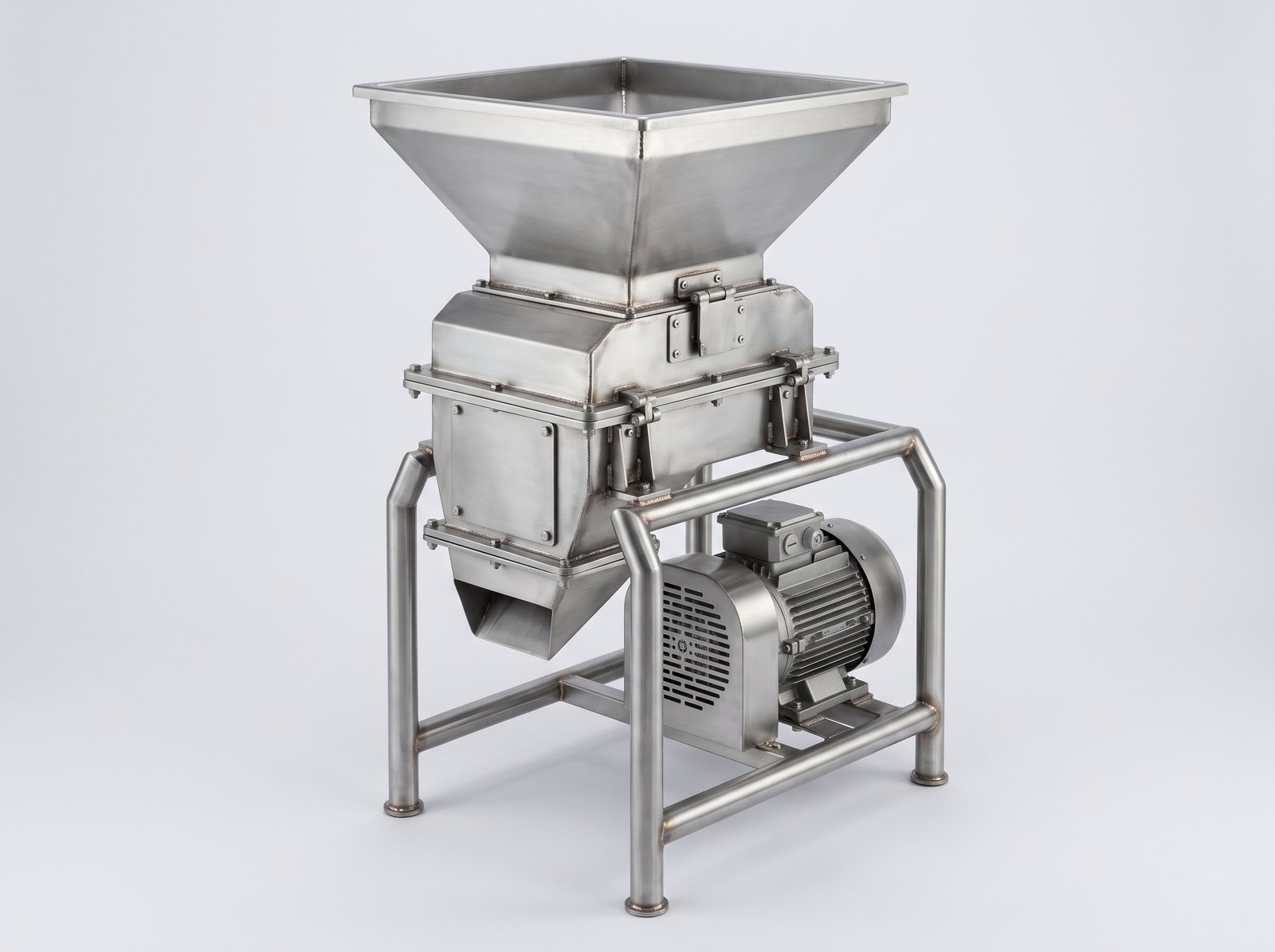
It breaks the fruit into a coarse mash that the pulper can take in at a steady rate.
It takes the stones out of mango before the pulp goes to the pulper and finisher for refining.

It cooks the smooth pulp from the finisher into ketchup, sauce or jam.
Next Step For Your Fruit Pulper Machine
Tell us the fruit, the product and the rate of your line, and we will send a customer-specific proposal. Write to archit@sonikaimpex.com or sunil@sonikaimpex.com, or call +91 99027 67900.