

Home › Fruit Processing Machinery › Fruit evaporator
Fruit Evaporator: Falling-Film, Plate Evaporators And Tomato Vacuum Pans
What A Fruit Evaporator Does
A fruit evaporator removes water from juice, pulp or puree under vacuum so that the product becomes a concentrate or paste. Concentrate is cheaper to store and ship than juice, because most of the water is gone, and it keeps longer once sterilised and packed. In fruit processing, this is the step that turns a seasonal plant into one that can sell through the year.
Vacuum is the point. Water boils at a much lower temperature under vacuum, so the product loses its water without being cooked. An evaporator run too hot, too long or with fouled surfaces scorches the product: mango concentrate darkens, tomato paste turns brown and bitter, and the colour and flavour buyers pay for are lost. An evaporator that cannot keep up with the extraction section forces fresh juice to wait, which costs quality before concentration even starts.
Fruit Evaporator Capacity
Evaporators are offered as vacuum pans of 100, 250 and 450 litres/hour of evaporation and as falling-film evaporators of 1,500, 3,000 and 6,000 kg/hour of feed, from a single vacuum pan to a multi-effect falling-film unit. Pans suit tomato puree and smaller plants. Falling-film units concentrate fruit juice and pulp to 60 to 65 Brix.
The evaporator is chosen to the line’s fruit intake in peak season and the Brix the market buys.

Where A Fruit Evaporator Sits In The Line
The evaporator sits after extraction, finishing and, for juice, clarification. On a mango line the pulp comes from the mango destoner and the fruit pulper and finisher. On a clear juice line it comes from the juice extractor and the centrifugal clarifier and filter press.
Juice or pulp arrives from a balance tank through a pre-heater. Concentrate leaves through a discharge pump to a concentrate collection tank and then to the aseptic steriliser and aseptic bag-in-drum filler, or, for tomato, to the cooking and filling section. The water removed leaves as vapour to the condenser.
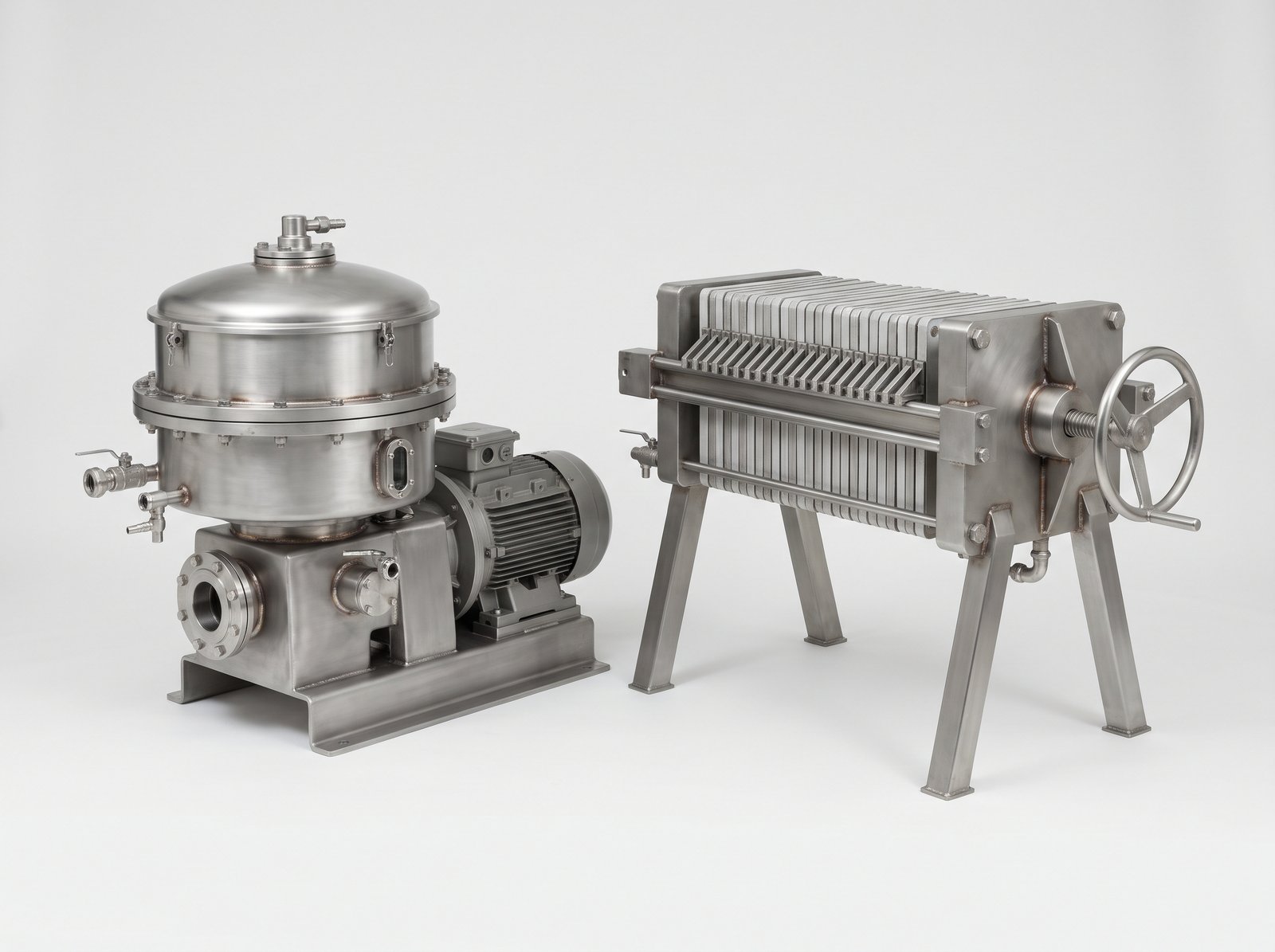
Fruit evaporator
This Machine
How It Works
1
Feeding And Pre-Heating In The Fruit Evaporator
The feed is pumped from a balance tank through a duplex filter and pre-heaters into the first effect.
2
Thin-Film Boiling In The Fruit Evaporator Calandria
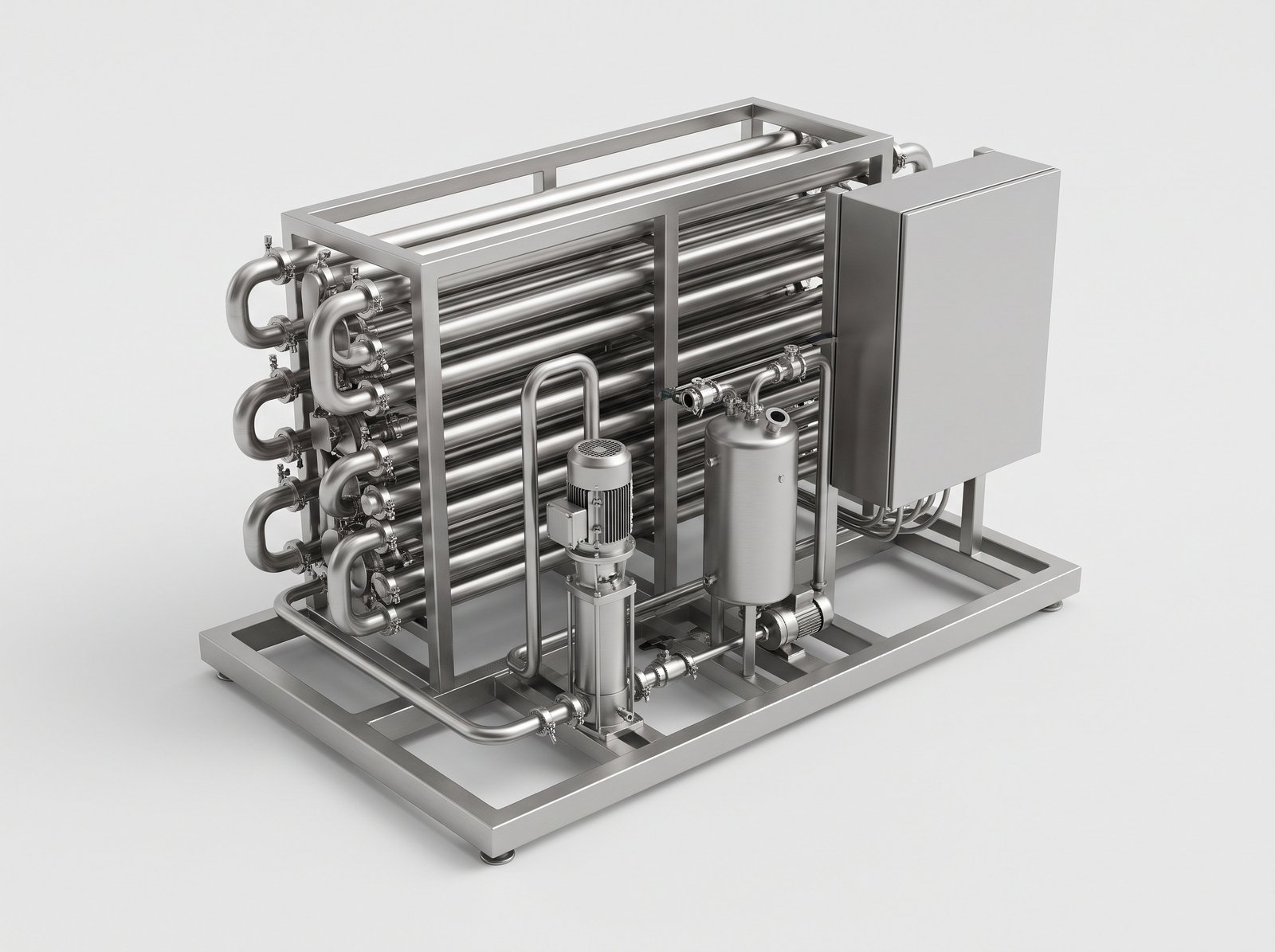
Inside each calandria, the juice runs down the inside of vertical tubes as a thin film. Steam heats the outside of the tubes. The thin film boils quickly and evenly, so the product spends little time on hot steel. Product contact parts are stainless steel.
3
Effect-To-Effect Concentration In The Fruit Evaporator
The vapour from each effect heats the next, which saves steam. Partly concentrated product moves from effect to effect until it reaches its final concentration. Vapour separators part the vapour from the product at each stage, so only concentrate travels on.
4
Holding Vacuum In The Fruit Evaporator
A condenser and water-ring vacuum pumps hold the vacuum. Under that vacuum the vapour comes off at 50 to 55 °C. The condenser turns the vapour back into water, and its cooling water carries the heat away.
5
Checking Brix And Discharging The Fruit Evaporator Concentrate
A refractometer reads the Brix of the concentrate, and steam and feed are held so the product leaves at the strength the market buys. A discharge pump then moves the concentrate to the collection tank.
Types And Options
Multi-Effect Falling-Film Fruit Evaporator
The falling-film unit makes mango, pineapple and orange concentrate on continuous lines, working through the effects, calandrias and separators described above. It suits larger plants with a long season.
Plate Fruit Evaporator With Thermal Vapour Recompression
Thin juice runs between heated plates. A multi-effect plate evaporator with a thermal vapour recompressor reaches full concentration in a single pass, with low steam use. It carries a refractometer measuring Brix on line and its own cleaning unit, and its plate packs make it compact.
Tomato Vacuum Pans As A Batch Fruit Evaporator
Tomato pulp is concentrated batch-wise in stainless steel vacuum pans with a steam jacket and a scraper that keeps the thick paste moving and off the hot wall. A vacuum pump holds the pan at 550 to 600 mm Hg, so the pulp boils gently until it reaches the Brix the product needs. The operator controls steam, vacuum and the end point by Brix. Pans are usually installed as a pair working together on tomato puree and paste lines.
Options Fitted To A Fruit Evaporator
- On-line refractometer.
- CIP unit.
- PLC control.
- Concentrate cooler and plate pasteuriser at the outlet, from the plate and tubular pasteuriser range.
What Decides The Choice Of A Fruit Evaporator
- The product: juice concentrate suits a falling-film or plate evaporator. Tomato paste suits vacuum pans.
- Final Brix: 60 to 65 Brix for fruit concentrate is reached in the multi-effect units. Tomato puree is finished at 12 Brix in pans.
- Line rate: the evaporator is sized to the juice or pulp the extraction section produces.
- Steam and cooling water: an evaporator is one of the largest users of both in the plant. It takes steam at 9 bar. The rest of the plant takes steam at 3 to 4 bar. The boiler and cooling tower are sized with the evaporator.
- Building: falling-film calandrias are tall, so the building height and platforms are planned with the evaporator.
- Cleaning: evaporators foul, so a CIP unit and the time for cleaning between runs are part of the plan; the CIP set is covered under stainless steel storage tanks and CIP system.
What A Fruit Evaporator Is Supplied With
- Evaporator effects (calandrias or plate packs), vapour separators and pre-heaters.
- Condenser and water-ring vacuum pumps.
- Feed, transfer and concentrate discharge pumps.
- Balance tank and duplex filter.
- Refractometer, instruments and control panel.
- CIP unit where ordered.
- Manuals and an initial parts kit.
- Installation, commissioning and operator training at the buyer’s site.
Fruit Evaporator On Its Own Or In A Line
An evaporator is supplied on its own when a juice or pulp plant, such as a fruit juice processing plant, adds concentrate. It is also supplied as part of the fruit pulp and concentrate plant and the tomato puree, paste and sauce plant. When it is added to a running plant, the steam, cooling water and building height are checked against what is already installed.
It also works in the tomato ketchup plant.
Fruit Evaporator Inspection And Documentation
SGS or Bureau Veritas can inspect the evaporator before shipment as the buyer requires: the calandria or plate packs, vapour separators, condenser and vacuum pumps, and the contact-part steel. Manuals, the packing list and an initial parts kit come with the evaporator. The building height and platforms are confirmed with you before it ships.
Frequently Asked Questions
Why Does A Fruit Evaporator Work Under Vacuum?
Under vacuum the juice boils at a low temperature, so water is removed without cooking the product. Colour and flavour are kept.
Should I Choose A Falling-Film Or Plate Fruit Evaporator?
Both make fruit concentrate. A falling-film unit suits larger continuous lines. A plate evaporator is compact and reaches full Brix in one pass.
How Does A Fruit Evaporator Concentrate Tomato?
In vacuum pans with scrapers that keep the thick paste moving, usually a pair working together so the line has the evaporation it needs.
What Does A Fruit Evaporator Need From The Site?
Steam from the boiler, cooling water for the condenser, power for the pumps, and enough building height for the effects.
Related Machines

Next Step For Your Fruit Evaporator
Tell us the fruit, the juice or pulp you will feed and the concentrate you plan to sell, and we will send a customer-specific proposal. You can see how a project runs on How we work. Write to archit@sonikaimpex.com or sunil@sonikaimpex.com, or call +91 99027 67900.