

Home › Fruit Processing › Canned fruit and vegetable plant
Fruit Canning Plant: Canned Fruit, Beans And Vegetables
Who A Fruit Canning Plant Suits
A fruit canning plant suits a buyer who wants a product that needs no cold chain and keeps on a shop shelf for a long time: pineapple slices in syrup, baked beans in tomato sauce, canned vegetables or a local dish in cans. Cans need no cold chain once sealed and sterilised.
It fits a first plant for a food business with access to fruit, vegetables or dried beans, often starting as a small batch line. It also fits as an addition to a tomato puree, paste and sauce plant or another fruit processing plant that already has steam and preparation. Lines run from 100 kg an hour to 2 TPH, and bean lines have been offered at 2,000 kg a day and at 500 kg an hour.
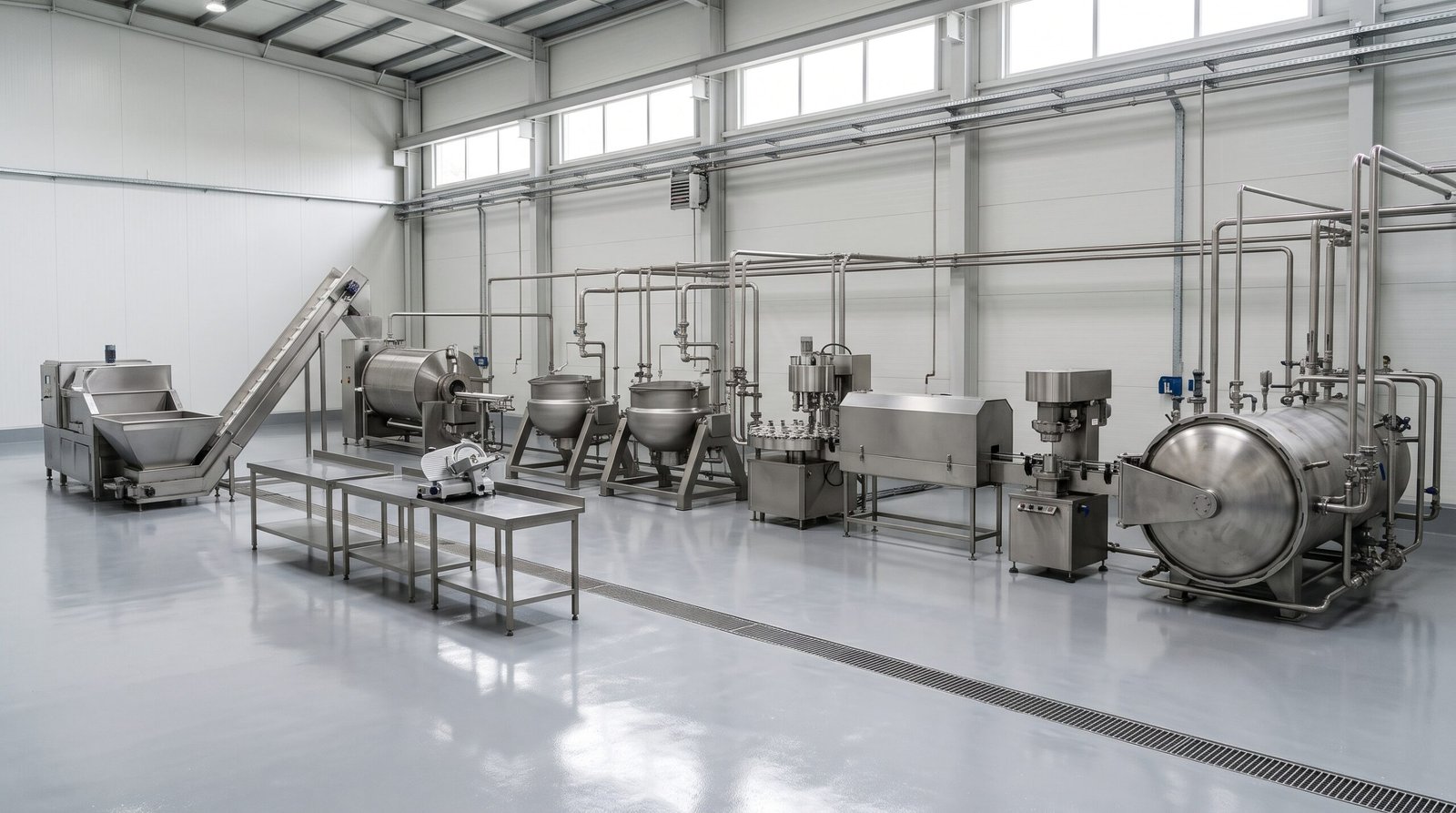
Process Flow
Stage 1
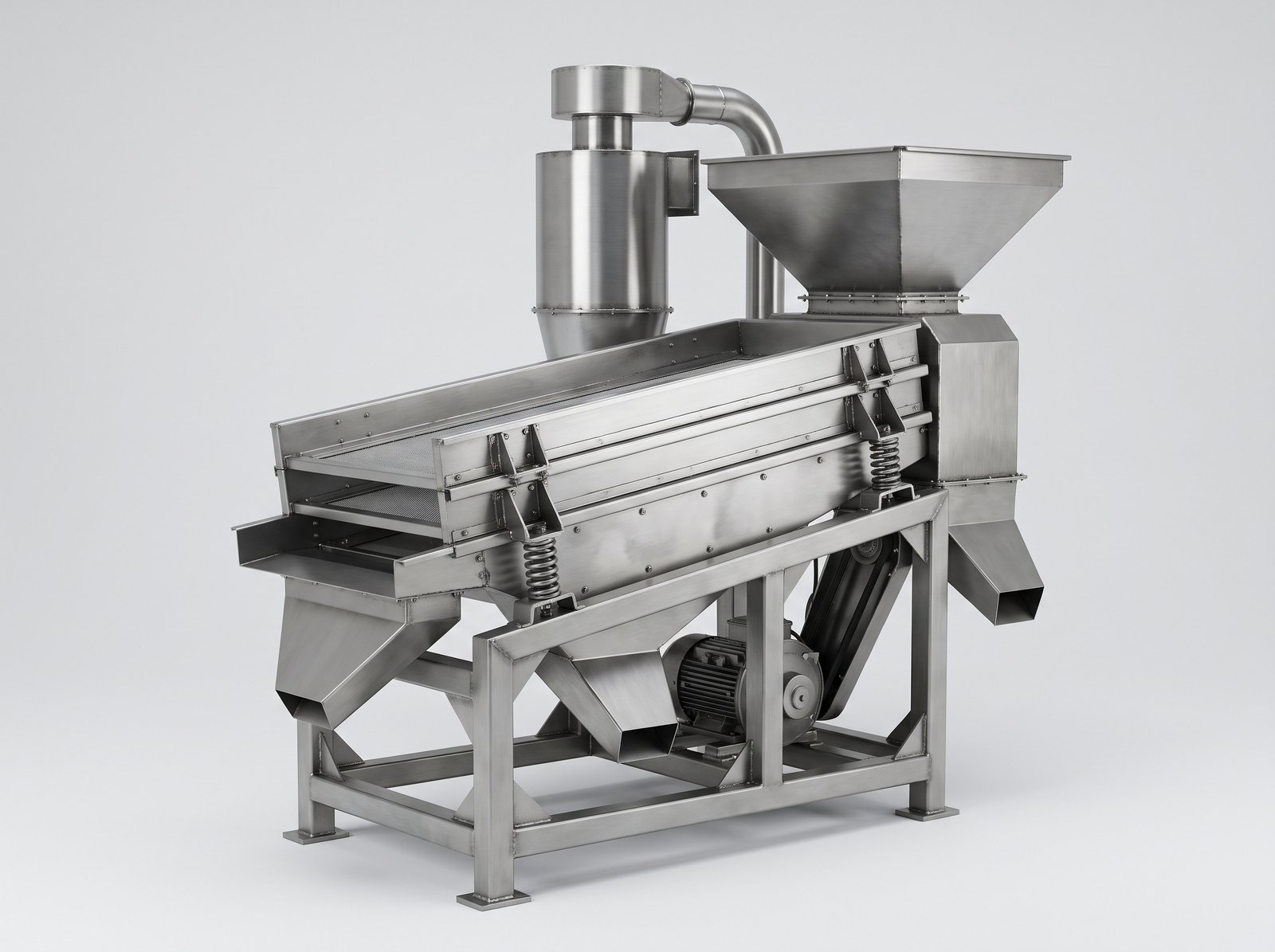
Cleaning Dried Beans In The Fruit Canning Plant
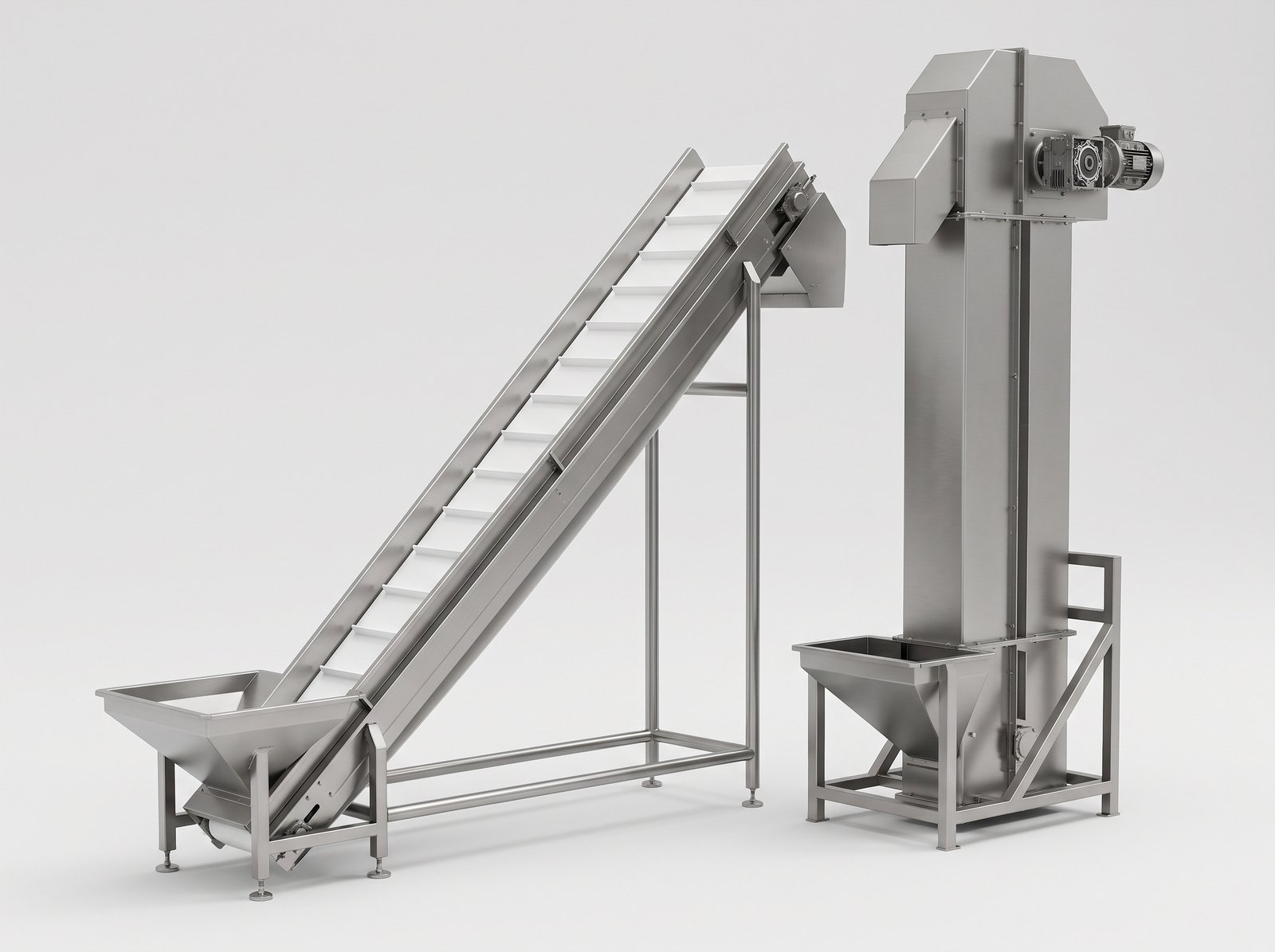
For bean lines, dried beans pass a seed cleaner with oscillating screens and double aspiration that removes dust, chaff and broken grain. A vibrating-deck destoner follows, where air drawn through the deck floats the beans away while the vibration carries the heavier stones out at the top. Bucket elevators move the beans between machines. Fruit lines start at the next stage.
Machines At This Stage
- Seed cleaner with oscillating screens and double aspiration
- Vibrating-deck destoner
- Bucket elevators
Stage 2
Soaking And Washing In The Fruit Canning Plant
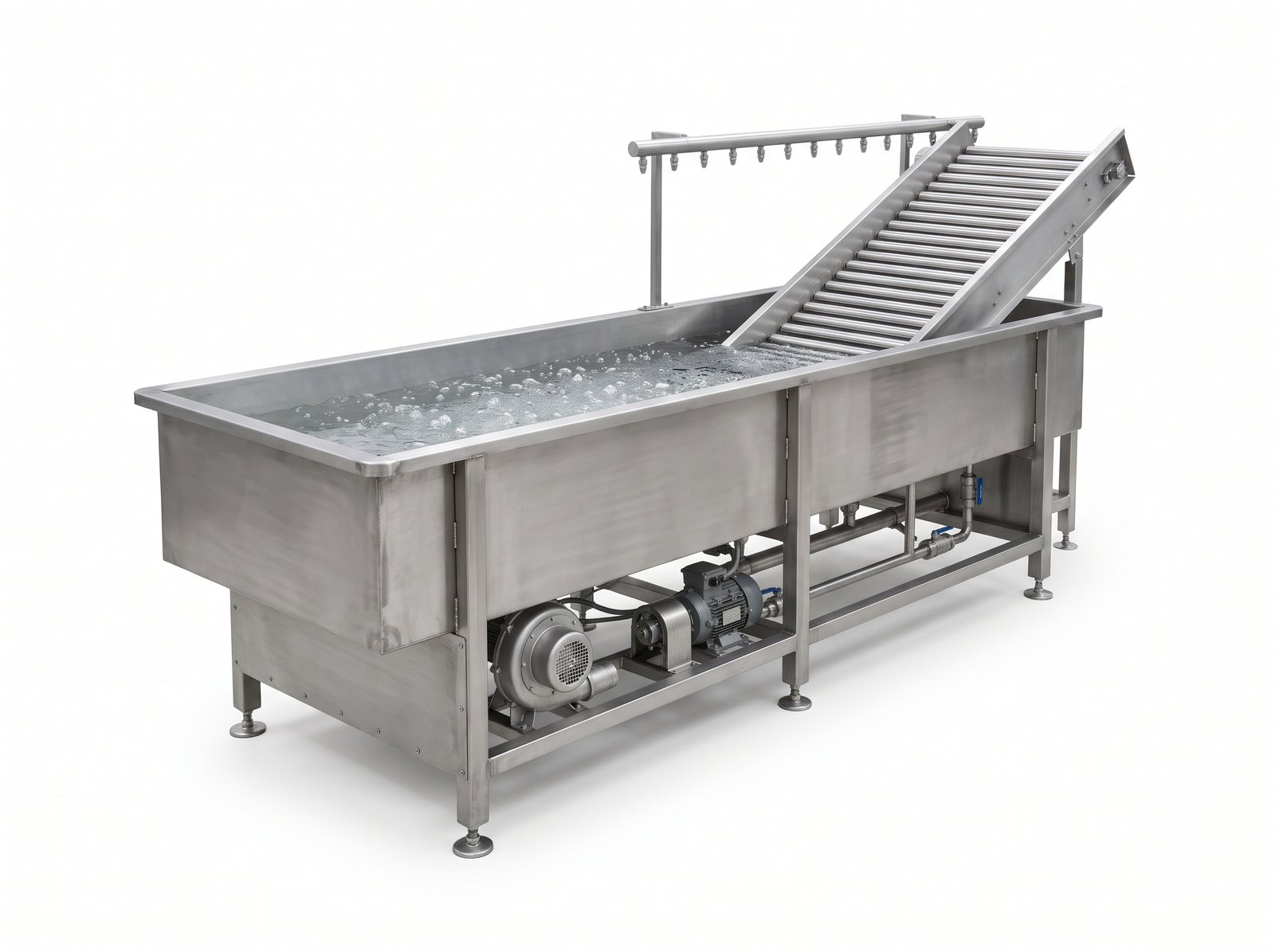
Beans soak in stainless conical-bottom tanks until they have taken up water, then pass a washer-elevator where blower agitation and sprays clean them. Fruit is washed in the same kind of washer, a fruit washing machine. The number and size of soaking tanks follow the day’s batch, since beans soak for hours.
Machines At This Stage
- Stainless conical-bottom soaking tanks
- Washer-elevator with blower agitation and sprays
Stage 3
Preparation In The Fruit Canning Plant
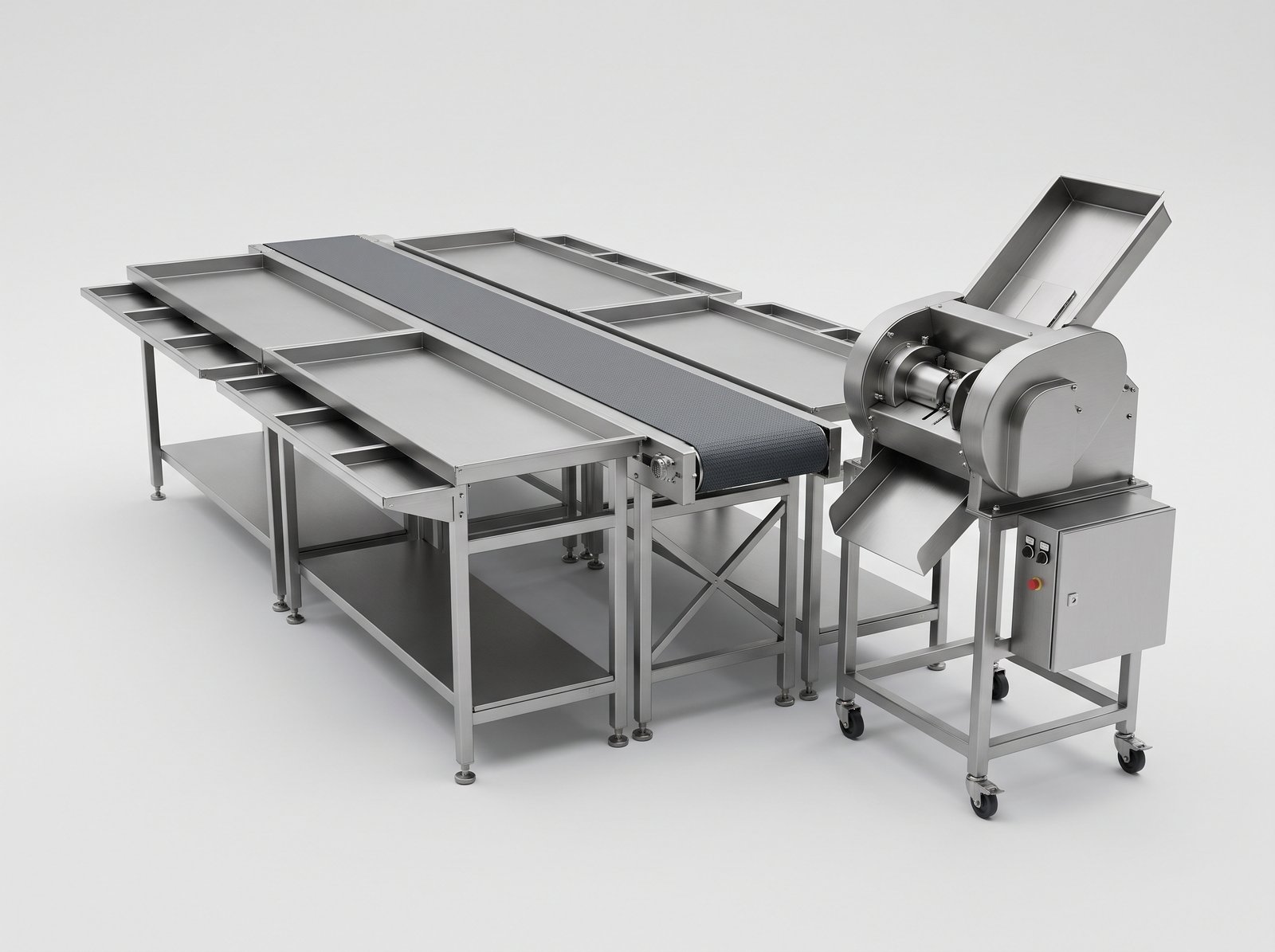
Pineapple is topped and tailed on stainless tables, then a hand-lever corer and sizer removes skin and core in one stroke and a slicer cuts even rings. Vegetables are trimmed and cut here. On bean lines an inspection conveyor with a magnet takes out discoloured beans and stray metal. The buyer chooses hand or machine cutting by the fruit and the labour available.
Machines At This Stage
- Stainless preparation tables
- Hand-lever corer and sizer
- Slicer
- Inspection conveyor with magnet
Stage 4
Blanching In The Fruit Canning Plant
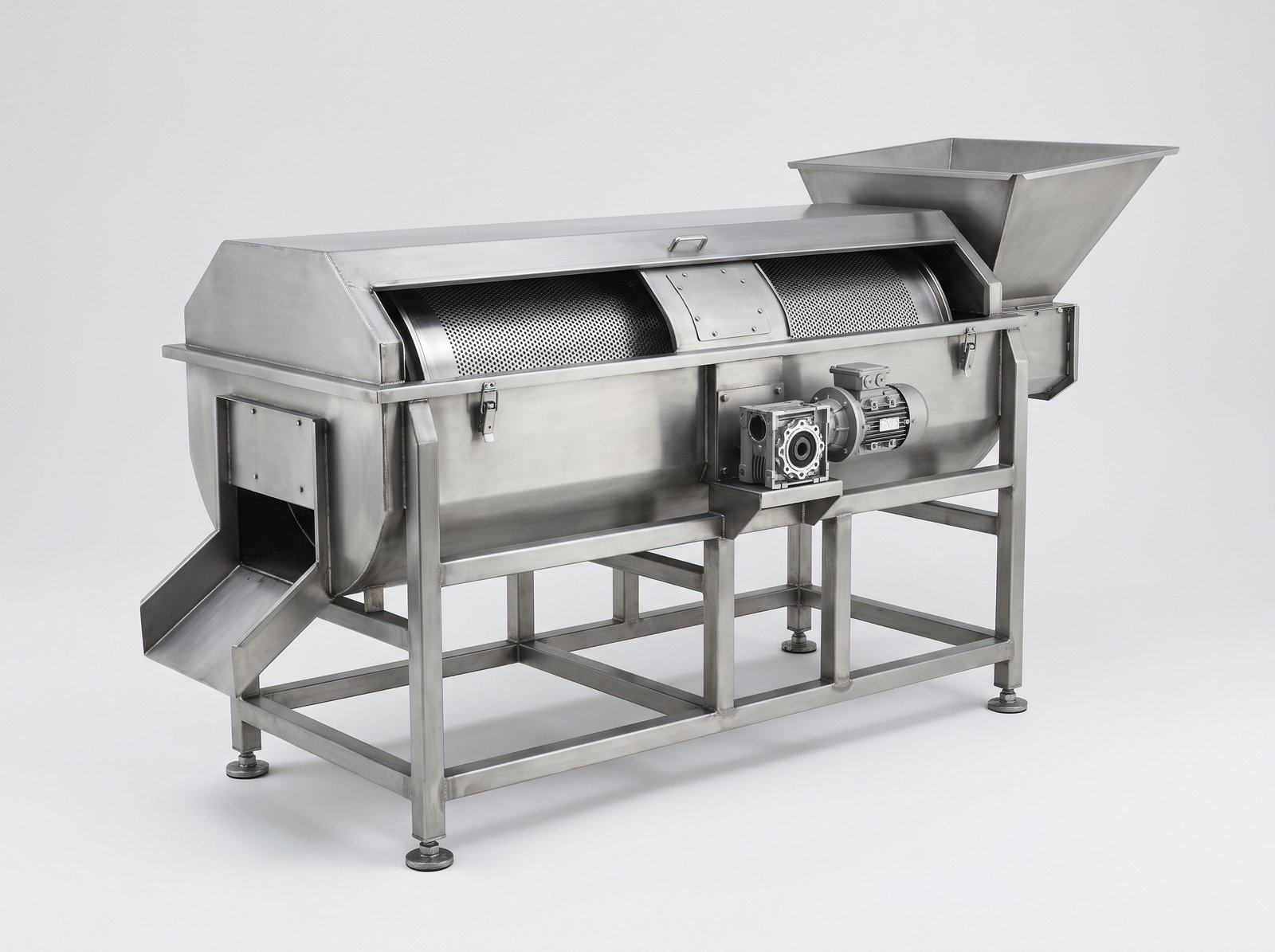
Beans and vegetables are blanched in a perforated rotary drum with a screw that carries them through hot water or steam for a set time. This softens them, fixes colour and drives out air. Residence time is adjusted by the screw speed. Pineapple slices do not need blanching.
Machines At This Stage
- Rotary drum blancher with screw
Stage 5
Syrup And Sauce Making In The Fruit Canning Plant
Sugar syrup for fruit is made in a tilting steam-jacketed kettle and held in an insulated filling tank. Tomato sauce for beans is cooked from tomato paste in steam-jacketed kettles with paddle scrapers. The sauce then passes through a homogeniser at 150 to 200 bar so it pours evenly into the can.
Machines At This Stage
- Tilting steam-jacketed kettle for syrup
- Insulated syrup filling tank
- Steam-jacketed kettles with paddle scrapers for sauce
- Homogeniser

Stage 6
Can Washing And Filling In The Fruit Canning Plant
Empty cans are washed and steam-sterilised before filling. Fruit slices are packed into cans by hand and topped with hot syrup from a filling header. Beans are filled by weight and the sauce added hot by a piston filler. The buyer chooses manual, semi-automatic or servo piston filling by the cans per hour.
Machines At This Stage
- Can washer and steam steriliser
- Syrup filling header
- Manual, semi-automatic or servo piston filler

Stage 7
Exhausting In The Fruit Canning Plant
Filled cans travel through a steam tunnel on a belt so the contents are heated and the air above them is driven out before the lid goes on. The vacuum this leaves in the closed can protects colour and flavour and stops the can bulging.
Machines At This Stage
- Exhaust box with steam tunnel and belt

Stage 8
Seaming In The Fruit Canning Plant
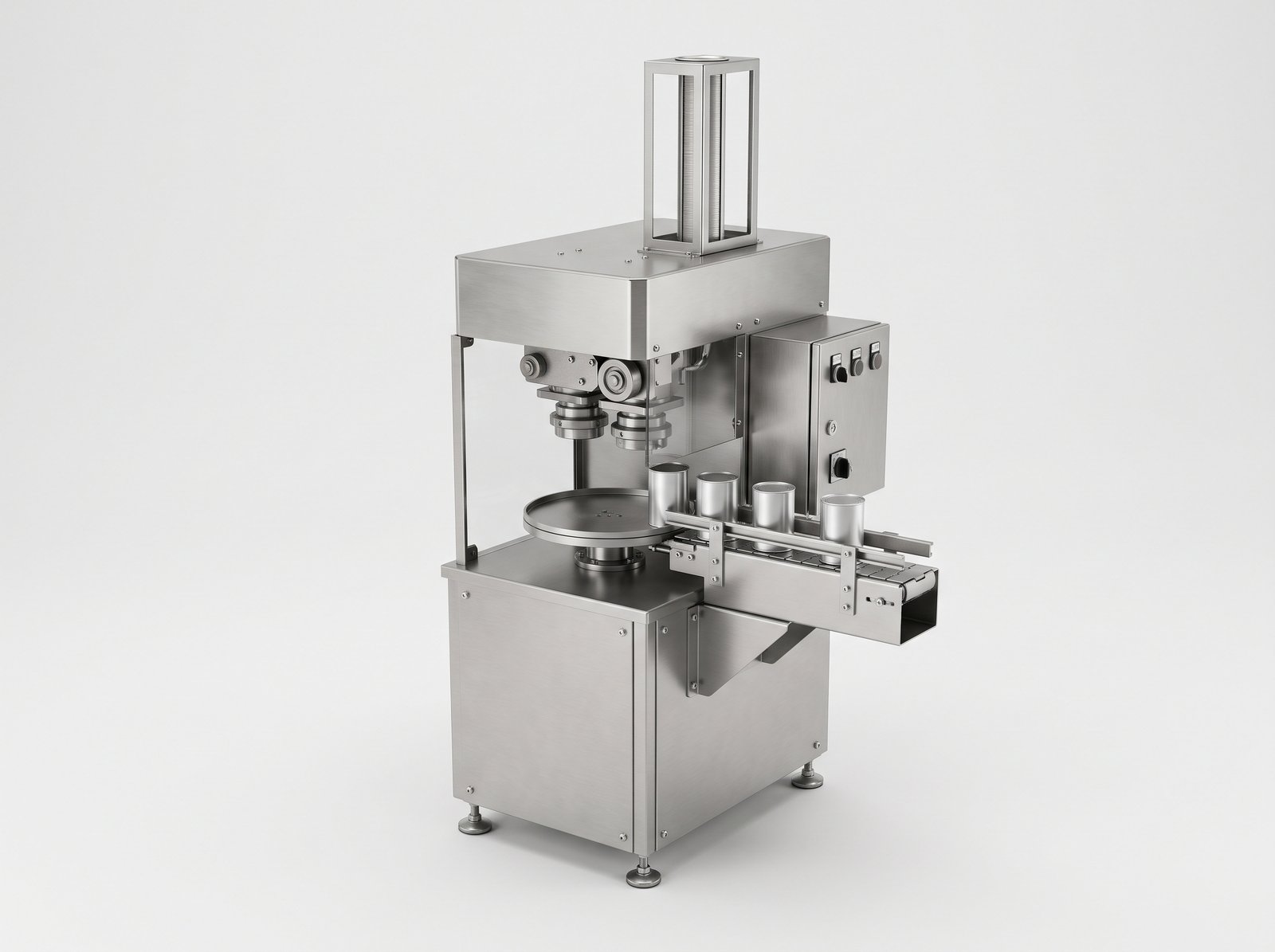
A double seamer rolls the lid onto the can body to make an airtight seam. Small lines use a hand-lever seamer with a foot pedal; larger lines an automatic seamer. The seam is the most important check in a canning plant.
Machines At This Stage
- Hand-lever double seamer with foot pedal
- Automatic double seamer
Stage 9
Sterilising And Cooling In The Fruit Canning Plant
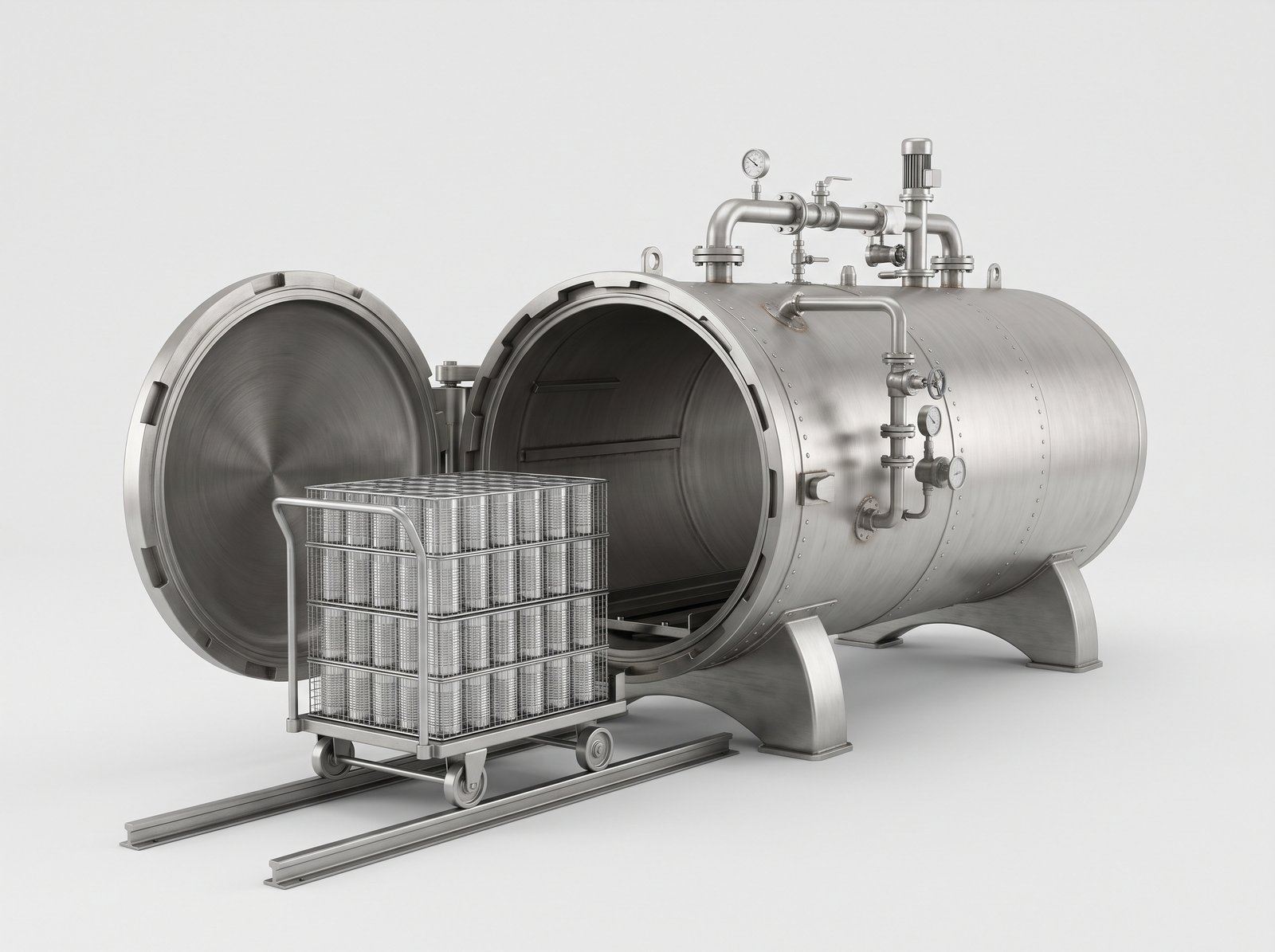
Sealed cans are loaded in perforated crates into a retort and heated under pressure, at up to 140 °C, long enough to make them commercially sterile, then cooled with water in the same vessel. Vertical retorts suit small lines. Horizontal retorts with trolleys, spray water, PLC control and stored recipes suit larger lines and also take pouches and bottles.
Machines At This Stage
- Vertical retort with perforated crates
- Horizontal retort with trolleys, spray water and PLC control
Stage 10
Labelling And Packing In The Fruit Canning Plant
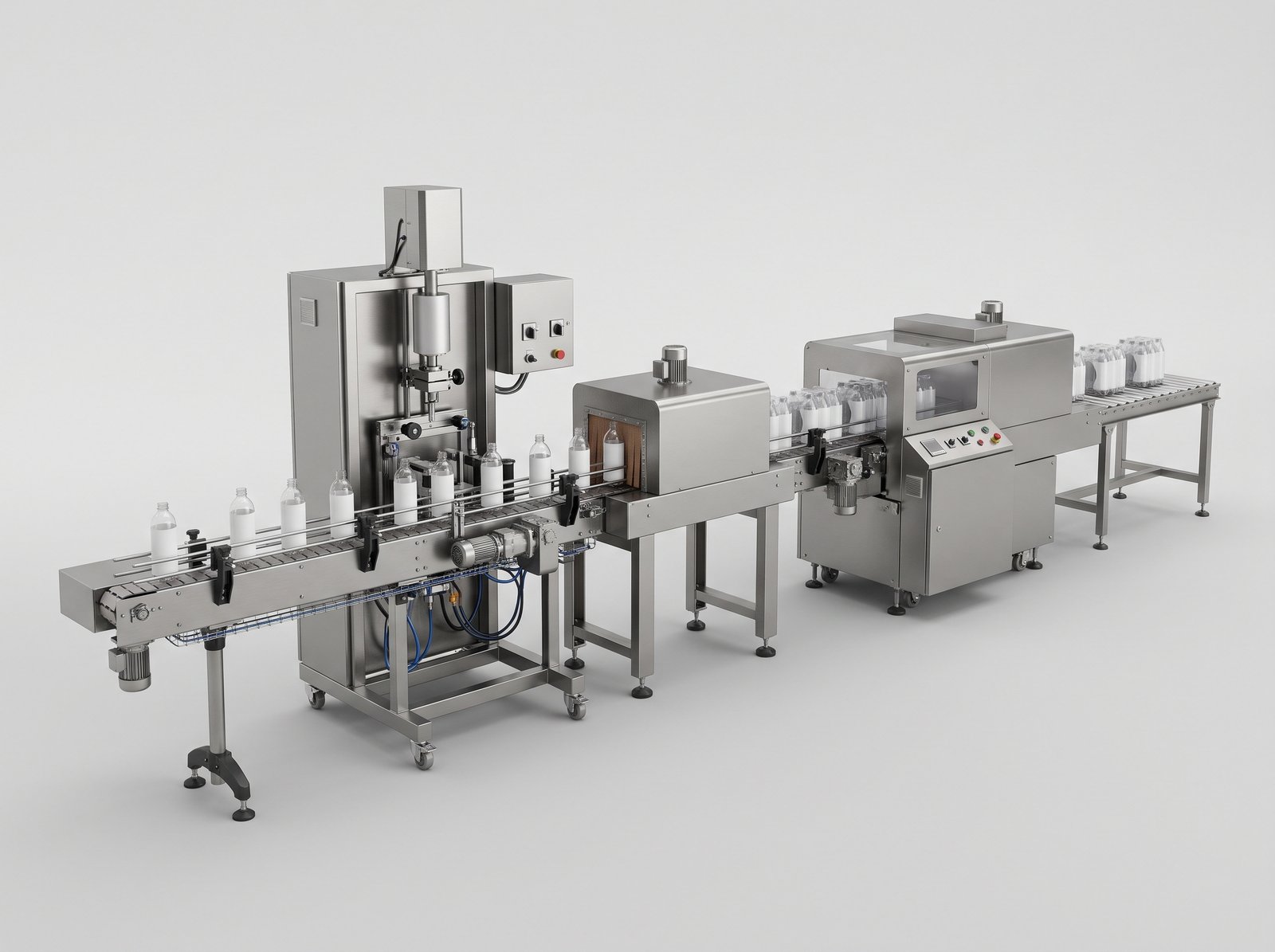
Cooled, dried cans are labelled, coded and packed in cartons. They are then held for a few days’ incubation and checking before dispatch.
Machines At This Stage
- Can labeller and coder
- Carton packing
Fruit Canning Plant Capacity
Canned fruit and vegetable plants are offered at 100, 200 and 500 kg/hour, 1 and 2 TPH. The range runs from a hand-packed batch line with vertical retorts to automatic filling, seaming and horizontal retorts. As offered, canned pineapple slice lines run at 200 kg/hour of fruit, and canned beans in tomato sauce at 500 kg/hour or in 2,000 kg/day batch lines.
Each plant is sized to the buyer’s raw material and season, with the retorts setting the line’s output. As offered, a vertical retort holds 300 cans of 850 g per batch. A 3-cage horizontal retort holds about 3,380 cans of 450 ml or 1,785 cans of 850 ml, and 1.5 tonne units are also offered.
What Decides The Design Of A Fruit Canning Plant
The product and the can decide the plant. Fruit in syrup, beans in sauce and vegetables in brine share the closing and retorting end but differ at the front.
- Raw material and season: fresh fruit in season, or dried beans all year.
- Product mix: fruit in syrup, beans in sauce, vegetables, ready meals.
- Scale and running hours: cans an hour and retort cycles a shift.
- Utilities available: steam fuel for the boiler, cooling water for the retorts and power.
- Staff skill: seaming and retort operation need trained, careful operators.
- Packaging the local market expects: can sizes and labels.
- Site and access: a can store and room for more retorts.
What A Complete Fruit Canning Plant Includes
Process Line For A Fruit Canning Plant
Seed cleaner and destoner for dried beans, soaking tanks, washer-elevator, preparation tables, corer and slicer, inspection conveyors, rotary drum blancher, steam-jacketed kettles for syrup and sauce, insulated syrup filling tank and homogeniser.
Packaging Machinery For A Fruit Canning Plant
Can washer and steam steriliser, hand or piston can filler, exhaust box, hand-lever or automatic double seamer, vertical or horizontal retorts with crates and trolleys, can labeller and carton packing.
Utilities For A Fruit Canning Plant
Steam boiler, cooling tower for retort cooling, air compressor for the retort controls and the filler, process water treatment and control panels. Boilers for fruit plants are offered from 750 kg/hour to 3 TPH.
Storage And Handling In A Fruit Canning Plant
Dried bean and sugar store, fruit receiving area, empty can store, crate trolleys and a finished goods store with space to hold cans before release.
Laboratory For A Fruit Canning Plant
The checks the plant needs, and the laboratory items we can supply with the project: seam inspection tools for cutting and measuring seams, incubator for test cans, Brix refractometer, pH meter and vacuum gauge.
Working Capital Materials For A Fruit Canning Plant
Cans and lids, labels, cartons, sugar, tomato paste, salt, spices, dried beans and cleaning chemicals.
Buying A Fruit Canning Plant In Stages
Canning grows well from a small batch line. A first plant can be preparation tables, a kettle, hand filling, an exhaust box, a hand-lever seamer and two vertical retorts. An automatic seamer, a piston filler, a rotary blancher and a horizontal retort with PLC control can be added as volume grows.
The steam supply and the retort area cannot be undersized at the start, since retorting is where the steam and cooling water go and where the plant’s capacity is set. Floors must drain well, because syrup, brine and wash water run across them all day. A first plant does not need a horizontal retort or automatic seaming until it fills more cans than two vertical retorts can process in a shift.
Fruit Canning Plant Inputs And Utilities
Fruit, vegetables or dried beans are the base, with sugar for syrup and tomato paste, salt and spice for sauce. Steam at 3 to 4 bar heats the blancher, kettles, exhaust box and retorts, and the retorts take the most. Cooling water cools the retorts and is recirculated through a cooling tower.
Process water soaks and washes the product and cleans the plant. Compressed air at 6 to 7 bar works the retort valves and filler. Labour is needed mostly at preparation, filling and crate handling.
Empty cans and lids are bought in and must be stored dry and clean, because a dented can or a damaged lid will not seal on the seamer.
Fruit Canning Plant Inspection And Documentation
The preparation machines, syrup and sauce kettles, exhaust box, seamer and retorts can be inspected by SGS or Bureau Veritas before packing, when the buyer asks. Retorts are pressure vessels, designed for 4 bar at 159 °C and operated up to 140 °C, and come with their pressure-vessel papers. A boiler supplied with the line can be IBR certified as part of its compliance documents.
Manuals and an initial parts kit are shipped with the machines. Your staff are trained at site in seam checking and in running the retort to its time and temperature.
How A Fruit Canning Plant Project Runs
We plan from the product, the can size and the site, and start with a line that can grow, often a small batch line first. The scope covers the proposal, pre-shipment inspection, export, erection and commissioning. The project runs to cans coming off a commissioned line, and support continues from there. Read more on How we work.
Pages Related To The Fruit Canning Plant
- Tomato puree, paste and sauce plant
- Fruit processing
- Pineapple juice plant
- Fruit pulp and concentrate plant
- Fruit washing machine
- Sorting and grading conveyor
- Fruit peeling machine
- Steam-jacketed and vacuum cooking kettle
- Homogeniser
- Pouch and jar filling machine
- Labelling, shrink wrapping and case packing
Every machine for this line is in our fruit processing machinery range.


Frequently Asked Questions
Why Does A Fruit Canning Plant Need An Exhaust Box?
It heats the filled can and drives out air before seaming, so the closed can holds a vacuum. Without it, the product darkens and the can may bulge.
Vertical Or Horizontal Retort For A Fruit Canning Plant?
Vertical retorts are simple and suit small batch lines. Horizontal retorts take trolleys, use spray water and PLC recipes, and handle larger volumes and other packs such as pouches and bottles.
Can One Fruit Canning Plant Can Both Fruit And Beans?
Yes. The exhaust box, seamer and retorts are shared. Beans need cleaning, soaking and blanching in front, and fruit needs preparation tables and syrup.
How Is A Can Checked In A Fruit Canning Plant?
Seams are cut and measured regularly, and sample cans are held in an incubator before a batch is released, to catch any that were not properly sterilised.
Next Step For Your Fruit Canning Plant
Send us the product you want to can, your raw material supply and the details of your site, and we will prepare a customer-specific proposal. Write to archit@sonikaimpex.com or sunil@sonikaimpex.com, or call +91 99027 67900.