

Home › Fruit Processing › Hibiscus and herbal drink plant
Hibiscus Drink Processing Plant: Extraction, Blending, Pasteurising And Bottling
Who A Hibiscus Drink Processing Plant Suits
A hibiscus drink processing plant suits a buyer who wants to bottle a drink that is already sold by the cup in markets across West Africa and beyond, known as sobolo in Ghana, bissap in Senegal and francophone West Africa, and zobo in Nigeria, and to sell it in sealed bottles with a shelf life. The raw material is dried hibiscus calyces, which store well and can be bought all year, so the plant does not depend on a fruit season. Ginger and other herbal drinks can share the blending, pasteurising and filling end of the line.
It fits a first plant for a food business or a trader in dried hibiscus. It also fits as an addition to a fruit juice processing plant that wants a year-round product, since the two lines are much the same from blending onward. Plants run from 250 to 3,000 litres of drink an hour.
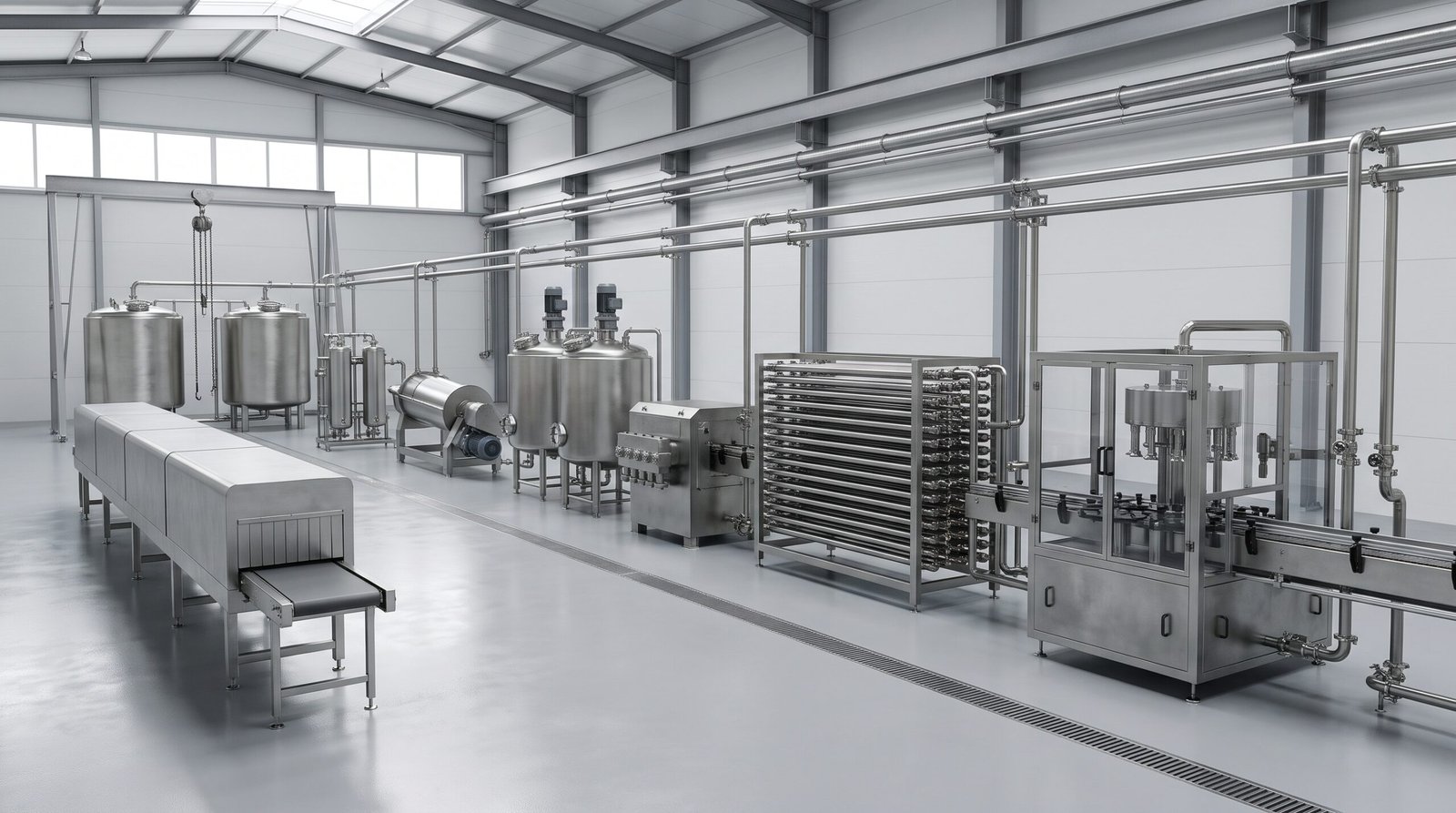
Process Flow
Stage 1
Inspection In The Hibiscus Drink Processing Plant
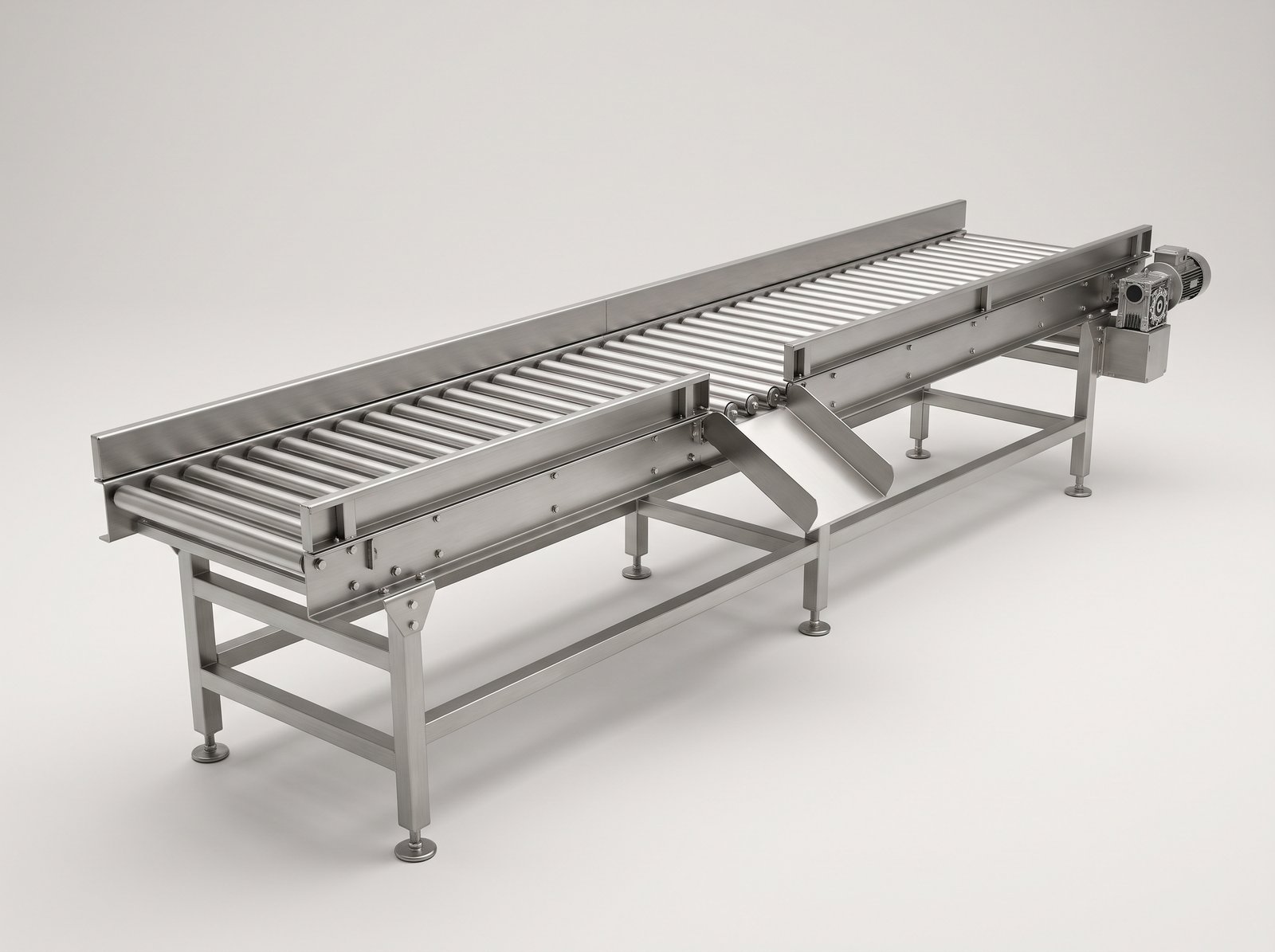
Dried calyces are spread on an inspection conveyor, built in the same way as a sorting and grading conveyor, and picked over by hand to remove stones, stalks, foreign matter and mouldy material. Dried produce bought from many sources varies, so this step protects every batch that follows. Sand and stones left in the calyces wear the pumps and the press screw, so this step also protects the machines.
Machines At This Stage
- Inspection conveyor

Stage 2
Hot Extraction In The Hibiscus Drink Processing Plant
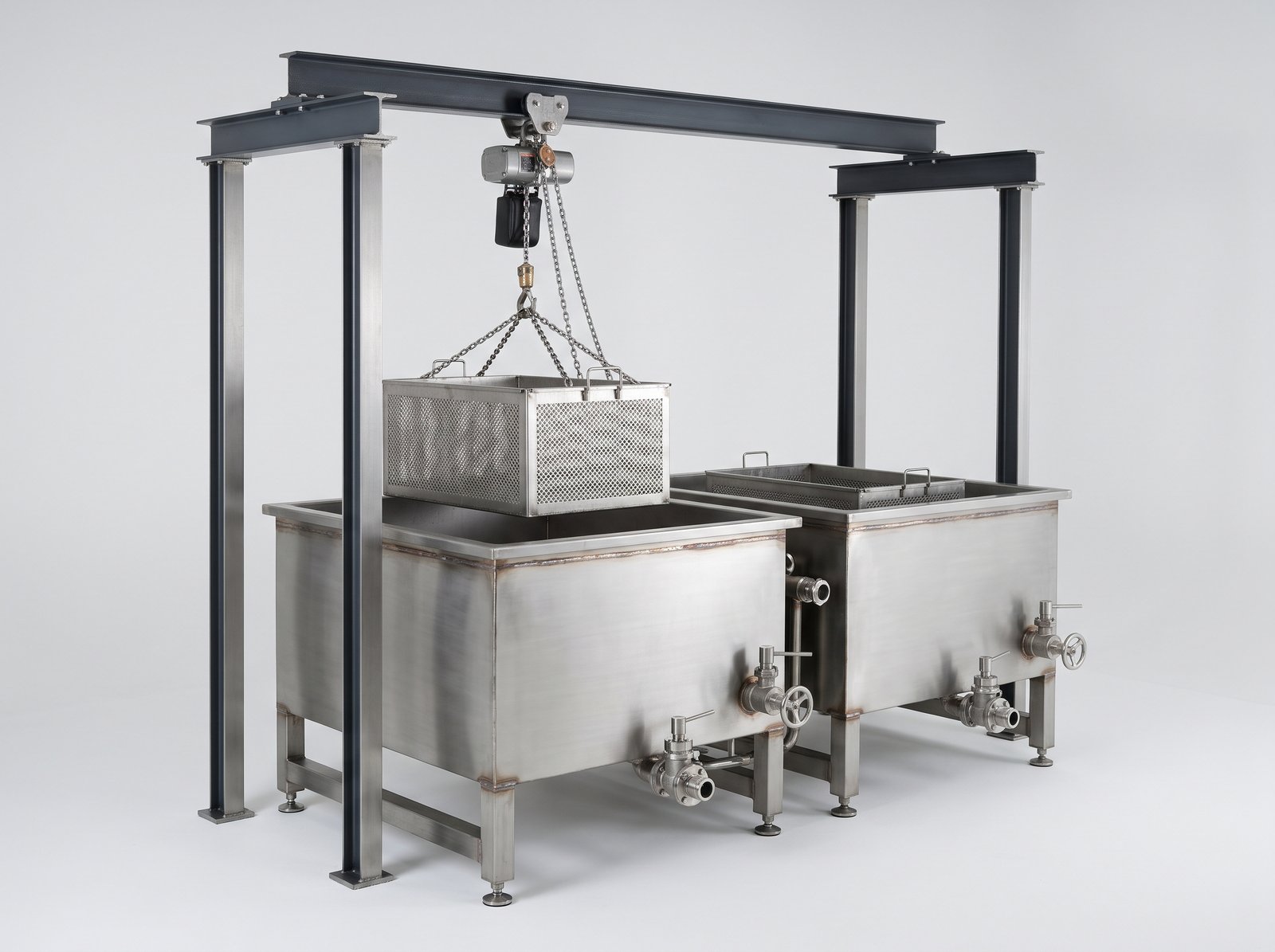
Calyces are loaded into perforated stainless crates and lowered by an electric hoist into stainless soaking tanks heated by steam coils, where the hot water draws out colour, acidity and flavour. Several tanks work in turn: one is loading, the next is extracting and another is draining. The buyer chooses the number of tanks from the litres a day. The soak time and water temperature are set by trial on the buyer’s own calyces, since colour and acidity vary between sources. Transfer pumps move the extract on to filtering.
Machines At This Stage
- Steam-coil soaking tanks
- Perforated stainless crates
- Electric hoist
- Transfer pumps
Stage 3
Filtering And Clarifying In The Hibiscus Drink Processing Plant
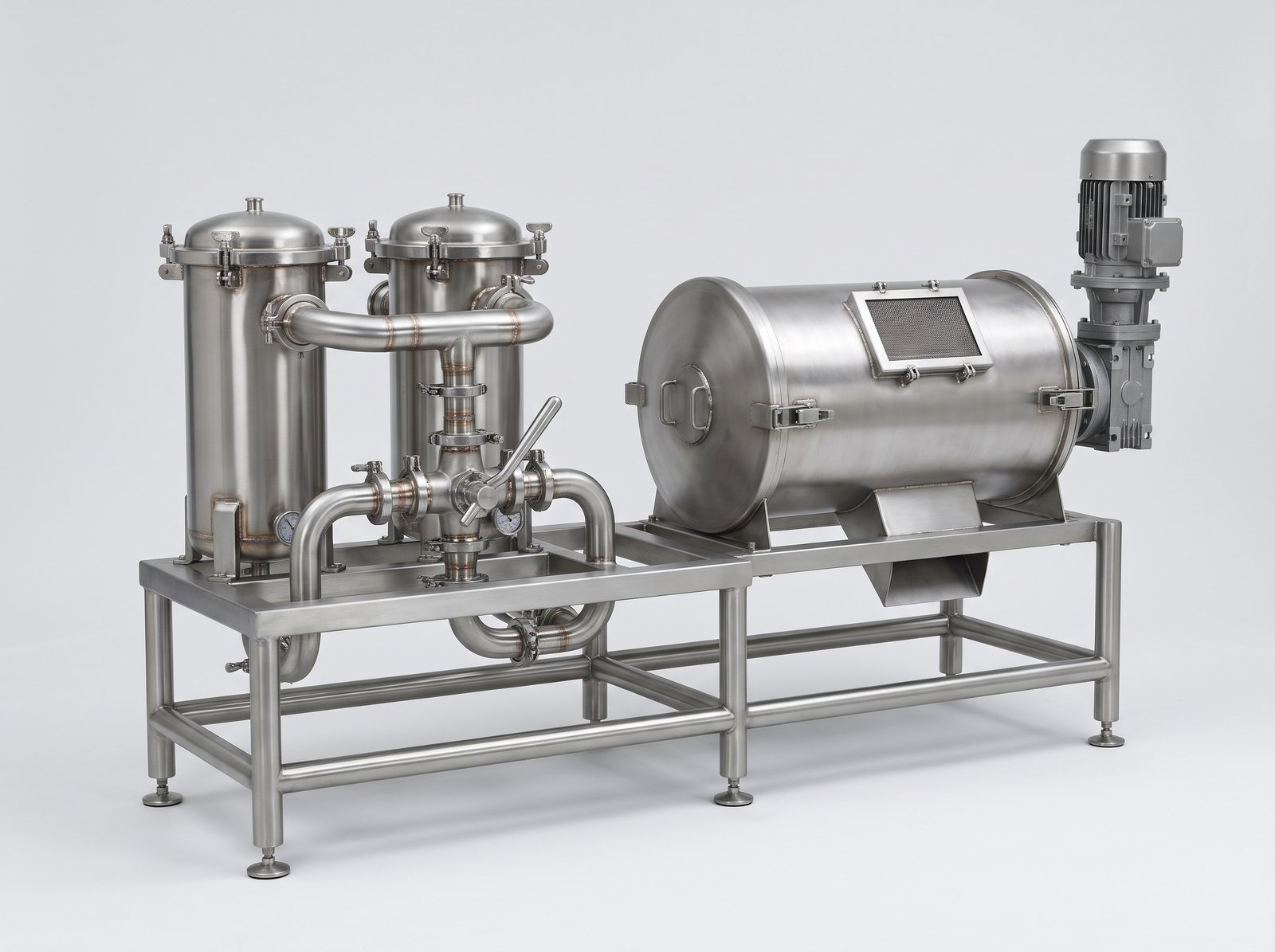
The extract is pumped through a duplex filter, which can be cleaned on one side while running on the other. A brush-type finisher with a fine screen then takes out the remaining plant particles. Clear extract runs to a collection tank.
Machines At This Stage
- Duplex filter
- Brush-type finisher
- Collection tank
Stage 4
Pressing In The Hibiscus Drink Processing Plant
Wet calyces lifted out of the tanks still hold extract. A screw press, with a screw turning in a perforated drum and an adjustable pressure plate, squeezes it out and sends it to the same collection tank. The pressed calyces leave as waste, and can go for compost or animal feed where local rules allow.
Machines At This Stage
- Screw press

Stage 5
Syrup Preparation In The Hibiscus Drink Processing Plant
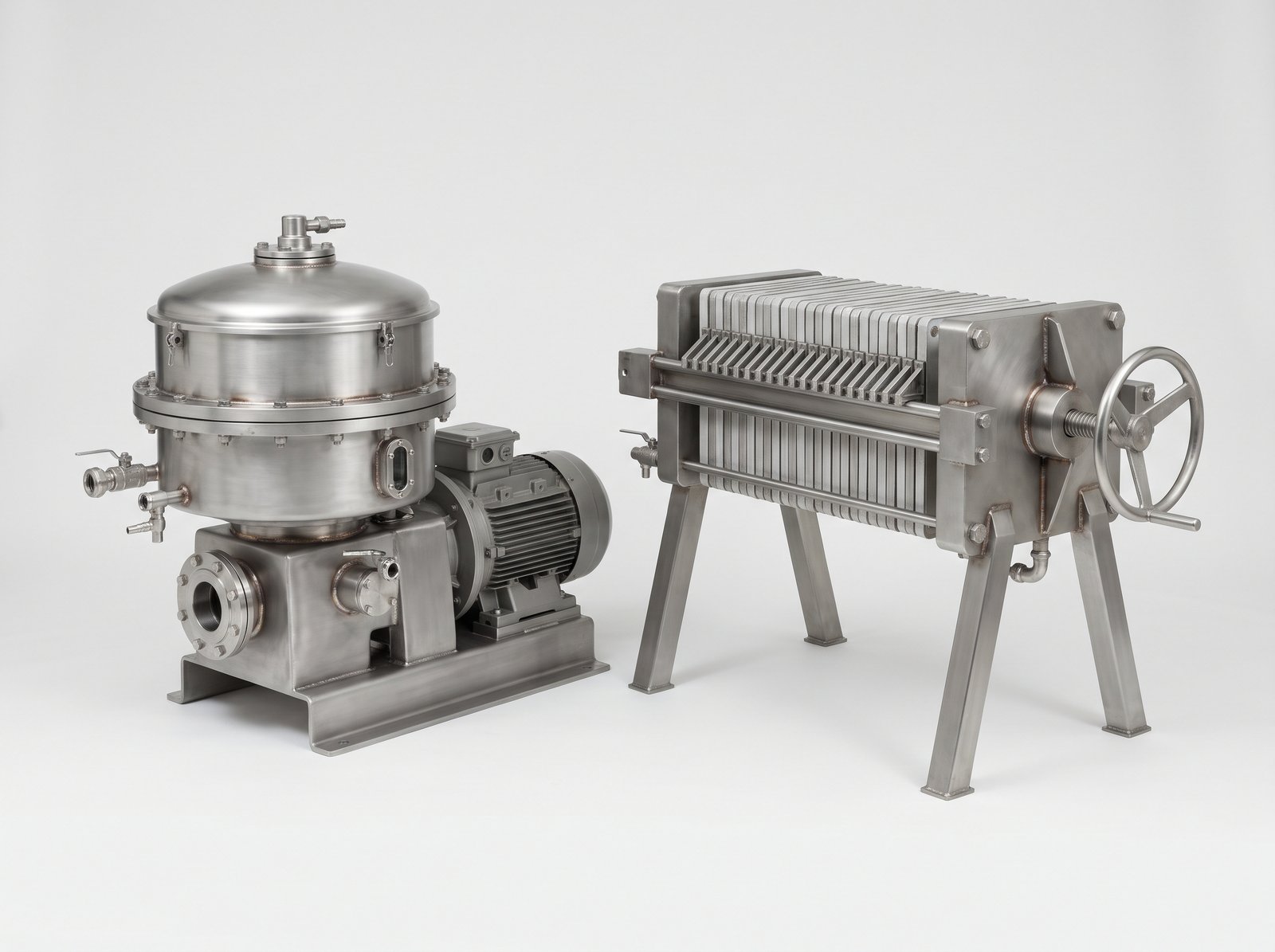
Raw sugar is dissolved in a steam-jacketed hemispherical kettle with scrapers to a syrup of 60 to 65 Brix at 80 °C. The syrup is filtered in a plate-and-frame filter press, the press side of the centrifugal clarifier and filter press range, and held in a stirred syrup tank until blending.
Machines At This Stage
- Sugar syrup kettle
- Plate-and-frame filter press
- Stirred syrup tank
Stage 6
Blending In The Hibiscus Drink Processing Plant
Extract, syrup, water and flavours such as ginger are blended in stainless mixing tanks with paddle stirrers and steam heating, built as blending and sugar dissolving tanks. Several mixing tanks work in turn, so a batch can be checked as the next is mixed. The finished drink is brought to the recipe Brix. Citric acid may be added where the calyces alone do not give the sharpness the recipe calls for.
Machines At This Stage
- Mixing tanks with paddle stirrers and steam heating

Stage 7
Homogenising In The Hibiscus Drink Processing Plant
A three-plunger homogeniser at 150 to 200 bar gives the drink an even body, which matters most when ginger or other ground flavours are in the recipe.
Machines At This Stage
- Three-plunger homogeniser

Stage 8
Pasteurising In The Hibiscus Drink Processing Plant
The drink is heated in a corrugated tube heat exchanger, the tubular type of plate and tubular pasteuriser, to 90 to 95 °C. It is held for 30 to 45 seconds in a holding tube and goes to the filler at 85 to 88 °C for hot filling in heat-set PET. A hot water battery supplies the heat, and a flow diversion valve returns under-heated drink to the feed tank.
Machines At This Stage
- Corrugated tube pasteuriser with holding tube
- Hot water battery
- Feed tank

Stage 9
Bottling In The Hibiscus Drink Processing Plant
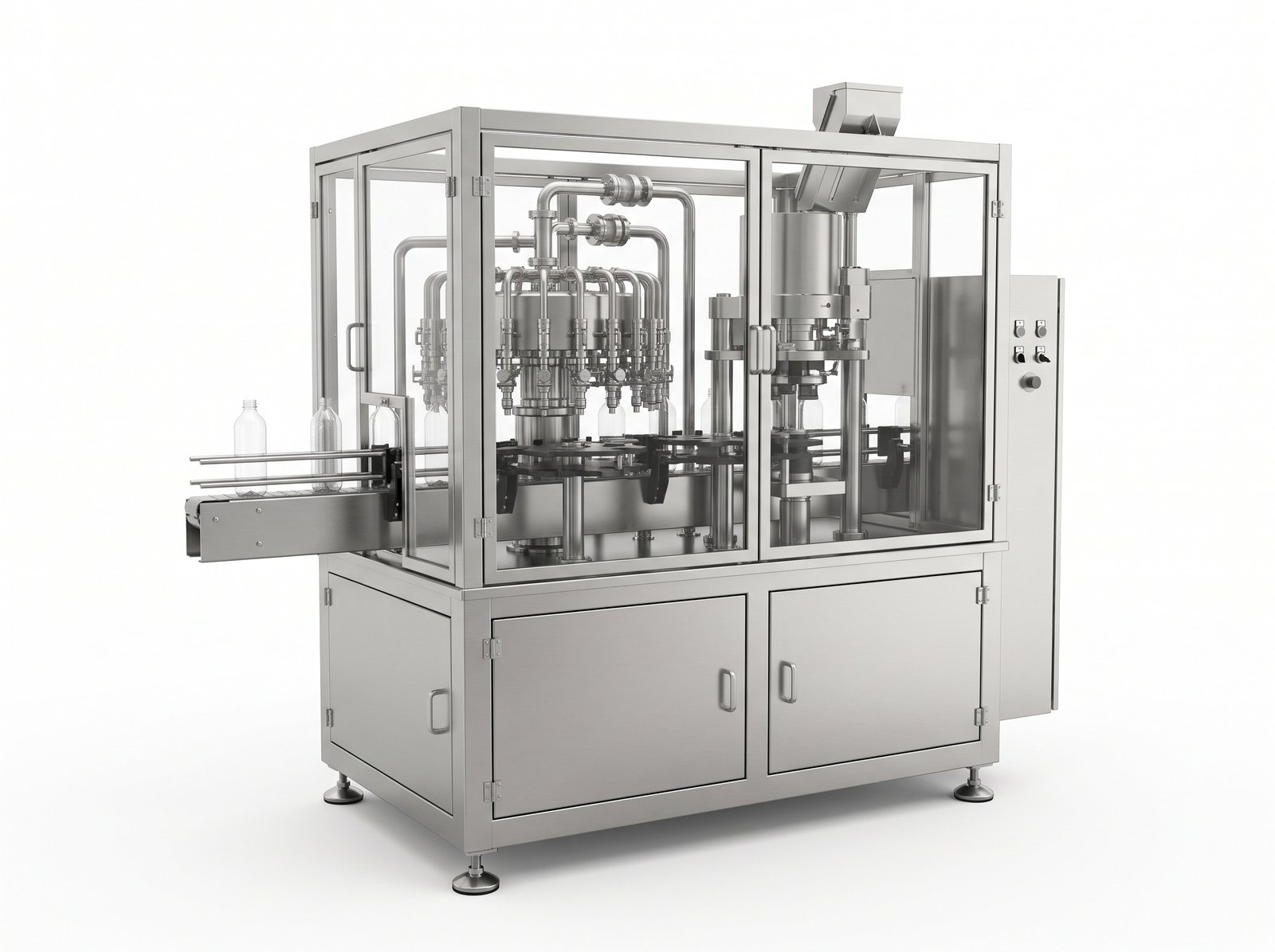
Empty PET bottles are fed by an unscrambler and an air conveyor to an inline filler and capper with no-bottle-no-fill, the hot-fill bottle filling and capping machine, where they are filled hot and capped. A discharge conveyor with an inspection light lets an operator check every bottle. Bottle sizes are changed with change parts on the filler and capper.
Machines At This Stage
- Insulated product tank
- Bottle unscrambler
- Air conveyor
- Inline filler and capper
- Discharge conveyor with inspection light
Stage 10
Cooling And Packing In The Hibiscus Drink Processing Plant
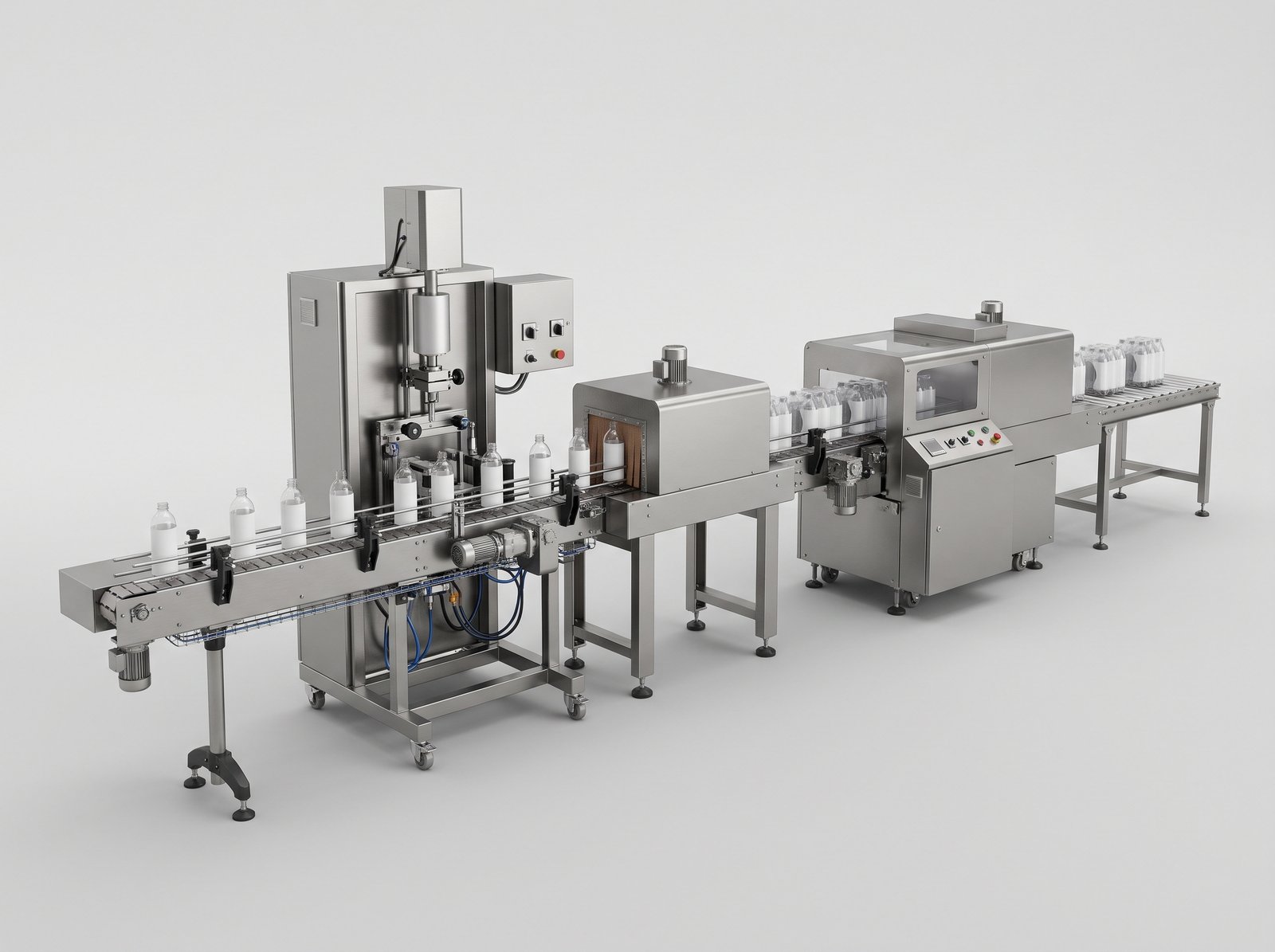
Hot-filled bottles pass through a tunnel cooler, of the kind on the tunnel pasteuriser and bottle cooler page, that sprays water in stages until they can be handled and labelled without the label creasing. They are then labelled, batch coded and packed in cartons or shrink-wrapped packs on labelling, shrink wrapping and case packing machines. A sample from each batch is kept back for shelf-life checks.
Machines At This Stage
- Tunnel cooler
- Labelling machine
- Carton packing
Hibiscus Drink Processing Plant Capacity
Hibiscus and herbal drink plants are offered at 250, 500, 1,000, 2,000 and 3,000 litres/hour of drink, from batch soaking tanks with semi-automatic bottling to an automatic line. The soaking tanks, pasteuriser and filler are matched to the plant size, and bottle speeds fall as the bottle size rises. Each plant is sized to the buyer’s market and raw material supply when we assess the buyer’s needs.
What Decides The Design Of A Hibiscus Drink Processing Plant
The recipe and the litres a day decide the line.
- Raw material: dried hibiscus, ginger and other herbs, and how they are bought and stored.
- Product mix: plain hibiscus, hibiscus with ginger, other herbal drinks.
- Scale and running hours: litres a day and shifts.
- Utilities available: steam fuel, water quality and power.
- Staff skill: running extraction, pasteurising and filling consistently.
- Packaging the local market expects: PET bottle sizes and labels.
- Site and access: dry storage space and waste disposal.
What A Complete Hibiscus Drink Processing Plant Includes
Process Line Of The Hibiscus Drink Processing Plant
Inspection conveyor, steam-coil soaking tanks with perforated crates and electric hoist, transfer pumps, duplex filter, brush finisher, screw press, collection tank, sugar syrup kettle, filter press and syrup tank, mixing tanks, homogeniser and corrugated tube pasteuriser with feed tank.
Packaging Machinery For The Hibiscus Drink Processing Plant
Insulated product tank, bottle unscrambler, air conveyor, inline filler and capper, discharge conveyor with inspection light, tunnel cooler, labelling machine and carton packing.
Utilities For The Hibiscus Drink Processing Plant
Steam boiler, cooling water for the pasteuriser, air compressor, process water treatment and control panel.
Storage And Handling In The Hibiscus Drink Processing Plant
A dry, ventilated store for dried calyces, sugar store, waste handling for pressed calyces, and a finished goods store.
Laboratory For The Hibiscus Drink Processing Plant
The checks the plant needs, and the laboratory items we can supply with the project: Brix refractometer, pH meter, acidity titration and microbiology for shelf life.
Working Capital Materials For The Hibiscus Drink Processing Plant
PET bottles, caps, labels, cartons, sugar, ginger and flavours, citric acid and cleaning chemicals.
Buying A Hibiscus Drink Processing Plant In Stages
A first plant can run with a few soaking tanks, a filter, a mixing tank, a pasteuriser and a semi-automatic filler. A screw press, a further soaking tank, a homogeniser and an automatic filler with unscrambler and air conveyor come as sales grow, each fitting into the same line. A plant selling by the crate to local shops can run for some time on the semi-automatic filler before the automatic one is needed.
Steam and water must be planned for the full number of soaking tanks from the start, since hot extraction is where most of both go. Drainage for the soaking tanks and room for the hoist and crates cannot be added easily later. A first plant does not need an air conveyor or unscrambler until output passes what workers can load by hand.
Hibiscus Drink Processing Plant Inputs And Utilities
Dried hibiscus calyces, sugar, water and flavours are the inputs. Because the drink is mostly water, the water treatment plant is as important as any process machine. Sand and carbon filters and a softener take out the particles, taste and hardness that would otherwise show in the bottle.
Steam at 3 to 4 bar heats the soaking tanks, the syrup kettle and the pasteuriser, and the soaking tanks draw the most. Cooling water serves the pasteuriser. Compressed air at 6 to 7 bar works the filler and air conveyor. Labour is needed at inspection, loading crates and packing.
Hibiscus Drink Processing Plant Inspection And Documentation
The extraction tanks, press, blending tanks, homogeniser, pasteuriser and inline filler can be inspected by SGS or Bureau Veritas before packing, as the buyer asks. A steam boiler in the scope can be supplied IBR certified as compliance documentation. Every machine ships with its manual and an initial parts kit. Training at site covers the soak and extraction cycle for the calyces, recipe blending and the hot-fill temperatures.
How A Hibiscus Drink Processing Plant Project Runs
The project is built from your recipe, your market and your building, with the first line set up for the additions that follow as sales grow. Support continues once bottles are on the shelf. Read more on How we work.
Pages Related To The Hibiscus Drink Processing Plant
- Fruit processing: the industry page for every fruit plant and machine.
- Fruit juice processing plant: shares the end of this line from blending onward.
- Carbonated soft drink line: the line for sparkling drinks.
- Sorting and grading conveyor: for picking over the dried calyces.
- Centrifugal clarifier and filter press: clears the sugar syrup.
- Blending and sugar dissolving tanks: mix extract, syrup, water and flavours.
- Homogeniser: gives the drink an even body.
- Plate and tubular pasteuriser: heats the drink before hot filling.
- Hot-fill bottle filling and capping machine: fills and caps the hot drink.
- Labelling, shrink wrapping and case packing: the end of the line.
- Stainless steel storage tanks and CIP system: hold extract, syrup and drink between stages.
Every machine for this line is in our fruit processing machinery range.
Machines In This Line



Frequently Asked Questions
Why Is A Hibiscus Drink Processing Plant Different From A Fruit Juice Plant?
It starts from a dried raw material, so it extracts with hot water in soaking tanks. A fruit juice plant crushes or presses fresh fruit. From blending onward the two lines are much the same.
Does A Hibiscus Drink Processing Plant Depend On A Harvest Season?
No. Dried calyces store well and can be bought through the year, so the plant can run steadily. The store must stay dry and ventilated, because damp calyces take on mould that no later step removes.
Can A Hibiscus Drink Processing Plant Make Ginger Drinks Too?
Yes, with one addition. Ginger and other herbal drinks share the blending, pasteurising and filling machines. Fresh ginger needs its own washing and crushing step ahead of them. Dried calyces go through the hot soak.
Why Does A Hibiscus Drink Processing Plant Pasteurise And Hot Fill?
Heating the drink and filling it hot keeps it safe in a sealed bottle without refrigeration.
Does A Hibiscus Drink Processing Plant Need A Screw Press?
The screw press recovers the extract still held in the wet calyces. It is usually added once the plant runs several tanks a shift.
Next Step For Your Hibiscus Drink Processing Plant
Send us your recipe, the litres a day you want to sell and the details of your site, and we will prepare a customer-specific proposal. Write to archit@sonikaimpex.com or sunil@sonikaimpex.com, or call +91 99027 67900.