

Home › Fruit Processing Machinery › Blending and sugar dissolving tanks
Juice Blending Tanks And Sugar Dissolving Tanks For Fruit Beverage Lines
What A Juice Blending Tank And Sugar Dissolving Tank Do
A juice blending tank is where a fruit beverage takes its recipe. Sugar is first dissolved in heated water in a sugar dissolving tank and filtered into syrup. The syrup is then mixed in the blending tank with pulp, concentrate or juice and treated water until the drink reaches the strength the label promises.
Acid, colour and other ingredients are dosed at the same point. The tanks sit in the preparation section of a fruit processing line, after extraction and clarification and before homogenising and heat treatment.
When this step is done badly the faults travel all the way to the bottle. Undissolved or unfiltered sugar leaves haze and sediment. Poor mixing gives batches that differ in sweetness and colour from one day to the next. A tank that cannot be cleaned properly carries yeast from one batch into the next, and the drink ferments in the bottle.
Juice Blending Tank And Sugar Dissolving Tank Capacity
Blending and sugar dissolving tanks are offered at 300, 500, 1,000, 2,000 and 5,000 litres, from a single jacketed tank to a multi-tank syrup room. They serve juice plants of 250 to 3,000 litres/hour, including the ready-to-serve line of 2,000 litres/hour. You choose the tank size and the number of tanks from the batch you want to prepare and how long the filler must run on one batch.

Where A Juice Blending Tank Sits In The Line
Sugar arrives in bags, is tipped into a hopper and transferred to the sugar dissolving tank. Fruit material arrives as clarified juice from the juice extractor and the centrifugal clarifier, or as pulp and concentrate taken from storage through a transfer pump.
The syrup leaves the dissolving tank hot, passes through a filter press, and is held in a syrup storage tank until it is needed. In the blending tank the syrup, the fruit material and the water become one standardised batch. That batch leaves for the deaerator or the homogeniser, then the plate and tubular pasteuriser, and from there to the hot-fill bottle filling and capping machine.
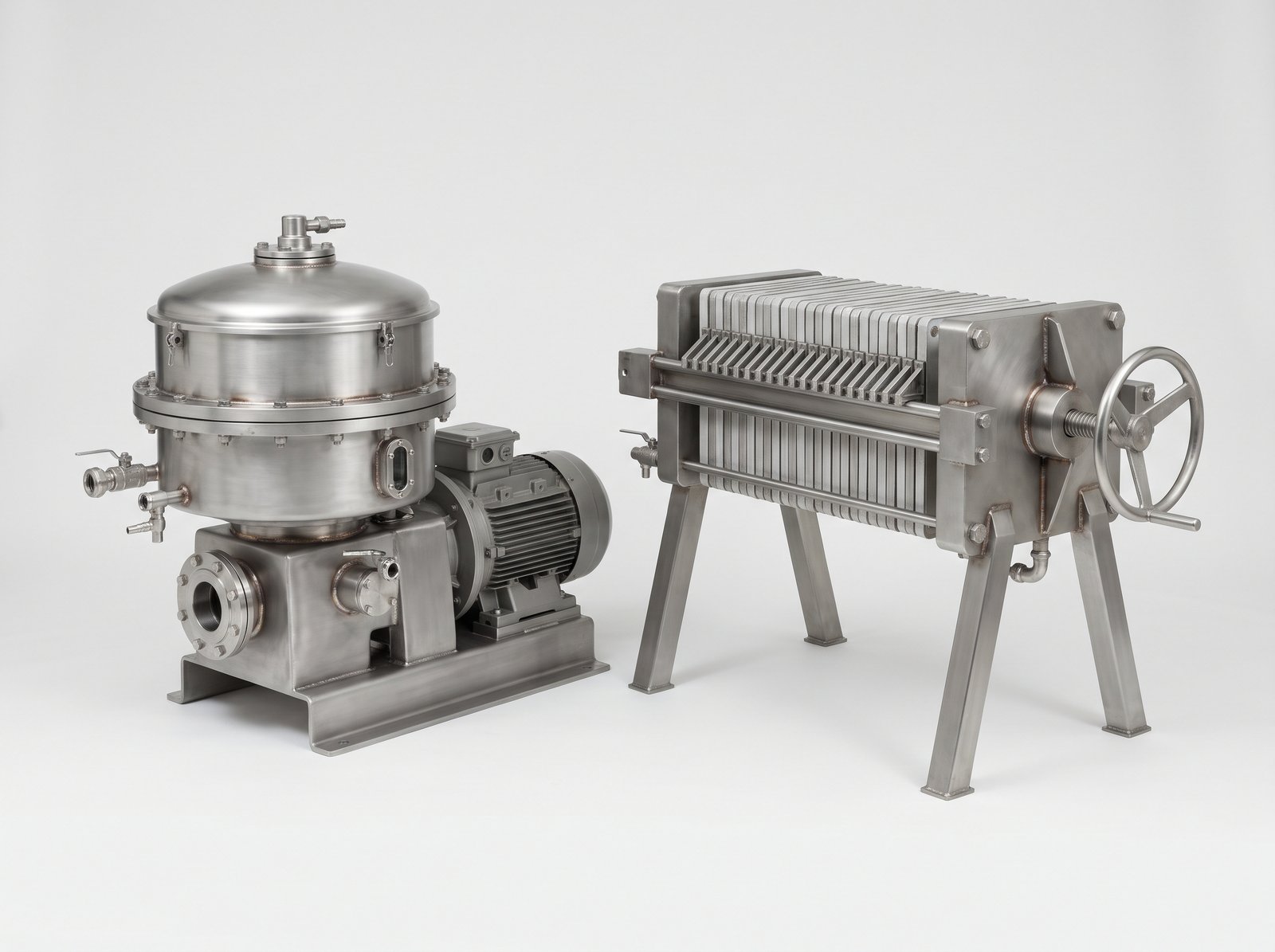
Blending and sugar dissolving tanks
This Machine
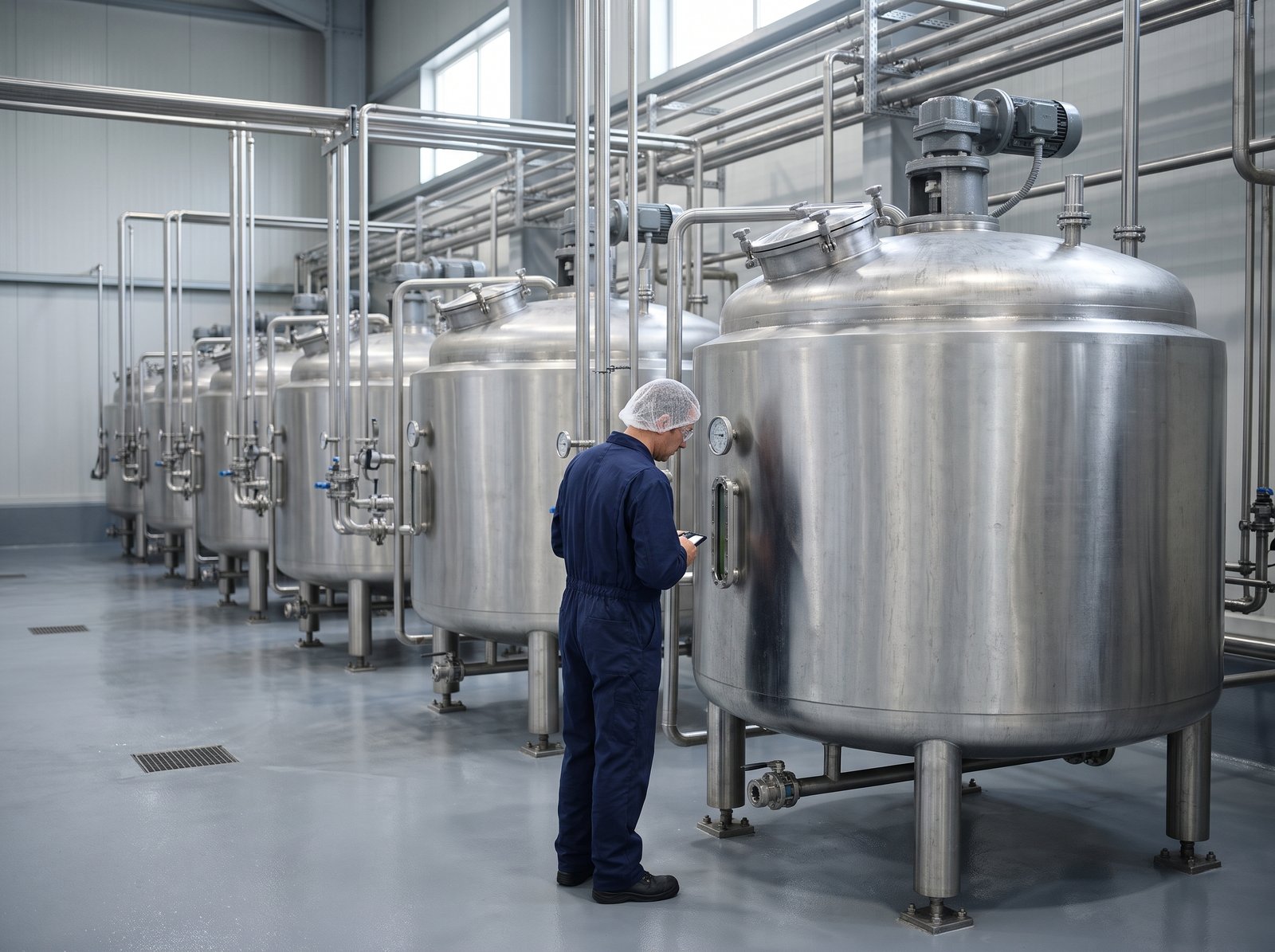
blending tanks

How It Works
1
Dissolving And Filtering Syrup For The Juice Blending Tank
The sugar dissolving tank is an insulated stainless steel vertical cylinder with a top and bottom cone, a steam jacket or steam heating, and an agitator or radial jet mixing that keeps the sugar moving until it dissolves. The syrup is taken to 60 to 65 Brix and dissolved at 80 °C, then pumped through a horizontal plate filter press that holds back undissolved particles and foreign matter. Load cells under the tank tell the operator the batch weight, so the recipe is set by weight.
2
Mixing The Batch In The Juice Blending Tank
The blending tank is a sanitary SS 304 vertical cylindrical vessel with cone ends, polished inside and out, and a top-mounted agitator driven by a geared motor at low speed. It carries a manhole, air vent, sight glass, level glass with calibration marks, sampling point and inlets for syrup, fruit material and water.
3
Setting The Recipe In The Juice Blending Tank
The operator controls three things. The proportions of syrup, fruit and water set the final strength, which for a ready-to-serve drink is 15 to 18 Brix. Mixing time sets how even the batch is.
The order of addition matters too: sugar syrup and water first, fruit material next, then acid and other ingredients, so that nothing is added into a dry or unstirred tank.
4
Cleaning The Juice Blending Tank In Place
A rotary spray ball in the top lets the CIP system clean the tank without opening it. The CIP set is the one in the stainless steel storage tanks and CIP system that serves the line.
Types And Options
Steam Jacket Or Radial Jet Mixing Ahead Of The Juice Blending Tank
The sugar dissolving tank can be built with a steam jacket and agitator, or with radial jet mixing. Radial jet mixing dissolves faster and leaves less sugar on the bottom.
Electrically Heated Syrup Tank For A Small Juice Blending Tank Line
An electrically heated syrup tank suits small lines or sites without a boiler.
One Juice Blending Tank Or A Pair
You can run one blending tank or a pair. With a pair, one batch is prepared while the other feeds the line.
Load Cells Or A Level Glass On The Juice Blending Tank
Load cells give recorded batch weights. A level glass alone is cheaper and asks more of the operator.
Syrup Filter Press And Filter-Aid Tank For The Juice Blending Tank
A filter press cleans the syrup before it reaches the blend. A small filter-aid coating tank is added where clear juices and soft drinks need a clear syrup.
SS 304 Or SS 316 Juice Blending Tank
SS 304 is used for general tanks. SS 316 is used where acid products or your standard call for it.
What Decides The Choice Of A Juice Blending Tank
- The product: clear juice, pulpy nectar, soft drink or herbal drink, each with its own recipe and filtration standard.
- The fruit material: fresh juice, stored pulp or concentrate, which changes the agitator and the transfer pumps.
- Scale and running hours, which set the batch size and whether one blending tank is enough.
- What sits downstream: the deaerator, homogeniser and pasteuriser need a steady, standardised feed.
- Utilities: steam for the dissolving tank, treated water for the recipe, power for agitators and pumps.
- Cleaning: spray balls and CIP connections on every tank the CIP system must reach.
What A Juice Blending Tank Is Supplied With
- Stainless steel tanks with legs, manholes, vents, level glasses, sampling points and CIP spray balls
- Agitators with geared motors, or radial jet mixing on the dissolving tank
- Sugar loading hopper with platform, syrup and blend transfer pumps, filter press on a skid trolley
- Load cells where specified, and an instrument panel for the preparation section
- Standard spares and operation and maintenance manuals
- Installation, commissioning and operator training at your site
Juice Blending Tank On Its Own Or In A Line
Blending and syrup tanks can be bought on their own, to add a second blending tank so the filler runs without pauses, or to replace an open mixing vessel with a closed tank that can be cleaned in place.
They are also part of every complete fruit beverage line: the fruit juice processing plant, citrus juice plant, pineapple juice plant, hibiscus and herbal drink plant, and the jam and fruit preserves plant, where sugar is dissolved before cooking.
It also works in the fruit pulp and concentrate plant.
Juice Blending Tank Inspection And Documentation
SGS or Bureau Veritas can inspect the tanks before shipment as the buyer requires: shell steel and finish, agitators and drives, load cells where fitted, and the filter press plates. Manuals, the packing list and an initial parts kit come with the supply.
Frequently Asked Questions
Why Is Sugar Dissolved In Its Own Tank Before The Juice Blending Tank?
Sugar dissolves fully only in hot water with mixing, and the syrup can then be filtered. Adding dry sugar to juice leaves undissolved crystals and dirt in the product, and heating the juice for long enough to dissolve it harms flavour and colour.
Do I Need One Juice Blending Tank Or Two?
One tank is enough when the filler can stop between batches. Two tanks let one batch be prepared while the other feeds the line, which keeps the pasteuriser and filler running steadily through the shift.
Can The Same Juice Blending Tank Make Different Drinks?
Yes. The tanks are cleaned in place between products, and each recipe sets its own proportions of syrup, fruit and water.
Related Machines
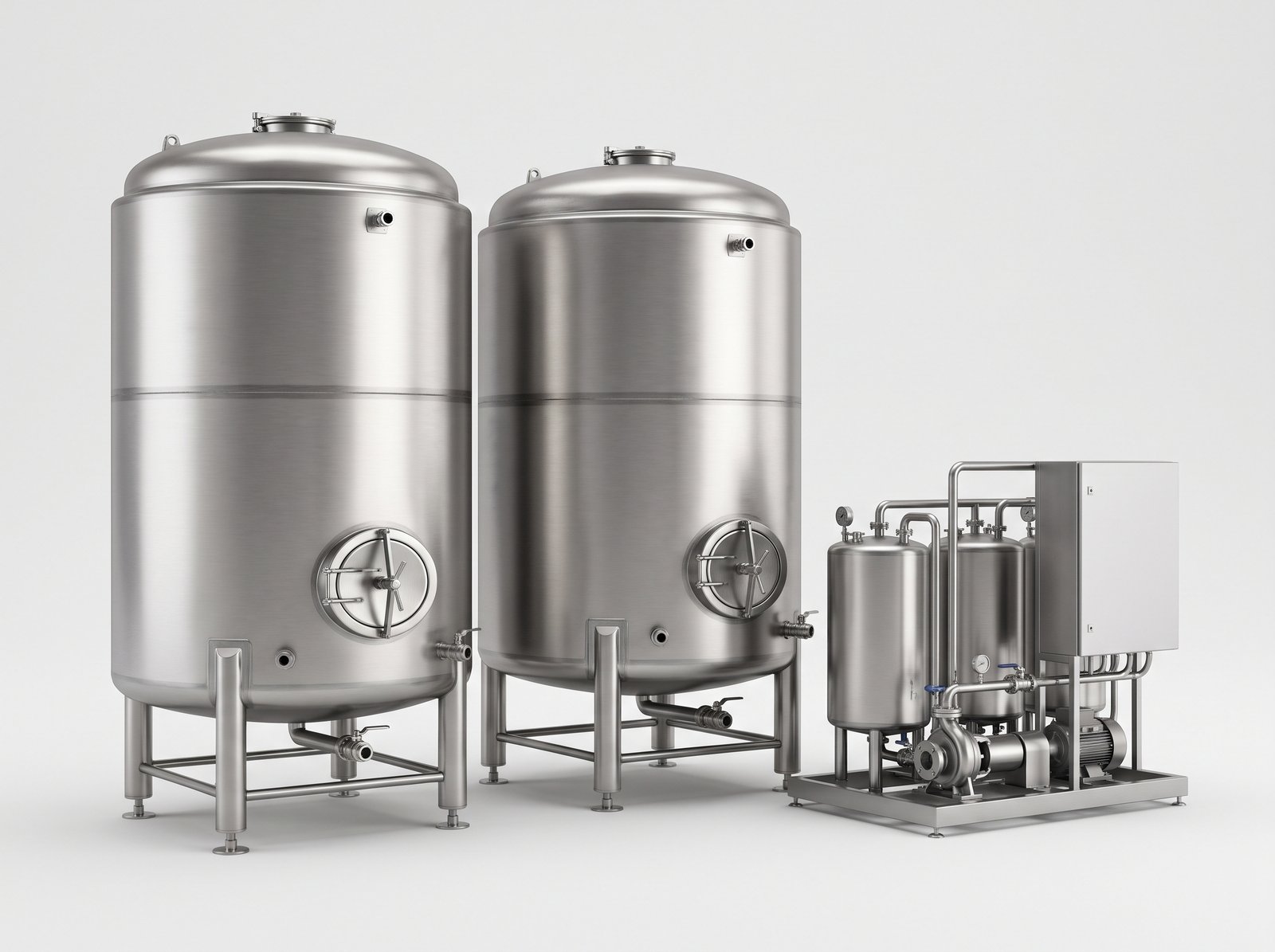
holds pulp and concentrate for blending and cleans every tank in place.
Next Step For Your Juice Blending Tank
Tell us the drinks you want to make, your fruit material and the output you need, and we will prepare a customer-specific proposal for the blending section. You can read how we work before you write. Write to archit@sonikaimpex.com or sunil@sonikaimpex.com, or call +91 99027 67900.