

Home › Fruit Processing Machinery › Fruit peeling machine
Fruit Peeling Machine: Lye Peeling Line, Corers And Peeling Tables
What A Fruit Peeling Machine Does
A fruit peeling machine removes the skin of fruit that cannot go into the product with it on. Citrus peel carries bitter oils. Pineapple skin is hard and fibrous. A canned or sliced product has to be skinned and cored before it is packed. In fruit processing, peeling comes early in the line, after the fruit washing machine and sorting, and before pulping, pressing or slicing.
When peeling is done badly, it shows in yield and in taste. Peel left on orange segments makes the juice bitter. Peeling that is too deep takes good flesh with it and lowers what the plant gets from every tonne it buys. Uneven hand peeling on a busy day slows the whole line, because the fruit pulper and finisher and juice extractor downstream can only work as fast as peeled fruit reaches them.
Fruit Peeling Machine Capacity
Fruit peelers are offered at 100, 250 and 500 kg/hour, 1 and 2 TPH, from a hand-lever peeler to a continuous lye peeler. As offered, canned pineapple slice lines run at 200 kg/hour of fruit, which sets the number of corers and peeling tables. Lye and acid dip tanks are sized so each batch gets its 30 second lye dip and 15 minute acid dip without holding up the fruit behind it.

Where A Fruit Peeling Machine Sits In The Line
Peeling sits between the sorting and grading conveyor and the extraction machines. Washed, sorted whole fruit arrives at the peeling station. Peeled fruit leaves for the fruit pulper and finisher, the juice extractor or, on a canning line, the slicer and can-filling table. Peel and cores leave on a waste conveyor or into bins.
Fruit that goes to a whole-fruit extractor skips peeling entirely. A citrus extractor of this kind cuts and squeezes the fruit with the skin on and separates the peel itself.
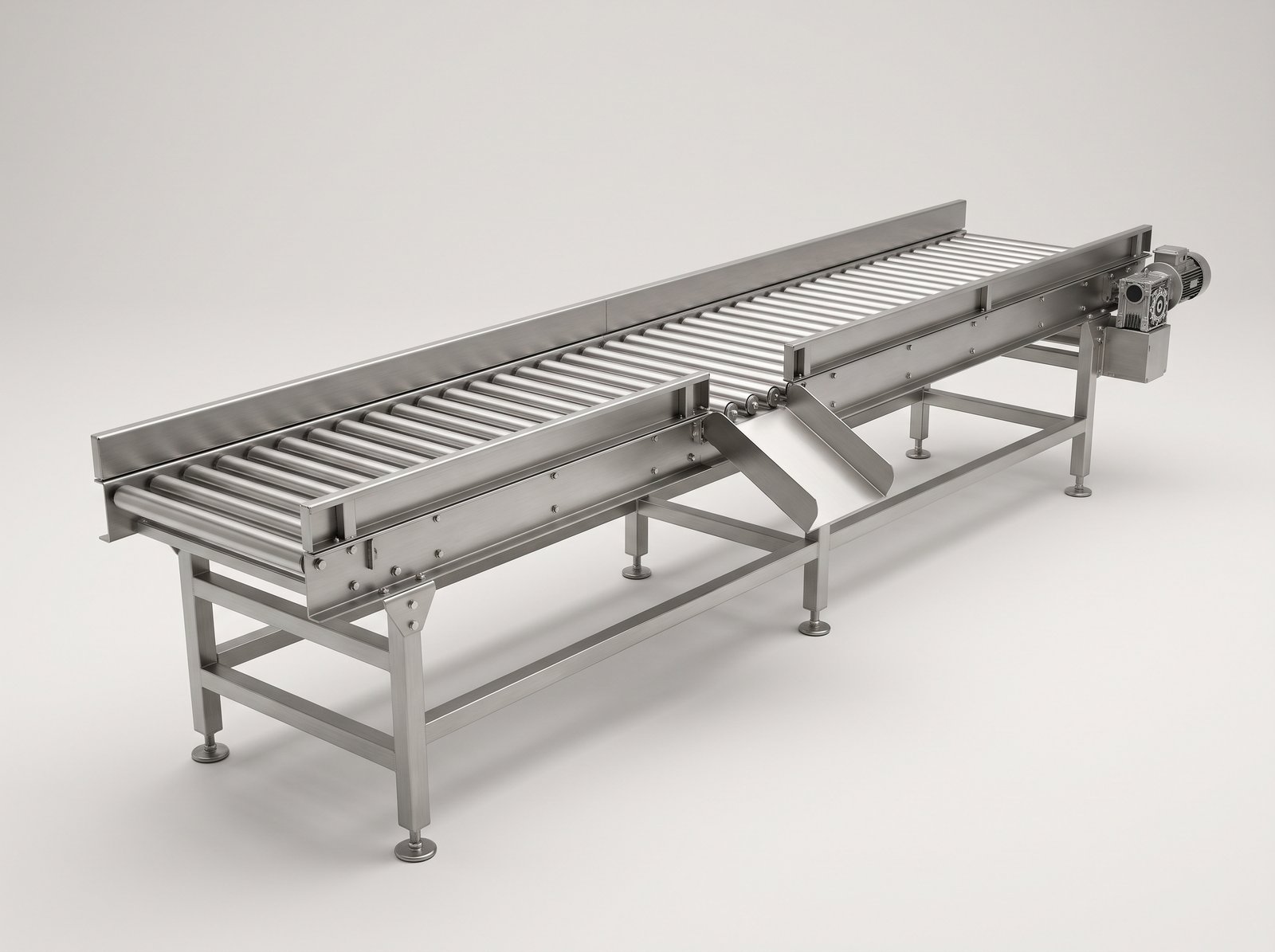
Fruit peeling machine
This Machine


How It Works
1
Lye Peeling In A Fruit Peeling Machine Line
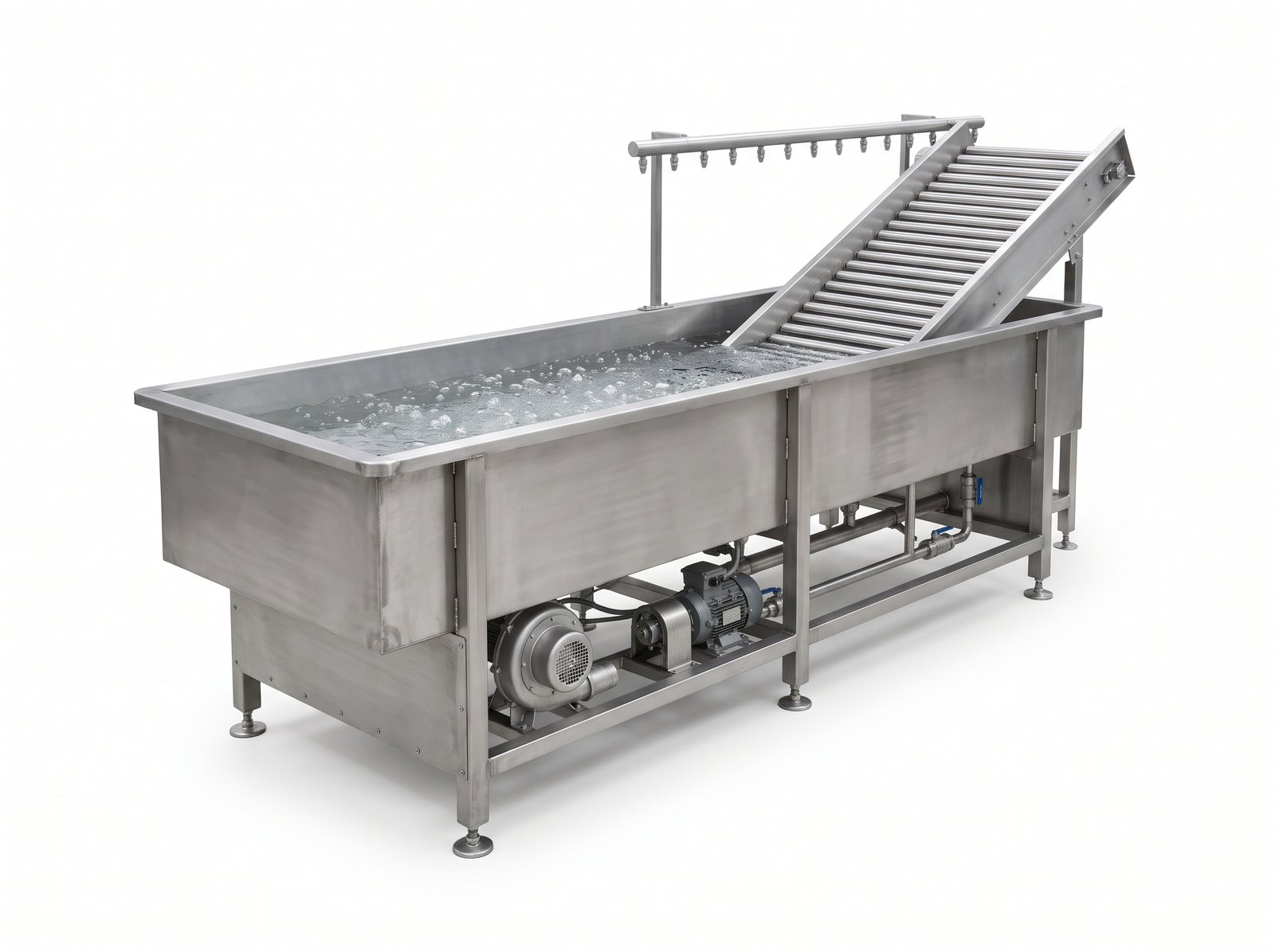
Lye peeling loosens the skin chemically so it washes off without a knife. Fruit is loaded into perforated stainless steel baskets and lowered into a hot lye dip tank. This is a stainless steel rectangular tank on legs, with a drain and a steam header that heats the solution. After a dip of about 30 seconds the skin softens.
The baskets then go into an acid dip tank for about 15 minutes, which neutralises the lye on the fruit, and the fruit is rinsed and sent on. The tanks are built in SS316 because they hold lye and acid every day. The operator controls the dip time, the solution strength and its temperature through the steam supply.
2
Coring And Sizing In A Fruit Peeling Machine Line
For pineapple, a hand-lever corer and sizer removes skin and core in one stroke. It leaves a cylinder of flesh ready for slicing or for the fruit mill and crusher. A manual slicer then cuts rings for canning.
3
Peeling And Trimming Tables In A Fruit Peeling Machine Line
Stainless steel tables beside the sorting conveyor let workers peel, top and tail, and trim fruit by hand. Waste goes into a trough or chute along the table edge, keeping peel off the product belt.
4
4
Types And Options
Lye And Acid Dip Fruit Peeling Machine
For citrus and other fruit peeled chemically before pulping. The buyer chooses the number of tanks and baskets to match the line rate.
Hand-Lever Fruit Peeling Machine For Pineapple
The hand-lever corer and sizer serves canned pineapple slices and pineapple juice lines where the core is removed. Sizes match the fruit size bought locally.
Fruit Peeling Machine Tables For Hand Peeling
For mango, pineapple and mixed fruit peeled by hand. Table number and length are set by the workers per shift.
Fruit Peeling Machine Options
- SS316 construction for all chemical-contact tanks.
- Extra baskets so one set soaks while another is loaded.
- Waste conveyor under the tables.
What Decides The Choice Of Fruit Peeling Machine
- The fruit: citrus suits lye peeling or a whole-fruit extractor. Pineapple suits a corer. Mango usually goes whole to the mango destoner.
- The product: juice lines can extract from fruit with the skin on. Canned and sliced products have to be peeled first.
- Line rate and labour: hand peeling scales with the number of people. A dip line scales with the number of tanks and baskets.
- Steam and water: lye tanks need steam for heating and water for rinsing, and the rinse water must be handled.
- Effluent: spent lye and acid must be neutralised and disposed of, so the site's drainage and treatment are planned alongside.
- Safety: workers handling lye need protective equipment and training, which is part of the commissioning.
- Season and ripeness: ripe fruit loses flesh in a strong dip, so the dip time and strength are set for the fruit in season. A plant that handles several fruits plans its tanks for the hardest-skinned one.
What A Fruit Peeling Machine Is Supplied With
- Lye dip and acid dip tanks in SS316 with legs, drains and steam header.
- Perforated stainless steel baskets.
- Hand-lever corers, sizers and slicers where ordered.
- Stainless steel peeling and preparation tables with waste troughs.
- Manuals and an initial parts kit.
- Installation, commissioning and operator training at the buyer’s site, including safe handling of the dip solutions.
Fruit Peeling Machine On Its Own Or In A Line
Peeling equipment is supplied on its own when a buyer adds a canned or sliced product to an existing juice plant. It is also supplied as part of a complete line: the citrus juice plant, the pineapple juice plant and the canned fruit and vegetable plant.
It also works in the jam and fruit preserves plant.
Fruit Peeling Machine Inspection And Documentation
The dip tanks, baskets, corers and tables can be inspected by SGS or Bureau Veritas before packing, when the buyer asks. Manuals and an initial parts kit come with the order. The training at site covers safe mixing and handling of the lye and acid solutions.
Frequently Asked Questions
Do I Need A Fruit Peeling Machine For Orange Juice?
Not always. A whole-fruit citrus extractor cuts and squeezes the fruit with the skin on and separates the peel itself. Peeling is needed where the fruit goes to a pulper, or where segments or pulp are the product.
Is A Lye Fruit Peeling Machine Safe For Food?
Yes, when the acid dip and rinse follow it. The acid neutralises the lye left on the fruit and the rinse removes both before the fruit goes on.
How Does A Fruit Peeling Machine Handle Pineapple On A Canning Line?
The top and tail are cut on a table, then a hand-lever corer and sizer removes the skin and core in one stroke, and a slicer cuts the rings.
Can A Fruit Peeling Machine Be Added To My Existing Line?
Yes. Tanks and tables fit beside your sorting conveyor and feed the machines you already run.
Related Machines
Next Step For Your Fruit Peeling Machine
Tell us the fruit you peel, the product it goes into and the rate your line runs at, and we will send a customer-specific proposal. How we work sets out each stage from that proposal to commissioning. Write to archit@sonikaimpex.com or sunil@sonikaimpex.com, or call +91 99027 67900.