

Home › Fruit Processing › Jam and fruit preserves plant
Jam Processing Plant: Fruit Preparation, Cooking, Jar Filling And Capping
Who A Jam Processing Plant Suits
A jam processing plant fits a buyer who has fruit to spare after the fresh market and the juice trade have taken theirs, and who wants a product that sells on a shop shelf through the year. Mango, pineapple, guava, papaya, orange and mixed fruit all make jam, marmalade or fruit spread.
It fits a first plant for a business in fruit processing, or a food business starting small, often in batch kettles. It also fits an addition to a fruit juice processing plant or a fruit pulp and concentrate plant that already has washing, pulping and steam. A jam line can also run on stored pulp outside the season.
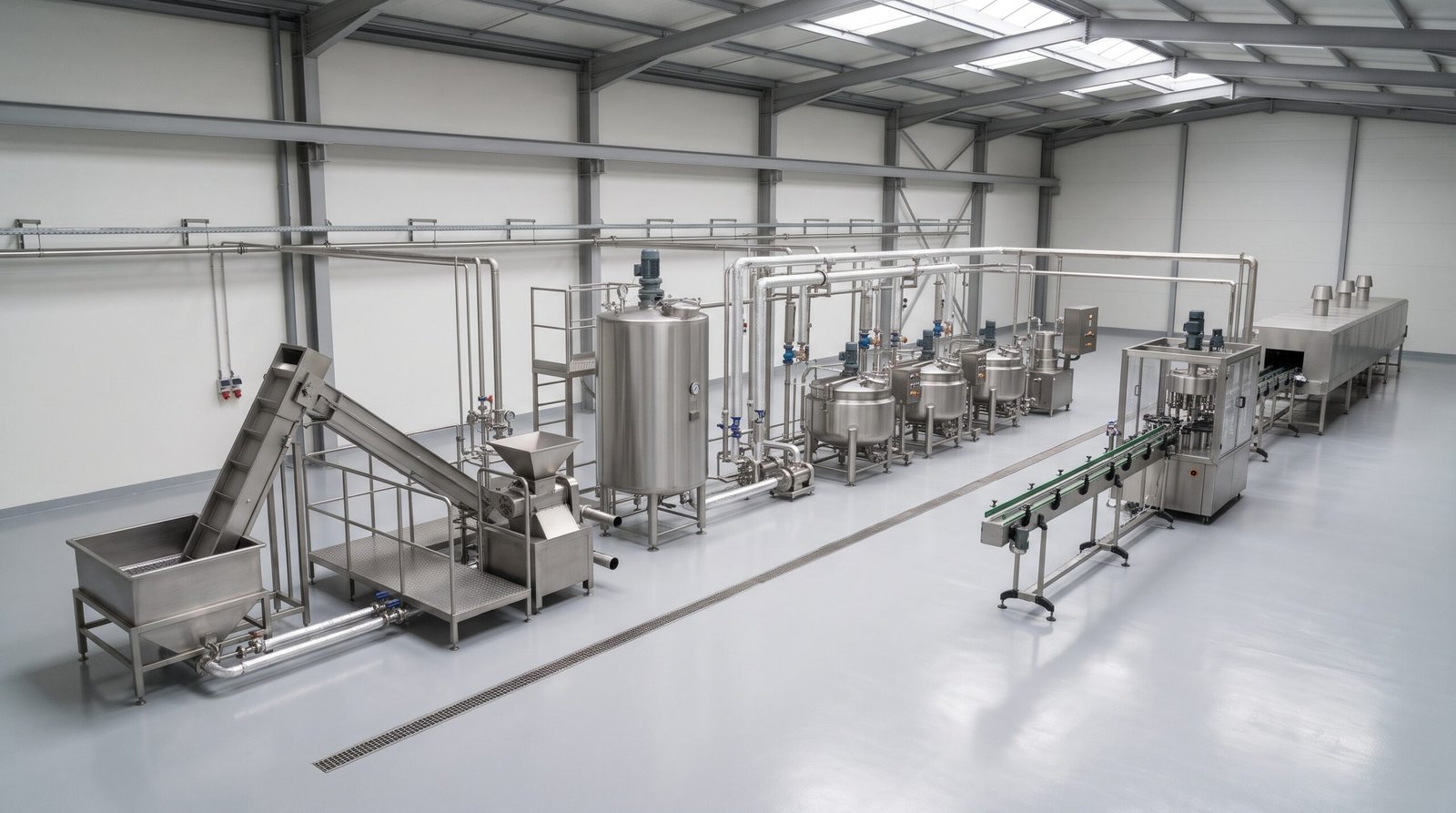
Process Flow

Stage 1
Washing In The Jam Processing Plant
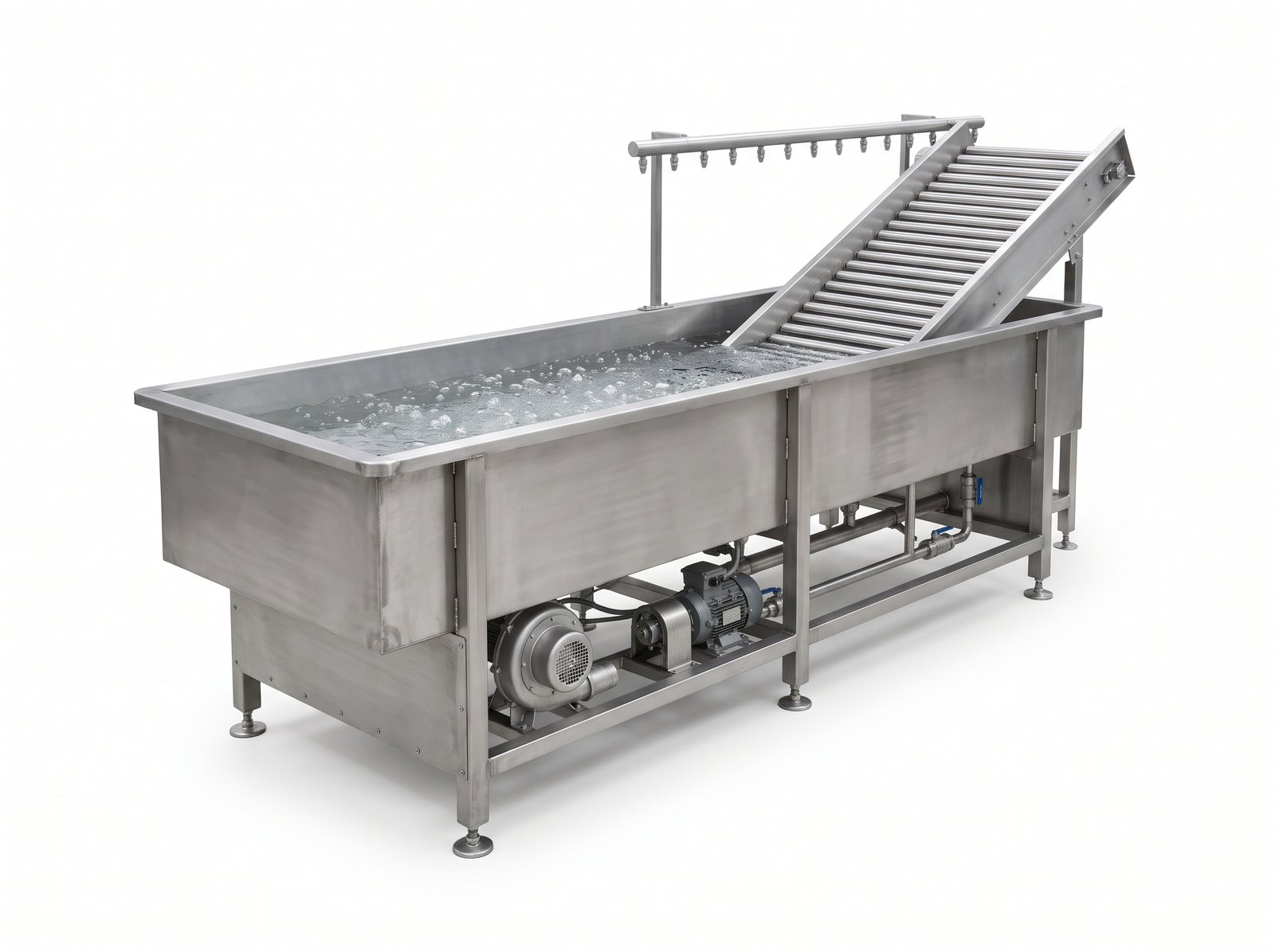
Fruit is soaked in a fruit washing machine where air bubbled through the water tumbles it and loosens soil and residue. A stainless slat elevator then lifts it through spray nozzles. The buyer chooses the washer size from the daily fruit intake, which for a jam plant is often smaller and more mixed than for a juice plant.
Machines At This Stage
Stage 2
Preparation In The Jam Processing Plant
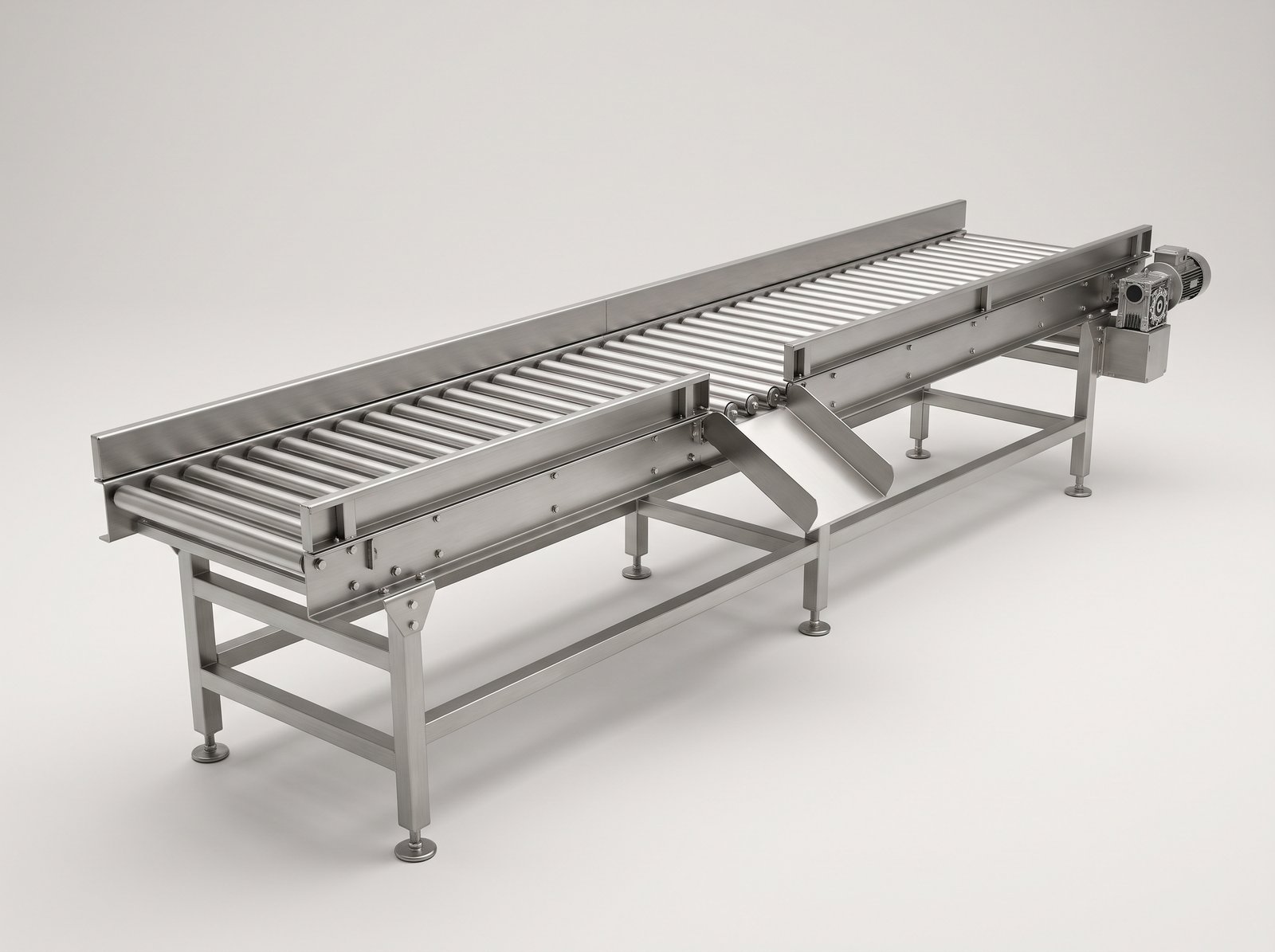
Washed fruit is inspected on a roller sorting and grading conveyor and then peeled, cored, destoned or cut by hand at stainless preparation tables, since jam fruits vary too much for one machine. Citrus for marmalade has its peel cut into shreds here. Where one fruit carries the plant, a fruit peeling machine or a mango destoner can take over part of the hand work. The number of tables follows the fruit and the labour available.
Machines At This Stage
- Sorting and grading conveyor
- Preparation tables
- Fruit peeling machine
- Mango destoner
Stage 3
Pulping Or Crushing In The Jam Processing Plant
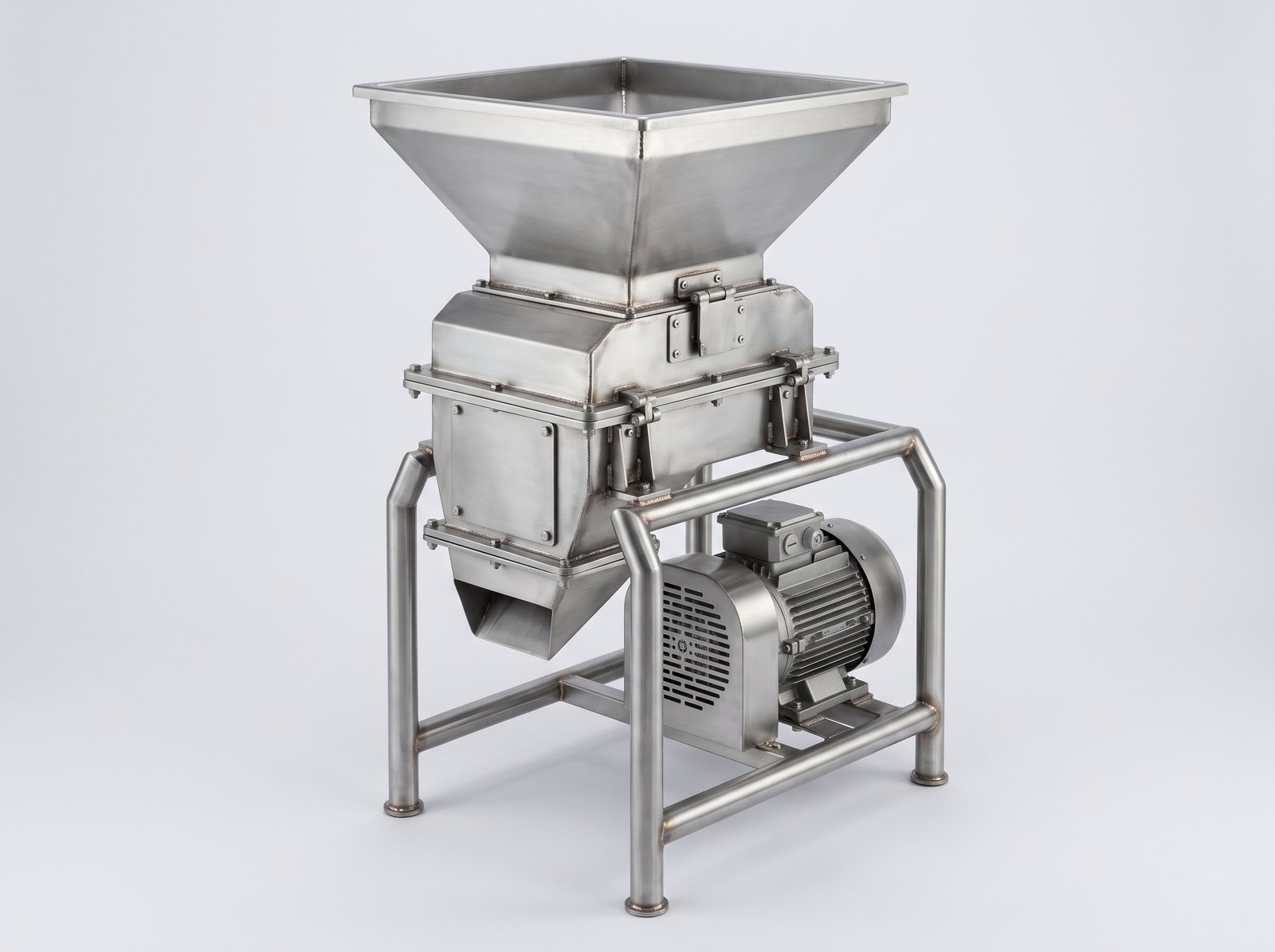
Prepared fruit is crushed in a fruit mill and crusher, or passed through a fruit pulper and finisher where rotating blades push the flesh through a screen and hold back seeds and fibre. Jam with fruit pieces bypasses the pulper and is cut instead. The buyer decides the texture of the product, and that decides which of the two machines is needed.
Machines At This Stage
Stage 4
Sugar Dissolving In The Jam Processing Plant
Sugar is dissolved into a heavy syrup in a steam-heated stainless sugar dissolving tank with an agitator, and filtered before use so undissolved crystals do not reach the jar. Syrup is prepared at 60 to 65 Brix at 80 °C. A plant cooking small batches can add sugar directly to the kettle instead.
Machines At This Stage

Stage 5
Cooking In The Jam Processing Plant
Pulp or fruit pieces, syrup, pectin and food acid are cooked together in a steam-jacketed kettle with a scraping agitator that keeps the product moving off the hot wall. Water boils off until the jam reaches its setting point. A vacuum kettle does the same at a lower boiling temperature, which keeps colour and flavour closer to the fresh fruit. The buyer chooses open or vacuum cooking and the number of kettles from the batch plan.
Machines At This Stage
- Steam-jacketed cooking kettle
- Vacuum cooking kettle

Stage 6
Smoothing In The Jam Processing Plant
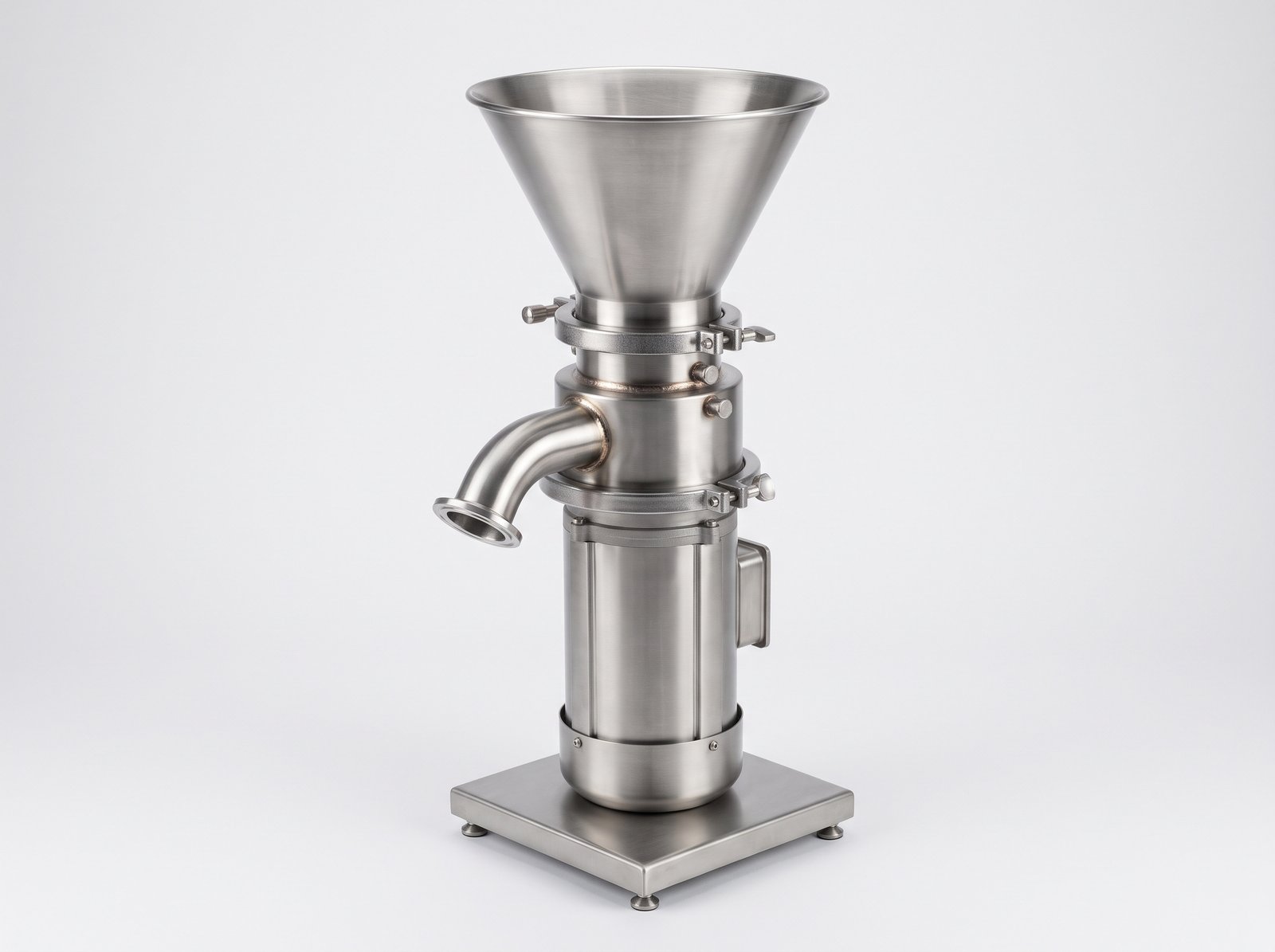
Smooth spreads and fruit fillings pass through a colloid mill, where a rotor turns close to a fixed stator and shears the product to an even texture. Jams with pieces skip this stage.
Machines At This Stage
Stage 7
Hot Filling In The Jam Processing Plant
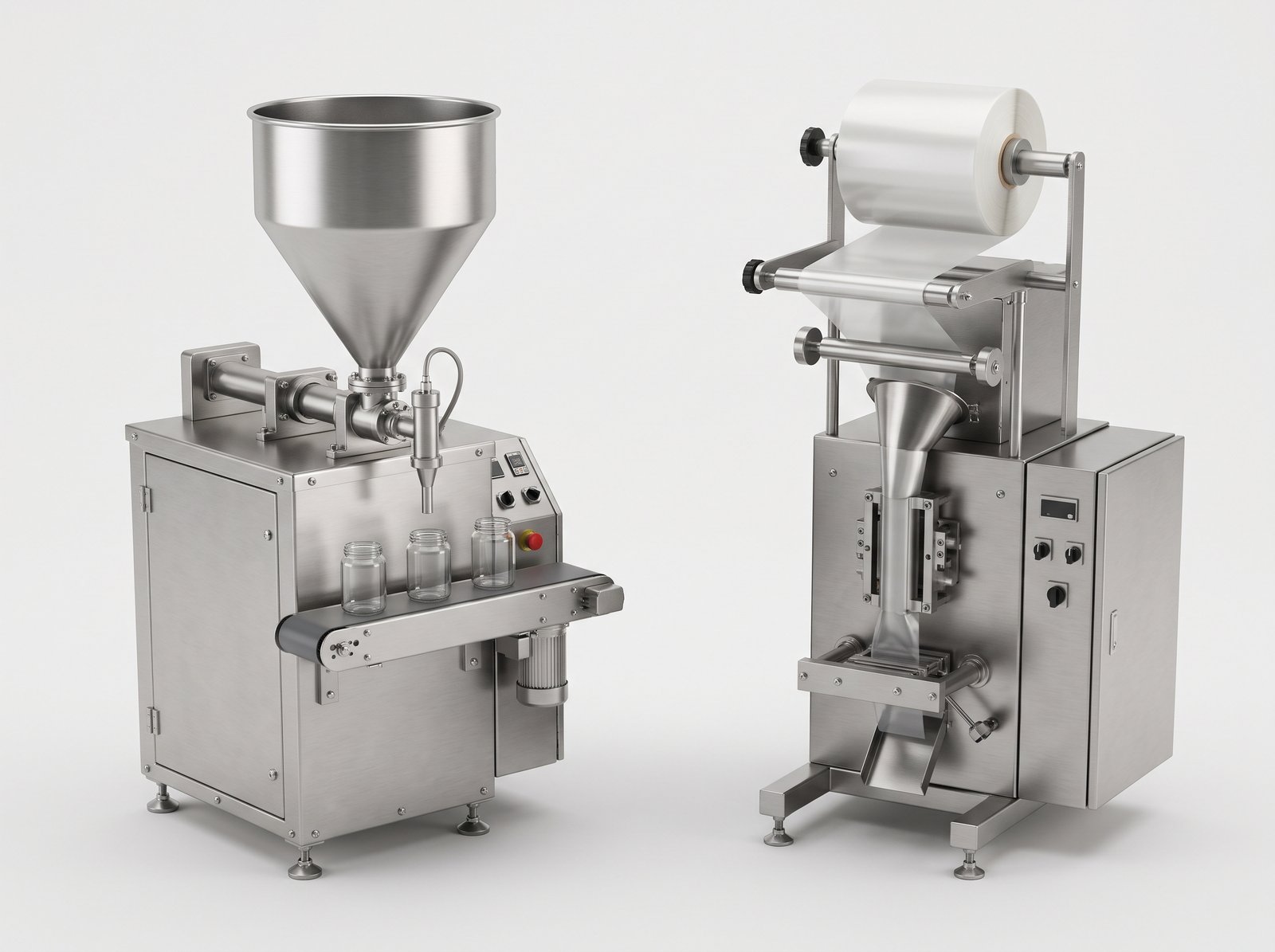
The cooked jam is filled hot into glass jars or pouches through a piston or volumetric pouch and jar filling machine with a heated hopper, so the jam stays fluid enough to fill cleanly. Hot filling also pasteurises the inside of the jar and cap. The buyer chooses the jar sizes and a manual, semi-automatic or automatic filler by the output. Jars are checked for fill level and a clean rim before capping, since jam on the rim stops the cap sealing.
Machines At This Stage
Stage 8
Capping And Cooling In The Jam Processing Plant
Jars are closed with lug caps at once while the jam is hot, often with a steam jet under the cap to form a vacuum. They then pass through a tunnel cooler from the tunnel pasteuriser and bottle cooler range, which sprays water in stages so the glass cools without cracking and the jam sets.
Machines At This Stage
- Lug capping machine
- Tunnel cooler

Stage 9
Labelling And Packing In The Jam Processing Plant
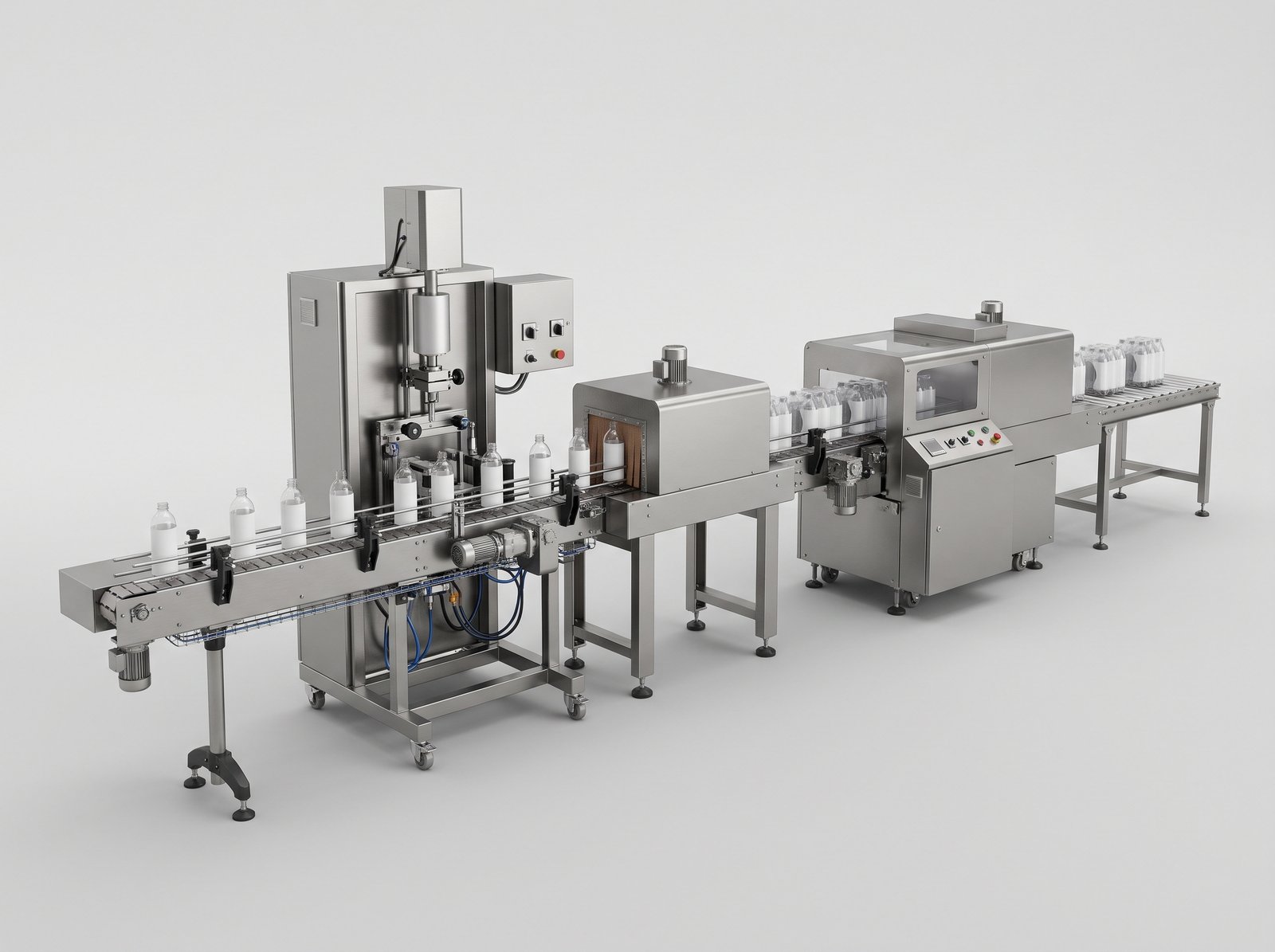
Cooled, dried jars are labelled, batch coded and packed into cartons or shrink-wrapped trays for dispatch on labelling, shrink wrapping and case packing machines.
Machines At This Stage
- Jar dryer
- Labelling machine
- Batch coder
- Case packing or shrink wrapping
Stage 10
Machines At This Stage
Jam Processing Plant Capacity
Jam and fruit preserve plants are offered at 50, 100, 250, 500 and 1,000 kg/hour of jam, from an open steam kettle batch line to a vacuum-pan line. Batch lines grow by adding kettles, and steam-jacketed and vacuum cooking kettles run from 50 to 1,000 litres. In the needs assessment, each plant is sized to the buyer’s fruit, its season and the number of batches cooked in a day.
What Decides The Design Of A Jam Processing Plant
Jam is made in batches, so the design starts from the batches a day and the number of recipes. A plant that changes recipe several times a day needs more kettles and more cleaning time between batches than one that cooks a single recipe all day.
- Raw material and season: which fruits, and whether stored pulp will carry the plant out of season.
- Product mix: jam with pieces, smooth spread, marmalade or fruit filling.
- Scale and running hours: batches a day and kettles needed.
- Utilities available: steam fuel and reliable water.
- Staff skill: judging the end point of cooking needs trained hands.
- Packaging the local market expects: glass jars or pouches, and which sizes.
- Site and access: a clean, separate area for filling and room for more kettles.
What A Complete Jam Processing Plant Includes
Process Line Of The Jam Processing Plant
Fruit washer, sorting and grading conveyor, preparation tables, fruit mill and crusher, pulper and finisher, sugar dissolving tank, steam-jacketed or vacuum cooking kettles with scraping agitators, and a colloid mill for smooth products.
Packaging Machinery For The Jam Processing Plant
Jar or pouch filling machine with a heated hopper, lug capping machine, tunnel cooler, jar dryer, labelling machine, batch coder and case packing or shrink wrapping.
Utilities For The Jam Processing Plant
Steam boiler, air compressor for the filler and capper, water treatment for process and washing water, cooling water for the tunnel cooler, and control panels.
Storage And Handling In The Jam Processing Plant
Fruit receiving and ripening area, pulp holding tanks from the stainless steel storage tanks and CIP system range, a sugar store dry enough to keep it free-flowing, jar and cap store, and a finished goods store. Stored pulp for off-season runs needs a cold room.
Laboratory For The Jam Processing Plant
The checks the plant needs, and the laboratory items we can supply with the project: Brix refractometer, pH meter, acidity titration, balance and microbiology for shelf-life checks.
Working Capital Materials For The Jam Processing Plant
Glass jars, lug caps, pouches, labels, cartons, sugar, pectin, citric acid and cleaning chemicals.
Buying A Jam Processing Plant In Stages
A jam plant grows well in stages. A first plant can be a washer, preparation tables, two steam-jacketed kettles, a semi-automatic jar filler and a hand capper. More kettles, a vacuum kettle, an automatic filler and capper and a tunnel cooler are added as sales grow, each one slotting into the same line.
What cannot be deferred is the steam supply and the floor. Kettles run on steam, so the boiler and steam main should be sized for the number of kettles the plant will finally hold. Floors need drains and a slope from the start, because cooking and washing put water on them all day. A first plant does not need a colloid mill unless it sells smooth spreads, and does not need a vacuum kettle until colour and flavour become the selling point.
Jam Processing Plant Inputs And Utilities
Fruit or pulp, sugar, pectin and food acid are the inputs, and the fruit’s own sugar and acid decide how much of each is added. Steam heats the kettles and the sugar tank, at 3 to 4 bar at the plant. Water is needed for washing fruit and jars, for the tunnel cooler and for cleaning, and it must be treated.
Compressed air at 6 to 7 bar works the filler and capper. Power runs the agitators, mill, pulper and conveyors. Labour is needed most at preparation, where fruit is peeled and cut by hand, and at packing.
Jam Processing Plant Inspection And Documentation
The kettles, pulper, jar filler and capper can be inspected before shipment by SGS or Bureau Veritas when the buyer asks for it. A boiler supplied with the plant can carry IBR certification as part of its compliance papers. Every machine is shipped with its manual and an initial parts kit. The cooks and maintenance staff are trained at site on batch cooking to the set point, hot filling and the capper’s settings.
How A Jam Processing Plant Project Runs
We begin with the fruits you can buy, the jams and preserves you want on the shelf and the room you have, and plan the first kettles with the later ones in mind. Support continues once the plant is cooking. Read more on How we work.
Pages Related To The Jam Processing Plant
Fruit processing. Tomato ketchup plant. Tomato puree, paste and sauce plant. Fruit pulp and concentrate plant. Fruit washing machine. Sorting and grading conveyor. Fruit mill and crusher. Fruit pulper and finisher. Blending and sugar dissolving tanks. Steam-jacketed and vacuum cooking kettle. Colloid mill. Pouch and jar filling machine. Tunnel pasteuriser and bottle cooler. Labelling, shrink wrapping and case packing.
Every machine for this line is in our fruit processing machinery range.
Machines In This Line

Frequently Asked Questions
Is A Jam Processing Plant Run In Batches Or Continuously?
In batches. Each kettle cooks one batch to its setting point, so output grows by adding kettles.
What Is The Difference Between Open And Vacuum Cooking In A Jam Processing Plant?
An open steam-jacketed kettle boils the jam at normal pressure. A vacuum kettle boils it at a lower temperature, which keeps more of the fruit’s colour and flavour and shortens cooking.
Can A Jam Processing Plant Share Equipment With A Juice Or Pulp Line?
The washer, preparation and pulper are shared with a pulp line, so a jam plant is often built beside one. Cooking and jar filling are particular to jam. Batch kettles of the same kind cook sauce in a tomato ketchup plant, and a tomato puree, paste and sauce plant starts from vacuum pans.
Which Fruits Can A Jam Processing Plant Use?
Mango, pineapple, guava, papaya, citrus for marmalade and mixed fruit can all be made into jam. Each needs its own preparation and recipe, but the cooking and filling machines are the same.
Does A Jam Processing Plant Need A Sterile Filling Room?
No. Hot filling and capping at once, then cooling, keep the jar sound. The filling area must still be clean and separate from fruit preparation.
Next Step For Your Jam Processing Plant
Send us the fruits you have, the products you want to sell and the details of your site, and we will prepare a customer-specific proposal. Write to archit@sonikaimpex.com or sunil@sonikaimpex.com, or call +91 99027 67900.