

Home › Fruit Processing Machinery › Aseptic steriliser
Aseptic Steriliser For Fruit Puree, Pulp And Concentrate
What An Aseptic Steriliser Does
An aseptic steriliser heats fruit puree, pulp or concentrate to a sterilising temperature, holds it there long enough to make it commercially sterile, and cools it again, all inside a closed system that has itself been sterilised. The cooled product then goes straight to an aseptic bag-in-drum filler, which puts it into sterile bags without letting air or organisms in. It is the heat treatment stage of a pulp or concentrate line, after deaeration and before aseptic filling.
This is how mango pulp, tomato paste and fruit concentrate are kept for long periods at ambient temperature and shipped in drums to juice and food makers. Sterilisation can fail by too little heat, too short a hold or a break in sterility after the hold. When it does, a whole drum spoils, and one failed drum can cost a buyer’s confidence in the whole consignment.
Aseptic Steriliser Capacity
Sterilisers are offered at 600, 1,000, 2,500 and 5,000 kg/hour, from a plate steriliser to a tube-in-tube or annular-space steriliser. Smaller units suit concentrate after an evaporator. Larger units suit refined puree and pulp straight from the pulping section. Each steriliser is matched to the aseptic bag filler after it, which fills 1,000 to 6,000 litres/hour into 3 to 200 litre bags.
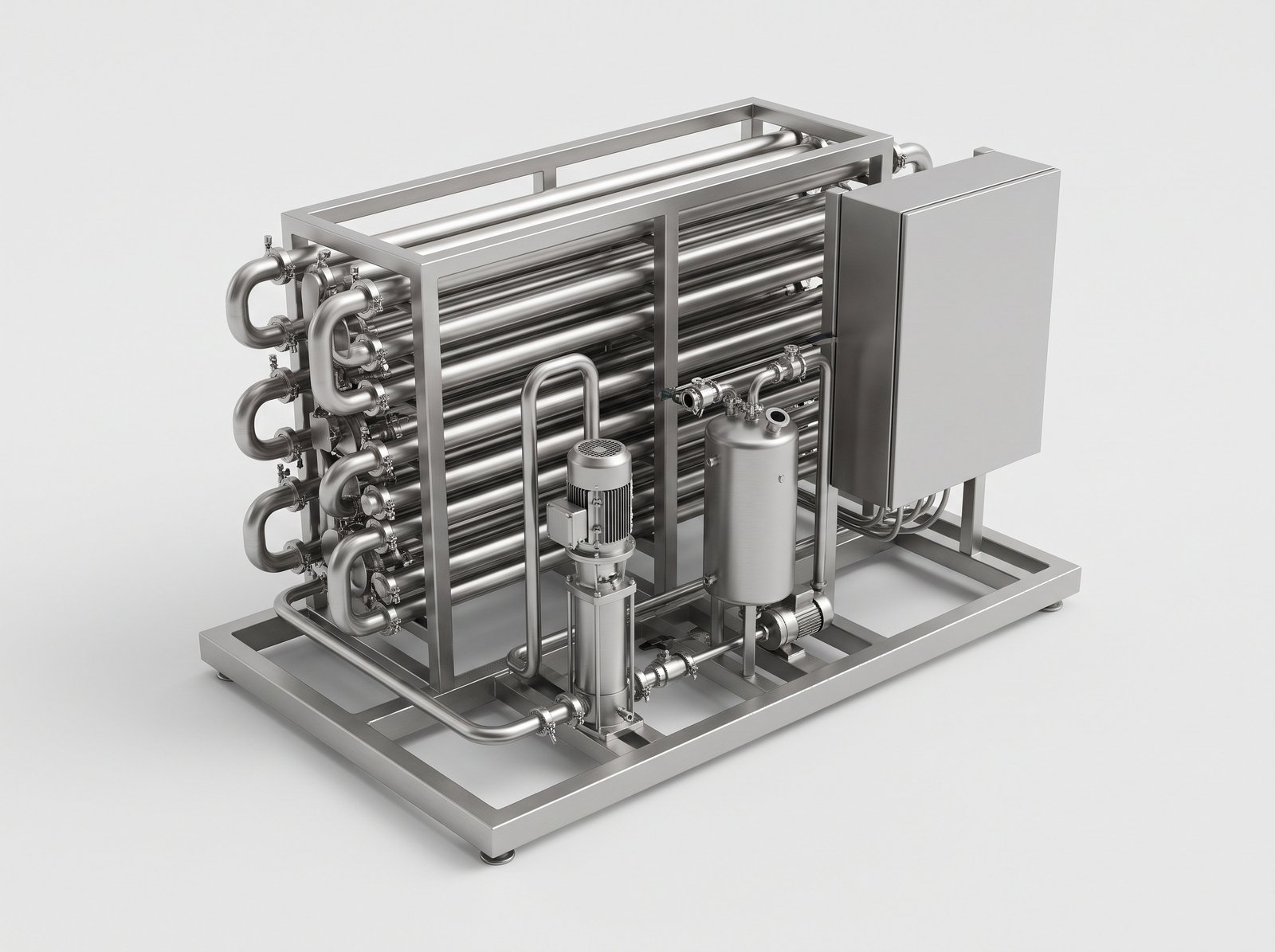
Where An Aseptic Steriliser Sits In The Line
Product arrives refined from the fruit pulper and finisher, or concentrated from the fruit evaporator, and is held in a collection or balance tank. It enters the steriliser through a deaerator tank, which removes air under vacuum. The same tank serves as the feed and recirculation tank for sterilising and cleaning the plant.
What leaves is sterile product, cooled to filling temperature, which goes through closed sterile piping to the filler. Product that does not reach temperature is diverted back and does not reach the filler.


How It Works
1
Sterilising The Product Path Of The Aseptic Steriliser
Before any product runs, the steriliser and the filler are sterilised by circulating hot water above processing temperature through the whole product path for a set time. Only then is product admitted.
2
Feeding And Heating In The Aseptic Steriliser
A positive displacement feed pump, an eccentric screw or lobe pump with a variable speed drive, pushes product from the deaerator tank through the heat exchanger at a steady, metered rate. An electromagnetic flow meter reads that rate. The product is first pre-heated by hot water, then heated to the sterilising set point, which for fruit products runs at 98 to 110 °C.
3
Holding And Cooling In The Aseptic Steriliser
The heated product passes through a holding tube for 30 to 60 seconds. It is then cooled in two steps, first by cooling tower water and then by chilled water, to 20 to 35 °C for filling.
4
Construction And Control Of The Aseptic Steriliser
All product contact parts are AISI 316 or 316L. The plant is skid mounted, assembled, cabled and tested before it ships, with steam, condensate, tower water and chilled water groups. A PLC with a touch screen holds the recipes, records the run and controls the flow diversion. The operator sets the sterilising temperature, the hold, the outlet temperature and the flow.
4
Types And Options
Annular Space Aseptic Steriliser For Puree And Pulp
An annular space, or tube-in-tube, heat exchanger handles puree, pulp and products with fine particles and fibre.
Plate Aseptic Steriliser For Concentrate
A plate heat exchanger with AISI 316L product contact and EPDM gaskets suits concentrate and smoother products. It is the usual choice after an evaporator, where the product is uniform and free of particles.
Aseptic Steriliser With Built-In Or Separate Deaerator
The deaerator feed tank can be built into the steriliser skid, or a separate deaerator can feed it. Either way, the size is matched to the evaporator or pulper ahead of the steriliser and to the filler after it.
Cooling, Recycle And Control Options On The Aseptic Steriliser
Two-step cooling with tower water and chilled water brings the product down to filling temperature quickly. A low temperature recycle mode lets the plant idle without spoiling product when the filler stops. Control is by PLC with touch screen and recipe memory, with recording for each batch.
What Decides The Choice Of An Aseptic Steriliser
- The product: puree with particles, smooth pulp or concentrate, which decides the heat exchanger type.
- The product's acidity, which sets the sterilising temperature and hold.
- Scale and running hours, set by the fruit season and the pulping or evaporating capacity ahead.
- The filler after it: bag size and filling rate must match the steriliser output.
- Utilities: steam at pressure, cooling tower water, chilled water, compressed air and a sizeable electrical load.
- Staff: an aseptic line needs operators trained in sterilising, sterility checks and cleaning in place.
What An Aseptic Steriliser Is Supplied With
- Skid-mounted steriliser with heat exchanger, holding tube and cooling sections
- Deaerator feed tank with vacuum pump, CIP spray ball and instruments
- Product feed pump with variable speed drive and flow meter, and a CIP pump
- Hot water set for sterilising, and steam, condensate, tower water and chilled water groups
- Flow diversion and stainless control panel with PLC
- Standard spares and operation and maintenance manuals
- Installation and commissioning at your site, with operator training on sterilising, sterility checks and cleaning in place
Aseptic Steriliser On Its Own Or In A Line
The steriliser is bought on its own when a pulp maker moves from hot-filled cans or frozen pulp to aseptic bags in drums, usually together with the filler. It is part of the complete fruit pulp and concentrate plant and the tomato puree, paste and sauce plant, among the lines Sonika supplies for fruit processing. In those plants it works alongside the stainless steel storage tanks and CIP system that hold product and clean the line.
Aseptic Steriliser Inspection And Documentation
Before shipment, SGS or Bureau Veritas can inspect the steriliser as required. The skid is assembled, wired and run on water at the works before it leaves. The manuals cover the sterilising cycle, the recipes and cleaning in place.
Frequently Asked Questions
Why Use An Aseptic Steriliser Instead Of Canning?
Aseptic processing heats the product quickly in a thin flow and cools it at once, so the pulp keeps its colour and flavour well. In retort canning, each sealed can is heated right through in a retort, which holds the pulp at heat for longer. Aseptic processing also allows large packs, up to 200 litre bags in drums, which is how pulp and concentrate are sold to industry.
What Temperature And Hold Does An Aseptic Steriliser Use?
Fruit products are sterilised at 98 to 110 °C with a 30 to 60 second hold, then cooled to 20 to 35 °C for filling. The exact setting depends on the product and is fixed at commissioning.
Does An Aseptic Steriliser Work Without An Aseptic Filler?
No. The product is only as sterile as the pack it goes into, so the steriliser is always paired with an aseptic filler.
Related Machines

it removes air from the product and serves as the steriliser’s feed and recirculation tank.
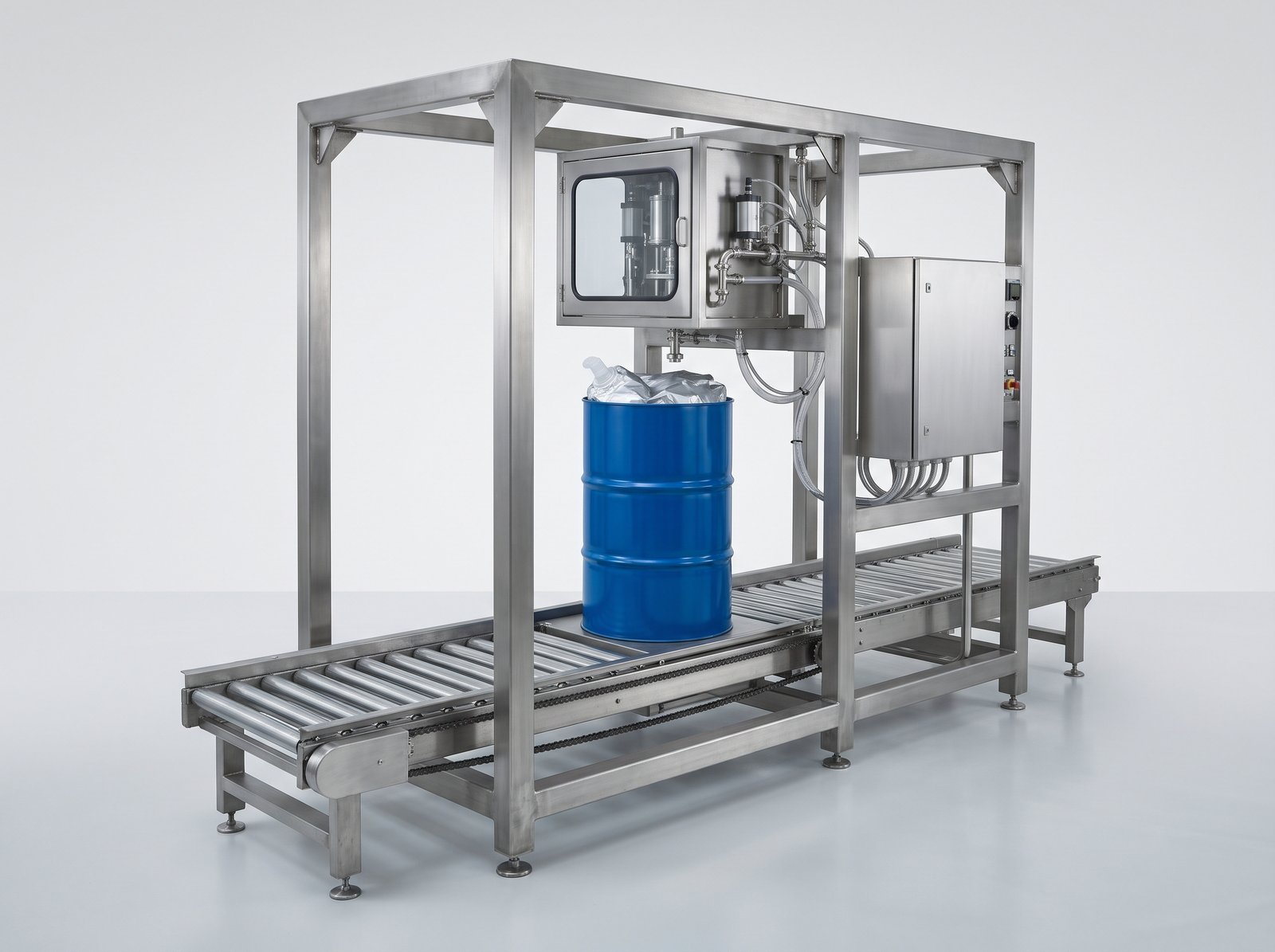
it receives the sterile, cooled product and fills it into sterile bags in drums.
Next Step For Your Aseptic Steriliser
Tell us your product, the season’s fruit and the drum size your buyers want, and we will prepare a customer-specific proposal for the aseptic section. How we work sets out each step from that proposal to commissioning at your site. Write to archit@sonikaimpex.com or sunil@sonikaimpex.com, or call +91 99027 67900.