

Home › Fruit Processing Machinery › Enzyme treatment tank
Enzyme Treatment Tank: Jacketed Stainless Steel Tank For Fruit Pulp And Juice
What An Enzyme Treatment Tank Does
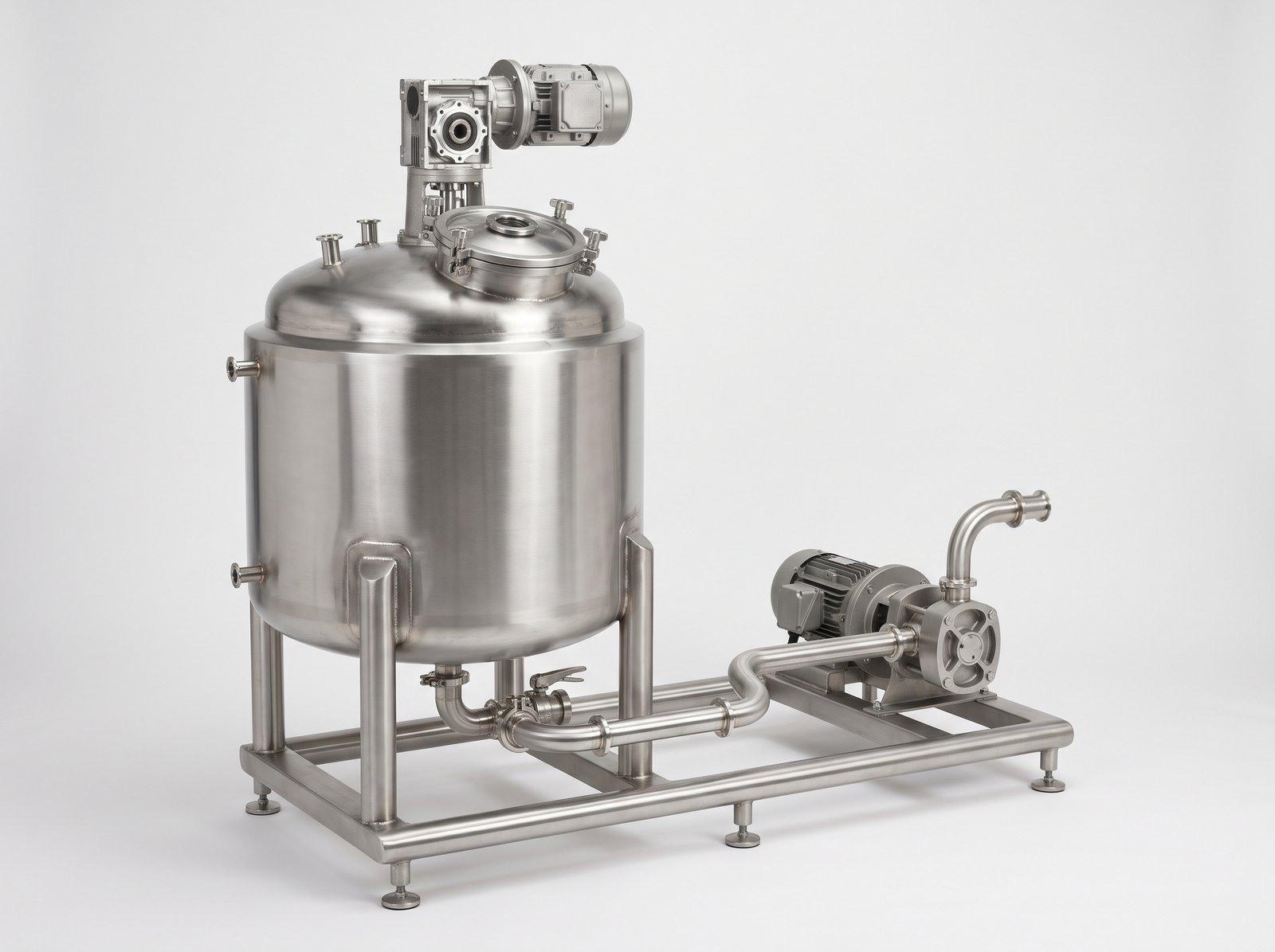
An enzyme treatment tank holds pulp or juice at a set temperature while an enzyme works on it. The enzymes used in fruit processing break down pectin, the substance that makes pulp thick and juice cloudy. Treated, the pulp is easier to press or pulp, and the juice is easier to clarify.
The tank provides the three things the enzyme needs: a vessel, heat to hold the right temperature, and an agitator that mixes the enzyme through the batch for the time the enzyme takes to work.
Enzyme Treatment Tank Capacity
The tank is sized to the batch you treat at one time, set against the hourly flow of the line it serves. For reference, our fruit juice processing plant is offered at 250, 500, 1,000, 2,000 and 3,000 litres/hour of juice. The fruit pulp and concentrate plant is offered at 500 kg/hour, 1, 2, 3, 5 and 10 TPH of fruit. The enzyme time and the line flow together decide the working volume.
Where An Enzyme Treatment Tank Sits In The Line
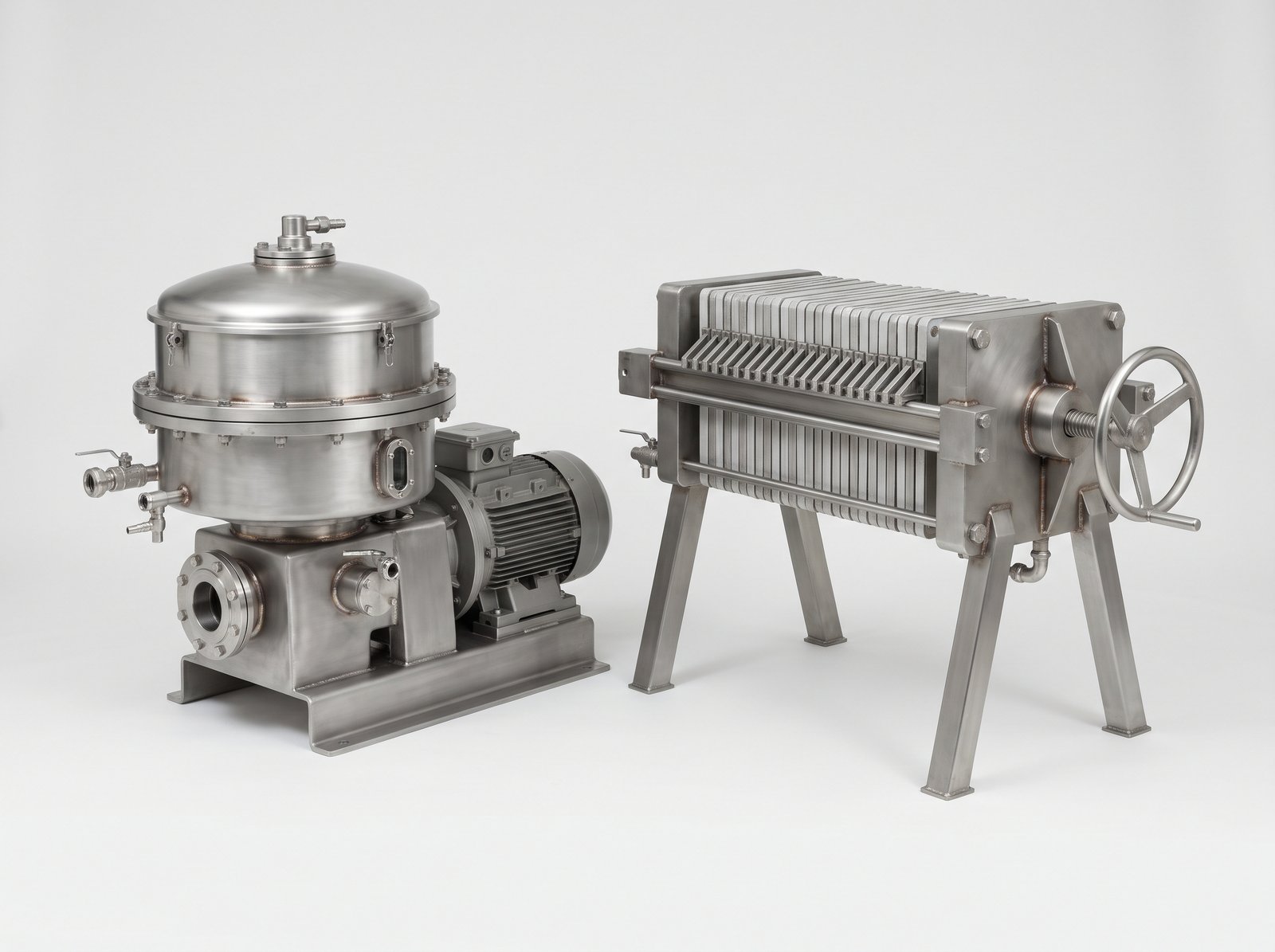
The tank comes after the fruit pulper and finisher, or after the juice extractor. It comes before the centrifugal clarifier and filter press or the fruit evaporator.
What arrives is raw pulp or juice. What leaves is treated pulp or juice with a lower viscosity, which is easier to clarify, press or concentrate. It is moved on by a pump, usually a positive displacement or screw pump.
The machines on either side run by the hour. The tank works in batches. Filling, holding and emptying each take time. That is why the batch size and the number of tanks are planned together with the rest of the line.
Enzyme treatment tank
This Machine

How It Works
1
Filling And Heating In The Enzyme Treatment Tank
Pulp from the fruit pulper and finisher, or juice from the juice extractor, fills the stainless steel vessel. Steam or hot water runs through the jacket around the shell. The operator sets the jacket heating to bring the batch to the temperature the enzyme supplier gives.
2
Dosing The Enzyme In The Enzyme Treatment Tank
Where a level transmitter is fitted, it shows how much pulp or juice the tank holds, and the operator matches the enzyme dose to that reading. The agitator, a stirrer driven by a motor and gearbox, then mixes the enzyme through the whole batch, so no part of the pulp or juice is left untreated.
3
Holding The Batch In The Enzyme Treatment Tank
For the enzyme time, the agitator keeps the batch moving. The jacket holds it at temperature. The operator watches the temperature gauge and adjusts the jacket heating to keep the batch there.
4
Emptying And Cleaning The Enzyme Treatment Tank
Once the enzyme time is over, the pump moves the treated batch on. The tank is then washed before the next batch. The operator times each batch from filling to emptying.
4
Types And Options
Jacketed Enzyme Treatment Tank With Agitator
This is the standard build: a stainless steel vessel with a steam or hot water jacket and a stirrer.
Insulated Enzyme Treatment Tank
Glass-wool insulation sits under a stainless steel cover, for holding temperature with little heating. Insulation suits a batch that is brought to temperature once and then held.
Enzyme Treatment Tank With CIP Spray Ball
A spray ball inside the tank allows cleaning in place between batches, which suits the hygiene needs of a juice line. The tank can then be cleaned from the same circuit as the plant’s stainless steel storage tanks and CIP system.
Level Transmitter And Temperature Gauge On The Enzyme Treatment Tank
A temperature gauge is standard, for holding each batch at temperature. A level transmitter can be fitted to show the batch volume for dosing.
Castor-Mounted Enzyme Treatment Tank
Castor-mounted tanks are for small plants that move the tank to the point of use.
Stainless Steel 304 Or 316 Enzyme Treatment Tank Shell
Tank shells for juice and pulp are stainless steel 304 or 316, with a sanitary finish. The grade is chosen with the fruit and the product in view.
What Decides The Choice Of An Enzyme Treatment Tank
Our needs assessment works through these points with you. It sets out what the line needs now and what it may need later, with a plan for both. It also says plainly when an enzyme step is not needed yet.
- Fruit and product: apple, pineapple and mango pulp respond to enzymes differently, and some products need no enzyme treatment.
- Batch size: one batch at a time, matched to the hourly flow of the line.
- Time and temperature: the enzyme time sets how long the tank is occupied. A long hold may need tanks working in turn so that the line does not wait.
- Heating: steam or hot water to the jacket, so the boiler is planned with the line. Fruit plants take steam at 3 to 4 bar, and boilers for fruit plants run from 750 kg/hour to 3 TPH.
- Cleaning: the tank is washed between batches, and a spray ball and drain make this faster.
What An Enzyme Treatment Tank Is Supplied With
The usual scope is the stainless steel tank, jacket, agitator with motor and gearbox, inlet and outlet connections, a temperature gauge, and the supporting legs. A level transmitter can be fitted.
The tank comes with a control panel or starter, a standard set of spares, and manuals. We provide erection and commissioning at your site and train your operators and maintenance staff.
Enzyme Treatment Tank On Its Own Or In A Line
A tank can be supplied on its own as a replacement or as an additional vessel in a plant you run. Tell us the fruit and the batch.
It is offered on request as an optional step in the fruit juice processing plant and the fruit pulp and concentrate plant, ahead of clarification. Further along those lines come the blending and sugar dissolving tanks and the plate and tubular pasteuriser.
Enzyme Treatment Tank Inspection And Documentation
Before shipment the tank can be inspected by a third party such as SGS or Bureau Veritas, as your order requires. We pack it for export and supply the manuals and shipping documents.
Frequently Asked Questions
Do All Juices Need An Enzyme Treatment Tank?
No. It is used where the juice or pulp is thick or must be clear. Many pulp products do not need it.
Who Supplies The Enzyme Used In An Enzyme Treatment Tank?
The buyer buys it from an enzyme supplier. We tell you what the tank must provide in temperature and time.
Can A Normal Tank Be Used As An Enzyme Treatment Tank?
It can, if it has a jacket and an agitator. A plain storage tank cannot hold the temperature.
How Long Does A Batch Stay In The Enzyme Treatment Tank?
That depends on the enzyme, the fruit and the temperature, and is set by the enzyme supplier. Tell us the time your supplier gives, and we size the tank and the number of tanks to it.
Related Machines


Next Step For Your Enzyme Treatment Tank
Send us the fruit, the product, and the batch size you work with, and we will prepare a customer-specific proposal. Tell us what is already installed, the steam you have, and how you expect the line to grow.
We quote FOB at the Indian port of shipment by preference, which is the port nearest the manufacturing unit. CIF is also routinely used, quoted to the port you name, such as Tema for Ghana, Abidjan for Ivory Coast, or Mombasa or Dar-es-Salaam for Uganda and Rwanda. Payment is by TT remittance or Letter of Credit, and the lead time is given with the offer.
Write to archit@sonikaimpex.com or sunil@sonikaimpex.com, or call +91 99027 67900. Read how we work on How we work.