

Home › Rice Processing › Mini rice mill
Mini Rice Mill For 100 To 500 kg/hour Of Paddy
One compact unit that husks and whitens 100 to 500 kg/hour of paddy into white rice.
Who A Mini Rice Mill Suits
A mini rice mill suits a buyer who wants to turn paddy into white rice at a small, steady scale: a farmer group milling its own harvest, a trader serving a market town, or a service miller who mills customers’ paddy by the bag. It is usually a first mill. Each size is one complete compact unit, offered at 100, 200–250 and 400–500 kg/hour of paddy. It fits a small building, runs on electric power supplied to the site and needs a small team. The product is single-pass white rice, sold loose or in bags, with husk and bran as by-products.
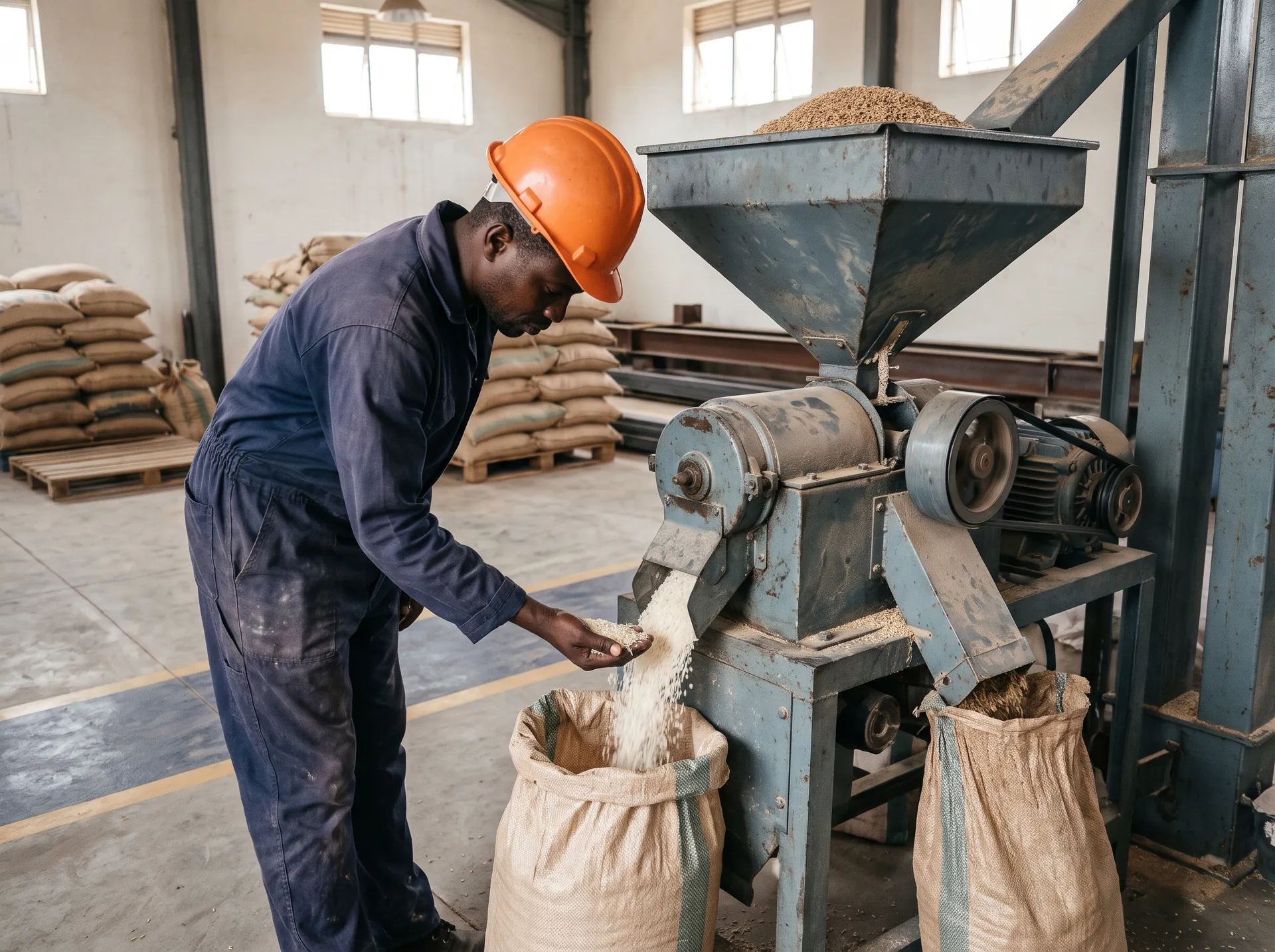
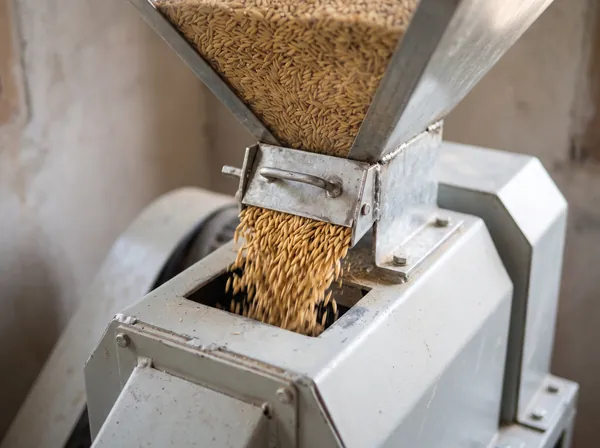
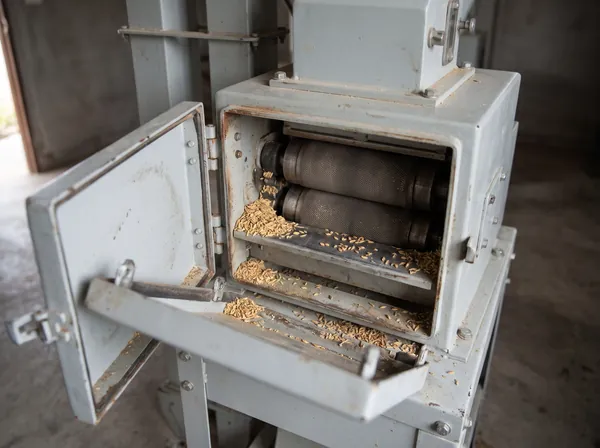
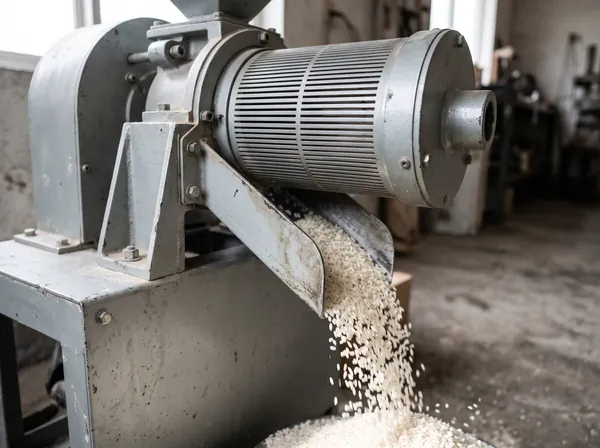
Stage 1
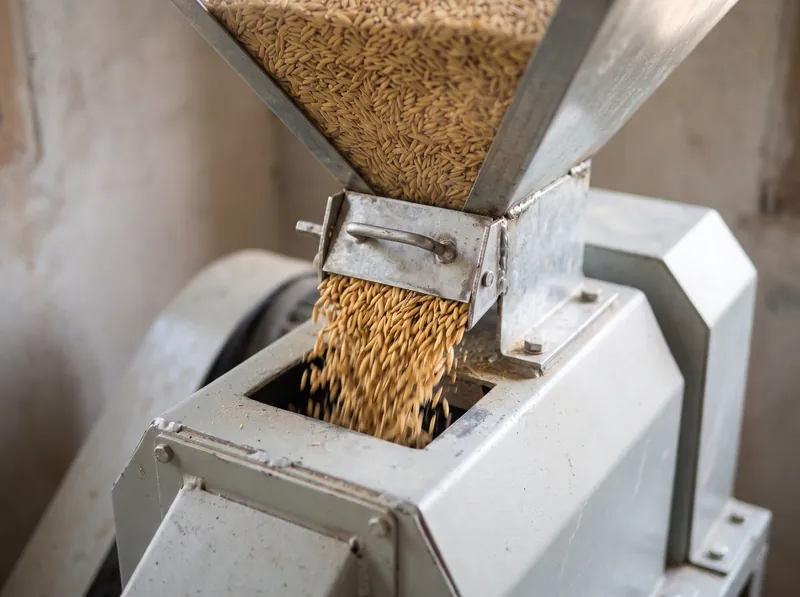
Feeding The Mini Rice Mill
Paddy is fed into the mini rice mill by the bag or the basket, and it should go in clean and dry. Stones and straw wear the husking and whitening parts faster, and wet paddy breaks in both stages. Your paddy and the proposal decide what cleaning goes ahead of the unit, from sieving or winnowing by hand to a small cleaner in front of the mill.
Stage 2
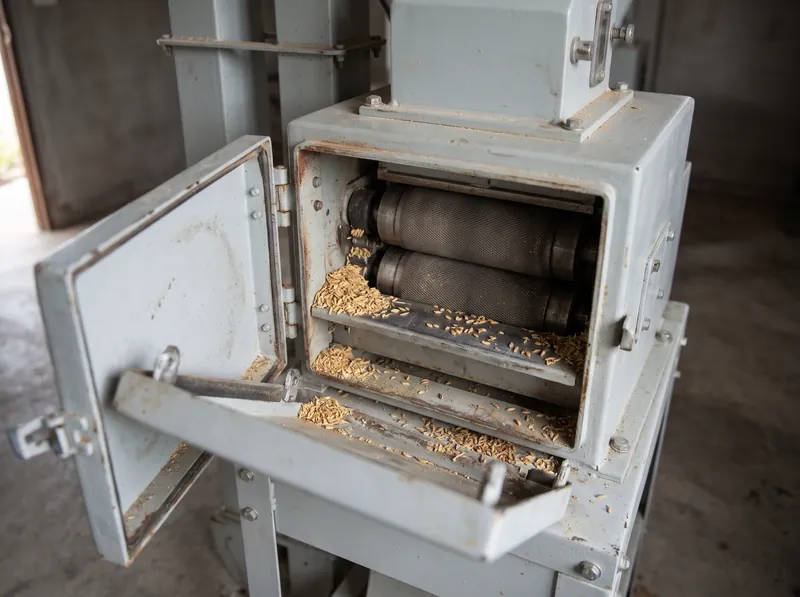
Husking In The Mini Rice Mill
From the feed hopper, paddy moves straight into the husking stage of the unit. Here the husk is rubbed off the grain, leaving brown rice, and the loose husk is carried away from the grain. The operator sets the husking to the paddy being milled, because grain length, dryness and variety all change how easily the husk comes away. Set too tight, the husking breaks grain. Set too loose, unhusked paddy goes forward.
Stage 3
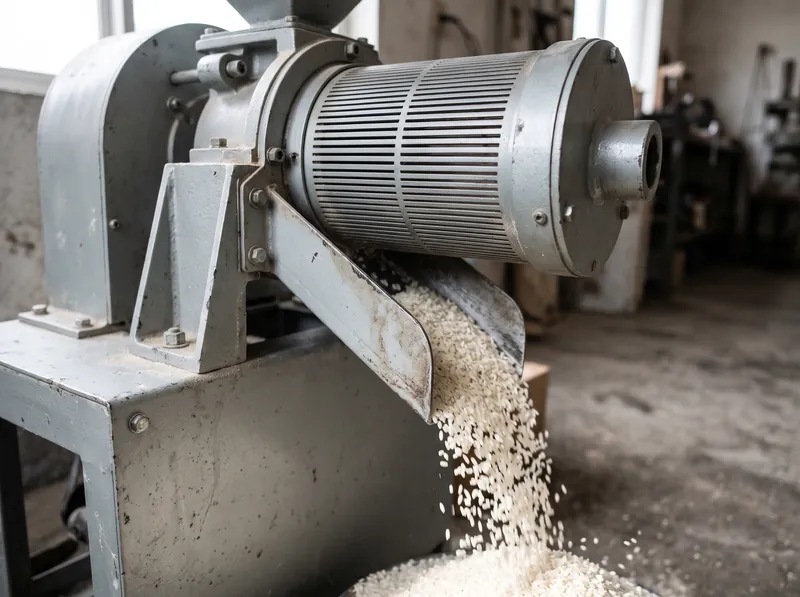
Whitening In The Mini Rice Mill
The brown rice passes straight on to whitening, where the bran layer is rubbed off the grain. The bran is taken out of the unit, and the rice comes out white in one pass. The operator sets how hard the unit whitens to what local buyers expect. Harder whitening gives whiter rice. It also gives more broken grains. The right setting is found by milling trial lots of your own paddy when the unit is first set up.
Stage 4
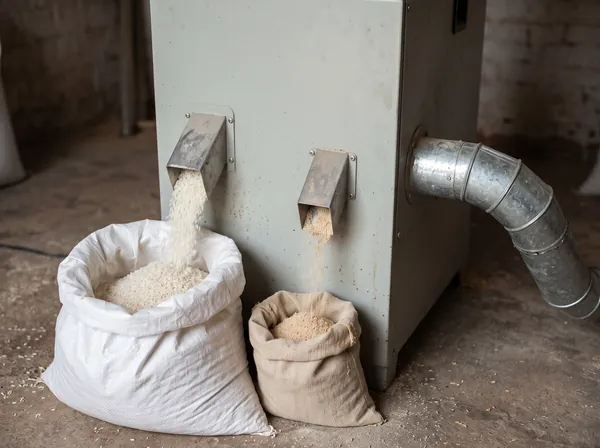
Discharge Of Rice, Bran And Husk From The Mini Rice Mill
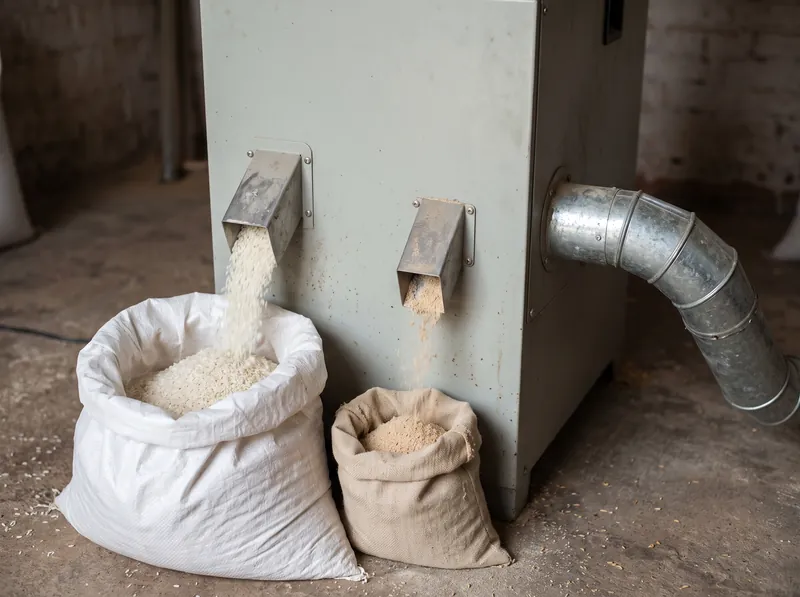
The unit delivers three streams at separate outlets. White rice runs from its spout into bags held by hand, which are weighed on a platform scale and stitched, in sizes of 10 to 50 kg. Bran comes out at its own outlet and is bagged for sale as animal feed. Husk leaves the unit to a heap or a husk room. The layout around the unit is planned from these three outlets.
Mini Rice Mill Capacity
A mini rice mill is offered in three sizes, stated as paddy input. Each is one complete compact unit, sized to the buyer’s paddy and season.
- 100 kg/hour of paddy: the smallest unit, for a household business or a village service mill.
- 200–250 kg/hour of paddy: the middle unit, for a farmer group or a small trader milling every day.
- 400–500 kg/hour of paddy: the largest unit, for a service miller or trader with a steady flow of paddy.
Every size is single pass, with no polisher and no bagging. Bags of 10 to 50 kg are filled by hand.
Choose the size from the paddy you can count on in the leanest months and the hours you plan to run each day. A unit sized to the harvest peak sits short of paddy for months.
What Decides The Design Of A Mini Rice Mill
The choice of size follows the paddy and the market.
- Raw material and season: the varieties you mill, their grain length, and how much comes in the harvest months against the rest of the year.
- Product mix: the whiteness your buyers expect. Buyers who later want polished rice point to a compact rice mill. Buyers who want graded or sorted rice point to a raw rice mill plant.
- Scale and running hours: how many hours a day the unit runs, and whether it mills its own paddy or customers' paddy by the bag.
- Utilities available: grid power, or a generator set where the grid is weak.
- Staff skill: who sets the husking and whitening, and who changes the wear parts.
- Packaging the local market expects: loose rice, or bags of a set weight.
- Site and access: room to unload paddy, store bags, and clear husk and bran.
What A Complete Mini Rice Mill Includes
Process Line Of The Mini Rice Mill
One complete compact unit in the size chosen, which husks and whitens paddy in a single pass. A pair of rubber rolls takes the husk off and an aspirator blows the husk away. The brown rice then passes to an emery whitening roller turning inside a slotted screen, which rubs off the bran. The unit is driven by an electric motor of about 7.5 HP on the 100 kg/hour size, 10 to 15 HP on the 200–250 kg/hour size and 20 to 25 HP on the 400–500 kg/hour size. From clean, well-dried paddy it typically gives 60 to 65 kg of white rice from 100 kg of paddy, depending on the variety and how hard the rice is whitened. The wear parts are the rubber rolls, the emery roller and the whitening screen.
Packaging Machinery For The Mini Rice Mill
No bagging machine is part of a mini rice mill. Rice is bagged by hand at the outlet, and a platform scale and a hand-held bag stitcher are enough for bags of 10 to 50 kg.
Utilities For The Mini Rice Mill
The unit runs on electric power supplied to the site, from the grid or a generator set, sized in the customer-specific proposal.
Storage And Handling For The Mini Rice Mill
A dry paddy store, a room or shed for finished rice in bags, and space for husk and bran as they leave the unit.
Laboratory For The Mini Rice Mill
Keep a moisture meter and a sample tray on site. The meter checks that incoming paddy is dry enough to mill, and the tray shows the broken grains and whiteness of the finished rice.
Working Capital Materials For The Mini Rice Mill
Rice bags in the sizes the market buys, stitching thread, and spare wear parts for the husking and whitening stages.
Buying A Mini Rice Mill In Stages
A mini rice mill is bought complete. Husking and whitening both sit inside the one unit, so the line itself is whole from the first day.
Around the unit, a platform scale, a stitcher, a moisture meter and a sample tray are enough to start. A polisher, grader, colour sorter or boiler bought early ties up money the mill needs for paddy.
The usual next step is a compact rice mill of 1, 1.5 or 2 TPH. It runs from a basic compact mill to a compact mill with polisher and bagging, and it suits buyers whose market wants polished rice. Buyers whose market wants graded or sorted rice look at a raw rice mill plant. Plan for the move when the mini mill is first sited.
- Building: a compact rice mill is a line of separate machines and needs a longer, taller shed. Leave room to extend, or a plot where a second shed can stand.
- Power: the larger mill carries a higher load. Ask what the grid can supply later when you apply for the first connection.
- Paddy supply: the paddy buying has to grow before the larger mill arrives.
- Staff: training for project and maintenance staff is provided at your site when the larger line goes in.
The mini rice mill can keep milling small lots as the larger plant goes in.
Mini Rice Mill Inputs And Utilities
The main input is dry, clean paddy. Paddy that is too wet breaks during husking and whitening, and paddy carrying stones and straw wears the unit faster.
The unit runs on electric power supplied to the site, with the connection or generator set sized in the customer-specific proposal.
The daily work is feeding paddy, setting the husking and whitening, bagging and stacking the rice, and clearing husk and bran. Bran sells as feed, and husk needs a buyer, a use as fuel or a place to go.
Put the unit under cover, with the paddy store on one side and bagged rice on the other, so the two never cross. Clear husk to the side away from both, so its dust stays out of the rice.
Mini Rice Mill Inspection And Documentation
Before shipment, the mini rice mill can be inspected by SGS or Bureau Veritas, as the buyer or the buyer’s bank requires. The scope covers erection and commissioning, and training for project and maintenance staff at the buyer’s site. That training covers the husking and whitening settings, changing the wear parts, and the daily checks and cleaning the unit needs.
How A Mini Rice Mill Project Runs
A mini rice mill project starts with your paddy, your market and your site. We work out which size fits the paddy you can count on, and what the building should allow for if you grow. Then come a customer-specific proposal, order finalisation, pre-shipment inspection and packing, export from India, and erection and commissioning at your site. After-sales support stays available after the warranty period ends, for spares, advice and, when it comes, the move to a larger mill. How we work sets out the rest.
Pages Related To The Mini Rice Mill
- Rice processing
- Compact rice mill
- Raw rice mill plant, 2 TPH and above
- Parboiled rice mill plant
- Post-harvest drying and cleaning
- Rice Processing Machinery
Frequently Asked Questions
How Much Paddy Does A Mini Rice Mill Take?
A mini rice mill takes 100, 200–250 or 400–500 kg/hour of paddy in a single pass. Buyers who need more tonnage move to a compact rice mill of 1, 1.5 or 2 TPH.
Is A Mini Rice Mill A Single Machine?
Yes. Each size is one complete compact unit that husks and whitens paddy in one pass. It is ready to run once it is set up and connected to power.
Does A Mini Rice Mill Polish Or Grade The Rice?
No. It whitens the rice in one pass, which gives white rice for local sale. Buyers who want polished rice move to a compact rice mill. Buyers who want graded or sorted rice look at a raw rice mill plant.
Can A Mini Rice Mill Run On A Generator Set?
Yes. A generator set can supply the unit’s electric power where the grid is unreliable, sized in the customer-specific proposal.
Which Parts Of A Mini Rice Mill Wear Out?
The rubber rolls, the emery whitening roller and the whitening screen wear with use. The rolls are swapped side to side to even the wear and then replaced, and the emery roller and screen are replaced when the whitening drops off. Spares on hand shorten a stoppage when a wear part goes.
Next Step For Your Mini Rice Mill
Send us the details of your paddy, the rice you want to sell and your site, and we will prepare a customer-specific proposal. Write to archit@sonikaimpex.com or sunil@sonikaimpex.com, or call +91 99027 67900.