

Home › Rice Processing Machinery › Paddy dryer
Paddy Dryer Machine: Batch Dryers For Rice Mills
Dries steamed or wet paddy in batches before husking, in parboiled and raw mills.
What A Paddy Dryer Machine Does
A paddy dryer machine passes warm air through wet paddy in a controlled way, until the grain is dry enough to husk and mill. In a parboiled rice mill it takes the hot, wet paddy straight from the steaming tanks. In a raw rice mill it dries paddy bought in too wet to mill. It is the step in rice processing that decides whether the grain reaches the husker sound or cracked.
Drying faults stay hidden until the rice is milled. Paddy dried too hard develops fine cracks inside the kernel, and those grains break in the husker and whitener. Uneven drying leaves wet pockets that heat, mould and discolour in the bin. Parboiled paddy left wet too long yellows.
- Heating: steam heat exchanger with finned tubes, or a burner on the mobile dryer
- Drive: electric motors on the blower and the discharge rotors
Paddy Dryer Machine Capacity
Paddy dryers are offered at 5, 10, 16, 32 and 48 tonnes per batch, from a mobile recirculating batch dryer to a large column dryer. The buyer chooses one dryer or several, matched to the parboiling batch or to the wet paddy received each day, and to the mill rate behind it.
Where A Paddy Dryer Machine Sits In The Line
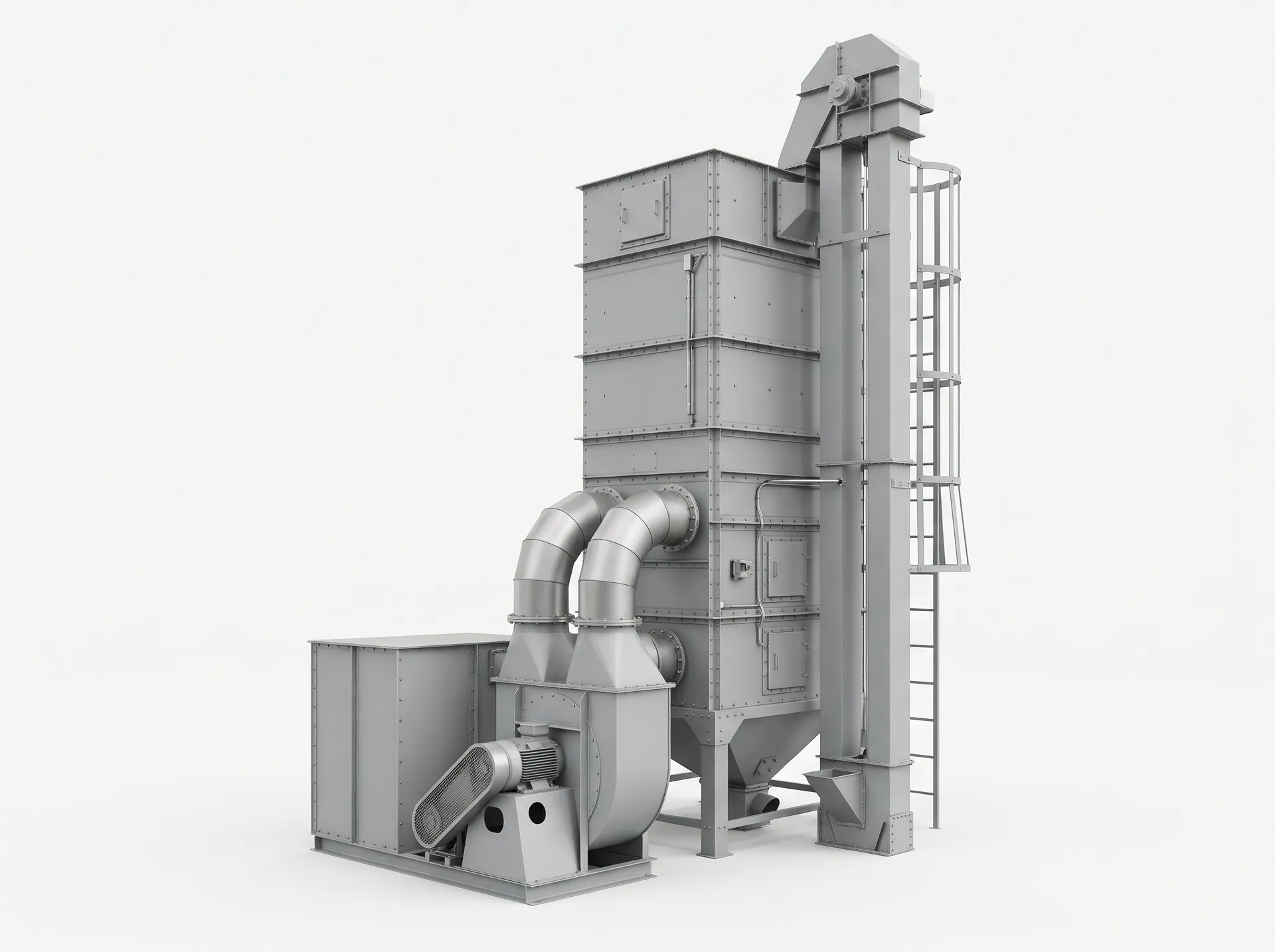
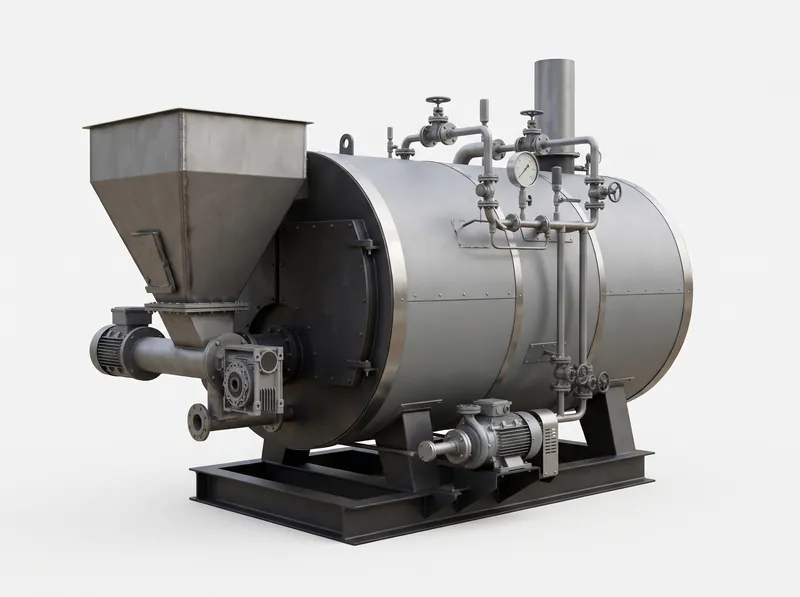
Hot, wet paddy arrives by belt conveyor and elevator from the Parboiling soaking and steaming tanks. In a raw mill, wet paddy comes from intake after a first cleaning. Heat for the column dryers comes from a steam heat exchanger fed by the Husk-fired boiler.
Dried paddy leaves by rotary discharge onto a conveyor and rests in tempering bins, where the moisture evens out through the grain. From there it goes to the Rubber roll husker. Moist exhaust air leaves through the dryer’s outlet side.


How It Works
1
Filling The Column Of The Paddy Dryer Machine
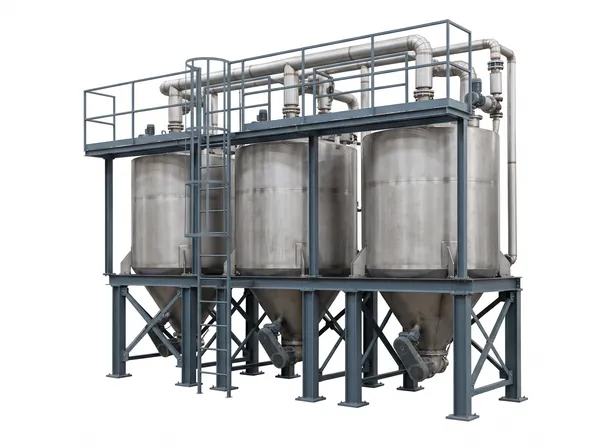
An elevator lifts paddy to the top of a tall drying column. Plain and half-plain chambers at the top and bottom hold paddy above and below the drying zone. The operator fills the column to its full batch, so the air passes evenly through it.
2
Air Through The Ports Of The Paddy Dryer Machine
Rows of inverted V-shaped ducts, called ports, cross the column from side to side. A centrifugal blower on an electric motor drives air through the finned-tube heat exchanger into the inlet ports. The air passes through the paddy and leaves by the outlet ports. The operator sets the airflow and the air heat at the exchanger.
3
Rotor Discharge And Recirculation In The Paddy Dryer Machine
Slow-turning rotors at the base draw paddy out at a steady rate, so the whole mass moves down past the ports and every grain sees the same air. On a recirculating batch dryer, the paddy is lifted back to the top and passed again. The operator sets the rotor speed.
4
Ending The Batch In The Paddy Dryer Machine
The operator takes samples through the batch and checks their moisture against what the mill needs. When the paddy is ready, the burner or steam is shut off and the batch is discharged to the tempering bins before husking.
Types And Options
Mobile Recirculating Paddy Dryer Machine
The small end of the range, with its own burner, so it runs without a boiler. It suits a small raw mill that buys wet paddy at harvest.
Column Batch Paddy Dryer Machine With V-Shaped Ports
The standard dryer for parboiled rice mills, heated by steam from the husk-fired boiler and matched to the parboiling batch. Larger plants run several column dryers side by side, so each parboiling batch has a dryer ready.
Tempering Bins With The Paddy Dryer Machine
Bins after the dryer hold the paddy as moisture evens out between the surface and the core of the grain. They are sized with the dryer, and a mill that leaves them out sends stressed paddy to the husker.
What Decides The Choice Of A Paddy Dryer Machine
Parboiled paddy must be dried as soon as it leaves the tanks, so the dryer is sized to the parboiling batch first.
- Paddy: parboiled or raw, and how easily the variety cracks.
- Product: the rice the mill sells, and how much breakage it can accept.
- Scale and hours: batches a day, and the peak of the harvest for raw paddy.
- Upstream and downstream: the parboiling batch before it, tempering bins and the husker after it.
- Utilities: steam from the husk-fired boiler, or fuel for the mobile dryer's burner; power for blower and rotors.
- Cleaning and maintenance: clearing ports between varieties, and checking rotor and blower bearings.
What A Paddy Dryer Machine Is Supplied With
- Dryer column with ports, plain and half-plain chambers and discharge rotors.
- Centrifugal blower with motor.
- Steam heat exchanger with finned tubes, or a burner on the mobile dryer.
- Rotor drive with motor and gearbox.
- Control panel with starters.
- Erection and commissioning.
- Training for project and maintenance staff at the buyer’s site.
- After-sales support, which stays available after the warranty period ends.
Paddy Dryer Machine On Its Own Or In A Line
A paddy dryer is supplied on its own to replace yard drying at a running mill, to add drying for a larger parboiling section, or to let a raw rice mill plant of 2 TPH and above buy wet paddy at harvest. In a complete plant it is part of the parboiled rice mill plant, with the parboiling tanks and the boiler.
Paddy Dryer Machine Inspection And Documentation
Third-party pre-shipment inspection by SGS or Bureau Veritas is available as the buyer requires. It takes place before the dryer is packed and exported. The boiler that feeds it steam can be supplied IBR certified.
Frequently Asked Questions
Why Move From Yard Drying To A Paddy Dryer Machine?
Yard drying depends on the weather, brings stones and dust into the paddy and dries unevenly, which cracks grains. A dryer puts the drying under the operator’s control. The operator sets the air heat at the exchanger, the airflow from the blower and the rotor speed for each batch, and checks samples until the paddy is ready.
Why Is Paddy Tempered After The Paddy Dryer Machine?
The surface of the grain dries faster than the core. Resting the paddy in tempering bins lets the moisture even out, so it does not crack in the husker.
Can One Paddy Dryer Machine Handle Raw And Parboiled Paddy?
Yes. The air heat, airflow and drying time are set for each, and the operator checks samples through the batch.
Related Machines
Next Step For Your Paddy Dryer Machine
Tell us whether you dry raw or parboiled paddy, the batch you need to dry and how you dry it today. Sonika Impex India will send a customer-specific proposal. How we work sets out each step of a project, from the first enquiry to erection and commissioning. Write to archit@sonikaimpex.com or sunil@sonikaimpex.com, or call +91 99027 67900.