Unlocking the Power of Format Factory v5.22.0 for Your Business Workflows
November 22, 2026
What Sets the Output of a Poultry Feed Manufacturing Plant: The Ingredient Store Behind the Mixer
November 23, 2026
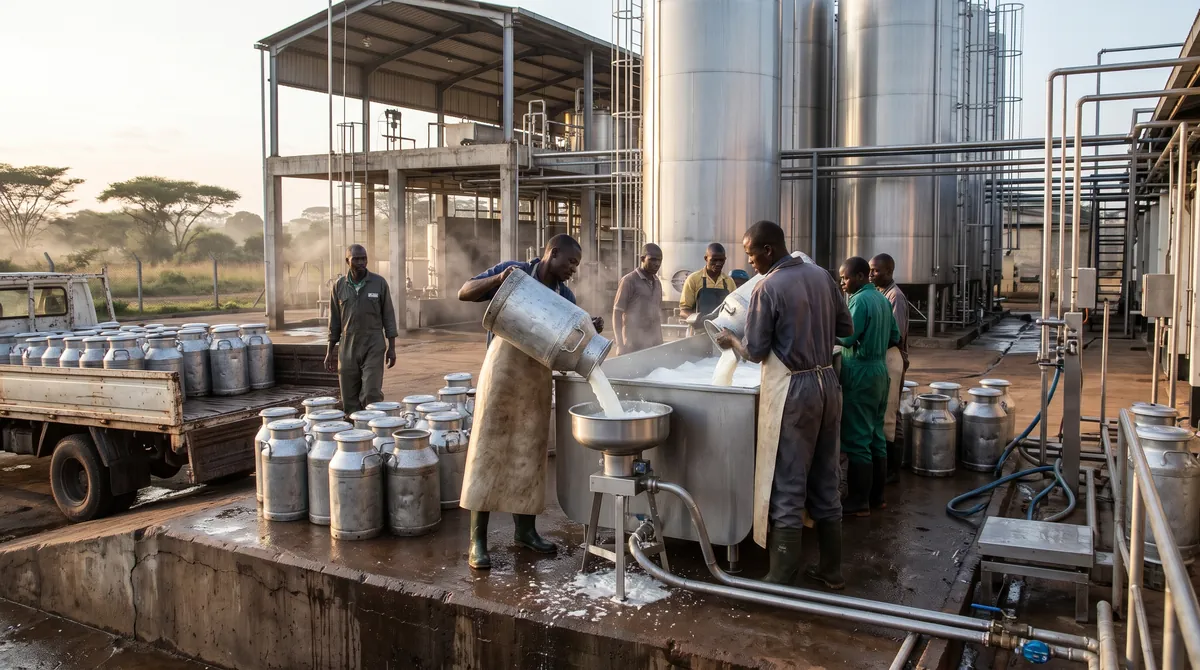
Milk arrives on the morning’s terms, not the plant’s
Milk doesn’t arrive on the plant’s timetable. It arrives when the cows give it, when the rains have been good and when the collectors can reach the farms. In the flush season the reception bay is busy before the sun is high, and the cans keep coming. In the lean months the same bay waits for deliveries that come in light. That swing is seasonal milk intake.
Every dairy plant has to be sized against that swing. This article follows the swing from the farm gate through reception, chilling, processing, utilities and storage. It shows which stage should be sized to which month. It is for you if you are planning a new dairy plant or adding to one, and want the sizing settled before any quote arrives.
In short:
- Your milk intake has a flush size and a lean size. The yearly average is the figure least likely to turn up at your gate.
- Reception, testing and chilling must handle the heaviest flush morning, because raw milk cannot wait to be cooled.
- The processing line is sized to the milk you can reliably collect in the leanest month, and it runs longer through the flush.
- Power, water and steam follow the peak, and standby power matters most in the season that can least afford a stoppage.
- Measure a full year of collection, month by month, before you size anything.
Contents
- Your seasonal milk intake has a flush size and a lean size
- How wide the swing runs between the flush season and the lean month
- Reception, testing and chilling have to hold the flush morning
- Processing is sized to the leanest month and runs longer in the flush
- Power, water and steam at the flush peak
- Where the flush surplus goes: cold storage and longer-keeping products
- What the swing looks like in Uganda, Rwanda, Côte d’Ivoire and Ghana
- How to choose: the ways to size against the swing, and the mistakes to avoid
- How Sonika Impex LLP can help
- Frequently asked questions
- Final thoughts
Your seasonal milk intake has a flush size and a lean size
Most dairy plans start from a single figure: so many litres a day, averaged from a year of collection records. It goes into the feasibility study, and the bank reads it.
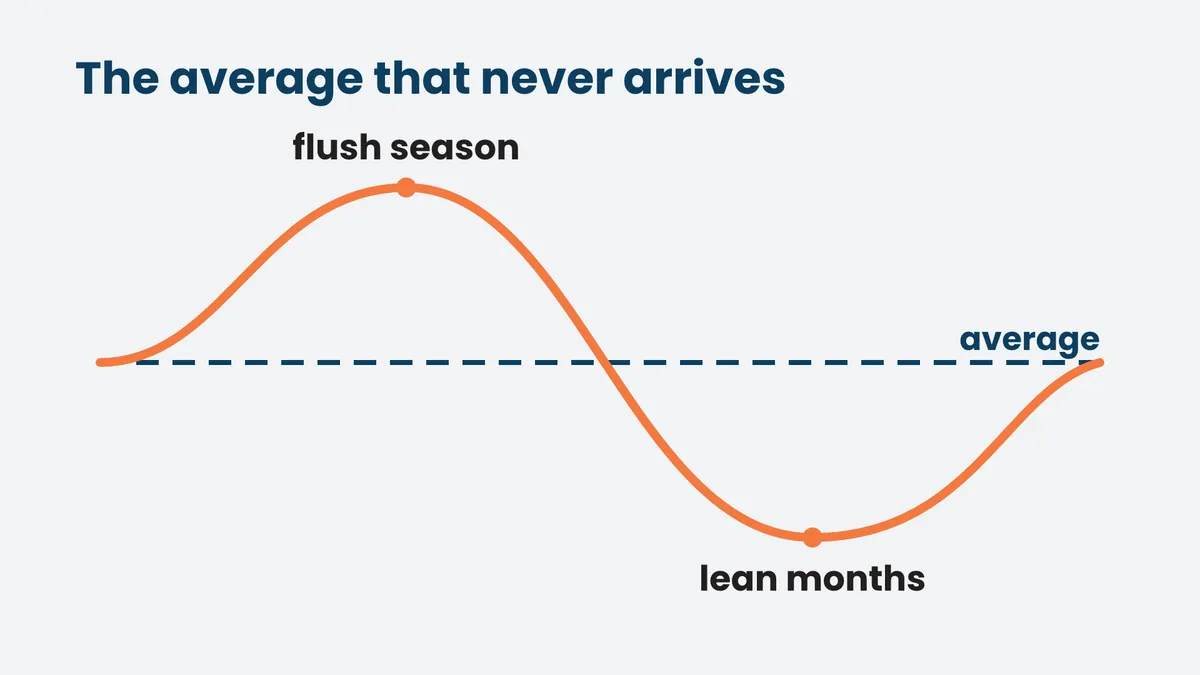
Here’s the catch. That average is the figure least likely to arrive at your gate on any given morning. In the flush season, after the rains, milk comes in well above it. In the lean months, when pasture dries out and cows give less, it comes in well below it. The average sits between them and describes neither.
A plant sized to the average is too small for the flush and too big for the lean months, and it pays for both mistakes. In the flush it turns milk away, or takes the milk in and cannot cool it fast enough. In the lean months the line waits for milk while the loan, the wages and the standing charges stay exactly where they were.
So the real question is which month you size for, and what you do in the other. The answer differs from stage to stage. Reception and chilling answer to the flush, because milk has to be cooled the moment it is accepted. Processing answers to the lean month, because that is when the plant has to pay its way. Storage and utilities sit between them and carry the difference.
How wide the swing runs between the flush season and the lean month
The swing is easy to underestimate until you see it in a collection record. Rwanda gives a clear example. The milk collection centres in Nyagatare received an average of 80,000-100,000 litres a day during the rainy season in March and April, according to Rwanda Agriculture Board data reported in the Rwandan press [1]. By July the same centres were taking in 39,900 litres a day [1].
A plant built for April would have spent the dry months running well below capacity. A plant built for July would have turned milk away right through the rains. Either way, the damage was done at the planning table.
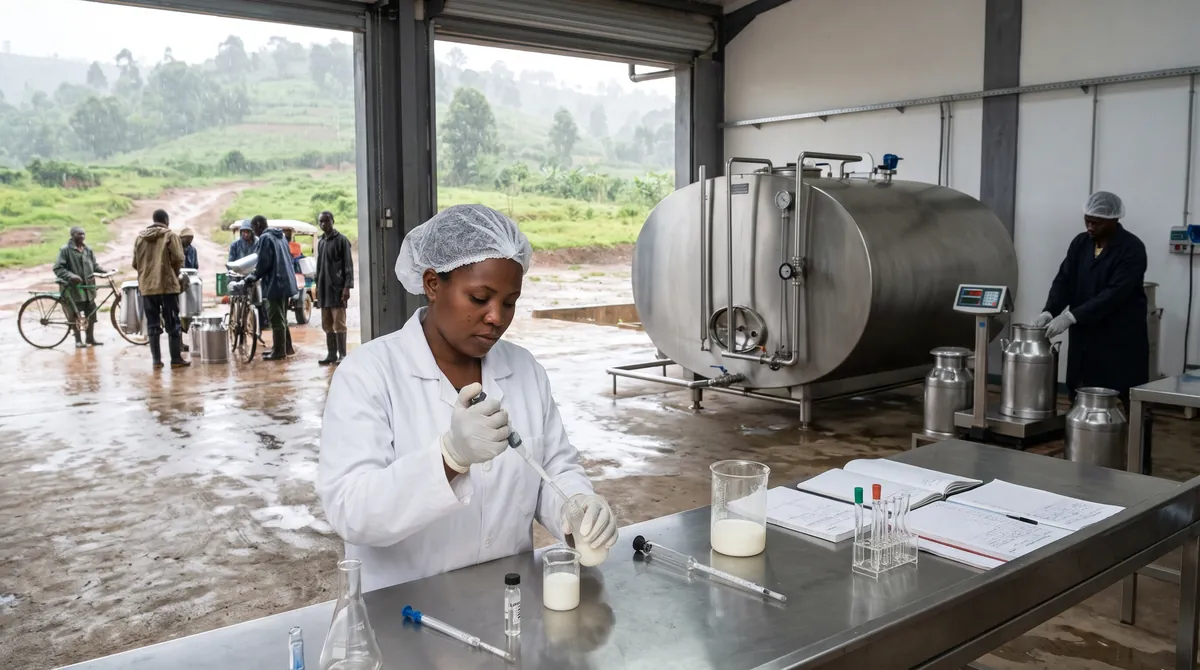
The swing that matters for your plant is the swing in your own collection area, measured month by month. A national figure won’t tell you, and neither will a neighbour’s plant.
Measure the swing before you size the plant.
If you already collect milk, your own intake records for the past year are the most valuable planning document you hold. If you are planning a new plant, the collectors, co-operatives and farmer groups you will buy from can usually tell you what they delivered in their best and worst months. Ask for both, in writing, and ask what a poor rainy season looked like.
Reception, testing and chilling have to hold the flush morning
FAO’s technical guidelines on milk cooling centres treat milk delivery, collection points, and reception, cooling and storage as distinct stages, each planned for in its turn [2]. That order matters, because each stage hands its problems on to the next.
Here is the sequence on a flush morning:
- Collection. Milk comes in from farms and collection points by can, by motorbike and by tanker. In the flush more of it arrives, and most of it arrives in the same morning window.
- Reception and testing. Each delivery is measured and tested before it is accepted. Every test takes the same time however busy the bay is, so a queue at reception is milk warming while it waits.
- Filtering. Milk is filtered before it goes into the cooler. Think of this as cleaning the milk before you commit to keeping it.
- Chilling. Accepted milk is cooled as fast as the system allows, to the target temperature below.
- Raw-milk storage. Cooled milk is held in insulated tanks until the process line is ready for it.
So the flow runs: collection, reception and testing, filtering, chilling, raw-milk storage, and only then the process line. FAO’s guidance for milk producer groups is that milk should be cooled immediately after milking and kept at 4 degrees Celsius or below until it is processed [3].
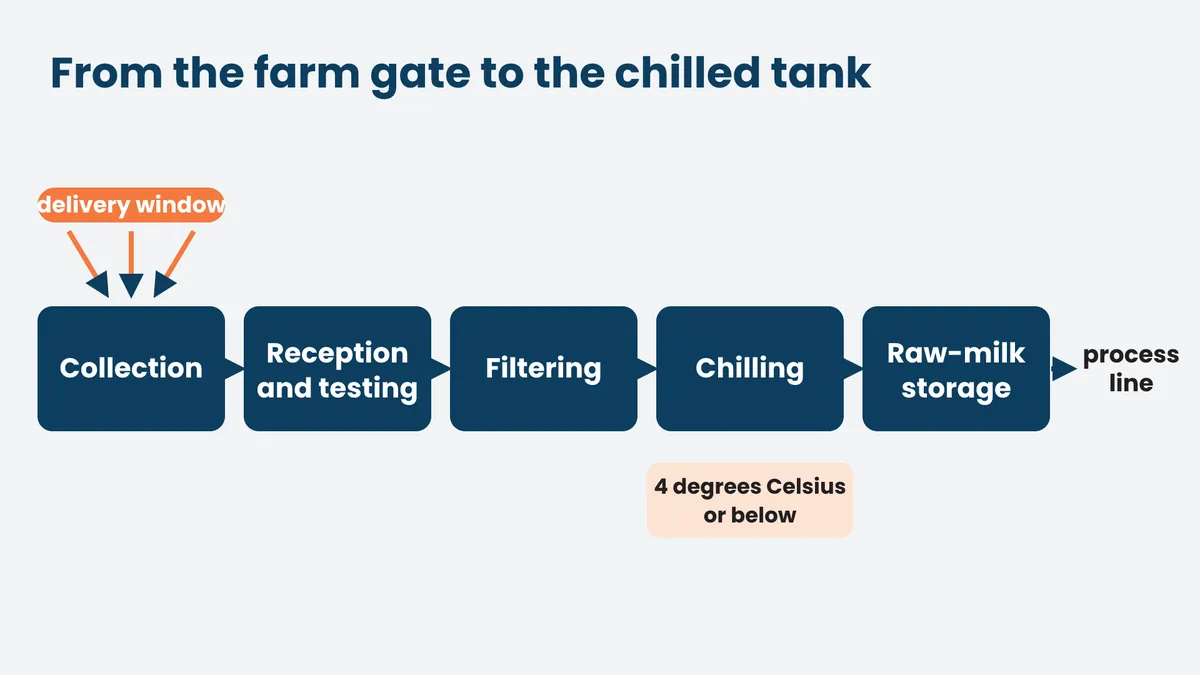
Here’s where the sizing logic turns. Your processing line can take milk at its own pace across the day. Reception and chilling can’t. Milk that has been tested and accepted has to be cooled now, whatever the line happens to be doing. So these stages are sized to the heaviest morning of the flush season, measured by how much milk arrives inside the delivery window. The day’s total and the yearly average don’t decide them.
Getting this right is harder than it sounds, because an undersized cooler or reception bay doesn’t stop. It just makes milk wait, and you pay for that milk’s quality later.
The table shows what the flush does to each stage and what that stage must be sized for.
| Stage | What the flush does to it | What it must be sized for |
|---|---|---|
| Collection | More deliveries, bunched into the morning | The heaviest flush morning, routes and cans included |
| Reception and testing | Queues form, and each test takes the same time however busy the bay is | Deliveries per hour at the flush peak |
| Filtering | More milk through the same filters, and more frequent changes | Flow at the flush peak |
| Chilling | Warm milk arrives faster than it can be cooled | All milk arriving in the flush delivery window, cooled at once |
| Raw-milk storage | Tanks fill before the line can draw them down | The flush morning’s intake plus whatever the line has not yet taken |
Every stage before the process line answers to the flush. This is the part of the plant where under-sizing costs you the milk itself, and no amount of extra processing hours later in the day will win it back.
Processing is sized to the leanest month and runs longer in the flush
The process line works on a different clock. It doesn’t have to take milk the moment it arrives, because the chilled tanks are holding it.
Size the plant to the milk you can reliably collect in the leanest month.
The reasoning is about cost. The loan repayment, wages, maintenance and standing charges arrive every month whether milk flows or not. A line sized for the flush runs well below its capacity for most of the year, so its cost per litre climbs in exactly the months when milk is scarce. The lean month is also the month the bank’s repayment has to survive.
How is the flush absorbed, then? By time. A line sized to the lean month can run longer through the flush: an extra shift, longer runs between cleans, working days that would otherwise be rest days. This is why reception and chilling are sized to the peak while processing is not. The chilled tanks are the buffer between them.
The trick is to plan the extra hours before the flush arrives. An extra shift needs trained operators, a cleaning routine between runs and a maintenance window that the longer runs will squeeze. If those are not in place, the extra hours exist only on paper.
In the team’s experience across projects, the plants that struggle are seldom the ones that ran short of capacity in the flush. They are more often the ones that bought for the flush and spent the rest of the year paying for it. This is the dairy case of a wider rule: a plant is sized to the raw material that actually arrives, which our pillar guide on sizing a plant to real intake works through across industries.
Power, water and steam at the flush peak
Utilities follow the same peak as reception. FAO’s study of solar energy in small-scale milk collection and processing notes that energy use in food plants has to be judged on specific consumption and on peak-hour requirements, separately [4]. A plant can look modest on its average energy use and still overload its supply on a flush morning.
Chilling is the heaviest early load. FAO estimates the energy needed to chill milk before it goes on to milk plants at 25 to 30 kWh/t net [4]. That figure is per tonne of milk, so the chilling load rises in step with the flush. Treat it as an indication and confirm it against the equipment you are quoted.
Don’t underestimate the water. Every tank, line and can that touches milk has to be cleaned, and in the flush there is more of everything to clean. More batches mean more cleaning cycles, more hot water and more wastewater. The boiler that heats cleaning water and supplies process steam carries its heaviest load on flush days, so its sizing belongs with the flush as well.
A power cut in the lean month stops a line that had spare time anyway. On a flush morning it stops a cooler full of milk that cannot wait, which is why standby power matters most then.
In Côte d’Ivoire, the number of electrified localities rose from 2,851 to 7,508 between 2011 and 2023, and the electricity access rate rose from 74 percent to 97 percent, according to the government’s communication service [5]. Subscribers grew from 1.1 million to more than 4 million over the same period [5]. Access is still a different measure from supply that stays on through a flush morning.
So size the power connection, the standby generation, the water supply and the boiler to the flush peak. Then settle in the plan what keeps the chilling running if the grid drops at the worst hour of the flush.
Where the flush surplus goes: cold storage and longer-keeping products
A line sized to the lean month will not always turn all the flush milk into fresh product, and the market wouldn’t take it all if it did. So the flush leaves a surplus, and the plan has to say where that surplus goes.
Large dairy regions treat this as a cost in its own right. A USDA study of the US Northeast market uses actual milk volumes and how they were used to estimate the costs manufacturing plants incur in balancing seasonal supply [6]. Its numbers don’t transfer to your market. The lesson does. Somebody pays for the surplus, and it is cheaper to decide who at the planning stage than to find out in the flush itself.
The surplus can go to cold storage, or into products that keep.
Cold storage
Cold rooms hold finished product so a heavy morning doesn’t force a heavy dispatch. Size them for the flush surplus plus the days between your dispatches, because rooms sized to the lean month will be full by midweek in the flush. Chilled raw-milk tanks do the same job upstream, but only for a short time, since raw milk can’t be held for long before processing.
Products that keep
Butter and cream hold the milk fat in a form that lasts longer than fresh milk. UHT milk with aseptic packaging is made to keep at room temperature until it is opened, so flush milk can be sold weeks later in the lean months.
Treat these lines as a way of carrying flush milk forward. Which products you make, and for whom, is a separate decision. Here the only question is whether the plant has somewhere to put the milk the fresh line can’t use.
What the swing looks like in Uganda, Rwanda, Côte d’Ivoire and Ghana
Rwanda
The Nyagatare figures earlier come from Rwanda, where the swing between the rains and the dry season is well recorded. The Rwanda Development Board lists milk processing as an agriculture investment opportunity, spanning cold-chain infrastructure through to processing of UHT milk, yoghurt, cheese and butter [7]. A 2021 review of Rwanda’s dairy policies describes a sector that plays a key role in rural incomes and has grown significantly over the past two decades [8]. The cold-chain end of that list is where the flush is won or lost.
Uganda
A situation analysis from the International Livestock Research Institute reports milk production rising from 0.4 to 3.1 billion litres per year over the past two decades, with Uganda moving from net importer to net exporter of milk and dairy products [9]. Growth doesn’t remove the season. A study of price incentives to Ugandan milk producers found the farm-gate milk price very sensitive to the dry and wet seasons, and to geography [10].
That price swing matters for sizing. When the flush lowers farm-gate prices, a plant with room in its reception and chilling can take more milk at a better price. FAO’s earlier review of the sector shows how dispersed that supply is, with women and youth the major players at farm level [11]. Dispersed supply means many small deliveries, which is exactly what makes the reception bay the pinch point. IFPRI’s work on the Ugandan dairy value chain identifies milk quality as a live issue along the chain [12]. In the flush, the test at the gate protects everything after it.
Côte d’Ivoire
We found no published source on seasonal milk intake in Côte d’Ivoire, and we won’t stretch a figure from elsewhere to fill the gap. On intake, plan from the records of the collectors and producer groups you will actually buy from.
Ghana
Ghana starts from a very different place. A USDA overview of Ghana’s dairy industry reports that domestic fresh milk production is underdeveloped and represents less than one percent of the total dairy market value [13]. For a fresh-milk plant there, the collection base comes before the sizing question. Establish what milk exists, from whom and in which months, before any of the stages above can be sized.
How to choose: the ways to size against the swing, and the mistakes to avoid
The choice narrows to the approaches in the table. Each ties a different stage to a different month, and each looks different to whoever carries the loan.
| Approach | What it costs | What sits idle | What is turned away | What the bank sees |
|---|---|---|---|---|
| Size everything to the flush peak | The most capital, and the highest cost per litre in the lean months | Most of the line for most of the year | Very little | Repayment that depends on the best months |
| Size everything to the yearly average | Middling capital | Part of the line in the lean months | Milk on flush mornings, and quality lost to slow cooling | Numbers that look right on paper and miss in both seasons |
| Lean-month line, flush-sized reception and chilling, room to grow | Capital placed where the milk demands it | Little, because the line runs longer in the flush | Little, if storage and longer-keeping products are planned | A plant whose numbers hold in the leanest month |
The last row takes more thought at the planning stage and less money across the life of the plant. It also leaves room to grow. Within a plant range of 500 LPD to 20,000 LPD, you can begin at the size today’s collection supports, leave space and connections for the next stage, and buy it when the milk is there to fill it.
The mistakes we see most often
- Sizing from an average. It is the most common starting point and the most expensive, because it is wrong in both seasons.
- Sizing chilling to the process line. The line can wait and warm milk can’t, so chilling belongs with reception, sized to the flush morning.
- Planning the plant before measuring a full year of collection. A few good months produce a plan built for the flush.
- Buying the eventual plant at the outset. Plan it in full, then buy it in the order the milk justifies.
How Sonika Impex LLP can help
Turnkey dairy plant supplier India: what is in scope
Sizing a dairy plant to its seasons is planning work before it is buying work. The team behind Sonika Impex LLP, with close to five decades of export experience, starts there.
- Complete milk processing plants from 500 LPD to 20,000 LPD, with lines for liquid milk, yoghurt, ice cream, butter, cream, and UHT systems with aseptic packaging
- Milk reception tanks, cold rooms and boilers
- A needs assessment that sets out what you need now, what you will need later and a plan for both, including saying plainly when something is not needed yet
- Pre-shipment inspection and packing, export, erection and commissioning
- Training for project and maintenance staff at your site
- After-sales support that continues past the warranty period
- Introductions to banks, financial institutions and other institutions that can help the project. Sonika does not lend, arrange or guarantee finance.
Send us:
- Your milk collection month by month for the past year, or your suppliers’ best and worst months
- The products you want to make, and roughly how much of each
- Your site and its access
- Your power supply and any standby arrangements
- Your water source
- Anything already installed
+91 99027 67900 · https://sonikaimpex.com
Frequently asked questions
How many months of collection records do I need before sizing a dairy plant?
A full year is the minimum, because anything shorter misses either the flush or the lean months. Longer records are better, since a single poor rainy season can change the lean month a great deal. If you have no records of your own, ask each supplier for their best and worst month in writing.
Can I start with a small plant and add capacity as collection grows?
Yes, and it is often the sounder way to begin. The point is to plan the full plant at the start, with space, foundations and utility connections for the later stages, and then buy each stage when the milk is there to fill it. A plant extended without that plan usually ends up rebuilding work that was done once already.
Should chilling sit at the plant or out at the collection points?
That depends on how far the milk travels and how long it takes to arrive. Where farms are far from the plant, cooling closer to the farms protects quality before the milk ever reaches you. Where the plant sits close to its suppliers, chilling at reception may be enough. Map your routes and journey times before you decide.
What happens to milk I cannot accept on a flush morning?
It goes somewhere else, and often the farmer goes with it. Suppliers who are turned away in the flush may sell to another buyer for good. That is a reason reception and chilling are sized to the flush even when the processing line is not.
Does the lean-month rule hold for every product I might make?
It holds for the line that runs every day. Products that keep, such as butter or UHT milk, can be run in campaigns during the flush, so their timing follows the surplus rather than the daily intake. Ask for each line to be sized separately in any proposal you receive.
How do I explain seasonal sizing to my bank?
Show the bank your month-by-month collection, the lean month you have sized to, and how the flush is handled through longer runs and storage. A plan whose repayment holds in the leanest month is easier for a lender to read than one built on a yearly average. Keep the collection records ready, because the bank may ask for them.
Is a generator still needed if the grid in my area has become reliable?
Plan for one anyway, sized at least to keep chilling running. A single outage during the flush can spoil a full morning’s milk. The cost of standby power is usually small beside the cost of losing that milk.
Does a seasonal plan need more staff in the flush?
Usually it means longer hours or an extra shift rather than a larger permanent team. Plan who will cover those hours, and train them before the flush begins, so the extra shift is ready when the milk arrives.
Final thoughts
The flush morning and the lean month are the same plant meeting two different years of milk. Most planning starts by asking how big the plant should be, and then reaches for the average to answer it. That is the figure that never arrives at the gate.
Ask a different question instead. How much milk can you count on in your leanest month, how much arrives on your heaviest morning, and where will the difference go? Answer those, and the size of each stage follows: reception and chilling for the morning, processing for the lean month, storage and longer-keeping products for the gap between them. The machinery comes after that. It is easier to buy well when you know which month each machine is working for.
Sources
- The New Times – Milk shortages, price hikes bite as drought takes its toll (2022-08-18) – https://www.newtimes.co.rw/article/399/news/business/milk-shortages-price-hikes-bite-as-drought-takes-its-toll (accessed 2026-10-13)
- FAO – Technical guidelines on milk cooling centres (2016) – https://openknowledge.fao.org/server/api/core/bitstreams/85eadb51-af17-4de0-b1c9-ac881bccdb32/content (accessed 2026-10-13)
- FAO – Milk producer group resource book: milk cooling (2002) – https://www.fao.org/4/y3548e/y3548e06.htm (accessed 2026-10-13)
- FAO – Solar energy in small-scale milk collection and processing – https://www.fao.org/4/x6541e/X6541E02.htm (accessed 2026-10-13)
- Government of Côte d’Ivoire, Communication service – Electrification of localities and access to electricity – https://www.communication.gouv.ci/actualite/300 (accessed 2026-10-13)
- USDA Rural Development – Cost of Balancing Milk Supplies: Northeast Regional Market – https://www.rd.usda.gov/sites/default/files/rr188.pdf (accessed 2026-10-13)
- Rwanda Development Board – Investment opportunities: Agriculture – https://rdb.rw/investment-opportunities/agriculture/ (accessed 2026-10-13)
- PubMed Central – A Review of the Evolution of Dairy Policies and Regulations in Rwanda and Its Implications on Inputs and Services Delivery (2021) – https://pmc.ncbi.nlm.nih.gov/articles/PMC8343096/ (accessed 2026-10-13)
- International Livestock Research Institute – Dairy value chain in Uganda: Situation analysis and prospects (2024-12-11) – https://cgspace.cgiar.org/items/36e959b7-c095-476d-90d5-0724a83b919b (accessed 2026-10-13)
- Livestock Research for Rural Development – Price incentives to milk producers: a case of Uganda (2017) – https://lrrd.cipav.org.co/lrrd29/4/akna29076.html (accessed 2026-10-13)
- FAO – Uganda Dairy Sector Review Final Report (2011) – https://openknowledge.fao.org/bitstreams/484ce19d-0315-48bd-b208-c9bd2eff7b57/download (accessed 2026-10-13)
- IFPRI – Enhancing milk quality in Uganda: Challenges and innovations in the dairy value chain – https://www.ifpri.org/blog/enhancing-milk-quality-in-uganda-challenges-and-innovations-in-the-dairy-value-chain/ (accessed 2026-10-13)
- USDA Foreign Agricultural Service – An Overview of Ghana’s Dairy Industry (2022) – https://apps.fas.usda.gov/newgainapi/api/Report/DownloadReportByFileName?fileName=An%20Overview%20of%20Ghana%27s%20Dairy%20Industry_Accra_Ghana_GH2022-0011 (accessed 2026-10-13)