

Home › Rice Processing Machinery › Rice bagging machine
Rice Packing Machine: Rice Bagging And Pouch Packing
Weighs and closes bags and retail pouches of finished rice at the mill's end.
What A Rice Packing Machine Does
A rice packing machine weighs finished rice into bags or pouches of a set weight and closes them. It covers bulk bagging in 10 to 50 kg bags and retail packing in 1 to 5 kg pouches. It is the last machine in rice processing, where the mill’s output is counted.
Bagging done badly costs money on every bag. An overweight bag gives rice away. An underweight bag breaks the market’s weights and measures rules. A weak stitch or seal splits in transport and lets in damp and insects. A bagger slower than the mill fills the bins and holds up the line.
- Contact parts: stainless steel
- Weighing: load cell with controller
- Bag closing: stitching or heat sealing
- Compressed air: 6 bar, for pneumatic clamps and pouch machines
Rice Packing Machine Capacity
Bulk bagging: 150–200, 250–300, 400–500 and 600 bags/hour of 10 to 50 kg, from a semi-automatic single weigher to an automatic twin weigher. Retail packing: 6–8, 20–30 and 35–40 packs/minute of 1 to 5 kg, from a semi-automatic filler to a multi-head form-fill-seal machine. The step follows the mill’s output and shift hours.

Where A Rice Packing Machine Sits In The Line
Finished rice comes from the Rice colour sorter, or from the Plan sifter and length grader in a mill without a sorter. It arrives graded and dry, through the finished rice bins and a packing hopper above the bagger, with each grade in its own bin.
Filled bags leave on a slat conveyor through the closing head to the store and dispatch. Pouches leave on a take-away conveyor to be baled. Nothing comes after the bagger, so its rate must match the line ahead of it.

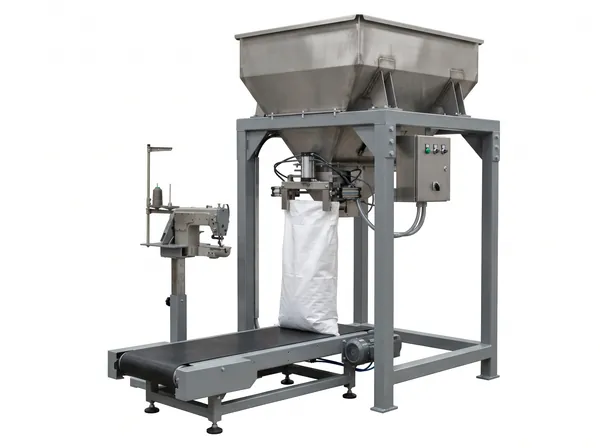
Rice bagging machine
This Machine
How It Works
1
Feeding Rice Into The Rice Packing Machine
Rice drops from the packing hopper into a gravity or screw feeder, which runs fast, then slows to a fine stream as the bag nears its weight. Every part the rice touches is stainless steel. The operator sets the feed points for each grade.
2
Weighing On The Load Cell Of The Rice Packing Machine
A load cell under the weigh pan reads the weight continuously, and the controller shuts the feed gate at the target. Stored recipes hold the weight for each bag size and grade. Interlocks stop the feed when no bag is clamped or a weight is out of tolerance.
3
Clamping And Filling Bags In The Rice Packing Machine
The operator places an empty bag on the spout, and a pneumatic clamp holds it while the weighed rice drops in. The clamp runs on air at 6 bar and is fitted for jute, woven or laminated bags. When the bag is full, it drops onto the slat conveyor.
4
Stitching And Sealing On The Rice Packing Machine
The conveyor carries each bag through a stitching machine on a height-adjustable column, or a heat sealer for laminated bags. The operator sets the column height for the bag size. On pouch lines, a form-fill-seal machine forms, fills, seals and codes each pouch.
Types And Options
Semi-Automatic Rice Packing Machine With Single Weigher
Load-cell weigher, pneumatic bag clamp, slat conveyor and stitching machine, with an operator placing each bag. A semi-automatic bagger costs less, and it is enough for a regular-scale mill of about 2 to 5 TPH packing 50 kg bags. An automatic bagger is not needed at that scale.
Automatic Rice Packing Machine With Twin Weigher
Two weigh hoppers work in turn. One weighs the next charge as the other discharges into the bag. It suits large plants running long shifts on one bag size, and costs more to buy and maintain.
Retail Pouch Rice Packing Machine
Packs 1 to 5 kg pouches for shops. It runs from a semi-automatic filler, with the operator holding each pouch, to a multi-head form-fill-seal machine fed by a bucket elevator. It sits beside the bulk bagger on its own bin.
Bag Closing Options For The Rice Packing Machine
A stitching head closes jute and woven bags. A heat sealer closes laminated bags. The clamp and closing head are chosen together, for the bags the market uses.
What Decides The Choice Of A Rice Packing Machine
The bagger sets the pace at which the mill empties, so it is chosen with the mill and the market.
- Rice: head rice, brokens and each grade, each from its own bin.
- Product: bulk bags of 10 to 50 kg, retail pouches of 1 to 5 kg, or both.
- Scale and hours: mill output and shift length.
- Upstream and downstream: bins and a packing hopper before it, store space after it.
- Utilities: steady power and compressed air at 6 bar.
- Maintenance: weighing checks and closing-head spares.
What A Rice Packing Machine Is Supplied With
- Weigher with feeder, weigh pan, load cell and controller.
- Pneumatic bag clamp.
- Slat or belt conveyor with motor and drive.
- Stitching machine on a height-adjustable column, or a heat sealer.
- Control panel for the bagger, conveyor and closing head.
- For pouch lines: form-fill-seal machine, weigher, bucket elevator, take-away conveyor and batch coding printer.
- Erection and commissioning.
- Training for project and maintenance staff at the buyer’s site.
- After-sales support, which stays available after the warranty period ends.
Rice Packing Machine On Its Own Or In A Line
A rice packing machine is supplied on its own to replace hand weighing, to add a pouch line, or to keep pace with an expanded mill. In a complete plant it is an option on the Compact rice mill. On the Raw rice mill plant, 2 TPH and above and the Parboiled rice mill plant it is part of the plant or an option.
Rice Packing Machine Inspection And Documentation
Third-party pre-shipment inspection by SGS or Bureau Veritas is available as the buyer requires. It takes place before the bagger is packed and exported.
Frequently Asked Questions
Which Bag Sizes Can A Rice Packing Machine Fill?
A bulk bagger fills 10 to 50 kg bags, set on the controller. Pouches of 1 to 5 kg need a separate pouch machine.
Does A Regular-Scale Mill Need An Automatic Rice Packing Machine?
No. A mill of about 2 to 5 TPH packing 50 kg bags is well served by a semi-automatic bagger. The automatic twin weigher belongs on larger plants.
Does A Rice Packing Machine Need Compressed Air?
Pneumatic bag clamps and pouch machines need air at 6 bar, so a small compressor is planned with the bagging section.
Can One Rice Packing Machine Pack Head Rice And Brokens?
Yes. Each grade is fed from its own bin, and the controller keeps a recipe for each grade and bag size.
Related Machines

removes discoloured grains and foreign matter just before the rice reaches the bagging bins.
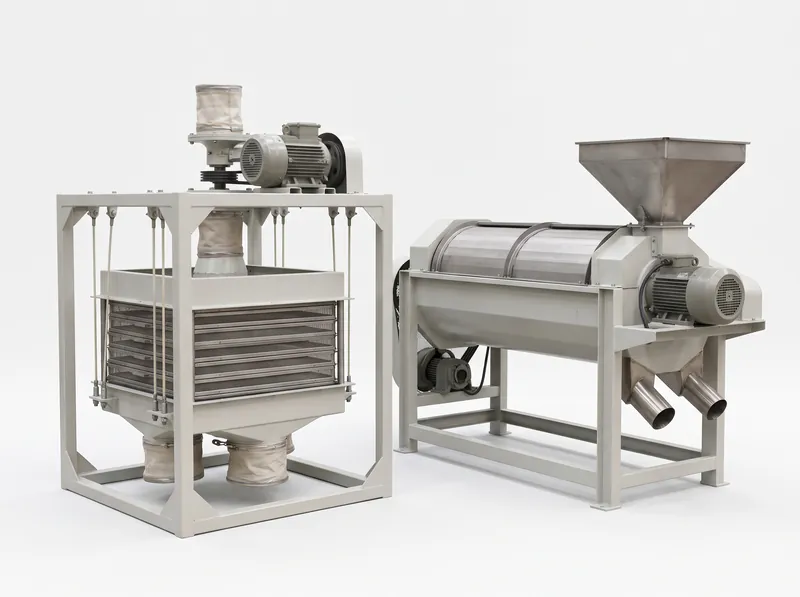
separates head rice from brokens, so each grade goes to its own bin and bag.
Next Step For Your Rice Packing Machine
Tell us the bags and pouches you sell, the grades you pack and the rate of your mill. Sonika Impex India will send a customer-specific proposal. How we work sets out each step of a project, from the first enquiry to erection and commissioning. Write to archit@sonikaimpex.com or sunil@sonikaimpex.com, or call +91 99027 67900.