Industrial Steam Boiler: What the Quote Should Contain, and Whether to Buy IBR or Non-IBR
November 13, 2026
Most first mineral water plants are chosen from a quote for the bottling line. The decisions that set the cost and the quality sit upstream of it: the source water, the treatment route it calls for, the bottle and cap supply, and the standard the product is tested against in its market.
November 15, 2026
Machinery Spare Parts by Industry: What to Settle With an Industrial Machinery Manufacturer in India Before You Sign
The latest transport observatory report for the Northern Corridor, published this year, found that in 2025 ships calling at Mombasa waited 4.7 days for a berth, and vessel turnaround rose to 192 hours [1]. Every plant has parts the work consumes, and the line stops when one runs out. Buy from an industrial machinery manufacturer in India and the next one is that voyage away, so the spares question belongs in the quote.
Six kinds of plant get a section each: rice, poultry feed, wheat and maize, oil, dairy and mineral water. Each covers what wears, why, the signal it is due and what to stock. It is for plant managers, engineers and processors planning an expansion.
In short:
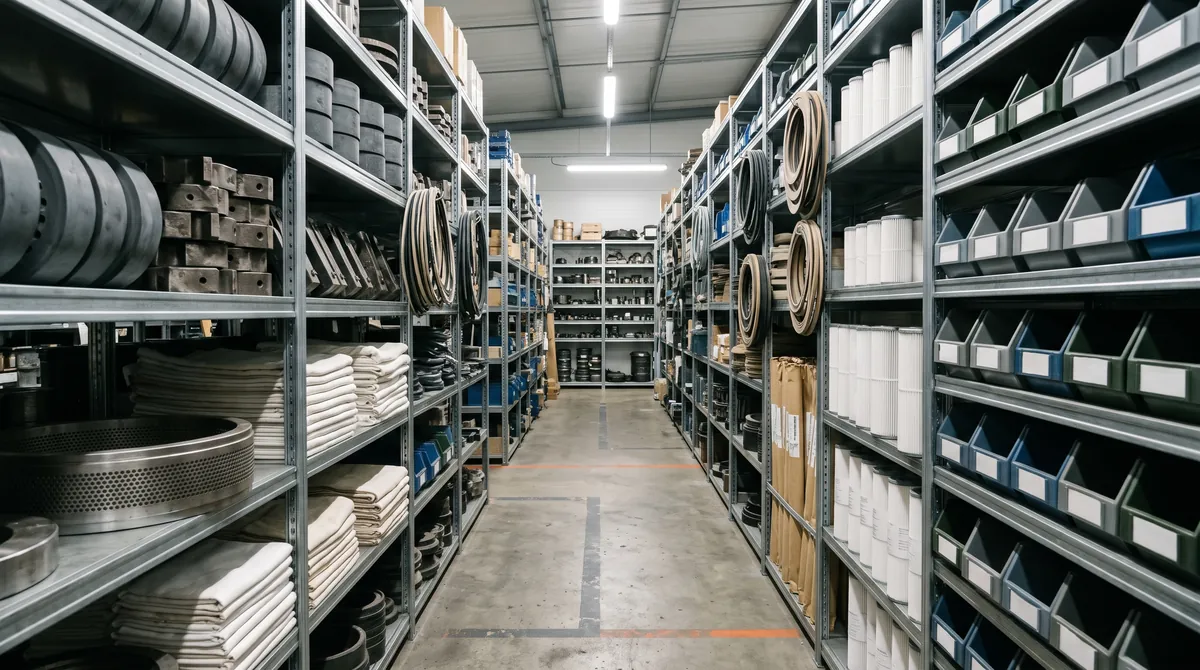
- Every plant has a short list of parts the work consumes, different for each industry.
- PNS/BAFS PAES 251:2021, the Philippine corn mill standard, requires warranty except for normal wear of consumable parts [7], so check your own warranty and plan to fund wear parts.
- Settle commissioning, first-year and critical spares in the quote, with drawings and part numbers.
- Set reorder points from usage and the shipping time from India, and ask who supplies parts after the warranty ends.
Contents
- Why the spares list belongs in the quote
- Rice mill spare parts: husker rubber rolls, polisher emery stones and screens
- Poultry feed mill spare parts: hammer mill beaters, screens, pellet mill die and rollers
- Wheat and maize mill spare parts: flour mill rollers, sifter cloths and bearings
- Oil mill spare parts: expeller worm shafts, cage bars and filter cloths
- Dairy plant spare parts: gaskets, seals, homogeniser valves and pump parts
- Mineral water plant spare parts: RO membrane replacement, cartridges and UV lamps
- Building the spares list into the quote from an industrial machinery manufacturer in India
- What this means in Ghana, Cote d’Ivoire, Uganda and Rwanda
- What to ask before you sign
- How Sonika Impex LLP can help
- Frequently asked questions
- Final thoughts
Why the spares list belongs in the quote
In the team’s experience, a plant that stops in year three has usually stopped for a part that wears with every tonne. Nobody recorded the part number, so the replacement is ordered from a photograph. The Philippine corn mill standard, PNS/BAFS PAES 251:2021, excludes normal wear and tear of consumable parts from its warranty [7], and the Philippine rice mill specification does the same [2]. Check your own warranty for that exclusion.
Here’s the catch: the quote is your last moment with the leverage of an unsigned order.
Rice mill spare parts: husker rubber rolls, polisher emery stones and screens
In a rice mill plant, two rubber rolls turn at different speeds and shear the husk off the paddy. A March 2026 agricultural engineering study found that paddy stacking between the rolls causes high contact pressure, the primary cause of cracks and local spalling on the rubber [3]. The signals are rising unhusked paddy, more broken grain and a roll worn out of true. The Philippine test method for husker rolls records roll thickness and weight every 2 hours of running, until the rubber has lost up to 50% of its thickness [4].
The Philippine rice mill specification describes an abrasive whitener as a cone or cylinder coated with emery, turning inside a perforated steel screen [2]. The stones lose grit as they scour bran away, and the screens wear open. Worn stones show as more heat or broken grain for the same whiteness.
On the shelf: a spare pair of rolls for each husker, a set of emery stones, a full set of screens, and bearings and belts.
Poultry feed mill spare parts: hammer mill beaters, screens, pellet mill die and rollers
A May 2025 conference paper on hammer mills notes that impact and friction round the hammer faces, which lowers productivity, raises energy use and unbalances the rotor [5]. In the team’s experience, screens also tear, passing coarse grain to the pellet mill.
A June 2024 study of flat die pelleting found that wear shortened die life and lowered pellet quality, and that the mix with the most corn wore the die most [6]. The signals are rising motor current and vibration, coarser mash, falling output, more fines and flattened roller shells. Record the die specification for every formula your feed mill plant runs.
On the shelf: a full set of beaters and pins, two or more screens of each size, a spare die for each die specification, and roller shells with bearings.
Wheat and maize mill spare parts: flour mill rollers, sifter cloths and bearings
The Philippine corn mill specification describes degermed maize ground between pairs of steel rollers turning in different directions, with grits sorted on sieves of different mesh sizes [7]. Break rolls carry corrugations with a sharp leading edge. Reduction rolls are smooth. In the team’s experience, corrugations round over and smooth rolls polish, so the rolls crush where they used to cut.
The signals arrive in the product first: flour release falls, bran breaks finer and the motor draws more. Sifter cloths stretch, tear and blind, letting coarse stock into the flour. Roll bearings fail with heat and lost lubrication. The corn mill specification also asks the supplier for a maintenance schedule and a list of the mill’s non-warrantable parts, so ask for that list with the quote [7].
On the shelf: a spare pair of rolls for the fastest-wearing passage, a full set of sifter cloths and cleaners, and roll bearings and belts.
Oil mill spare parts: expeller worm shafts, cage bars and filter cloths
In an expeller, worms drive seed through a barrel of cage bars, and pressure squeezes oil out between them. A February 2024 study of a palm oil screw press found that wear grows as the worm’s material gets softer and as the pressure applied rises, and that a badly worn worm leaves oil in the pressed fruit [8]. In the screw press study the factory ran its worms for 1300 to 1500 hours, against a manufacturer’s rated life of 1000 hours [8].
Your own records set the real figure. A university extension guide on oilseed processing describes a magnet in the seed discharge that collects ferrous debris, and a filter press that must be cleaned out when full [9]. Worn cage bars pass more solids, so the filter press fills faster.
On the shelf: a full set of worms, a set of cage bars, a choke ring, filter cloths for two or more changes, and the main thrust bearing.
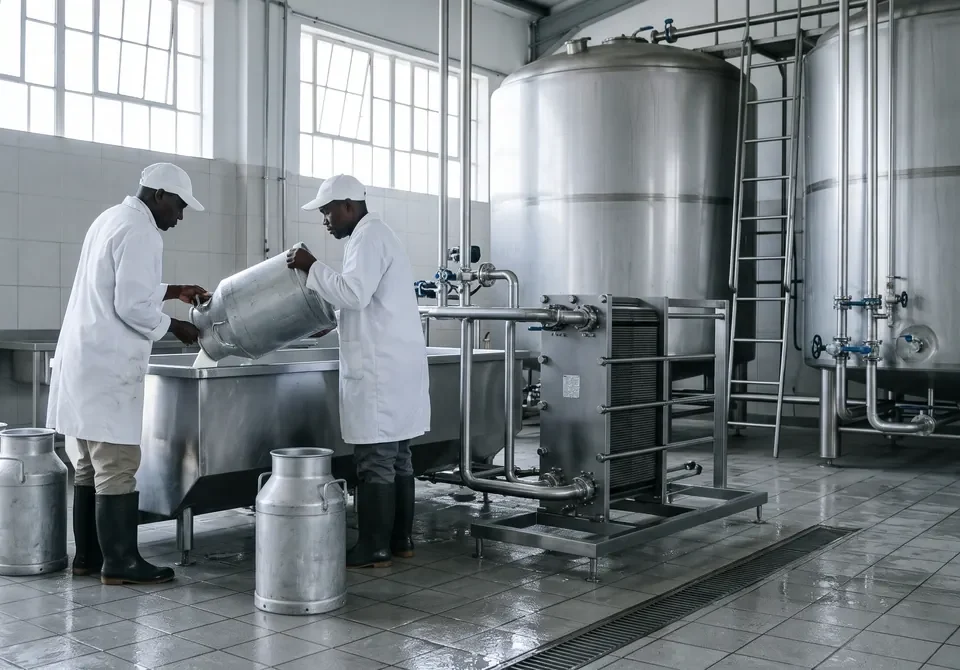
Dairy plant spare parts: gaskets, seals, homogeniser valves and pump parts
Gaskets and seals meet hot milk, caustic and acid daily, ageing with every cleaning cycle. US Food and Drug Administration guidance notes that minor cracks let bacteria in and that cracked or pitted areas cannot be sanitised [10]. Look for gaskets that have hardened, cracked or taken a set.
The homogeniser is the hard exception. A 2022 paper on dairy homogeniser durability traced wear on valves and seats to chemical and mechanical action under high pressure, with the plungers worn most at the ends of the stroke [11]. A homogeniser that can’t hold its set pressure needs its valve set examined.
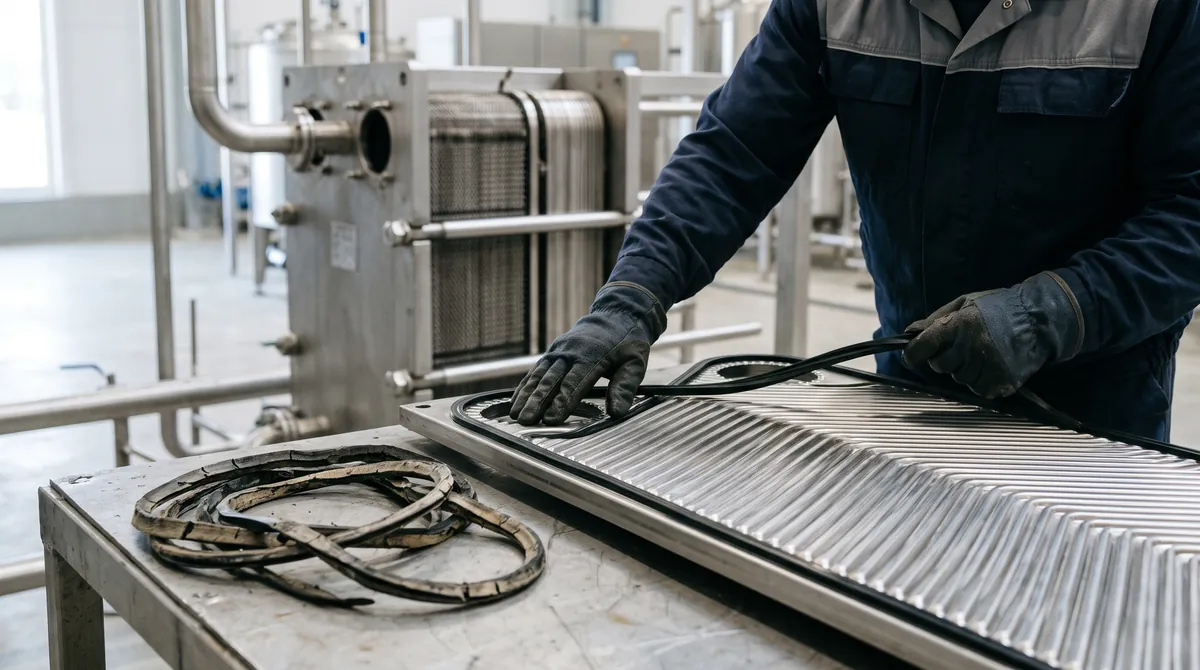
On the shelf: a gasket set for each plate heat exchanger, seal kits for every valve and pump type, and a homogeniser valve, seat and plunger seal set.
Mineral water plant spare parts: RO membrane replacement, cartridges and UV lamps
In a mineral water plant the wear parts are the treatment stages. A September 2025 review of RO membrane fouling finds that fouling cuts permeate flow, raises salt passage and calls for more feed pressure [12]. The Membranes review reports that cleaning begins once performance falls by 10 to 15%, and that membranes typically last 5 to 10 years [12]. Those figures come from desalination; check them against your own records.
Cartridge filters change far more often; a rising pressure drop is the signal. A UV unit has two wear parts. A May 2023 paper on UV reactors notes that water in contact with the quartz sleeve fouls it, which reduces the disinfection dose [13]. The lamp weakens with age, and Scotland’s drinking water regulator gives a typical lamp life of about 10 to 12 months, when output is about 70% of a new lamp’s, and strongly recommends UV intensity monitors with alarms [14].
On the shelf: cartridges for several changes, cleaning chemicals, a planned purchase of RO membranes, spare UV lamps and sleeves, and dosing pump seal kits.
Building the spares list into the quote from an industrial machinery manufacturer in India
The table sorts each plant’s parts into two groups. Parts that wear by use can be scheduled. Parts that fail with little warning have to be held.
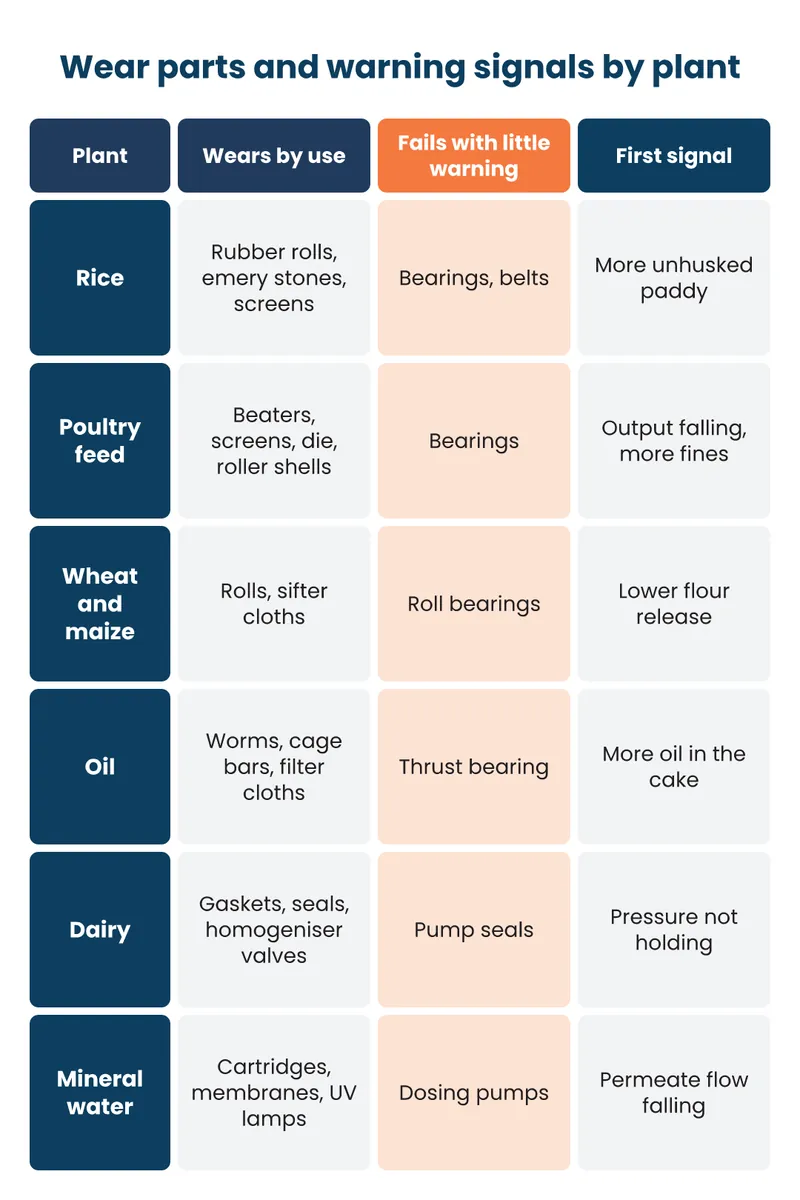
| Plant | Wears by use | Fails with little warning | First signal |
|---|---|---|---|
| Rice | Rubber rolls, emery stones, screens | Bearings, belts | More unhusked paddy |
| Poultry feed | Beaters, screens, die, roller shells | Bearings | Output falling, more fines |
| Wheat and maize | Rolls, sifter cloths | Roll bearings | Lower flour release |
| Oil | Worms, cage bars, filter cloths | Thrust bearing | More oil in the cake |
| Dairy | Gaskets, seals, homogeniser valves | Pump seals | Pressure not holding |
| Mineral water | Cartridges, membranes, UV lamps | Dosing pumps | Permeate flow falling |
Caption: Wear parts and warning signals by plant. Source: the six plant sections above.
That table becomes the spares schedule in four steps.
- Commissioning spares. Gaskets, fuses, belts and seals for erection and trial runs.
- First-year spares. One full change of every part that wears by use, sized to your raw material and shifts.
- Critical spares. Parts that stop the line and can’t wait for a shipment, such as a pellet die.
- Drawings, part numbers and reorder points, with each part’s material.
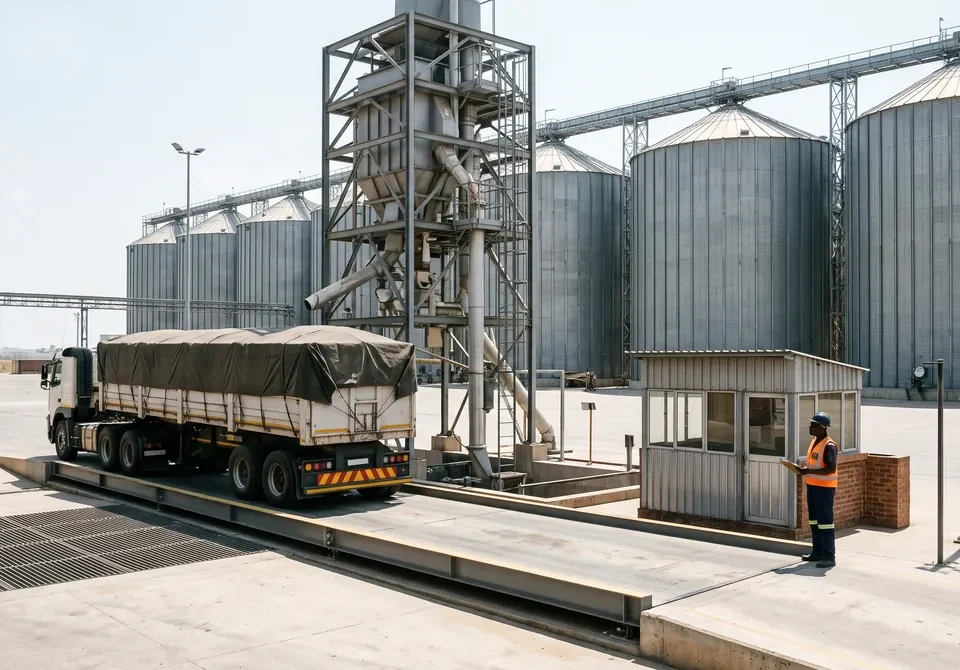
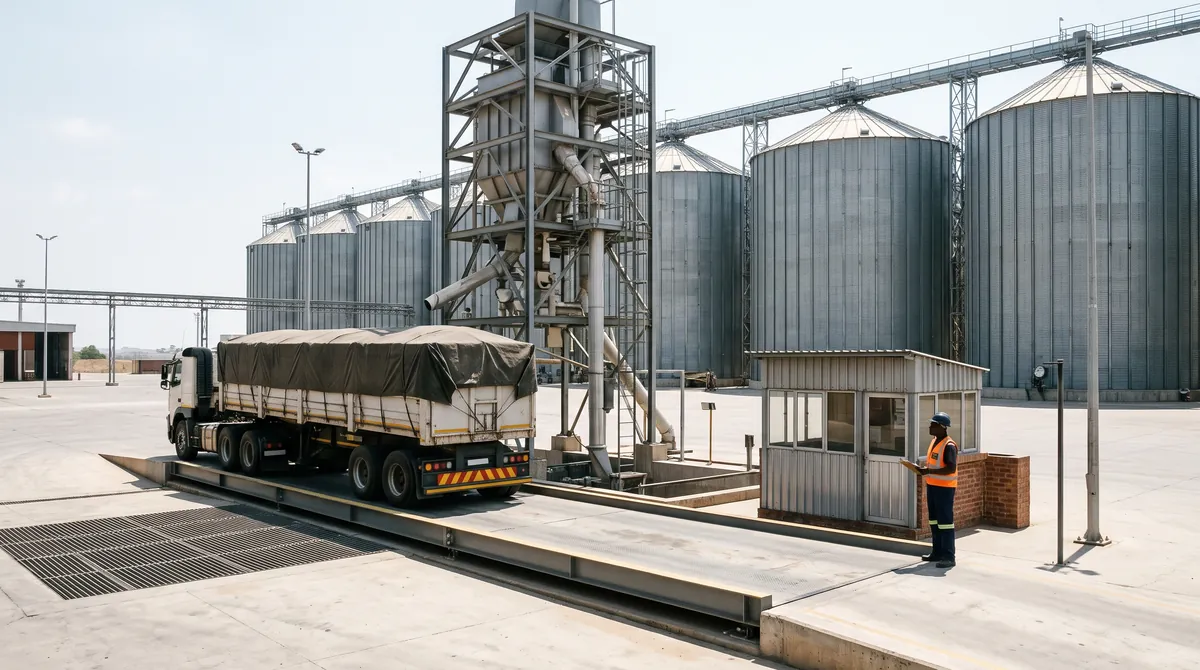
The flow runs from commissioning, to a year of wear, to critical parts, to the paperwork. Beneath it runs the timeline a reorder must cover: order, shipment from India, berth wait at Mombasa, Northern Corridor transit, arrival at site.
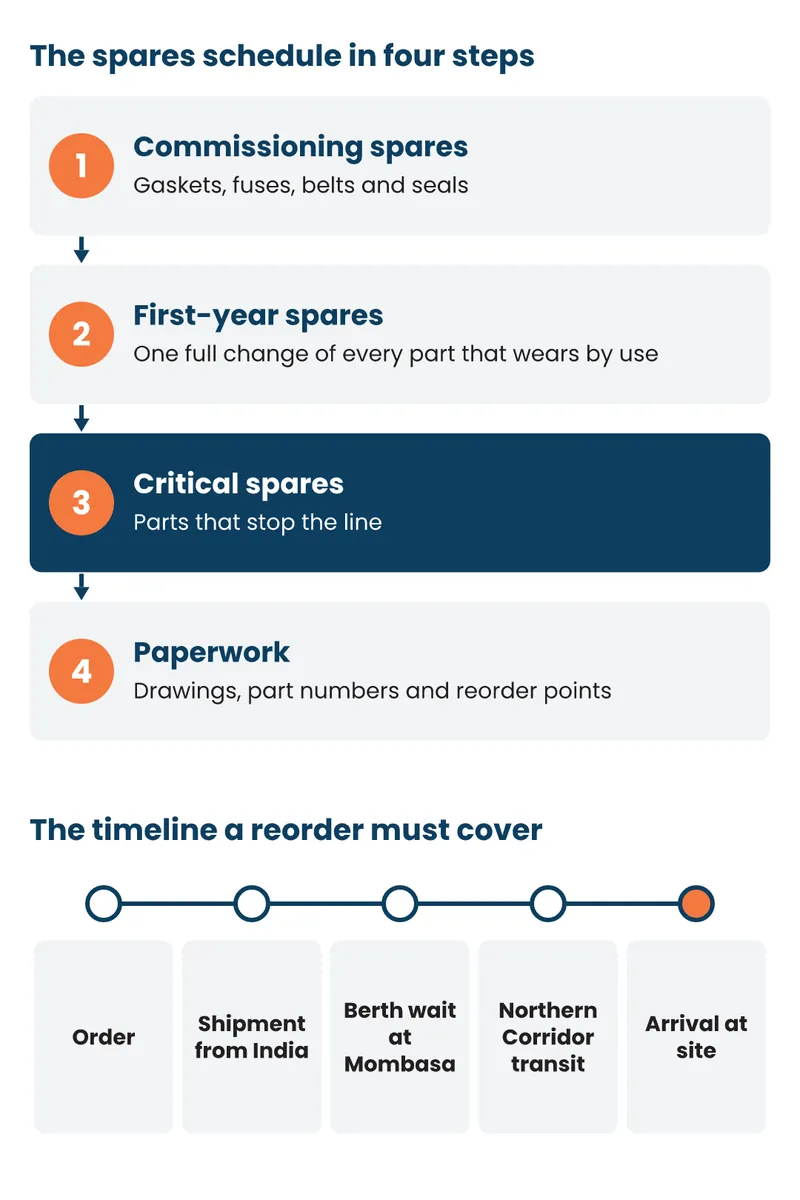
Caption: A reorder point covers every stage from order to gate, including a Mombasa berth wait of 4.7 days in 2025 [1]. Source: Northern Corridor Transport Observatory Report [1].
Don’t underestimate the reorder point: monthly usage times the months from order to gate, plus a safety stock.
What this means in Ghana, Cote d’Ivoire, Uganda and Rwanda
Confirm how customs classifies each spare before you fix the spares budget.
Ghana
Spares usually land at Tema. A July 2026 press release on the new law reports that the Ghana Investment Promotion Authority Act, 2026 (Act 1173), replaces the 2013 Act [15]. If your budget assumes relief on imported spares, confirm it under the new Act.
Cote d’Ivoire
Spares usually land at Abidjan. The Ministry of the Economy’s Investment Code page sets out a full or 50% customs duty exemption, and a temporary VAT suspension, for eligible investors in the investment phase [16]. Under the Investment Code the operating phase carries different advantages [16], so ask customs how spares ordered after start-up are treated.
Uganda
Spares usually land at Mombasa or Dar-es-Salaam. On the Mombasa route, add the Northern Corridor transit time to your reorder point. The East African Community sets its Common External Tariff in four bands from 1 July 2022, from 0% for capital goods to a top band for finished goods [17]. Check each spare’s band with the revenue authority.
Rwanda
Rwanda’s spares land at the same two ports and pay the same EAC Common External Tariff [17]. Ask your clearing agent for recent port-to-site times before you set the safety stock.
What to ask before you sign
Ask for the wear parts list for every machine, with part numbers, drawings and materials. Ask which parts are critical for your line, and for commissioning and first-year spares in the same quote. Three mistakes recur: buying without drawings; forgetting small consumables such as cloths, cartridges and gaskets; and leaving the after-warranty question unasked.
How Sonika Impex LLP can help
Sonika Impex LLP provides:
- A needs assessment and customer-specific proposal for what the plant needs now and later
- Turnkey plants, standalone machinery, industrial supplies and working capital materials from a single point of service
- Pre-shipment inspection and packing, with inspection by SGS or Bureau Veritas as required
- Export FOB by preference, or CIF to the port you name
- Erection, commissioning and training for project and maintenance staff at your site
- After-sales support, available after the warranty period ends
Send us:
- What you make or plan to make, and how much
- How your raw material arrives across the year
- Your site, power supply and water source
- The machines already installed, and the wear parts you replace most
- Your nearest port, and any quote you hold
+91 99027 67900 · sonikaimpex.com
Frequently asked questions
Can wear parts be made locally once the plant is running?
Some can, if you hold the drawing, the material specification and the hardness. In the team’s experience, good local workshops can often make screens, beaters, cage bars and some gaskets. Rolls, dies and membranes usually need specialised production, so plan to import them.
Should spares be packed and marked separately from the machines?
Yes. Pack each spare in its own marked case, labelled with its part number and the machine it belongs to, and keep a separate packing list. Spares mixed into machine cases are easily lost during erection, and the store then starts its first year short.
Should I keep spare RO membranes in stock?
Membranes have a shelf life and need correct storage, so holding a full set for years can waste money. A common approach is to track normalised performance and order a set once cleaning stops restoring it. Keep cartridges and cleaning chemicals in stock at all times.
What records should the maintenance team keep for wear parts?
Record the date each part was fitted, the tonnes or hours it ran, the raw material processed and why it was replaced. After a year, those records give you your own wear rate. That figure is worth more than any general estimate.
Is it worth buying a hardened or coated version of a wear part?
Sometimes. A harder part can last longer on abrasive material, but it costs more and may need different handling when it is reworked. Run a trial on one machine and compare hours per part against cost per part.
Can bearings and belts be bought locally?
Often, because bearings and belts follow international numbering. Copy the exact bearing and belt numbers from the manual into your spares register, so they can be matched from local stock. Keep the imported set for the main drives until a local source has proved itself.
Does a change of raw material change the spares list?
It can. A new paddy variety, a harder maize or a feed formula with more fibre can change how fast rolls, screens and dies wear. Watch the first months after any change closely and adjust the reorder points from what you see.
How should spares be stored on site?
Keep them dry, labelled and away from the production floor. Rubber parts, gaskets and membranes need cool, shaded storage away from ozone sources such as electric motors. Issue the oldest stock first.
Can the first-year spares be bought later?
They can, but they then travel as a separate shipment with its own freight, paperwork and waiting time. Bought with the plant, they travel in the same containers under the same shipping documents. That usually costs less in freight and handling.
Final thoughts
The opening began with ships waiting for a berth at Mombasa, one stage of the journey every reorder makes. The voyage and the berth wait are outside your control. The shelf is yours, and it is filled before the order is signed: named wear parts, their drawings, a year of stock and a reorder point that covers the journey. Settled at the quote, spares are a line in the maintenance plan. Left until year three, they stop the plant.
For the full picture, read our guide: [What an industrial machinery quote leaves out: the costs between the price and a running plant](/what-an-industrial-machinery-quote-leaves-out).
Sources
- Northern Corridor Transit and Transport Coordination Authority | Northern Corridor Transport Observatory Report 2025, 21st Edition, published 2026-08 | https://www.ttcanc.org/wp-content/uploads/2026/08/EN-21-TOP-Report.pdf (accessed 2026-10-19)
- Bureau of Agriculture and Fisheries Standards, Philippines | PNS/BAFS PABES 303:2020 Postharvest Machinery, Rice Mill, Specifications, published 2020 | https://amtec.uplb.edu.ph/wp-content/uploads/2021/01/BPS-End_Rice-Mill_Specifications.pdf (accessed 2026-10-19)
- International Journal of Agricultural and Biological Engineering | Effects of abnormal paddy feeding states on the contact mechanical properties of rubber rollers in rice hullers, published 2026-03-16 | https://ijabe.org/index.php/ijabe/article/view/10272 (accessed 2026-10-19)
- Philippine Agricultural Engineering Standard | PAES 215:2004 Agricultural Machinery, Rubber Roll for Rice Mill, Methods of Test, published 2004 | https://amtec.uplb.edu.ph/wp-content/uploads/2019/07/paes-215.pdf (accessed 2026-10-19)
- Engineering for Rural Development 2025, Jelgava | Features of grinding and mixing feed components in hammer mill, published 2025-05 | https://www.iitf.lbtu.lv/conference/proceedings2025/Papers/TF161.pdf (accessed 2026-10-19)
- Agriculture, MDPI | Study on Flat Die Wear Characteristics in Flat Die Pelletizing with Different Material Ratios Based on DEM-FEM, published 2024-06-05 | https://www.mdpi.com/2077-0472/14/6/894 (accessed 2026-10-19)
- Bureau of Agriculture and Fisheries Standards, Philippines | PNS/BAFS PAES 251:2021 Corn Mill, Specifications, published 2021 | https://amtec.uplb.edu.ph/wp-content/uploads/2022/01/PNS-BAFS-251-2021-Corn-Mill-Specifications.pdf (accessed 2026-10-19)
- IJIMCE journal | Wear Analysis and Corrective Maintenance Worm Screw Press at PT. XYZ, published 2024-02-15 | https://ijimce.ppj.unp.ac.id/index.php/ijimce/article/view/18 (accessed 2026-10-19)
- Penn State Extension | Overview of Small-Scale Oilseed Processing, updated 2025-08-11 | https://extension.psu.edu/overview-of-small-scale-oilseed-processing (accessed 2026-10-19)
- U.S. Food and Drug Administration | Inspection Technical Guide 48: Microbiological Contamination of Equipment Gaskets, Product Contact, issued 1986-12-31, page current as of 2014-11-07 | https://www.fda.gov/inspections-compliance-enforcement-and-criminal-investigations/inspection-technical-guides/microbiological-contamination-equipment-gaskets-product-contact (accessed 2026-10-19)
- Scientific Bulletin of Tavria State Agrotechnological University | Ensuring the durability of the main parts of dairy homogenizers, published 2022 | https://elar.tsatu.edu.ua/items/94587b75-cdfa-4ced-9ef9-700323b448e3 (accessed 2026-10-19)
- Membranes, MDPI | Current Trends and Biotechnological Innovations in Biofouling Control of RO Membranes in Desalination Systems, published 2025-09-05 | https://www.mdpi.com/2077-0375/15/9/270 (accessed 2026-10-19)
- Scientific Reports, via PubMed Central | Development and modeling of a novel type of photoreactors with exterior ultraviolet reflector for water treatment applications, published 2023-05-11 | https://pmc.ncbi.nlm.nih.gov/articles/PMC10175273 (accessed 2026-10-19)
- Drinking Water Quality Regulator for Scotland | Private Water Supplies Technical Manual, Section 6.9.2 Ultraviolet irradiation, undated | https://dwqr.scot/media/rsppa3lg/pws-technical-manual-section-6-water-treatment-processes-692-ultraviolet-irradiation.pdf (accessed 2026-10-19)
- Ghana Investment Promotion Centre | Press release: President passes GIPA Bill 2026, published 2026-07 | https://gipc.gov.gh/wp-content/uploads/2026/07/PRESS-RELEASE-PRESIDENT-PASSES-GIPA-BILL-2026.pdf (accessed 2026-10-19)
- Ministere de l’Economie, Cote d’Ivoire | Code des investissements, undated | https://economie-ivoirienne.ci/investissements/codes-des-investissements.html (accessed 2026-10-19)
- East African Community | Trade Regime: EAC Common External Tariff, undated | https://www.eac.int/regional-framework/trade-regime (accessed 2026-10-19)